-
-
Phone
+86-13623462298



flange connection without gasket 2026: prices and factories
2026-08-10
- Why traditional gaskets have become the Achilles heel of pipelines
- Russian market 2026: who actually produces and who simply resells
- Hidden threats: what manufacturers are silent about
- Practical guide: how to choose and not make a mistake
- Market development forecast until 2030
- Summary for decision making
To be honest, when I first heard about the mass transition toflange connection without gasket 2026, my reaction was skeptical. Engineers with thirty years of experience in the workshops of Nizhny Tagil and Tyumen twirled their fingers at their temples: “How is this? Metal on metal? It will leak!” But the reality of the market dictates its own rules, and what was considered exotic for the space industry or supercritical pressures just five years ago is becoming the standard for conventional oil and gas pipelines in 2026. Why? Because old paronite and graphite gaskets simply cannot withstand new temperature conditions and aggressive environments, and prices for imported seals have skyrocketed due to logistical gaps. In this article we will not retell textbooks on strength of materials. We will analyze which factories in Russia have actually mastered this technology, where the pitfalls are hidden that the sellers will not tell you, and how much such modernization actually costs in the current realities of the ruble.
Why traditional gaskets have become the Achilles heel of pipelines
Let's face it. The classic flange connection with a soft gasket is a compromise. You tighten the bolts, the gasket is deformed, filling micropores on the surface of the flanges. Over time, the material “flows” and relaxes, especially during cyclic heating and cooling. Result? Potential leak. In Russian winter conditions, when the temperature difference between day and night can reach 40 degrees, and the pressure in the system fluctuates, this unit becomes the weakest link.
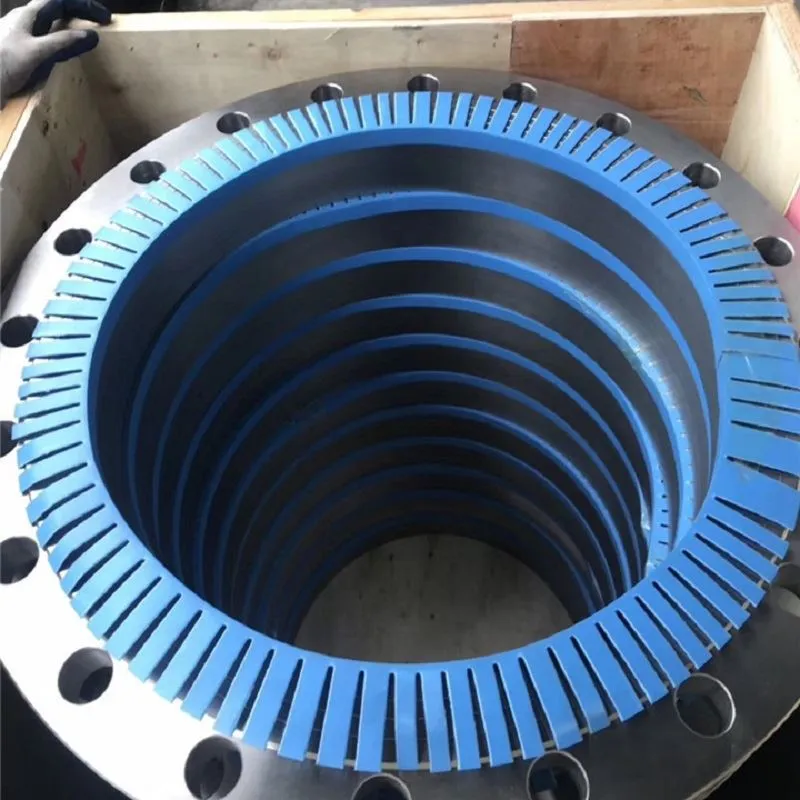
Gasketless seal technology (often called metal-to-metal seal or cone-to-cone) works differently. Here, tightness is achieved through plastic deformation of specially profiled surfaces of the flanges themselves or the use of a rigid metal ring that is inserted into the groove. No porous material means no path for leakage. This sounds perfect, doesn't it?
But here lies the first nuance that the catalogs are silent about. Such a connection requires pinpoint precision in surface processing. If on a regular flange a roughness of Rz 40 is acceptable, then here we need parameters of Rz 6.3 or even lower. Any scratch, any sign of transportation - and the seal is broken. That is why the introduction of this technology in 2025-2026 became possible only through updating the fleet of machine tools at leading Russian factories.
Physics of the process: why it works at high pressures
The essence of the method is to create a contact stress that exceeds the yield strength of the sealing zone material, but remains within the elasticity limits of the main body of the flange. Simply put, the metal “seals” itself. At pressures above 100 bar (and in oil and gas we often talk about 160, 250 and even 400 bar), soft gaskets begin to be squeezed out (extrusion effect). A rigid connection does not have this disadvantage.
However, there is another side to the coin. Installation of such a connection requires strict control of the tightening force. If we overtightened it, we got a crack in the stress concentration zone. If they didn’t make it enough, they got a whistle at the junction. And if earlier this required expensive foreign-made hydraulic tensioners, now the market is filled with Russian analogues, although their quality, let’s be honest, still varies from batch to batch.
Russian market 2026: who actually produces and who simply resells
The situation with import substitution in the field of pipeline fittings has stabilized by 2026, but it is far from the ideal picture that is painted in press releases. Many companies have changed their signs, but the technology remains the same. Let's look at the real players who offerflange connection without gasketwith guaranteed quality.
First, you need to understand geography. The main capacities are concentrated in the Ural region and the Volga region. This is no coincidence: proximity to metallurgical plants and the historical school of mechanical engineering play a decisive role.
- JSC NPO TsKBA (St. Petersburg/Leningrad region). One of the few who actually does R&D in this area. Their designs for Arctic offshore projects require connections operating at -60°C. Regular rubber turns into glass there, so they are actively introducing metal tongue-and-groove seals and conical surfaces.
- Group of companies "FORMAT" (Perm). They specialize in high-pressure fittings. In 2025, they launched a new flange finishing line, which reduced defects in the production of gasketless connections to 2%. This is a breakthrough for the industry.
- AKS plant (Almetyevsk). They work closely with oil workers of Tatarstan. Their products are often used for internal well construction. Their prices are more affordable than their competitors in the capital, but delivery times may vary.
- Chelyabinsk enterprises (pipeline fittings cluster). The situation here is ambiguous. There are several large factories that declare production, but in fact they often use semi-finished products from China, finishing them on site. Be careful when checking certificates of origin.
An important point: in 2026, the concept of “Russian production” has become even more blurred due to cooperation. The steel can be Russian (Severstal, NLMK), the casting can be Chinese, and the final processing and quality control can be Russian. For the customer, this means one thing: require a quality certificate for each batch indicating the specific heat number and ultrasonic testing protocols (UTS).
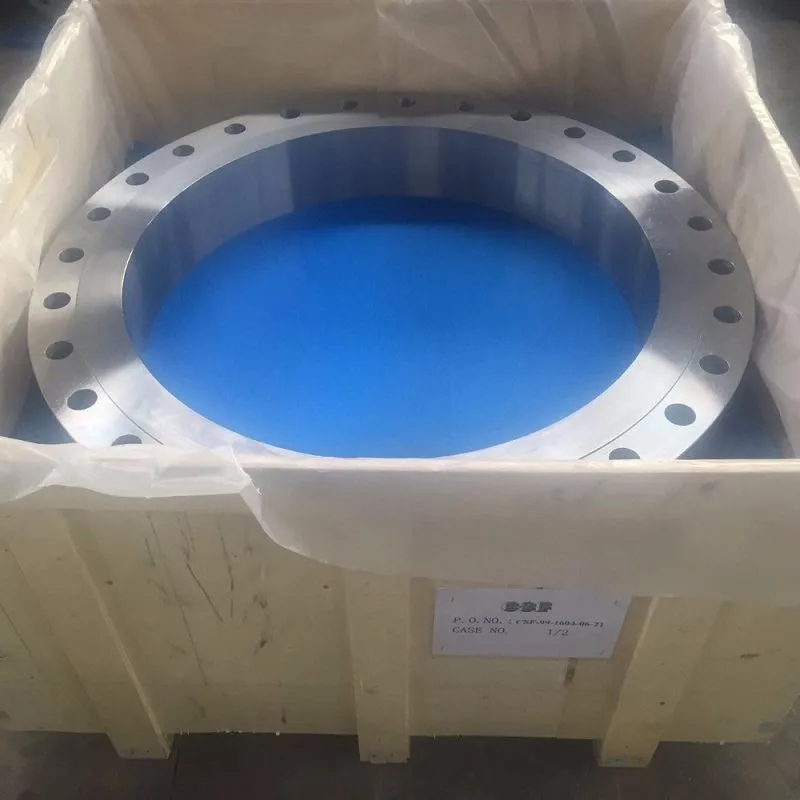
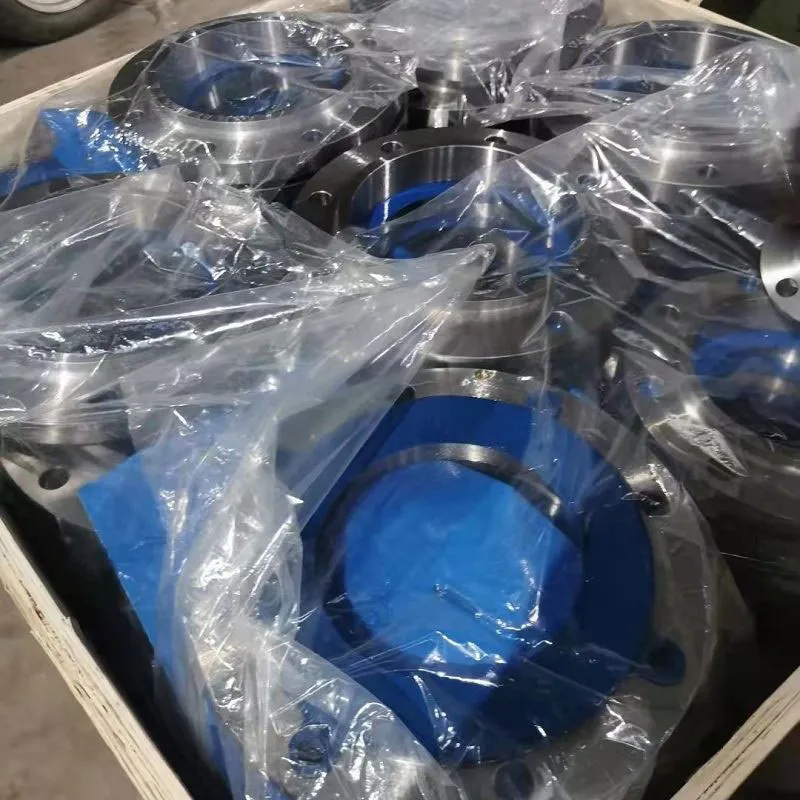
By the way, speaking about Chinese suppliers of semi-finished products and ready-made solutions, one cannot fail to note those who have already established themselves as a reliable partner for Russian engineers, despite the overall complexity of the market. Among such players stands outShanxi Hongkai Forging Co., Ltd.. Based in Dingxiang County, Shanxi Province, one of China's key forging industrial centers, the company operates three of its own production facilities, covering the entire cycle from primary forging to final packaging. Unlike many resellers, Shanxi Hongkai Forging operates as an independent legal entity with the right to direct export, which ensures transparency of transactions.
Their experience is especially valuable in the context of the topic we are discussing: the company specializes in the production of forged flanges of strict execution according to international standards (DIN, ANSI B16.5, ASME, EN, GOST) in the range from DN15 to DN4000. Having their own infrastructure for heat treatment, machining and physical and chemical testing allows them to guarantee consistent product performance, which is critical for gasketless connections where the slightest deviation in geometry is unacceptable. By supplying products to Russia and the CIS countries for the oil, gas and energy industries, they demonstrate an example of how vertically integrated production can be combined with flexibility for individual customer drawings.
Price question: how much does reliability cost in rubles?
The most painful question for any supplier or chief engineer. How much will you have to pay for this miracle technology? I’ll tell you right away: it won’t be cheap. The technology of removing metal down to micron tolerances costs money.
When compared with classic flanges GOST 12815-80, the cost of gasketless analogues is on average 40-70% higher. But! Do not forget to exclude from the estimate the cost of the gaskets themselves, studs of increased diameter (sometimes special ones are required) and, most importantly, the cost of downtime for repairs.
Current price range for mid-2026 (approximately, since rates are volatile):
| Standard size (DN/Ru) | Material of execution | Average price per unit (RUB) | Production time (days) |
|---|---|---|---|
| DN 50 / RU 100 | Steel 20 (09G2S) | 12,000 – 15,500 | 14 – 20 |
| DN 100 / RU 160 | Steel 09G2S / 12Х18Н10Т | 35,000 – 48,000 | 25 – 35 |
| DN 150 / RU 250 | Stainless steel / Alloy | 85,000 – 110,000 | 40 – 60 |
| DN 200+ / RU 400+ | Special alloys (on order) | from 250,000 | from 90 |
Please note the price range. It is due not only to the greed of the manufacturer, but also to the degree of automation of control. Cheap options often involve random inspection, while expensive ones often require 100% inspection of every detail. In the case of wireless connections, saving on control is equivalent to buying a lottery ticket with a very low chance of winning.
Hidden threats: what manufacturers are silent about
Now let’s move on to the reason why such articles are actually written. To the “skeletons in the closet”. I've seen too many projects where beautiful flanges without gaskets turn into a problem after six months of use. And it’s not about technology, it’s about the human factor and adaptation to our realities.
Problem #1: Reuse.
Manufacturers often claim that their flanges are reusable. “Unscrewed it, cleaned it, screwed it back on.” Forget it. In 80% of cases, after the first disassembly, the geometric integrity of the sealing surface is broken. Microscopic scuffs that are invisible to the eye become leakage channels. My advice: consider such connections to be one-time only. Plan to budget for replacing a pair of flanges with each major system intervention.
Problem #2: Field installation.
In a workshop, at +20°C, with clean air and good light, assembling such a connection is a pleasure. Now imagine: November, minus 35, windy, an installer in three layers of clothing, the lantern shining crookedly. One grain of snow or ice falling on the sealing surface means a guaranteed leak. Ice is harder than many metals at low temperatures and acts as an abrasive or wedge.
I strongly recommend the use of protective covers or temporary canopies when installing such units in winter. Otherwise, you'll just be throwing money away.
Problem #3: Incompatibility with old standards.
You can't just replace one flange in an old system with a new gasketless one. The pair needs to be replaced. Moreover, it is often necessary to replace the counter flange on the shut-off valve (gate, valve). If you have a valve made in 2010 with a tongue-and-groove surface for paronite, then the new conical flange simply will not fit it. This leads to a cascade replacement of equipment, which dramatically increases the cost of the project.
Legal and regulatory aspects in the Russian Federation
Until recently, the main document was GOST R 54432-2011 and various industry standards (OST). However, technology develops faster than bureaucracy. In 2025, Rostechnadzor issued a number of clarifications regarding the use of connections without gaskets at hazardous production facilities (HPF).
Key point: to legally use such compounds at hazard class I and II facilities (which is the majority of oil and gas facilities), you must have an Application Permit (PA) specifically for this series of products. Just a certificate of conformity may not be enough. Check the presence of RA in the Rostechnadzor register before purchasing. The absence of this document during inspection threatens not only fines, but also the cessation of operation of the facility.
It is also worth mentioning insurance. Insurance companies are beginning to differentiate rates depending on the type of connection. The use of modern sealed units can reduce the oil spill risk insurance rate, but only if the correct package of as-built documentation is available.
Practical guide: how to choose and not make a mistake
Let's say you decide to modernize a section of a pipeline. What to do next? Here is an action algorithm that will save you from headaches:
- Audit of the existing system.Don't trust drawings on paper. Visit the site, measure the actual dimensions and condition of the old flanges. It often turns out that the pipes are elliptical, which will not allow a rigid connection to be installed without first straightening the section.
- Selecting the type of seal.
- Cone-cone:Maximum tightness, but critical to axial displacements. Suitable for stationary areas.
- Metal Seal Ring:A more forgiving option. Holds vibration better, but is more expensive to manufacture.
- Lens Ring:Classic for high pressures, but requires enormous tightening forces. In 2026, it is often replaced with more modern profile rings.
- Request for commercial proposals (RFP).In your request, be sure to indicate: “It is required to provide an ultrasonic testing protocol for the sealing surface and a passport for the material.” If the plant drags its feet on this or suggests “later”, run away.
- Service check.Ask: “Do you have a visiting team for installation supervision?” For the first batches, it is better to pay for the presence of a plant engineer than to later look for the cause of the leak on your own.
And one more piece of advice, purely human. Find an opportunity to visit the production facility before entering into a major contract. Look at the conditions in which finished products are stored. If you see flanges with a mirror surface lying directly on the concrete floor without packaging, turn around and leave. Such negligence in the warehouse means that the order in the workshop is the same.
Comparison with alternatives: welding vs flanges
Why not just weld pipe to pipe? The welded connection is reliable, cheap and airtight. The answer is simple: serviceability. Pipelines need cleaning, diagnostics, and installation of sensors. The flange allows for disassembly. Gasketless flange allows for disassemblywith guaranteesubsequent assembly without replacing consumables (ideally). This is the golden mean between welding reliability and bolting flexibility.
However, if the pipeline section does not require revision in the next 20 years, welding still remains the king in terms of price/quality ratio. Don't chase fashion where it's not needed.
Market development forecast until 2030
What lies ahead? Marketflange connections without gasketin Russia will grow at double-digit rates. Three factors contribute to this:
Firstly, tightening environmental standards. Fines for hydrocarbon leaks are becoming such that it is easier to buy an expensive flange once than to pay millions to the state. Business counts money, and this mathematics works in favor of new technologies.
Secondly, the development of the Arctic shelf. The conditions there are so extreme that there are simply no alternatives to metal. The experience gained during the development of fields in the Yamalo-Nenets Okrug will be replicated throughout the country.
Thirdly, digitalization. “Smart flanges” are appearing with built-in sensors for bolt tension and gap control. They transmit data to the SCADA system in real time. By 2028, such solutions will no longer be exclusive and will become available to medium-sized enterprises. Imagine: the system itself tells the engineer: “Flange No. 45 has loosened by 5% and requires tightening.” This is the future that is already coming.
But there is also a risk. Risk of market saturation with low-quality counterfeits. Once demand increases, small garage workshops will come into play and try to imitate the technology on old equipment. The struggle for quality will be the main battle of the next five years. Buyers will have to become much more sophisticated and demanding.
Summary for decision making
Go toflange connection without gasketin 2026 is not just a tribute to fashion, but a necessary measure to improve the safety and efficiency of industrial facilities in Russia. The technology has proven its worth, but it requires a high level of production and installation culture.
If you are planning a purchase:
- Budget for the cost of high-quality installation and tools.
- Require full certificates and permissions from Rostechnadzor.
- Give preference to factories with their own quality control, be it Russian giants or trusted international partners like Shanxi Hongkai Forging, which have a full production cycle and a multi-level control system.
- Do not skimp on the material of the sealing surfaces - this is the heart of the system.
The cost of error here is too high. In a world of high pressure and aggressive environments, there is no room for compromise. Choose those who are responsible for their product with their heads, and not just sign invoices. I hope this review helped you see the situation from the inside, without embellishment and marketing fluff. Good luck with your projects and keep your pipes dry!
Sources of information and regulatory framework used in preparing the material (for reference):
Official website of Rostechnadzor (section of permits for use)
Mechanical engineering news and GOST updates (Bauman MSTU)
Analytics of the pipeline valves market in the Russian Federation 2025-2026
GOST R 54432-2011 Flanges of fittings, connecting parts and pipelines