-
-
Phone
+86-13623462298



Buy mounting kit of flange connections 2026: price from the factory
2026-08-10
- Why the old approach to flange procurement no longer works in 2026
- Anatomy of an ideal installation kit: an inside look
- Pricing 2026: where do the numbers come from and is it possible to bargain?
- Localization vs Import: the battle for reliability in Russian realities
- Practical guide: how to place an order and receive goods
- Future of the market: what to expect in 2027?
You were looking for whereкупить монтажный комплект фланцевых соединений 2026: цена от завода, but only came across rewritten texts with outdated price lists for 2023? I understand you perfectly. The market for industrial fittings in Russia now resembles a minefield: on the one hand, there are inflated prices of “outbid” products, on the other, there is the risk of running into counterfeit goods that will burst at the first water hammer. Frankly, the situation by the beginning of 2026 became even more absurd. Many “factories” whose names you see in the top search results are actually simply re-labeling Chinese consumer goods or remnants of Soviet stocks stored in damp hangars near Tula. In this article, I will not spill the beans about “digital transformation.” We will talk about what is really happening in the workshops, why GOST standards are now working selectively and how to save up to 40% of the budget without losing your head along with the pipeline.
Why the old approach to flange procurement no longer works in 2026
Let’s dot the “e” right away. If you are used to ordering installation kits to old specifications, ignoring changes in metallurgy over the past two years, you have already lost. The market has changed. And it’s not even about the sanctions that everyone is supposedly accustomed to. The problem is deeper.
In 2025–2026, there was a quiet but large-scale shift in the composition of steels used by Russian manufacturers. Imported alloying additives (molybdenum, certain grades of nickel) have either become unavailable or their cost has skyrocketed. Factories were forced to switch to new brands of domestic rolled products. And here lies the main catch that sales managers are silent about.
A flange mounting kit is more than just a bolt plus nut plus washer. This is a system. If a flange made of new steel 09G2S-IMK (symbol for new batches) has one hardness, and a stud from the old GOST has another, the effect of electrochemical corrosion occurs or, worse, “seizing” of the thread when heated. You tighten the connection, everything looks fine. Six months pass, seasonal pumping begins, and the temperature fluctuates. That's all. Stuck. It is impossible to unscrew without a grinder.
I personally saw reports of accidents on heating mains in Siberia last winter. Cause? Incompatibility of materials in the “standard” kit. The seller assured that everything was in accordance with GOST. Technically yes. Physically it’s a disaster.
So when you're looking for an opportunityкупить монтажный комплект фланцевых соединений 2026: цена от завода, the first question you should ask the supplier is not “how much?”, but “what is the chemical composition of the studs and do they match the current batch of flanges?” If the manager starts to hesitate in answering or reads you excerpts from an advertising booklet, run. This person will sell you a problem, not a solution.
Hidden risks of “cheap” kits
Why is the price from the factory sometimes frighteningly low? There are two options here. First: the plant has really optimized processes, introduced robotic welding (yes, this already exists in Tatarstan and Chelyabinsk) and is cutting margins for the sake of volume. Second, and more frequent: savings on coverage.
Galvanizing. That's where the dogs are buried. In 2026, environmental standards became stricter, and disposal of acid waste became more expensive. Some “garage” production, masquerading as factories, simply switched to low-quality cold galvanizing or even to paint that imitates zinc. Externally shiny. After three months in the aggressive environment of oil refining, rust flows like a stream.
Remember: high-quality hot zinc has a characteristic crystalline structure (“pattern”), it is matte and rough to the touch. A smooth, mirror-like coating is often a sign of cheap galvanic zinc, which is absolutely not suitable for critical flange connections under high pressure.
Anatomy of an ideal installation kit: an inside look
What exactly is included in the concept of “installation kit”? For a layman, it's just a bag of glands. For an engineer, this is a set of components, each of which has its own tolerance and purpose. Let's break it down piece by piece so you know what you're paying for.
Firstly,flanges. In 2026, flat welded flanges (type 01 according to GOST 33259-2015) and flanges on a free ring remain the most popular. But the trend is shifting toward flanges with a lip that provides better gasket centering. Why is this important? Because modern spiral wound gaskets (SPG) require perfect alignment. A misalignment of even half a millimeter - and the seal is broken.
Secondly,fastener. Studs or bolts? For temperatures up to 300°C, bolts are usually sufficient. But if we are talking about steam pipelines or chemical reactors, where there is vibration and thermal cycling, only studs with two nuts. The nuts must be high (design 2) to ensure sufficient length of the threaded grip. Low nuts are the way to self-unscrew.
Thirdly,gaskets. Here the revolution took place back in 2024. Paronite (red and blue) is slowly but surely becoming a thing of history for responsible nodes. Its place is taken by graphite gaskets with a metal base and multilayer composites. They are more expensive, yes. But they “remember” the shape. After the first heating and cooling, paronite often loses its elasticity and begins to flow. Graphite - no.
And the last thing:washers. They are often forgotten. But in vain. Flat washers according to GOST 11371 distribute pressure from the nut to the flange surface. Without them, you risk pushing through the soft metal of the flange or breaking the edge of the nut when tightening with a torque wrench.
Table: Comparison of characteristics of sets of different classes (Relevant for 2026)
| Parameter | Economy class (China/Russian Federation, low segment) | Standard (RF, certified factories) | Premium (Special alloys, imported analogues) |
|---|---|---|---|
| Flange material | St20, St3sp (without impact strength control) | 09G2S, 12Х18Н10Т (certificate with analysis) | Duplex steels, titanium alloys |
| Fastener coating type | Electroplated zinc (thin layer) or paint | Hot-dip galvanizing (60–80 microns) | Teflon coating, cadmium plating |
| Gasket included | Paronitis PON (often dried out) | SPN (spiral wound) with restrictive rings | Graphite laminated, metal-to-metal |
| Thread control | Visual, selective passage with gauge | 100% control of threaded rings | Laser scanning of thread profile |
| Average service life (water/steam) | 2–3 years before the first lift/replacement | 5–7 years without intervention | 15+ years (before major renovation) |
| Price relative to base | 100% (basic) | +35–40% | +200–300% |
Take a sober look at the table. Yes, Economy is cheaper. But calculate the cost of equipment downtime in the event of an accident. Consider the work of a team that must arrive in the middle of the night to replace a leaking flange in -30°C cold. Under these conditions, a difference of 40% in the cost of the kit seems ridiculous.
Pricing 2026: where do the numbers come from and is it possible to bargain?
The issue of price is the most painful. Do you wantкупить монтажный комплект фланцевых соединений 2026: цена от завода, but the price lists look like stock market reports. Why is this so?
The main driver of price growth in 2025–2026 is not the dollar exchange rate (although it also affects equipment), but the cost of energy resources and logistics within the country. Manufacturing flanges is an energy-intensive process. Cutting, forging, turning, drilling, galvanizing (zinc baths must be heated to 450°C around the clock). Electricity rates for industry have increased, and factories have passed these costs onto the end product.
In addition, the structure of demand has changed. Small batches have become unprofitable. If you want to buy 10 sets of DN50, the factory will either refuse or increase the price “as for a piece product.” The profitability of production now lies in wholesale. The minimum batch with which it makes sense to work directly with the manufacturing plant has shifted from 500 kg to 1–2 tons of metal.
But there is a nuance. The price “from the factory” does not always mean the price “without intermediaries”. Large factories often operate through a dealer network. There is a direct sales department, but it is tailored for tenders and contracts starting from 5 million rubles. If you are a small business or individual installer, you will most likely be offered work through a regional distributor. And that's okay!
Why? Because the plant will not ship you one box of bolts from a warehouse in Nizhny Tagil. Logistics will eat up all the benefits. A regional warehouse in your city (for example, in Yekaterinburg or Krasnodar) keeps a stock of running items. Yes, their markup may be 15-20%, but you get the product “here and now”, with the possibility of returns and a local guarantee.
Advice from an experienced person: don’t try to get a 50% discount from the manager. This is suspicious. A normal market in 2026 gives a discount of 5–10% for volume and 3–5% for prepayment. Anything higher is either a sale of illiquid goods or a scam.
How to check the real price and avoid hidden fees
When you request a quote, pay attention to the delivery terms (Incoterms). Often a beautiful price in the price list is indicated “pickup from the factory warehouse”. And delivery to your facility may cost another half of the order amount. This is especially true for heavy flanges with large diameters (DN300 and above).
Also check VAT. Some small “factories” operate on a simplified basis (without VAT). For large enterprises that pay VAT, this is critical. You'll save 20% on your purchase, but lose 20% on the deduction. The math is simple: working with a VAT payer is almost always more profitable for white businesses.
And one more point that is rarely written about: the cost of certificates. In 2026, documentation requirements became more stringent. A complete package of documents (quality certificates, TR CU certificates of conformity, test reports) can be a separate line in the invoice, especially if certified copies or originals are needed. Check this out “on the shore.”
Localization vs Import: the battle for reliability in Russian realities
Let's talk frankly. Is it possible to completely abandon imports today? Theoretically, yes. In practice, it’s difficult, but it’s possible. Russian industry has made a huge leap forward over the past three years. What was previously considered “impossible without a European machine” is now being done in Voronezh and Izhevsk.
However, there are areas where high-quality foreign analogues still have a right to life, especially when it comes to specific standards or extra-large diameters. Chinese manufacturers in 2026 are divided into two camps: those who dump at the expense of quality, and those who rely on technology and a full cycle of control. It is the second type that includes serious players, such asShanxi Hongkai Forging Co., Ltd..
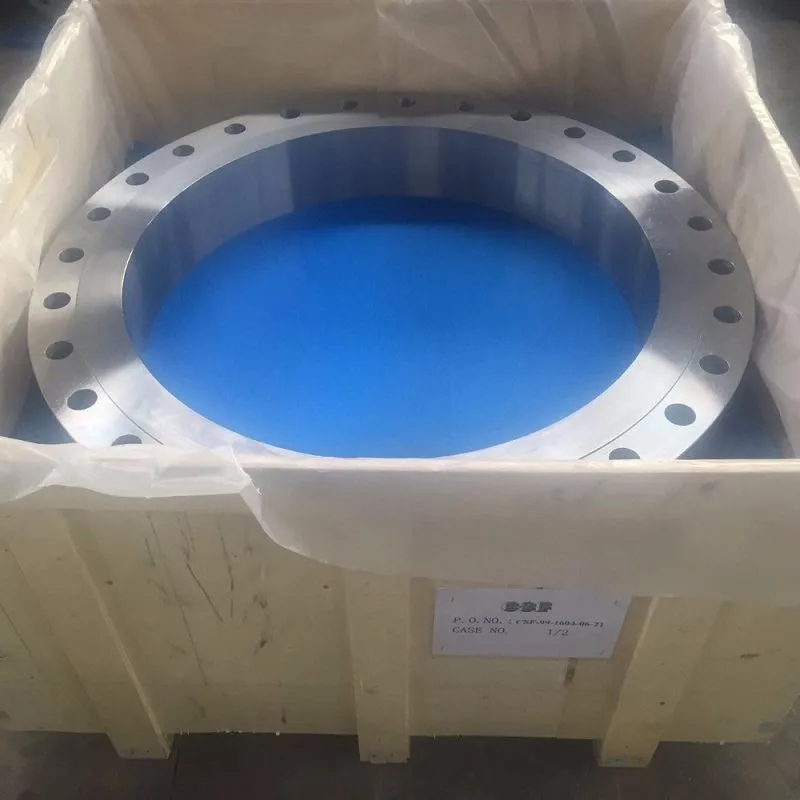
This company is based in Dingxiang County, Shanxi Province, one of the key industrial centers of forging and press production in China. Unlike typical resellers, Shanxi Hongkai Forging operates three of its own production facilities, providing a complete vertically integrated cycle from primary forging and heat treatment to finishing machining and packaging. This is critical to understanding where price and quality come from.
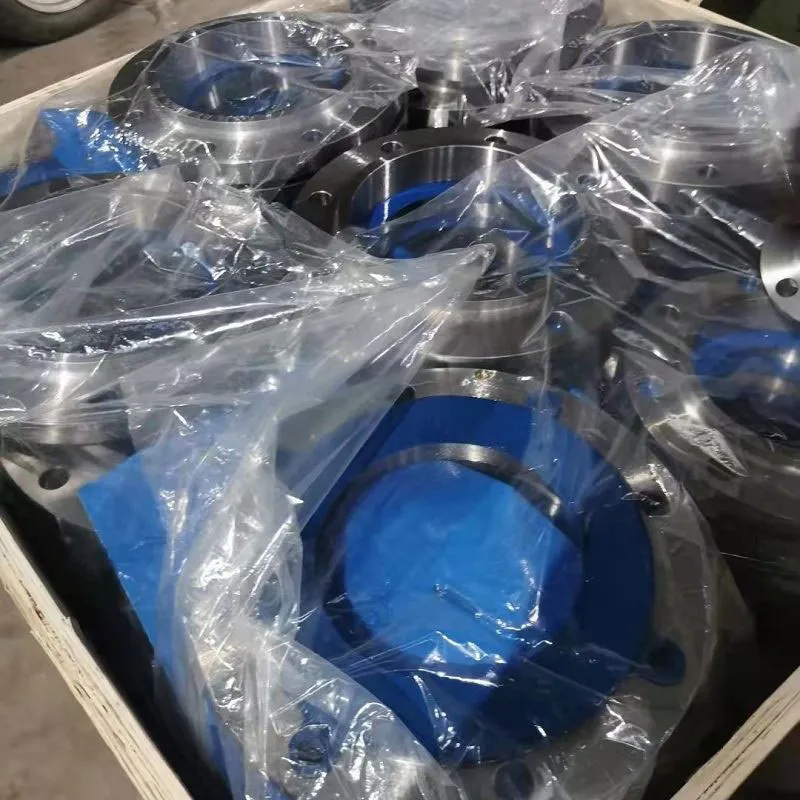
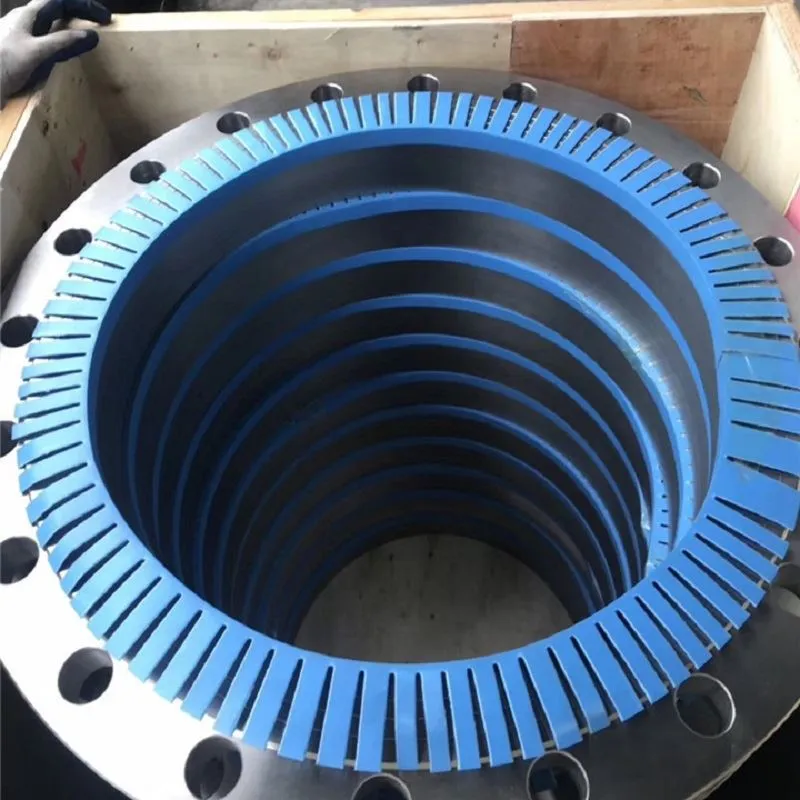
The company's product range covers six main types of forged flanges (overhead, butt weld, socket weld, threaded, loose ring and blind), manufactured strictly according to international standards DIN, ANSI B16.5, ASME, as well as GOST. The range of nominal diameters from DN15 to DN4000 allows us to meet the needs of both compact units and main pipelines. Having their own export rights and a multi-level quality control system (including physical and chemical tests at each stage) makes such manufacturers a reliable alternative when the Russian market is experiencing a shortage of certain items or when the project requires specific executions (for example, pressure classes 1500–2500).
The problem of cheap Chinese kits in 2026 remains the same - a lottery with the quality of steel. A batch may be excellent, but the next one may have a violation of the hardening technology. With a proven full-cycle plant such as Shanxi Hongkai, the situation is more transparent: you are working with a manufacturer who is responsible for each metal melt and product geometry, and is not simply reselling a container from Guangzhou.
I recommend the following strategy: for critical components (gas, high steam, chemicals), priority is given to the Russian Federation and proven brands with a history. However, for minor lines, projects with strict budget requirements or when it is necessary to purchase large flanges (over DN1000), where local production is limited, it is advisable to consider direct contracts with technologically advanced Chinese factories that have their own control cycle. The main condition is mandatory incoming control in your laboratory or the requirement of spectral analysis of each heat upon acceptance.
Geography of production: where to look for a real plant
Don’t believe sites that say “Production in Moscow.” There are no full-cycle metallurgical plants producing flanges in Moscow. There are sales offices there. Real production is concentrated in other regions:
- Ural (Chelyabinsk, Ekaterinburg, Pervouralsk):A classic of heavy industry. Here they do it reliably, roughly, but for centuries. An excellent choice for oil and gas.
- Volga region (Tatarstan, Samara):High technology, good automation. Flanges for the chemical and food industry (stainless steel) are often made here.
- South of Russia (Krasnodar, Rostov):Developing cluster. Well suited for construction and housing and communal services; logistics to the south are cheaper.
- Central Russia (Tula, Vladimir):Many small industries. Suitable for non-standard orders and small batches, but strict quality control is required.
- China (Shanxi Province, Dingxiang County):The largest forging center. There are powerful full-cycle factories here (including Shanxi Hongkai Forging), capable of producing flanges of any diameter and pressure class according to world standards. The optimal option for large wholesale quantities and complex engineering tasks that require a balance of price and certified quality.
Knowing the geography, you can roughly estimate logistics costs. Ordering flanges from Chelyabinsk to Vladivostok by sea may be cheaper than transporting them by truck across the whole country. Likewise, direct delivery from a specialized factory in China is often more profitable than purchasing from a local reseller, even taking into account customs procedures.
Practical guide: how to place an order and receive goods
Let's say you have chosen a supplier - be it a Russian plant in Tatarstan or a large manufacturer like Shanxi Hongkai Forging. Are you readyкупить монтажный комплект фланцевых соединений 2026: цена от заводаyou're happy with it. What's next? Mistakes most often occur at the acceptance stage.
First rule: never sign the delivery note without opening the package. Yes, the driver will rush, say that “there is no time.” Find time. Rust, missing washers, threads clogged with dirt - all this will be revealed later, and your claim will not be accepted, citing “salesmanship upon delivery.”
Second rule: check the labeling. Each flange must be clearly marked: diameter, pressure, steel grade, heat number, plant logo. If the marking is applied with paint or is not there at all, it is a defect or a fake. In 2026, standards require laser engraving or deep stamping.
Third rule: selection of fasteners. There is no need to measure each bolt with a caliper. Take random 5-10 pieces from the batch. Try tightening the nut by hand. It should go easily to the end of the thread and then tighten firmly. If the nut is tight from the very beginning, the thread is broken. If the bolt is too short or long, this is a malfunction.
Installation kit acceptance checklist
- Correspondence of the number of places to the quantity in the invoice.
- Availability of a quality passport for each item (the certificate can be general, the passport can be for a batch).
- No visible corrosion (light deposits, which can be removed with a rag, are allowed, but no rust).
- Integrity of packaging (wooden boxes, stretch film). Wet packaging is a sign of violation of transportation conditions.
- Contents: flange + fasteners + gasket + washers. Often they forget to put the gaskets, citing a “separate order”.
If you find a discrepancy, take a photo. Take a general photo, a photo of the markings, a close-up photo of the defect. Write the act in two copies. This is the only way you can get your money back or request a replacement.
Future of the market: what to expect in 2027?
Making forecasts is a thankless task, but trends are already visible. The market for installation kits is moving towards standardization and smart metering. Factories are starting to implement QR codes on every product. I scanned the code and got the full history: from steel smelting to shipment. This will help fight counterfeiting.
Prices for stainless flanges are also expected to rise due to a shortage of nickel-containing steel scrap. Если у вас есть возможность закупить нержавейку впрок в конце 2026 года — делайте это. Цены в 2027 могут неприятно удивить.
Еще один тренд — сервис. Заводы понимают, что просто продать железо мало. Они начинают предлагать услуги шеф-монтажа, расчет усилий затяжки и даже аренду гидравлических гайковертов. It's convenient. Лучше взять инструмент у производителя фланцев, который гарантирует, что он откалиброван под их продукцию, чем мучиться своим старым ключом.
В заключение хочу сказать: не гонитесь за самой низкой ценой в поиске запросакупить монтажный комплект фланцевых соединений 2026: цена от завода. Дешевый фланец — это бомба замедленного действия в вашей системе. Ищите баланс между ценой, репутацией производителя и качеством сервиса. Будь то надежный российский поставщик или технологичный зарубежный партнер с полным циклом производства, главное — чтобы компания не боялась показать свое производство, готова была ответить на неудобные вопросы и несла ответственность за свой товар. В промышленности скупой платит дважды, а иногда — здоровьем людей и экологией региона.
Sources of information and regulatory framework
- GOST 33259-2015 Flanges of fittings, connecting parts and pipelines. Конструкция, размеры и общие технические требования
- ГОСТ 33260-2015 Арматура трубопроводная. Фланцевые соединения. Specifications
- Обзор рынка трубной арматуры и фланцевых соединений в РФ (отчет АЛМЕТА, 2025)
- Минпромторг России: Итоги развития металлообработки и планы на 2026 год
- Динамика цен на черный металлопрокат и крепеж в первом полугодии 2026 года (MetalInfo)