-
-
Phone
+86-13623462298




Global wind flange market grows: root flanges are key to offshore wind farm expansion
2026-02-25
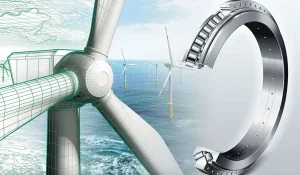
The global wind flange market is showing stable positive dynamics against the backdrop of steady growth in investment in renewable energy. According to the forecast of the analytical companyBusiness Research Insights, by 2026, the global wind energy flange market could reach US$780 million.
The main driver of growth is the active development of offshore wind energy, especially projects in deep-water areas and using ultra-high-power turbines.
Growth of offshore wind farms and new requirements for flanges
Modern offshore wind farms are moving to turbines of 12–18 MW and above. An increase in the diameter of the tower and the height of the structure leads to a multiple increase in loads on the connecting elements.
A particularly critical component isroot flange- an element connecting the wind turbine tower to the foundation (monopile, jacket or gravity foundation).
The following requirements apply to it:
-
high load-bearing capacity under static and dynamic loads
-
resistance to fatigue failure
-
corrosion resistance in marine environments
-
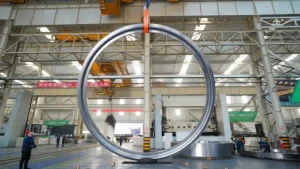
precise geometry for large diameters (up to 6–10 meters or more)
In an aggressive salty environment, the service life of the flange must correspond to the life cycle of the project - 20–30 years without loss of strength and tightness of the connection.
Large forged flanges are the basis for turbine reliability
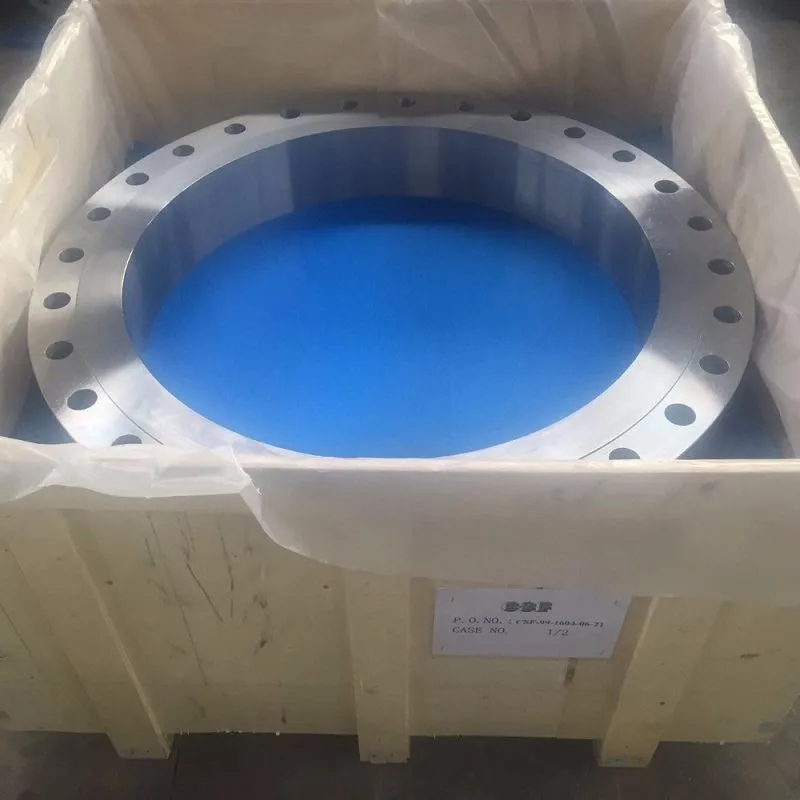
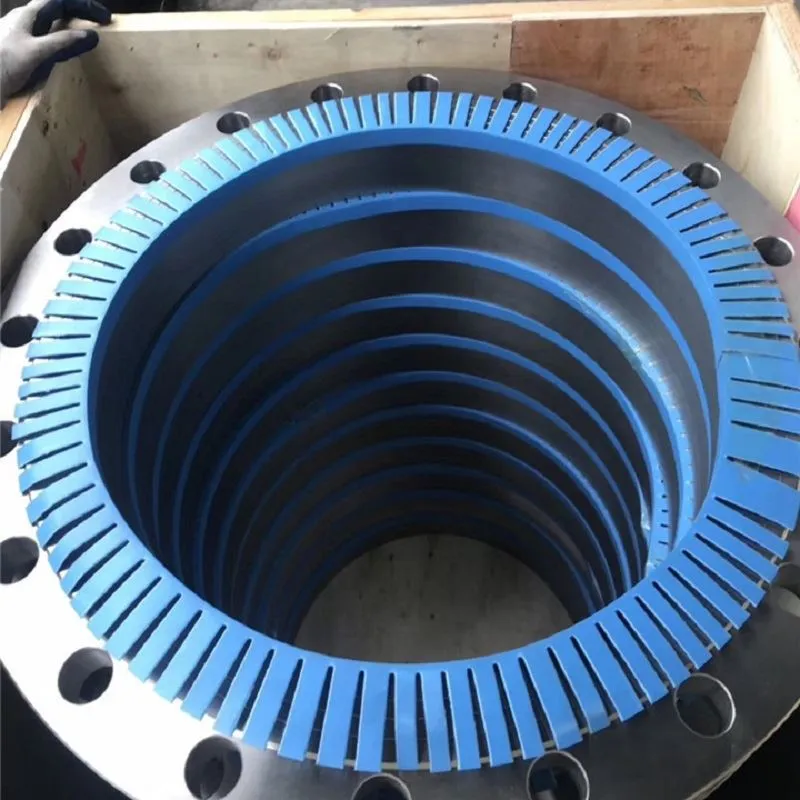
As the unit power of turbines increases, the diameter of the root flanges also increases. Unlike standard pipe flanges, wind energy flanges are solid annular structures made by hot forging and subsequent machining.
Advantages of forged flanges:
-
homogeneous metal structure
-
high impact strength
-
minimizing internal defects
-
high precision bolt hole machining
-
possibility of producing extra-large diameter products
For offshore projects, high-strength structural steels (S355, S420, S460 and higher) with additional anti-corrosion protection - hot-dip galvanizing or multi-layer coating - are most often used.
Deepwater projects as a driver of market growth
The development of deepwater offshore wind farms in Europe and Asia is driving demand for heavy and heavy-duty flanges. Increasing the installation depth increases the impact:
-
wave load
-
wind fluctuations
-
torque
-
fatigue cycles
This makes the root flange not just a connecting element, butthe key power unit of the entire structure.
Market prospects until 2026
Further developments in offshore wind, localization of production and a shift to more powerful turbines are expected to continue to drive the market. Manufacturers capable of producing large forged flanges with high precision and full quality control (NDT, UT, MT, mechanical testing) will gain a competitive advantage.
Suppliers offering:
-
individual design
-
production according to customer drawings
-
control of chemical composition and mechanical properties
-
full batch traceability
Conclusion
The global wind energy flanges market is entering a phase of sustained growth. With the expansion of offshore projects and the transition to megawatt-class turbines, root flanges are becoming a strategically important design element.
Companies investing in large forging and precision machining technologies will play a key role in the development of the global wind energy industry.