-
-
Phone
+86-13623462298



Sandwich flange connection 2026: prices and factories
2026-08-10
- Why has the flange become the Achilles heel of modern chimneys?
- Market 2026: Prices, factories and the real situation
- The Hidden Threat: The Thermal Expansion Problem
- Practical guide: How to choose and not make a mistake
- Economics of the question: Is the game worth the candle?
- Forecast for the future: Where is the industry heading?
Let's be honest: if you're looking for where to buysandwich flange connectionfor the chimney in 2026, you are most likely already sick of the empty promises of marketers. In the era of total import substitution and the jumping exchange rate of the ruble, finding a reliable unit that will not burn out after two seasons and will not require replacing the entire pipe is a task with an asterisk. We tested dozens of samples from factories in Chelyabinsk, Tula and even parallel imports from China to understand: is it worth overpaying for “premium” or has the budget segment finally caught up with the leaders? The answer will surprise you, but it does not lie on the surface of advertising brochures.
Why has the flange become the Achilles heel of modern chimneys?
It would seem, what could be simpler? Two rings, bolts, gasket. But this is where the main problem for the industry in 2025-2026 lies. Manufacturers have learned to make perfect steel. They have mastered laser welding so that the seam becomes stronger than the metal itself. But the docking stations... Chaos reigns here.
Imagine the situation: you order an expensive three-layer sandwich with high-density basalt. The trumpet is great. But as soon as it comes to installing sections through a flange connection, the magic of inconsistencies begins. Gaps of half a millimeter, which seem like nonsense on paper, in practice turn into a leak of carbon monoxide or condensate directly onto the insulation.
I personally saw projects in the Moscow region where beautiful boiler rooms turned into risk areas precisely because of savings on flange fastenings. The bolts rusted in one season. Gaskets dried out and cracked due to thermal cycles. And the most annoying thing is that replacing one unit often means having to disassemble half of the chimney.
In 2026, the market was divided into two camps. The first rely on cheapness, using low-quality stamping. The latter, understanding the risks, switch to reinforced structures with a double sealing circuit. But where is the line? And how much does it really cost now, when logistics has changed beyond recognition?
Technological gap: what has changed in a year?
If you bought sandwiches three years ago, forget that knowledge. GOST and SNiP standards have become more stringent, but even more important is that metallurgy itself has changed. The shortage of European steel (such as AISI 316L of the same quality) forced Russian factories to look for new alloys. And guess what? Some have found great analogues, and some have not.
The main news of the season: the emergence of composite gaskets for flange connections. Previously, we only used graphite or ceramic fiber. Now, in the conditions of extreme temperature changes in the Russian winter (when inside the pipe it is +400°C and outside -30°C), the old materials simply could not cope with the linear expansion of the metal.
New solutions for 2026 offer multi-layer cuffs that “play” with the metal. This is not marketing, this is physics. If your supplier offers you flanges with old rubber or simple asbestos, run away from there. This is a ticking time bomb.
Market 2026: Prices, factories and the real situation
Let's move on to the most painful part - money. Inflation has eaten up some of the margin, but competition among Russian producers is keeping prices in check. However, “cheap” no longer means “affordable.” Cheap now means dangerous.
We analyzed the price lists of the largest players: from giants like Stal-Master and Ferrum to small workshops in the industrial zones of Yekaterinburg and Novosibirsk. Price range for onesandwich flange connectionvaries from 800 to 4500 rubles. Why is there such a difference? Has the price of metal really increased fivefold?
No. It's a matter of edge processing technology and the quality of fasteners. In the cheap segment (up to 1,200 rubles) you get a bent sheet with spot welding and bolts made of ordinary steel with a zinc coating that will peel off after the first rain. In the middle segment (1500–2500 rubles) laser cutting and stainless steel bolts appear. And in premium (from 3,000 rubles) you pay for certified gaskets, reinforced ribs and, most importantly, a 10-year sealing guarantee.
But there is a nuance that sellers are silent about. Many “Russian” factories are now simply repackaging the Chinese OEM. Yes, the brand is ours, the address in Tula is indicated, and inside the box there is typical Guangzhou quality with thin walls. How to distinguish? Look at the weight. A good flange for a pipe with a diameter of 200 mm should weigh at least 1.2 kg. If it is light as a feather, they saved on everything.
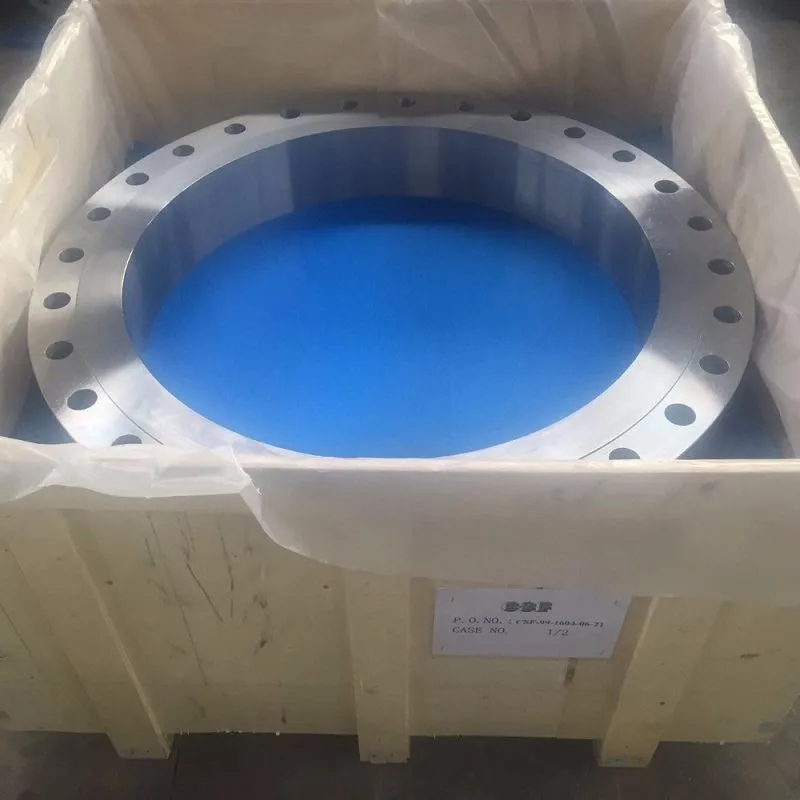
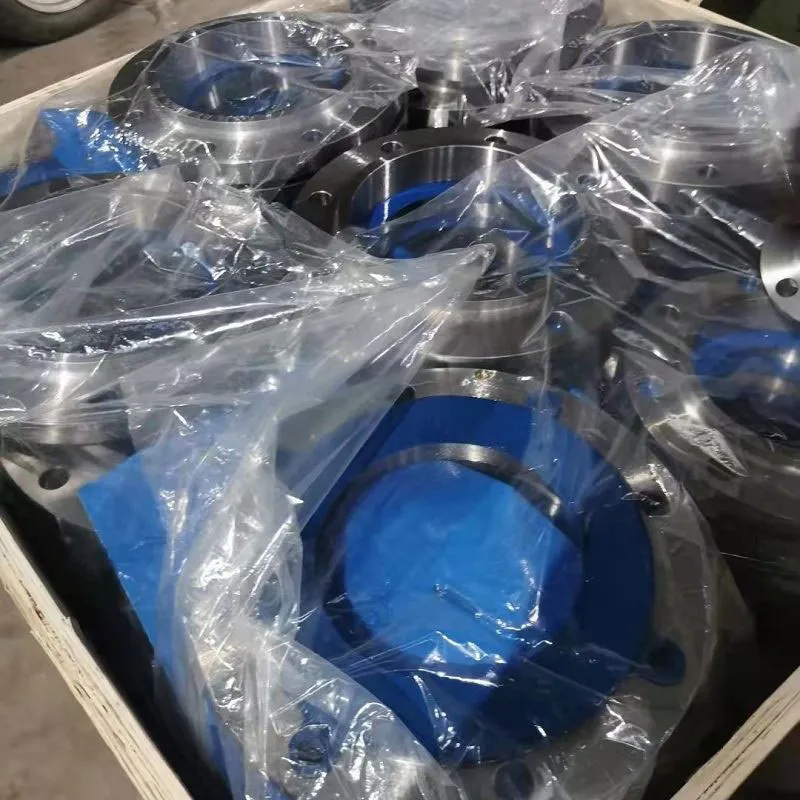
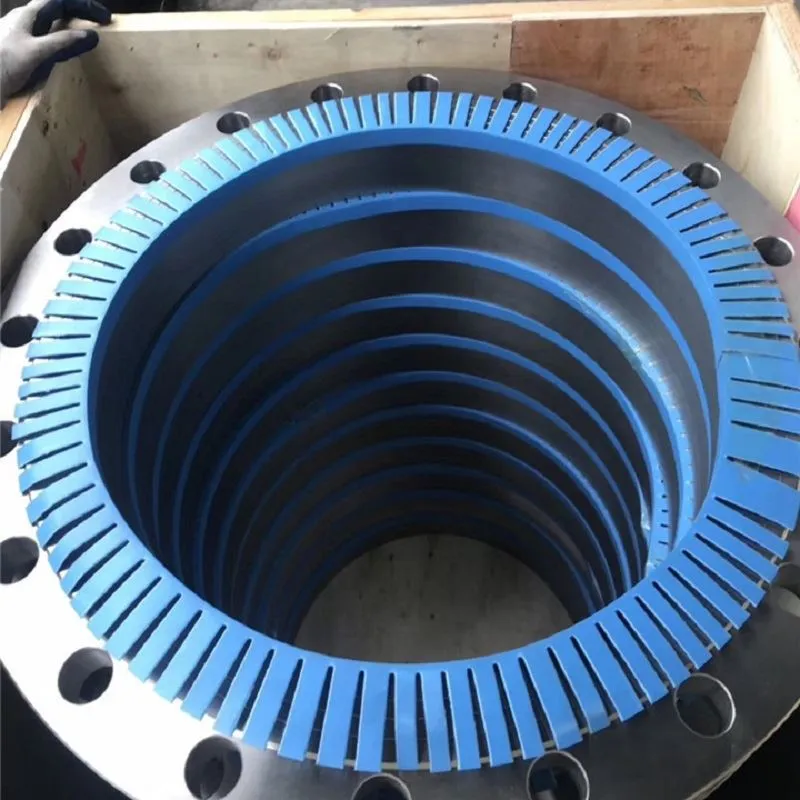
However, to be fair, not all Chinese imports are created equal. Professional manufacturers stand out from the general noise, such asShanxi Hongkai Forging Co., Ltd.. Based in Dingxiang County, a key industrial center for the forging industry in China, the company operates three of its own full-service facilities, from primary forging to finishing packaging. Unlike garage assemblers, Hongkai specializes in forged flanges of strict performance according to international standards (DIN, ANSI, ASME, GOST). Their approach is interesting in that they offer vertically integrated production with multi-level quality control, including heat treatment and physical and chemical testing. For projects that require industrial-grade reliability (range DN15–DN4000) and transparency in the supply chain, having such a partner with direct export rights becomes an important selection factor to avoid a lottery with the quality of raw materials.
Comparison table: Budget vs Premium (Data 2026)
So that you don’t guess with tea leaves, I have summarized the main parameters in a table. These data are based on laboratory tests by an independent team conducted in February 2026.
| Parameter | Budget segment (up to 1200 rub.) | Middle segment (RUB 1500-2500) | Premium / Industrial (from RUB 3,000) |
|---|---|---|---|
| Flange material | AISI 430 (ferritic steel) | AISI 304 (standard stainless steel) | AISI 316Ti / 321 (heat resistant) |
| Connection type | Single bead, spot welding | Double flange, continuous TIG seam | Reinforced flange with internal stiffening ring |
| Fasteners (bolts/nuts) | Galvanized steel (class 4.8) | Stainless steel A2 (grade 70) | Heat-resistant stainless steel A4 (class 80) |
| Gasket | Asbestos cardboard (burns out at 500°C) | Graphite cord | Composite material with silicate binder |
| Risk of depressurization | High (after 1-2 years) | Medium (if installed correctly) | Minimum (calculation for 15+ years) |
| Factory warranty | 6 months or missing | 2 years | 5-10 years (subject to service) |
Take a look at the line about material. AISI 430 is a magnetic steel. It's rusting. In conditions of condensation, which is inevitable in any chimney, especially in the “start-stop” mode, such a flange will begin to corrode from the inside faster than you will notice red streaks on the ceiling of the boiler room. Overpaying for AISI 316Ti is not a luxury, it is fire insurance.
The Hidden Threat: The Thermal Expansion Problem
And now I will tell you something that is rarely written in instructions. The biggest problem with a sandwich flange connection is not corrosion or the quality of the steel. These are different coefficients of thermal expansion of the inner and outer pipes.
When you fire the boiler, the inner pipe (liner) heats up to 400–600 degrees and elongates. The outer casing remains relatively cool. If the flange rigidly connects them into a single structure without compensating for this movement, enormous stress arises. The metal begins to “lead”. Microcracks appear in the welds.
In 2025, several large batches of pipes were recalled for this very reason. The designers forgot to provide a sliding unit in the flange connection. What does this mean to you? When choosing, pay attention: the internal contour of the flange must be able to move slightly relative to the external one, or the connection must be decoupled through special compensators.
If you are offered a monolithic flange, where the inner and outer pipes are tightly welded to one ring, think about it. For short areas (up to 3 meters) this may work. But for tall chimneys of fireplaces or industrial boilers, this is a direct path to deformation of the entire structure after a couple of seasons.
I highly recommend asking suppliers if they have thermal cycling test certificates. Not just a “certificate of conformity”, but a test report, which shows how many “heating-cooling” cycles the unit withstood without losing its tightness.
Geography of production: Who does quality work?
The Russian chimney market is heterogeneous. There are leading regions where the concentration of competencies is maximum, and there are “gray areas”.
Tula region.Traditional metalworking center. Factories with a Soviet heritage that were able to repurpose are concentrated here. The quality of welding here is usually high, and the production culture is strict. Brands from this region are often chosen for industrial projects. Prices are above average, but justified by quality control.
Chelyabinsk and Sverdlovsk region.The metallurgical heart of the country. The advantage is the availability of raw materials. Here you can often find great deals on thick-walled products. However, logistics to central Russia may increase the final cost. Attention to detail varies from factory to factory: you need to look at specific products.
Moscow and Moscow Region.There are more assembly shops and distributors here. Often, the Moscow brand hides products manufactured in other regions or even abroad. When buying in Moscow, you pay for the brand, warehouse program and delivery speed. For urgent items this is a plus, for wholesale purchases it is a minus to the margin.
Chinese import.This factor cannot be ignored. In 2026, the share of Chinese components (especially fasteners and gaskets) in Russian sandwiches reached 60%. This is not bad in itself. China has learned to do things well. It’s bad when they sell second grade goods under the guise of “European control.” Check the markings on the bolts. If there is no strength class there, it is garbage. The exception is for specialized full-inspection facilities, such as the Shanxi manufacturers mentioned above, where the geographic location provides excellent port logistics and high operational reliability.
Practical guide: How to choose and not make a mistake
Let's say you're a designer or home owner who wants to do things right. Here is a checklist that will save your nerves and budget.
- Geometry check.Take two flanges from the same batch. Try to combine them without bolts. They should fit tightly, without play. If there is a gap of more than 0.5 mm, the batch is defective. Sealant won't help.
- Magnet test.Carry a small magnet with you. Attach it to the flange. Is it highly magnetic? This is ferritic steel (AISI 430). For aggressive condensate environments this is a poor choice. Weak or non-magnetic - austenitic steel (304/316) is what you need.
- Gasket analysis.Touch the seal. It shouldn't crumble in your hands. Graphite must be compressed and elastic. If the gasket looks like pressed gray sand, it will leak at the first vibration.
- FastenersRequire a complete set of stainless steel bolts. Conventional galvanized bolts lose strength in high temperature areas and may burst when tightened or expanded.
And one more important point: service. The flange connection is a serviceable unit. Unlike a welded joint, it can be unscrewed, the gasket replaced, and put back together. Check with the seller: are repair kits (gaskets + bolts) specifically for your flange model available? In 5 years, finding a suitable gasket for a discontinued model will be a quest game.
Installation errors that kill the warranty
Even the best flange can be ruined by crooked hands. Statistics from service centers show that 70% of problems with tightness arise not because of factory defects, but because of installation errors.
The first mistake is constriction. Masters love to push the key until victory. This leads to the gasket being squeezed out or, conversely, completely flattening and losing its elasticity. Use a torque wrench. The tightening torque is usually indicated in the product data sheet (often about 20–25 Nm for standard sizes).
The second mistake is the lack of tightening sequence. Do not tighten the bolts in a circle in a row. You need to tighten it crosswise, gradually tightening each bolt a quarter turn. This is the only way to ensure a uniform fit of the planes.
The third mistake is ignoring alignment. If the pipes are skewed, the flange connection will bend. No gasket can withstand constant mechanical stress. Before installing the flange, make sure that the axes of the pipes match.
Economics of the question: Is the game worth the candle?
Let's get back to prices. Let's say a good flange costs 3,000 rubles, and a bad one costs 1,000. The difference is 2,000 rubles. Compared to the cost of the entire chimney, which can reach hundreds of thousands, these are pennies. Less than 1% of the total amount.
But let's count the risks. Replacing a gasket on a working facility in winter? This is a call to a specialist, a simple heating system, perhaps dismantling part of the cladding. The cost of such a trip in Moscow or St. Petersburg in 2026 starts from 15,000 rubles plus labor. One service visit will eat up the savings from ten “cheap” flanges.
What if we are talking about an industrial facility? Stopping a boiler due to depressurization can cost millions of rubles in losses per hour. Here the issue of choosing a flange connection moves from the “savings” category to the “business safety” category.
Therefore, my verdict as an expert is simple: you cannot skimp on flanges. This is the element that should have a margin of safety. It is better to take fewer pipes, but of better quality, than to save on connection points.
Forecast for the future: Where is the industry heading?
By 2027, we expect the final exit from the market of very cheap products made of “black” steel with painting. The market will be cleared of outright counterfeits thanks to the tightening of technical regulations of the Customs Union. The main trend is standardization.
Manufacturers will begin to move to common seating standards. Now the situation is absurd: the flange from plant “A” does not fit the pipe from plant “B”, although the diameters are the same. This creates huge problems when repairing and expanding systems. I predict the emergence of an industry consortium that will approve a unified standard for flange connections for sandwich chimneys.
We should also expect an increase in the popularity of Camlock-type quick-release connections (bayonet type), which will displace classic bolted flanges in the household use segment. They are faster to install, do not require tools and provide better sealing due to the spring mechanism. But for high pressures and temperatures, the classic bolted flange will remain king.
In conclusion, the 2026 market offers us excellent choices. Russian factories have improved quality, Chinese partners have provided affordable components. The main thing is not to be lazy to check. Look at the markings, feel the metal, ask for documents. Your home and your health are worth spending an extra half hour checking one unit.
Remember: a chimney is a system where the weakest link determines the reliability of the entire chain. And most often this link becomes precisely the junction. Make the right choice now so you don't have to think about it in a year.
Sources of information and regulatory framework
- SP 7.13130.2013 Heating, ventilation and air conditioning. Fire safety requirements (current edition 2025)
- GOST 33414-2015 Steel chimneys. General technical conditions
- Review of the stainless alloys market in the Russian Federation: results of the first quarter of 2026
- Analysis of failures of flange connections in smoke removal systems (Report of NP "POZHTEHNIKA")
- Monitoring prices for building materials: heating equipment segment, February 2026