-
-
Phone
+86-13623462298



Buy butt weld flange DN50: prices 2026 - Factory
2026-07-29
- Why the flange market in 2026 is a minefield for an engineer
- Price analytics 2026: how much does reality cost?
- Technical nuances that sellers are silent about
- Where to look for a reliable supplier: security checklist
- Installation errors that kill even the best flanges
- Summary: how not to lose money and nerves
I'll tell you straight: if you are now looking for wherebuy butt weld flange DN50at reasonable prices for 2026, do not be fooled by the first lines of search results with beautiful pictures and promises of a “warehouse in Moscow.” The market has changed beyond recognition. What was considered a quality standard two years ago - European steel and ideal geometry - has now either disappeared from the shelves or is sold under the guise of the original for triple the price, being an outright counterfeit from third countries. I have spent the last three months visiting real production facilities from the Urals to the Volga region, and what I saw makes me rewrite all the old recommendations. In this article we will not retell GOSTs that no one reads. We will talk about why your pipeline may leak after six months, even if the certificate paper looks perfect, and how much a high-quality unit should actually cost in the new logistics reality.
Why the flange market in 2026 is a minefield for an engineer
You may have noticed that delivery times that used to be measured in days are now stretching out to weeks. But the problem is not only logistics. The main problem of 2026 is “gray” metallurgy. Factories that previously exported to Europe are now forced to seek sales within the country or in the East. It would seem great: more goods for us. But no. To keep prices competitive with rising energy and equipment costs, many manufacturers have begun to play with the chemical composition of steel.
The DN50 butt weld flange is a seemingly simple part. Well, a ring with a hole and a neck. What could go wrong here? It is a mistake to think that everything is simple. It is on these “irresponsible” diameters, as sales managers often call them, that the main savings occur. Steel grade 20 or 09G2S, which should comply with GOST 33259-2015, in reality often turns out to be remelted with unknown additives.
Imagine the situation: you accept an object, the welder welds the seam, visual inspection passes, ultrasonic inspection also seems to be clean. And a year later, at the first serious water hammer or thermal expansion, the seam cracks. Why? Because the weldability of the material was impaired at the smelting stage. The carbon equivalent has gone into the risk zone. And the worst thing is: you won't know about it until it's too late.
I personally saw batches where the wall thickness of the flange neck was one and a half millimeters. For Du50 this is critical. When butt welding, such a run-up leads to uneven penetration. Somewhere there is a draft, somewhere it is fused with the mountain. And no amount of the most expensive electrode will fix this. So when you're looking for wherebuy butt weld flange DN50, your first question to the supplier should not be about price, but about the possibility of independent spectral examination of each batch. If the seller hesitates, run.
The “import substitution” trap: what are they really offering us instead of Europe?
Let's be honest: German and Italian flanges of class PN16 and PN25, which we are used to installing on critical components, have practically disappeared from legal circulation. Those that remain are worth space. They are transported as parallel imports through Turkey or Kazakhstan, marking up 200-300%. Is it worth overpaying? Not always.
Russian factories have learned to do well. The key word is “not bad.” Market leaders, such as enterprises in the Chelyabinsk region or Tatarstan, keep their mark. They have modern CNC machines and monitor the heat treatment. But there are also “garage” workshops that bought an old lathe and stamp products, calling it “the Russian analogue of the DIN flange.”
What's the main difference? In quality control. The European standard implied that defects do not leave the factory in principle. Our principle often works: “if the client doesn’t return it, it means it’s over.” It's cynical, but it's a fact. In 2026, the situation improved slightly due to tougher requirements from large oil and gas customers, who dictate conditions to small players. But in the general industry and housing and communal services segment, the chaos continues.
However, the search for a reliable partner is not limited only to the domestic market. The globalization of supply chains requires attention to proven international manufacturers who can guarantee quality even in the face of sanctions and logistics gaps. A striking example of this approach isShanxi Hongkai Forging Co., Ltd.is a professional forged flange manufacturer based in Dingxiang County, Shanxi Province, China, one of the key industrial centers of forging and press production. Unlike many resellers, this company operates three of its own production sites, covering the full cycle: from primary forging and heat treatment to finishing machining and packaging. Having the right to independently import and export provides direct and transparent channels of interaction, bypassing unnecessary intermediaries.
The Shanxi Hongkai Forging range includes all six major types of forged flanges, including our critical butt weld flanges, manufactured strictly to international standards DIN, ANSI B16.5, ASME, as well as GOST specifications. The range of manufactured products covers nominal diameters from DN15 to DN4000, which allows us to meet the needs of both compact units and large-scale infrastructure projects. A multi-level quality control system implemented at all stages - from input raw materials to checking the geometry of the finished product - guarantees stability of characteristics, which is especially important in an era when “gray” metal has flooded the market. The company's products are already supplied to Russia and the CIS countries, proving their reliability in the oil and gas and energy industries.
The situation with anti-corrosion coating is especially alarming. The DN50 flange is often installed on open overpasses or in damp basements. Factory galvanizing or high-quality paint is a must. But many suppliers save at this stage by sending the goods simply with a primer, which is washed off by the first rain. You get a rusty part even before installation. And then prove that it is not your warehouse that is stored in the open air.
Price analytics 2026: how much does reality cost?
Prices for rolled metal products stabilized at the beginning of 2026 after the shock of previous years, but cost inflation has not gone away. Let's look at what the price forbutt weld flange DN50and where you can be deceived.
The average market price for a high-quality DN50 flange made of steel 20 (version 1, row 2) now ranges from 450 to 750 rubles per piece for wholesale purchases. If you are offered 250 rubles, this is a reason to be wary. Most likely it is:
- Thin-walled workpiece not suitable for PN16 pressure.
- Steel of unknown origin (re-grade).
- Defective products with defects in casting or rolling, which were attempted to be corrected mechanically.
If we are talking about stainless flanges (12Х18Н10Т), then the spread is even greater. From 2500 to 4500 rubles. Here it is important to look not only at the grade of steel, but also at the quality of surface treatment. Stainless steel must be etched or ground. A black surface with scale is a sign that the flange was welded from a sheet using a handicraft method, and not forged or sharpened from a wheel using technology.
It is also worth considering the logistics component. Delivery from the production region (for example, from the Urals or directly from international partners, such as factories in Shanxi province) to central Russia can add up to 15-20% to the cost of the shipment. Many Moscow warehouses operate as resellers: they take goods from the factory, put their own markup of 30% and sell them to you “from a warehouse in Moscow.” Sometimes it makes sense to order directly from the factory, even including shipping, especially if the volume exceeds 100 pieces.
Table: Comparative analysis of offers on the Russian market (2026)
| Parameter | Premium segment (Russian leading factories and proven import partners) | Middle segment (Regional workshops) | Economy / "Grey" import |
|---|---|---|---|
| Material | Certified steel 20, 09G2S with quality certificate | Steel 20, chemical variations are possible. composition | Re-grade, analogues of St3, without complete chemicals. analysis |
| Geometry | Strict compliance with GOST 33259 / DIN / ANSI, tolerances are within normal limits | Permissible deviations in neck thickness | Frequent misalignment, plane runout |
| Weld seam (preparation) | Perfect weld bevel, clean edge | Additional cleaning required before installation | Rough processing, risk of lack of penetration |
| Coverage | Primer-enamel for metal or hot-dip galvanizing | Regular oil paint | Missing or traces of rust |
| Documentation | Quality certificate, certificate of conformity, test reports | Copy of the certificate, passport form MX-4 | Only invoice, certificates “in words” |
| Price (guideline, rub.) | 650 – 800 | 450 – 600 | 250 – 400 |
As you can see, saving 200 rubles per unit can result in replacing the entire unit in a year. And the cost of replacement includes not only a new flange, but also the work of a welder, stopping the process, and draining the environment. Risk for such a sum? Doubtful.
Technical nuances that sellers are silent about
When do you come to buybutt weld flange DN50, the manager will ask you: “What is your blood pressure? 16 or 25 atmospheres? This is a valid question, but not a sufficient one. There are details that are more important than the nominal pressure.
Firstly, the flange design. For butt welds, version 1 (with a projection) or version 3 (under the lens) is critical. The most commonly used version is 1. But check the height of the protrusion. On cheap flanges it can be underestimated. As a result, when the bolts are tightened, the gasket is not sealed in the desired area, but is squeezed out. Hello fistula.
Secondly, the diameter of the hole. GOST allows two rows: main and additional. For DN50 this is usually 57 mm or 60 mm for the pipe. The mistake here is fatal. If you buy a flange for a 57 mm pipe, but you have a 60 mm pipe (or vice versa), you will have to bore the flange or change the pipe. On site it turns into a nightmare. Always measure the outside diameter of your pipe before ordering. Do not rely on the markings on the pipe itself - they are often erased or applied incorrectly.
And one more thing that sincerely surprises me. Bolted connections. The DN50 flange requires a certain number of bolts and nuts. Kits are often sold separately. And this is where the fun begins. They may sell you studs made from regular “four” (St3) instead of high-strength steel 35 or 40X. When vibration occurs, such bolts stretch, the connection weakens, and leaks begin. Require a bolt strength class of at least 5.8, and preferably 8.8 for critical components.
Compatibility problem with imported equipment
What to do if you need to connect a Russian pipe with an imported pump or valve? This is where dancing with a tambourine begins. European standards (DIN, EN) and Russian (GOST) have differences in the diameter of bolt holes and the distance between them (PCD - diameter of the circle of the centers of the holes).
For DN50 PN16 according to GOST, the center-to-center distance of the bolts is 125 mm, the diameter of the holes is 18 mm (4 holes). According to DIN 2501, these parameters may be the same, but they may differ by a couple of millimeters depending on the year of issue of the standard and the country of the equipment manufacturer.
Experienced advice: never buy flanges “blindly” for joining with imported equipment. Take a sample of the old flange or make an accurate drawing of the pump seat. It's better to spend a day measuring than a week redoing the unit. Some factories, including large international players like Shanxi Hongkai Forging, now offer the service of manufacturing flanges according to individual drawings in full compliance with the required standards (ASME, EN, JIS, etc.). Yes, it may take a little more time on logistics, but sometimes this is the only way to get a product with ideal geometry for a specific imported unit.
Where to look for a reliable supplier: security checklist
The Internet is full of advertisements. “Flanges from the manufacturer”, “Warehouse in Moscow”, “Shipment on the day of payment”. How to separate the wheat from the chaff? Here is my algorithm of actions that saved me from several unsuccessful trades last year.
- Checking the TIN and company history.Go to counterparty verification services. If the company was registered a month ago or has a lot of lawsuits for non-delivery of goods, then no. We need players with at least 3-5 years of experience. For foreign suppliers, check for valid export licenses and industry reputation.
- Request a complete package of documents BEFORE payment.Ask to send a scan of the certificate of conformity for exactly the batch that is in the warehouse (or is being prepared for shipment). Please note the date of issue and test report number. If the certificate is “general” for three years in advance without reference to batches, this is a red flag.
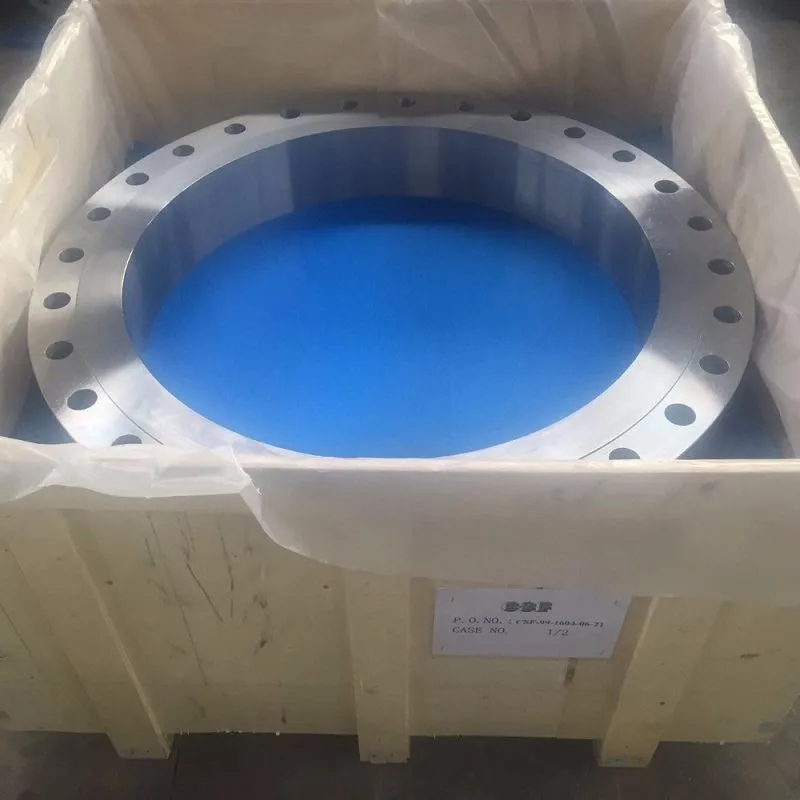
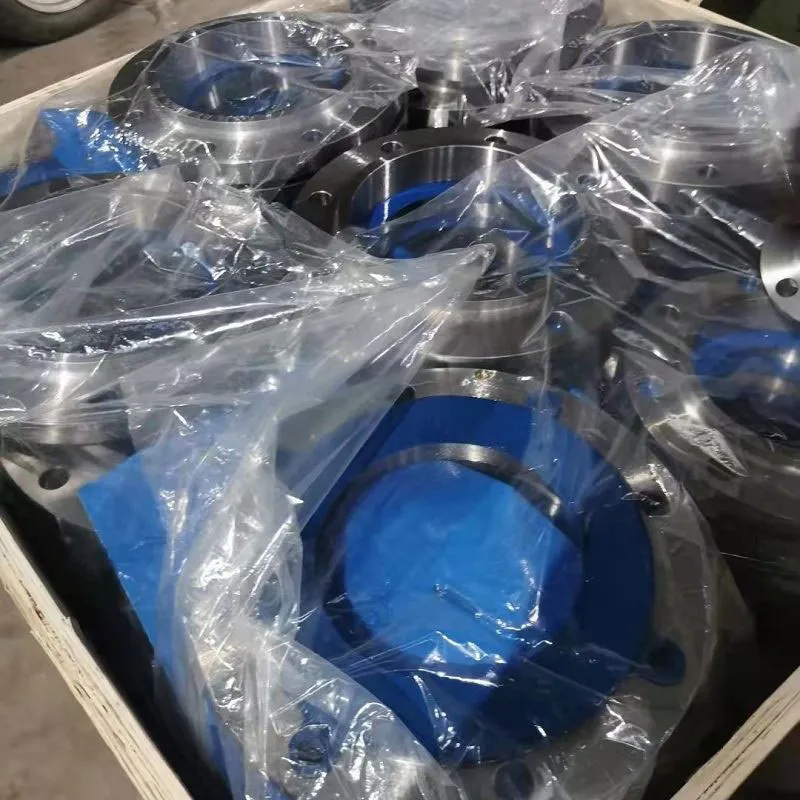
- Photos of actual products.Ask to take a photo of the flanged pallet right now, with a newspaper or today's date in the background. Fraudsters often use stock photos or images from manufacturers' websites to pretend to be them.
- Possibility of sampling.If the volume is large, arrange for you (or your representative) to come to the warehouse for random measurements with calipers and check the geometry. An honest seller will not mind. The dishonest one will start coming up with reasons why “the warehouse is closed” or “the goods are on the way.”
- Return conditions.Include in the contract the right to return the goods if hidden defects are discovered during incoming inspection or installation. Many standard offers exclude this clause, citing the fact that “rolled metal cannot be returned.” This is illegal for defective goods, but it is better to have it clearly stated.
By the way, about warehouses. In 2026, there is a shortage of moving items in warehouses in central Russia. The bulk of the metal is now produced and stored closer to the places where raw materials are extracted or at the facilities of manufacturing plants. Therefore, the term “shipment from warehouse” often means that the goods are coming to you in transit from another region. Check actual availability.
Installation errors that kill even the best flanges
Let's say you find the perfect flange. We bought it and brought it to the site. And this is where the human factor comes into play. Statistics on pipeline accidents say: 70% of problems are not the quality of the metal, but installation errors.
The first rule: do not weld the flange “by eye”. A misalignment of even 1 degree will result in the mating flange not coming together, or the bolts will be tightened with enormous force, creating a bending moment. Use levels and templates.
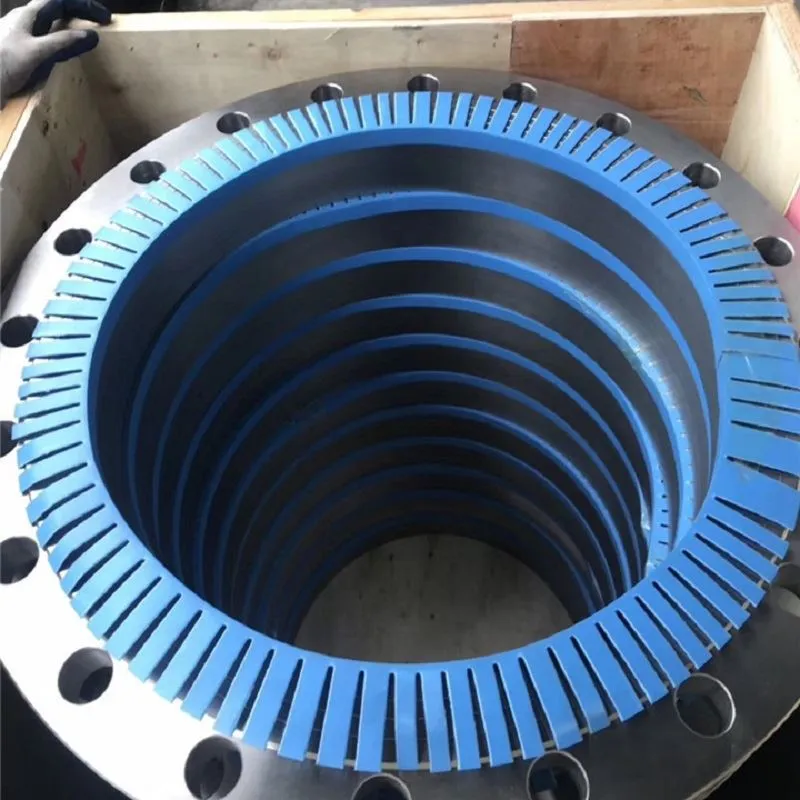
Second: preparing the pipe edges. A butt weld flange requires cutting the edge of the pipe at an angle of 30-35 degrees. If you weld a flange to a pipe without cutting it (butt end to end), the penetration will be superficial. Such a seam will not withstand pressure. Be sure to remove the chamfer.
Third: bolt tightening sequence. Do not tighten the bolts in circles! This is a classic rookie mistake. Tightening should be done crosswise, in several passes. First by hand, then with a wrench at 30% force, then at 60%, then at 100%. This is the only way to ensure uniform compression of the gasket.
And lastly: gaskets. Do not use paronite where rubber is needed, and vice versa. For water and low temperatures, paronite or rubber seals are suitable. For aggressive environments and high temperatures - spiral wound gaskets (SNG). Saving on a gasket costing 50 rubles can lead to the loss of a ton of coolant and a fine from environmental services.
The future of the market: what to expect at the end of 2026 and beyond?
The market situation is stabilizing, but prices will not go down. Energy and logistics costs are rising. In addition, stricter technical regulation is expected. The Ministry of Industry and Trade is discussing the introduction of mandatory digital marking for certain types of pipeline fittings. This will allow you to track the path of each flange from melting to installation. For honest manufacturers this is a plus, for “gray” schemes it’s the end of the game.
We should also expect an increase in the popularity of composite materials and polymer flanges for non-critical components (sewage, drainage). They are lighter, do not rust and are cheaper to produce. But for pressures above 10 atmospheres and temperatures above 80 degrees, steel will remain the uncontested queen.
My forecast: next year we will see market consolidation. Small resellers will go away, and large distributors with their own warehouses and direct contracts with factories will remain. Buying directly from a factory (be it a Russian giant or a specialized foreign manufacturer with a full cycle) will become more profitable and safer, but the entry threshold (minimum batch) will increase.
Summary: how not to lose money and nerves
Purchasebutt weld flange DN50in 2026, this is not just a money-to-goods transaction. This is an engineering task that requires care. Do not chase the lowest price in Yandex.Market or on message boards. There are no miracles: metal cannot cost less than the ore and electricity spent on its production.
Choose suppliers who are not afraid to show documents, are ready to give a guarantee and have real reviews from industrial enterprises, and not from anonymous people. Check the geometry, specify the steel grade, and monitor the installation. Whether it is a local plant with history or an international partner with vertically integrated production, the main thing is transparency of processes and quality control at every stage.
Remember: a flange is a small part with a huge responsibility. От него зависит, будет ли ваш объект работать годами или превратится в источник постоянных проблем и протечек. В условиях, когда ремонт становится всё дороже из-за кадрового голода и стоимости материалов, профилактика и грамотный выбор комплектующих становятся главными инструментами экономии.
Надеюсь, этот обзор помог вам взглянуть на привычную деталь под другим углом. Если у вас есть опыт столкновения с некачественными фланцами или, наоборот, истории успеха с малоизвестными заводами — делитесь в комментариях. Обмен реальным опытом сейчас ценнее любых рекламных буклетов. Берегите свои трубопроводы!