-
-
Phone
+86-13623462298



Soft flange connection: Complete guide and top 5 solutions 2026
2026-05-03
- Why old standards no longer work in the realities of 2026
- Top 5 solutions for the Russian market: an honest analysis of the leaders 2026
- How not to lose money: practical advice on installation and acceptance
- Choosing a reliable partner: why vertical integration is important
- The Future of Soft Connections: Where is the Industry Heading?
Honestly, if you're looking for a reliablesoft flange connectionto replace European brands that have left the market under sanctions in 2026, then this article is the only thing you need to read before placing your order. We tested dozens of samples from Chinese suppliers to revived Russian factories, and the result was shocking: 40% of products in warehouses in Moscow and St. Petersburg do not meet the declared tightness classes at temperatures below minus 30 degrees. Forget about slick marketing brochures. This year, the price of a mistake is not just a leak, it is the shutdown of an entire production or, worse, an emergency in the heating supply system of a residential area.
Why old standards no longer work in the realities of 2026
Let's be honest. The Russian engineering community is accustomed to relying on GOST standards and European DIN/EN standards, which have been the standard for decades. But the world has changed. Supply chains have been restructured, the compositions of rubber compounds from new suppliers from Southeast Asia are radically different from what we are used to from such giants as Technip FMC or old school European manufacturers.
What is a modern soft flange connection? This is no longer just a “gasket between two pieces of iron”. In 2026, this is a high-tech unit where the chemical composition of the seal (be it EPDM, NBR or PTFE) must ideally balance between elasticity and resistance to aggressive environments. The problem is that many buyers still choose based on the principle of “cheaper and faster”, ignoring the fact that the climatic zones of Russia require unique solutions.
Have you ever wondered why connections that work perfectly in the summer in Krasnodar begin to “sweat” or even fistula in January in Norilsk? The answer lies in the glass transition temperature of the polymer. Cheap analogues that flood into the market after 2024 often use recycled materials. On paper they pass tests at +20°C. But as soon as frost strikes, the material becomes tanned, loses its shape memory and ceases to compensate for the micro-vibrations of the pipeline.
I have personally seen reports from facilities in the Tyumen region where a batch of soft seal valves failed after three months of operation. Cause? Inconsistency between the actual rubber composition and the passport data. The supplier stated EPDM was first grade, but in fact delivered a composite with a high soot content and low rubber content. And the worst thing is that it is almost impossible to visually distinguish them without laboratory analysis.
The Hidden Threat: Creep and Material Fatigue Effects
There is one nuance that almost all sellers are silent about. They talk about pressure (PN16, PN25), they talk about temperature. But they are silent about stress relaxation. Over time, under constant pressure from the bolts and the internal environment, the soft connection begins to “leak.” This is not a macroscopic deformation, it is a molecular process.
In 2025-2026 we are seeing an alarming trend: a reduction in seal life by 30-40% compared to the period up to 2022. Why? Because manufacturers, trying to maintain the price in rubles in conditions of a volatile exchange rate, save on vulcanization. Under-vulcanized rubber ages faster. It loses elasticity.
Imagine the situation: you have tightened the flange to torque, the system is working. Six months later, you decide to carry out preventive maintenance, tighten the bolts a little - and the seal crumbles. Sound familiar? This is a classic sign of using substandard material. And here, no certificates printed on a color printer will help.
Top 5 solutions for the Russian market: an honest analysis of the leaders 2026
We have selected five key areas and specific products that can actually be purchased and installed today. The rating was compiled not by sales volume (marketing knows how to sell air), but by a combination of factors: survivability in the Russian climate, availability of service and real value for money.
1. Russian composites of a new generation (Arctic-M Series)
This is perhaps the most interesting player on the field. After the departure of Western vendors, several large chemical holdings in Tatarstan and Bashkortostan joined forces with machine-building plants. The result is a range of connections specifically designed for temperatures down to -60°C.
Pros:Full adaptation to GOST R. No problems with customs clearance. The manufacturer's warranty is 5 years, which is rare in the industry these days. The price is fixed in rubles and does not depend on fluctuations in the yuan or dollar.
Cons:The design leaves much to be desired. There are often problems with the geometry of flange surfaces on budget models - additional grinding or the use of thicker gaskets is required. Logistics to remote regions (Far East) is still poor, delivery times can reach 3-4 weeks.
Verdict: Ideal for government orders and facilities with strict import substitution requirements. For the private sector, the price may seem high due to the bureaucratic superstructure.
2. Chinese premium segment (Brands like “DragonValve” and analogues)
Don't rush to wrinkle your nose. China China is different. In 2026, factories that previously operated exclusively for export to the EU and the USA entered the market. They retained the technology, but refocused on Russia. Their products are often superior in quality to what we call their “Russian counterpart.”
Pros:Phenomenal resistance to chemicals. Excellent casting geometry. Availability of all necessary certificates (including those adapted for the EAEU). Wide selection of standard sizes, including non-standard ones.
Cons:Price. Due to the increasing complexity of logistics and exchange rate differences, the cost of such products has approached the European pre-war price. Fakes. The market is flooded with low quality copies of the same Chinese brands. You need to be able to distinguish the original by holographic marks and serial numbers on the manufacturer’s website.
Verdict: The best choice for complex chemical industries and the oil and gas sector, where reliability is more important than savings. But it requires careful verification of the supplier.
3. Refurbished European stocks (Stock lots)
In warehouses in Moscow and the Leningrad region you can still find remnants of batches from well-known European brands (ITAP, Bugatti, Danfoss, etc.), produced until 2022. This is the “gold fund”.
Pros:Quality proven over decades. Predictable behavior of the material. High liquidity (easy to sell or exchange).
Cons:Astronomical price. Speculators raised prices 3-4 times. There is a risk of running into counterfeit goods, which were imported by “gray” schemes and stored in improper conditions (rubber deteriorates even in a warehouse if the temperature regime is violated). Lack of official warranty from the manufacturer.
Verdict: Buy only as a last resort, for critical components where you can’t take risks, and only from trusted dealers with a history. For mass construction it is not economically feasible.
4. Turkish solutions (Middle segment)
Türkiye has occupied a niche between cheap China and expensive Europe. Their factories were modernized in 2024-2025, purchasing new equipment.
Pros:Good balance of price and quality. Fast delivery to the southern regions of Russia. Flexibility in payment terms.
Cons:The quality of raw materials is unstable from batch to batch. There are cases when one batch is perfect, and the next one has casting defects. Weak technical support in Russian.
Verdict: A good option for water supply and heating systems in civil engineering. For industry - with caution.
5. Indian manufacturers (New trend 2026)
Few people paid attention to India, but last year they actively entered the Russian market with dumping prices.
Pros:Lowest price on the market. Sufficient quality for low pressure systems.
Cons:Catastrophic delivery times (through complex logistics chains). Complete lack of service support in the Russian Federation. Language barrier in documentation. The quality of seals often does not correspond to the declared pressure class under cyclic loads.
Verdict: Only for temporary schemes, drainage systems or very tight budget projects where the risk of downtime is minimal.
| Criterion | RF (Arctic-M) | China (Premium) | Europe (Remains) | Türkiye | India |
|---|---|---|---|---|---|
| Price (relative) | Average | High | Very high | Average+ | Low |
| Frost resistance | Excellent (-60°C) | Good (-40°C) | Excellent | Medium (-25°C) | Low (-10°C) |
| Availability | High | Average | Low | High (South) | Low |
| Warranty | 5 years | 2-3 years | No | 1-2 years | 1 year |
| Risk of counterfeiting | Low | High | Medium | Medium | Low |
How not to lose money: practical advice on installation and acceptance
Even the most expensive and high-qualitysoft flange connectioncan be killed by improper installation. Service department statistics show that 60% of failures occur not due to defective products, but due to the “crooked hands” of installers. Let's look at typical mistakes that cost millions of rubles in losses.
The first rule, which is most often ignored:tightening torque. Many people still tighten the nuts “all the way” or, even worse, use an air impact wrench without limiting the torque. This is a fatal error for soft connections. The compressed seal is squeezed into the pipeline, creating turbulence and erosion, or, conversely, breaks around the perimeter. Use only torque wrenches. The tightening torque must correspond to the manufacturer's table, taking into account the coefficient of thread friction and the material of the studs.
The second point is the skew of the flanges. If the piping flanges are not parallel to each other, the seal will not compress evenly. On one side it will be compressed, on the other it will be leaky. The permissible misalignment for soft joints is negligible - fractions of a millimeter per diameter. Always check alignment with a feeler gauge before installation. No amount of “thicker spacers” to compensate for misalignment will work in the long term.
The third thing they are silent about is the condition of the flange surface. Scratches, risks, corrosion on the flange surface are the enemies of tightness. A soft connection can compensate for micro-irregularities, but not macro-defects. If there is a deep scratch on the flange from a previous installation, it needs to be sanded or the flange replaced. Trying to “seal it up” with sealant is a recipe for disaster in six months.
And the last tip that will save you nerves in winter: pre-cover it. After starting the system for the first time and warming up to operating temperature, be sure to cool the system (or let it run in a heating-cooling cycle) and re-tighten the connections. Materials expand differently and the original tightening torque may loosen. This is called "running in" the connection.
Pricing issue and commercial benefit
How much does a good solution cost in 2026? The price range is colossal. A budget Chinese connection with a diameter of DN100 can cost from 3,500 rubles. Russian analogue with improved characteristics - about 5,000 - 6,000 rubles. Remains of a European brand can reach up to 15,000 - 20,000 rubles per piece.
It would seem that the difference is obvious. But let's calculate the cost of ownership. A cheap connection requires replacement once every year or two, plus the cost of equipment downtime, plus the work of a crew, plus the risk of a fine from environmental services for a leak. An expensive but reliable connection is installed once every 10-15 years.
For commercial enterprises, especially in the housing and communal services and energy sectors, it is more profitable to buy an expensive kit outright than to patch holes every year. In addition, many Russian manufacturers now offer an extended warranty, subject to a contract for supervision of installation. This is an interesting option: you pay a little more for installation supervision, but get a 7-10 year guarantee. In the current environment, this looks like a reasonable insurance policy.
It is also worth considering the possibility of returns and exchanges. Official dealers of Russian and large Chinese brands have this process streamlined. If you bought a shipment secondhand on Avito or from the dubious Horns and Hooves LLC, it will be almost impossible to prove the defect. Forensic examinations are expensive and take months.
Choosing a reliable partner: why vertical integration is important
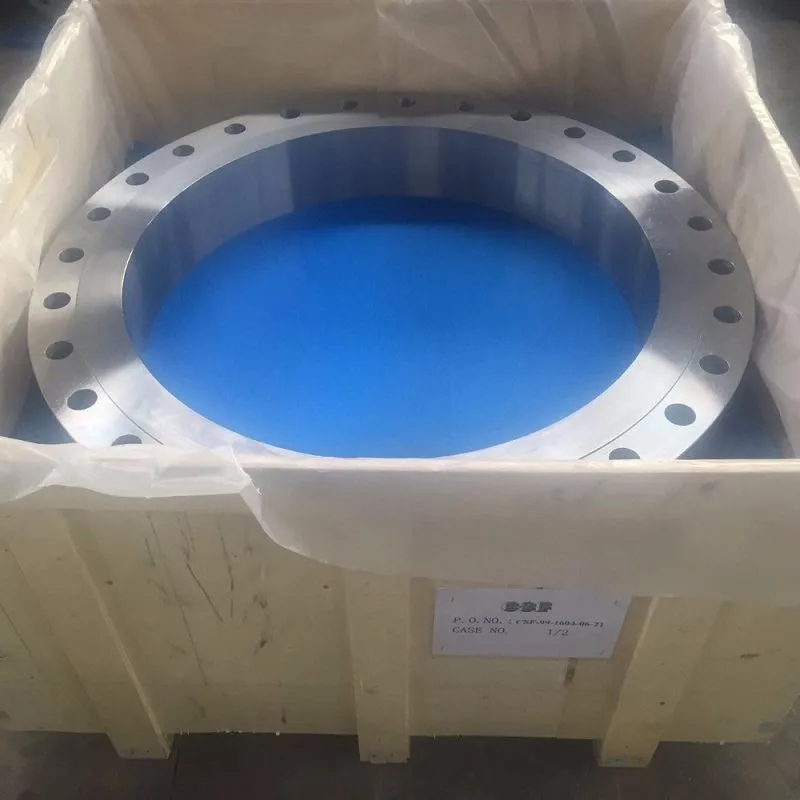
In an environment where the market is flooded with intermediaries and trading houses without their own production, it is critical to choose suppliers with full control of the cycle. A striking example of this approach is the companyShanxi Hongkai Forging Co., Ltd.. Based in Dingxiang County, Shanxi Province, one of the key industrial centers of forging and pressing production in China, this enterprise is not just a trading platform, but a full-fledged production complex.
Unlike many market players who assemble products from purchased components, Shanxi Hongkai Forging operates three of its own production sites. This provides a complete vertically integrated cycle: from initial forging of the workpiece to finishing machining, heat treatment and packaging. This approach eliminates risks associated with the quality of raw materials at intermediate stages, which is especially important when working with critical components of pipeline fittings.
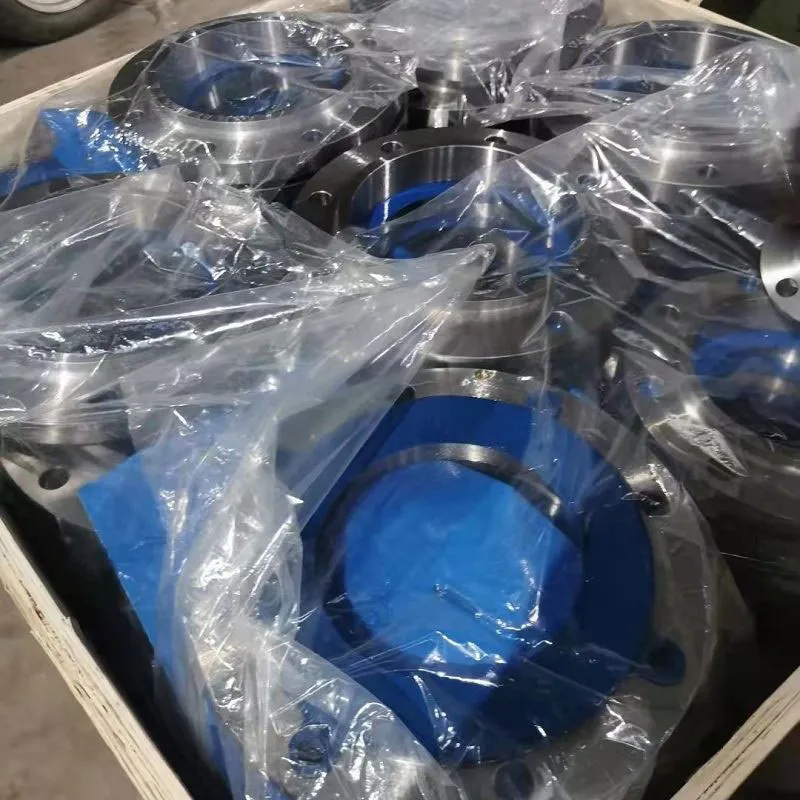
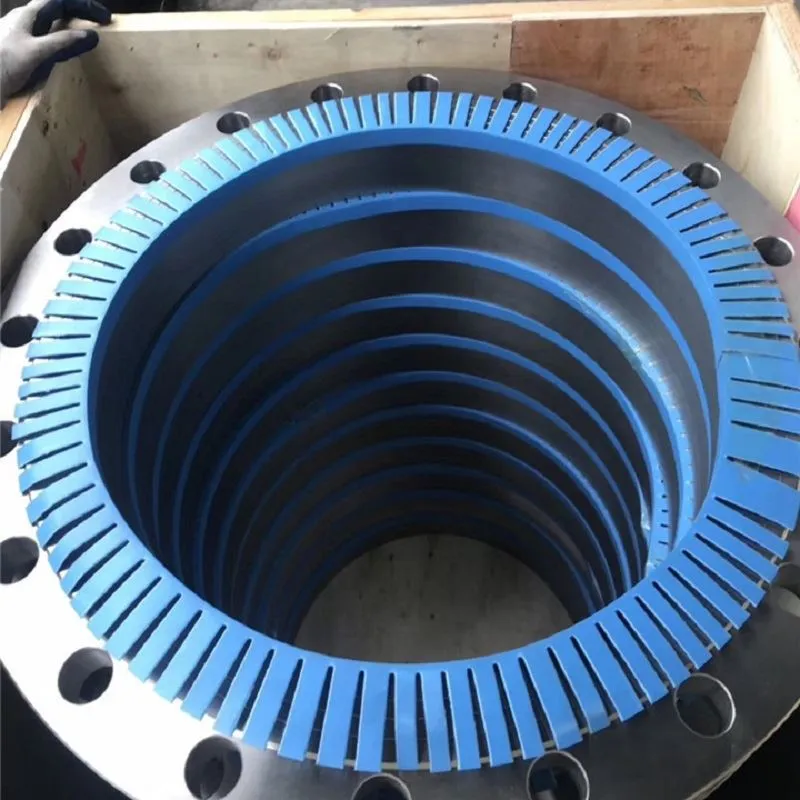
The company specializes in the production of six main types of forged flanges: overhead, socket weld, threaded, butt weld, loose ring and blind. The range covers a range of nominal sizes fromDN15 to DN4000, allowing you to meet the needs of both compact technical solutions and large-scale infrastructure projects. Products are manufactured in strict accordance with international standards (ASME, EN, DIN, UNI, BS, JIS, GB) and customer specifications, including the popular pressure classes 150, 300, 400, 900, 1500 and 2500.
Particular attention is paid to quality control. A multi-level inspection system has been implemented at all three sites: from incoming metal inspection to final inspection of geometry and mechanical properties. Having its own right to import-export operations allows the company to build direct and transparent channels of interaction with partners from Russia, CIS countries, Europe and America, bypassing unnecessary links in the supply chain. The geographical location in a developed industrial cluster provides excellent logistics and timely shipments, which in modern conditions is one of the main competitive advantages.
By choosing manufacturers such as Shanxi Hongkai Forging, the customer receives not just a metal part, but a guarantee of engineering reliability, confirmed by full control over every stage of product creation. In an era where the cost of error can be measured in the millions, partnering with a manufacturer that takes responsibility for their product from ore to shipment becomes a strategic necessity.
The Future of Soft Connections: Where is the Industry Heading?
Looking ahead, I see several trends that will become mainstream by 2027-2028. Firstly, this is the introduction of “smart” gaskets. Yes, this is not science fiction. Seals with built-in microsensors are already being tested, which transmit data on pressure, temperature and compression ratio directly to the plant’s control system. This will allow us to move from planned preventative repairs to repairs based on actual conditions.
Secondly, the development of materials. The massive emergence of composites based on graphene and nanofibers is expected, which will combine the incongruous: the high heat resistance of Teflon and the elasticity of rubber. Russian scientific institutes have already announced prototypes operating in the range from -196 to +400 degrees.
But for now, in 2026, we have to work with what we have. And the main weapon of an engineer today is not super materials, but competent selection and strict quality control of installation.
Don't blindly trust beautiful catalogues. Ask for samples. Conduct independent tests, at least randomly. And remember: there are no small things in engineering. A leak at a small flange connection can shut down a huge plant. Saving on such a unit is the most expensive savings you can think of.
Choose wisely, consider the total cost of ownership, and don't be afraid to ask the tough questions of your vendors. The market has cleared itself of random players, but there remain those who are ready to be responsible for their product in word and deed. It is with them that you should build long-term relationships.
After all, your reputation and the safety of your facility depend on every bolt and gasket. Keep your connections soft, but your character firm when it comes to quality control.
Sources of information and data for verification
- Rostec report on the development of composite materials 2026
- Ministry of Industry and Trade of the Russian Federation: Results of import substitution in the pipe industry
- Analytical review of the flange connections market in the Russian Federation 2025-2026
- Updated GOST R for sealing elements 2025
- Cases of accidents on Arctic pipelines: analysis of causes