-
-
Phone
+86-13623462298



Flange connections Ekaterinburg: prices 2026 from factories
2026-08-09
- Why the numbers in price lists lie: the real picture of the market in 2026
- Technical educational program: what really affects the price of a flange
- Where to look for reliable suppliers in Yekaterinburg: list and analysis
- Price analytics: forecast and realities for 2026
- Hidden threats: what do factories save on and what does this mean for you?
- Practical guide: how to place an order and not lose money
- The future of the industry: digitalization and new standards
- Conclusion: balance between price and reliability
If you are looking right nowflange connections Ekaterinburg prices 2026 from factories, then, most likely, you are already faced with the chaos that is happening in the rolled metal market. To be honest, the situation looks absurd: price lists are swelling with numbers, and actual deliveries have been delayed for weeks. We sifted through dozens of proposals from Uralmash to small workshops in the industrial zone to understand where marketing ends and reality begins. In this article, I won't pat you on the head with stories about "stability of supply." I’ll tell you why the price of a flange today is a lottery, and how not to buy metal that will crumble at the first water hammer.
Why the numbers in price lists lie: the real picture of the market in 2026
Let's take off the rose-colored glasses right away. You open the website of a large supplier and see a beautiful table with prices forflange connections Ekaterinburgand you think: “Great, the budget fits.” Stop. These figures often refer to a batch of 5 tons of steel 20, which will be delivered to you in three months. And if you need five pieces of flat flange made of stainless steel 12Х18Н10Т “here and now”? The price will double or even triple.
In 2026, the Urals market experienced tectonic shifts. After the final departure of a number of Western vendors and the restructuring of supply chains, local factories found themselves in the position of monopolists for certain standard sizes. But there is a nuance that sales managers are silent about. The shortage of high-quality alloy steel for high pressures (Pu100 and above) has not gone away. The factories operate in three shifts, but the queue for rentals is such that your order may simply get “lost” between higher-priority contracts for the oil and gas sector.
I personally spoke with the chief technologist of one of the Yekaterinburg enterprises at the end of last year. He admitted that they simply don’t take many small orders now, because reconfiguring machines for non-standard diameters eats up the entire margin. So when you see a suspiciously low price onwelded steel flanges, know: either these are the remains of an old batch (which is not bad if the steel has not oxidized), or this is dumping before the bankruptcy of the supplier.
Logistics factor and hidden costs
Yekaterinburg is a transport hub, that’s a fact. But the cost of delivering metal throughout the city and region in 2026 has increased disproportionately to the increase in prices for the metal itself. Why? Because fuel is becoming more expensive, and the fleet of heavy manipulators is aging. Many companies only include shipping in the final invoice as a final step. You see a price of 1,500 rubles per piece, but in the end you receive an invoice for 2,200, taking into account “express delivery” and rigging work.
By the way, about the rigging. Heavy flanges with a diameter of over 500 mm often require special equipment for unloading. If your site does not have a crane or forklift, you will have to rent one separately. And here lies another trap: some suppliers load goods onto regular Gazelles, violating safety standards, just to save money on the flight. Result? Dented sealing surfaces, which will then have to be ground on site, wasting time and money.
Technical educational program: what really affects the price of a flange
Not all flanges are created equal. It sounds like a platitude, but in pursuit of savings, customers often miss critical parameters. Let's look at what the cost is made up of so that you can bargain reasonably with suppliers.
First and foremost -steel grade. The cheapest option is St20 (carbon steel). It runs on water, steam and oil at moderate temperatures. But if your environment is aggressive or the temperature fluctuates, you need 09G2S (for the north and cold) or stainless steel (08Х18Н10, 12Х18Н10Т). The price difference between St20 and stainless steel can reach 400%. And here it is important not to fall for the bait of unscrupulous sellers who, under the guise of stainless steel, can slip in colored carbon. Yes, this happens. Check the certificates!
Second factor -manufacturing method. Cast flanges are cheaper than forged ones. They are cast into molds, allowing complex configurations to be created quickly. But the structure of cast metal is less uniform; there may be shells. For critical components, especially under high pressure, I strongly recommend using only forged flanges. They are 20-30% more expensive, but their safety margin is disproportionately higher. In the conditions of the Ural winter, when the metal becomes brittle, this overpayment is insurance against an accident.
Third point -accuracy class and processing. GOST 33259-2015 (which replaced the good old 12815-80) strictly regulates tolerances. If the factory offers flanges “according to specifications” with lower requirements for the flatness of the sealing surface, run away. The gasket will not press evenly and the connection will leak. Modifying such a flange on site will cost more than purchasing a quality product outright.
Comparison Chart: Cast vs Forged Flanges
| Parameter | Cast flanges | Forged flanges |
|---|---|---|
| Production cost | Low (mass casting) | High (energy-intensive process) |
| Metal structure | Coarse grain, possible defects | Fine-grained, fibrous, durable |
| Application | Low pressure, inappropriate components | High pressure, vibration, extreme temperatures |
| Risk of destruction on impact | High (fragile) | Low (viscosity) |
| Recommendation for 2026 | For water/sewer only | For all industrial pipelines |
Where to look for reliable suppliers in Yekaterinburg: list and analysis
The Yekaterinburg market is heterogeneous. Conventionally, it can be divided into three echelons. Understanding this gradation will help you save your nerves.
First echelon: Giants.These are large metal trading houses and subsidiaries of factories. They always have a certificate, quality passport and VAT. Their prices are fixed, bargaining is almost impossible unless you buy by the wagon. But the risk of running into marriage is minimal. They work strictly according to the contract, shipment usually within 3-5 days if the goods are in stock. The problem is that the giants' warehouses are focused on running positions (Du50-Du200, Ru16-Ru40). Non-standard is needed for a long time.
Second echelon: Specialized dealers.Medium-sized companies that hold a wide range of pipeline fittings. This is where you can most often findflange connections Ekaterinburgat reasonable prices with normal deferred payment. They are more flexible and can select an analogue if the required brand is not available. My advice: work with those who have their own warehouse within the city, and not “to order from Chelyabinsk or Magnitogorsk.” The difference in timing is a week versus a day.
Third echelon: “Garage” manufacturers and resellers.Here the prices are the lowest. Often these are small workshops that buy round timber and turn flanges on lathes. Quality? Lottery. Sometimes you come across very worthy products made by old-school craftsmen. And sometimes - crooked handicrafts from mismatched materials. It’s worth working with them only if you are a technologist yourself and can check the geometry with a caliper right upon acceptance. For large projects with technical supervision, this option will not work.
However, when it comes to large-scale projects requiring non-standard sizes (up to DN4000) or specific pressure classes (for example, ANSI Class 1500–2500), local capacity may not be enough. In such cases, it is reasonable to look towards vertically integrated manufacturers capable of completing the full cycle from forging to finishing. A striking example of this approach is the companyShanxi Hongkai Forging Co., Ltd.. Based in China's key forging center (Dingxiang County), they operate three of their own sites, ensuring quality control at every stage, from raw materials to packaging. Their experience in working with international standards (GOST, DIN, ANSI, ASME) and their own export rights allow them to build transparent supply chains even in the conditions of complex logistics in 2026. For orders where large volumes of forged products and strict compliance with the chemical composition are critical, partnership with such specialized factories is often more reliable than working with local resellers.
Checklist when choosing a supplier
- Request a scan of the GOST 33259-2015 certificate of conformity (not just a letter, but a certificate).
- Check whether the price is final including 20% VAT (rates may change in 2026, check for relevance).
- Ask about the terms of return if hidden defects are discovered during installation.
- Check the availability of your own fleet of trucks or agreements with TC.
- Call the manufacturer's quality control department if you buy directly (yes, this can be done).
Price analytics: forecast and realities for 2026
Let's talk about money specifically. What awaits us in the near future? Analysts predict a further increase in prices for ferrous metals within 10-15% until the end of the year. The reasons are banal: the rise in Russian Railways tariffs, the rise in the cost of electricity for factories and the shortage of qualified welders and turners, which is pushing up the salary fund.
At the moment (the first half of 2026), the average price for a flat welded flange Du100 Ru16 made of steel 20 fluctuates in the range1800 – 2400 rublesper unit for wholesale purchases. Retail price can reach 3,000 rubles. If you take a stainless steel analogue, get ready to shell out 6,500 rubles and more.
But there is an interesting trend. Some Yekaterinburg factories have begun to introduce dynamic pricing systems similar to stock exchange ones. The price changes daily depending on steel quotes on the Moscow Exchange and the yuan exchange rate (since a lot of equipment and consumables are now Chinese). This means that an invoice issued in the morning may become irrelevant by the evening. Fix the price in the contract immediately!
It is also worth noting the impact of import substitution. Chinese flanges, which previously filled the niche of the cheap segment, are now subject to increased duties and cost almost the same as Russian ones. Plus, logistics from the Middle Kingdom have become unpredictable. Therefore, local production in the Sverdlovsk region is again in favor. Supporting a local manufacturer is not a patriotic slogan, but a pragmatic calculation for the speed of receiving goods.
Hidden threats: what do factories save on and what does this mean for you?
And now that very “fly in the ointment” that I promised at the beginning. Not everything is so smooth in the Kingdom of Denmark. In pursuit of cost reduction, some manufacturers resort to tricks that are not visible to the naked eye, but are fatal for the system.
Problem #1: “Lightweight” profile.According to GOST, the flange has a strictly defined thickness and diameter of the hole for the bolts. Some craftsmen make the flange a little thinner than normal or reduce the diameter of the disk itself. Visually, a difference of 1-2 mm is invisible. But when tightening the bolts, such a flange may become deformed (“go screw”), and the tightness will be broken. This is especially critical for flanges of large diameters (from DN300).
Problem No. 2: Saving on heat treatment.Forged workpieces must undergo normalization or tempering to relieve internal stresses. This is a long and expensive process in ovens. It may be shortened or skipped altogether. Externally the flange is perfect. But inside he remains tense. After six months of operation, under the influence of vibration and temperature changes, a crack will appear in it. It will be impossible to find the culprit later - the plant will say that you violated the installation conditions.
Problem #3: Labeling.There have been cases when flanges made of ordinary steel were marked as stainless steel. Or instead of 09G2S (northern version) they stamped St20. In the Ekaterinburg winter, when the temperature drops to -40°C, an ordinary carbon flange can burst like glass. Always ask for a chemical analysis! Modern portable spectral equipment allows you to check the steel grade in 30 seconds right in the warehouse.
How to protect yourself when accepting?
Don't trust papers blindly. If the party is responsible, call an independent expert or use your own monitoring devices. Check the geometry of the sealing surface (it should be mirror-like, without marks from the cutter). Tap the flange: a ringing sound indicates good metal, a dull sound indicates possible internal defects or cracks. Yes, this is an old-fashioned method, but it still works.
Practical guide: how to place an order and not lose money
So, you have chosen a supplier. What's next? The ordering process also has its pitfalls.
Firstly,specification. Do not simply write “DN100 flange”. Please indicate the full designation according to GOST:“Flange 1-50-16 St20 GOST 33259-2015”. Explanation: type 1 (flat welded), nominal diameter 50 mm, nominal pressure 16 kgf/cm², material St20. The more precise the specification, the less likely it is to get something wrong.
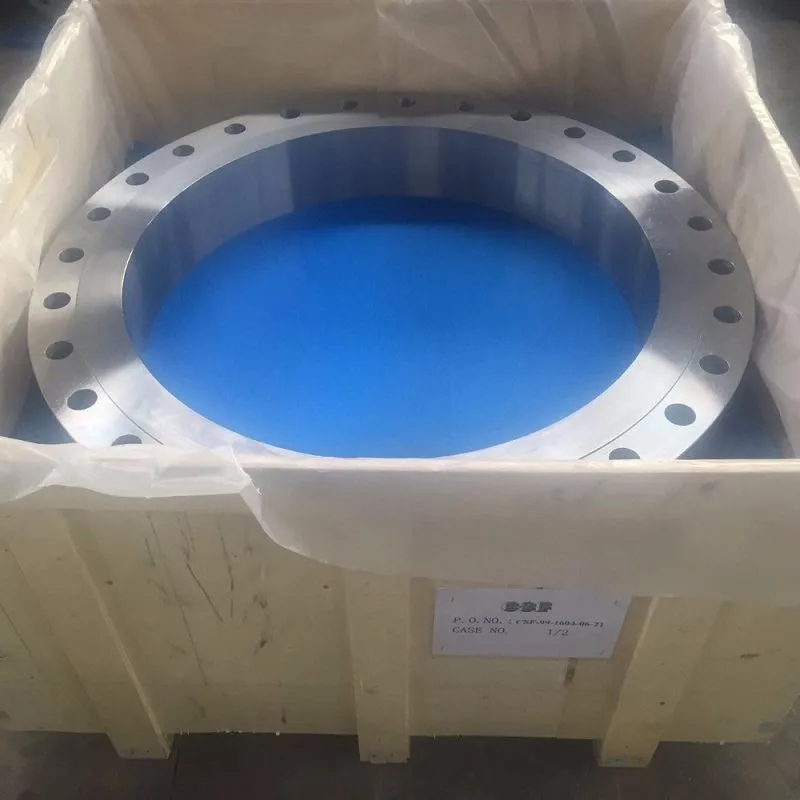
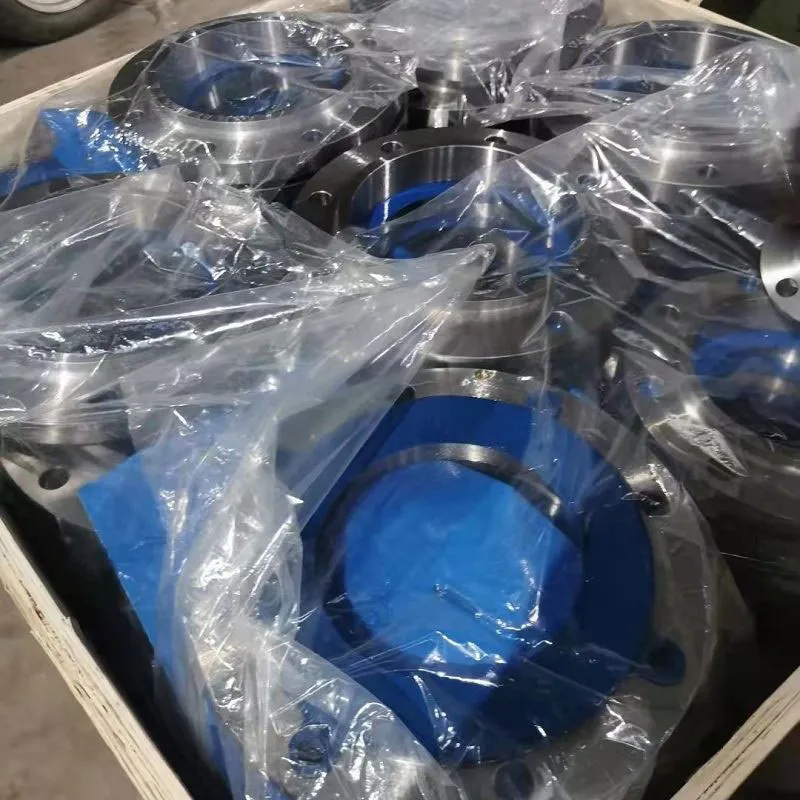
Secondly,packaging. Flanges, especially those with a treated surface, should be supplied in wooden boxes or on pallets protected from moisture. If they deliver it to you in bulk in the back of an open car in the rain, rust is guaranteed. And fighting rust on the sealing surface means extra hours of work for mechanics.
Thirdly,equipment. Order fasteners (studs, nuts, washers) and gaskets immediately. It often happens like this: the flanges have arrived, but the studs of the required length (they depend on the thickness of the flange and the type of gasket) are not available. You have to look for them separately, wasting time. A good supplier will offer a turnkey kit.
The future of the industry: digitalization and new standards
Where is the flange connection market heading in Yekaterinburg? I see several clear vectors. Firstly, the introduction of digital marking. In the next couple of years, every serious flange will have a QR code or RFID tag embedded in it all the way from steel melting to shipment. This will kill the counterfeit market. You will be able to scan the code with your phone and see the real certificate.
Secondly, the rise in popularityquick release connections. Traditional bolted flanges require time to install and remove. In conditions of labor shortages, factories are beginning to offer solutions with bayonet locks or wedge clamps. They are more expensive, but they reduce pipeline downtime during repairs by several times. For emergency services, this is a lifesaver.
And one last thing. Tightening environmental requirements for production is expected. Factories that fail to upgrade filters and reduce emissions will be closed or fined. This will inevitably lead to market consolidation: only large players with modern equipment will remain. It will become unprofitable for small workshops to operate. So, when choosing a partner today, look at his investment program. If a plant develops, you can work with it for a long time.
Conclusion: balance between price and reliability
Purchaseflange connections in Ekaterinburgin 2026, this is not just a money-to-goods transaction. This is a strategic decision. Saving 100 rubles per piece can result in millions of losses in the event of a pipeline accident. The market has become more complex, more transparent, but also more dangerous for the inattentive.
My main advice is: don't go for the lowest price on the list. Look for balance. Work with trusted factories, request documents, check geometry. Remember that a quality flange is the invisible hero of your system. It should work for years without requiring attention. And if you choose the right supplier today, then in five years you won’t even remember where you got these parts. And this is the best indicator of quality.
Ultimately, the reliability of your enterprise depends on the little things. And the flange is not the least of them. Be vigilant, check your facts, and don't be afraid to ask tough questions of suppliers. In 2026, the one who knows the real state of affairs will win, and not the one who believes beautiful booklets.
Sources of information and data for verification:
- GOST 33259-2015. Flanges for fittings, connecting parts and pipelines for rated pressure up to PN 250
- Analytical report of the Ural Metal Rolling Association: results of the first quarter of 2026
- Monitoring prices for rolled pipes and flanges in the Sverdlovsk region (updated weekly)
- Ministry of Industry and Trade of the Russian Federation: Register of Russian industrial products (updated 2026)