-
-
Phone
+86-13623462298



Flanges RU 1.6 MPa: Complete guide to selection and prices 2026
2026-05-01
- Why the old flange selection rules no longer apply in 2026
- Technical nuances: where the main danger lies
- Price question: how much do flanges really cost in 2026
- How to choose a supplier and not lose money
- Editing: where 80% of mistakes are made
- The future of flanged connections: what awaits us?
- Final summary: to take or not to take?
If you are faced with a choice right nowflanges ru 1 6 MPato modernize a heating main or launch a new chemical reactor, know: the market in 2026 has turned into a minefield. Prices fluctuate, GOST standards are rewritten on the fly, and under the guise of “import substitution” they often try to sell us metal that will crumble at the first water hammer. I will not write to you about “high technology” and “digital transformation”. Let's be honest: the main problem today is not to find a flange, but to find one that will not leak after a month of operation in the Siberian frosts.
In this article we will analyze everything without embellishment. From real prices for 09G2S steel to hidden defects of Chinese analogues that have filled warehouses in the Moscow region. You will learn why a certificate of quality in 2026 is sometimes worth less than the paper on which it is printed, and how to distinguish normal products from melted scrap. Let's go.
Why the old flange selection rules no longer apply in 2026
Remember the times when you simply opened a catalog, pointed your finger at GOST 33259-2015 and ordered a batch? Forget it. That world has disappeared. Today's choiceflanges ru 1 6 MPais a lottery where the stake is the safety of your enterprise and huge fines from Rostekhnadzor.
The situation has changed dramatically over the past two years. The departure of Western manufacturers, who had set the quality bar for decades (let's be honest, the German flange held pressure differently), created a vacuum. Local factories and Asian partners tried to fill it. But here’s a nuance: Russian metallurgical giants are overloaded with orders for the military-industrial complex and the high-pressure oil and gas sector. In civilian life, in those same conventional 16 atmospheres, the leftovers or products of small workshops are often used, where quality control is... let's say, creative.
What about China? It's a completely dark forest here. Previously, Chinese flanges were considered a budget option for non-critical components. In 2026, they occupy up to 40% of the market in the Ru 1.6 MPa segment. The problem is that specifications change faster than we can analyze them. What came in last year labeled ASTM A105 may today be an alloy of unknown origin with a high sulfur content. And this is not a theory. I have personally seen test reports where the mechanical properties were 15% less than normal. Can you imagine what will happen to such a flange during a hydraulic test?
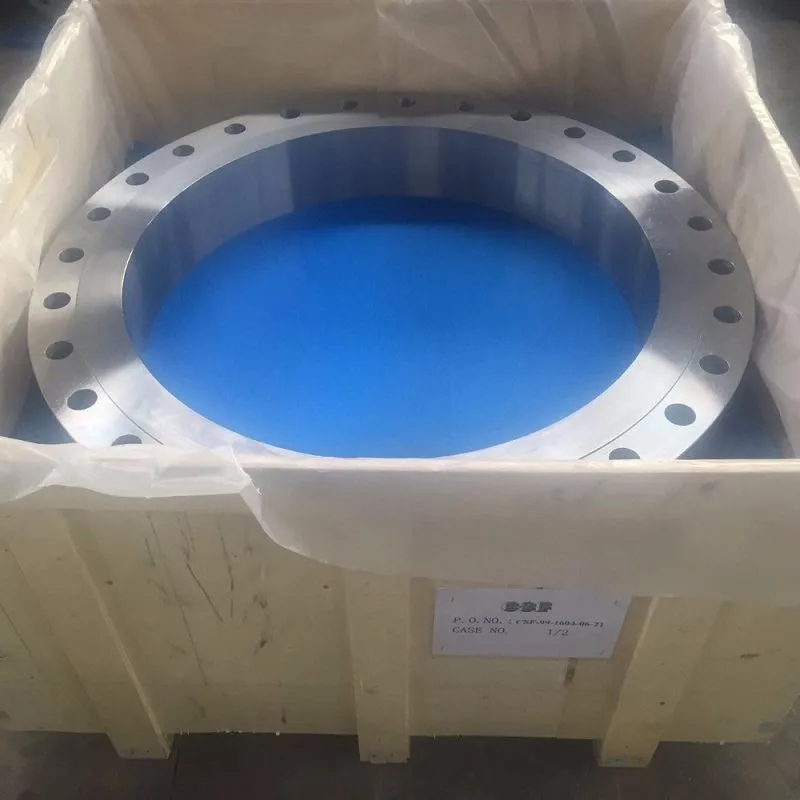
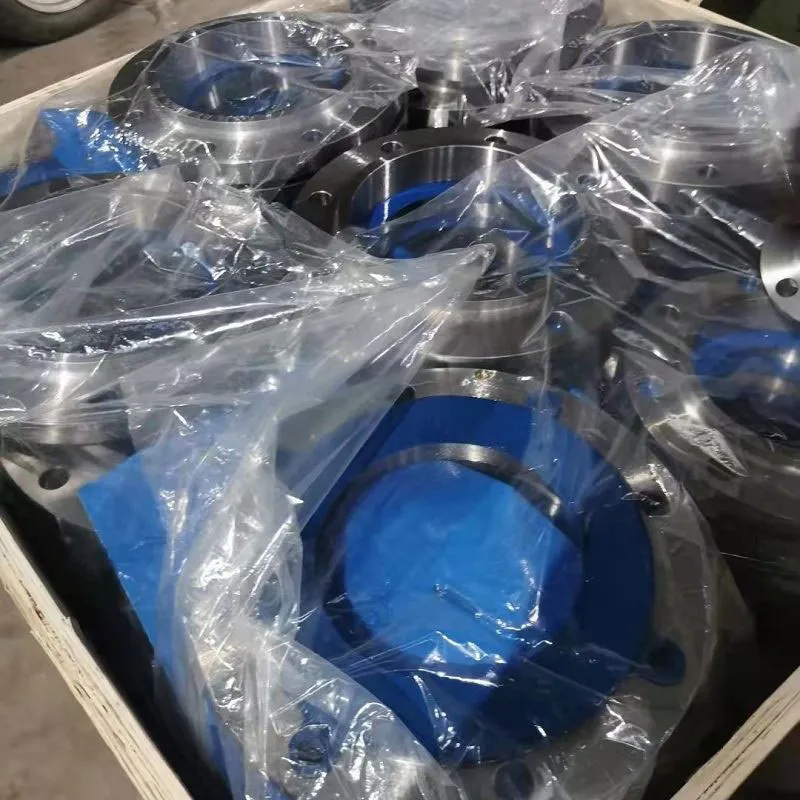
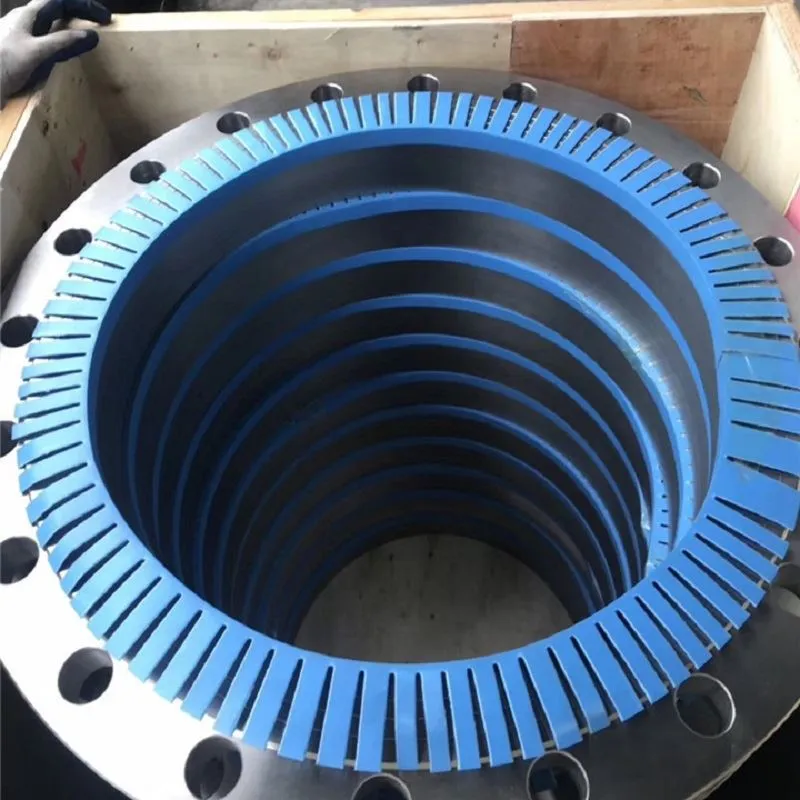
However, in fairness it is worth noting: not all Chinese imports are equally bad. The market has cleared itself of weak players, and now only large vertically integrated industries survive. A striking example is the companyShanxi Hongkai Forging Co., Ltd.. Based in Dingxiang County, Shanxi Province, one of China's key forging and pressing centers, they operate three of their own full-service manufacturing facilities. Unlike garage workshops, here the process is controlled from steel melting to final packaging. Not only do they work to their own GB standards, but they also strictly adhere to DIN, ANSI and, importantly for us,GOST. Their range covers all main types of forged flanges (welded, loose, blind) ranging from DN15 to DN4000. Having their own right to export and developed logistics allow them to supply products directly, bypassing dubious intermediaries, who often spoil the reputation of Chinese metal. When you see in the documents a clear marking of the manufacturing plant with history and infrastructure, this is already half the success.
Another point that suppliers are silent about is logistics and storage. Ru 1.6 MPa flanges are often stored in the open air in spontaneous warehouses along highways. Humidity, temperature changes from -40 to +30, lack of conservation lubricant. You buy a new flange, but you get already corroded scrap metal. In 2026, surface condition has become as important a criterion as geometric dimensions.
The real picture of the market: shortage or excess?
It’s strange, but true: with the seeming abundance of offers, finding a high-quality flat welded flange (type 01) of the required diameter is becoming increasingly difficult. Large distributors are overstocked with small items - DN 15, DN 20, DN 25. But the common sizes for heating networks - DN 100, DN 150, DN 200 - are often in the “on order 45 days” status. Why? Because their rental goes to higher-margin products or is exported to friendly countries.
This creates ideal conditions for speculators. They buy liquid positions and sell them with a markup of 200-300%. If you are offered a DN 150 Ru 1.6 flange “in stock tomorrow” at a price below the market average, run. With a 90% probability it is either stolen (without documents) or defective, which was returned by other buyers.
Technical nuances: where the main danger lies
Let's dig deeper into the physics of the process. A pressure of 1.6 MPa (or 16 kgf/cm²) seems small. This is not a main gas pipeline with a hundred atmospheres. Many engineers relax: “Yes, any flange will hold up here.” It is this overconfidence that leads to accidents.
The main threat to Ru 1.6 MPa flanges in Russian realities is not internal pressure, but external loads and temperature expansion. Our winters are merciless. The pipeline contracts, expands, twists and bends. The flange connection acts like a hinge. If the metal is brittle (and this is a common problem with cheap steel in cold weather), it will crack not from water pressure, but from a bending moment.
Particular attention should be paid to the material. For temperatures up to +300°C, 20 or 25L steel is usually used. For the northern regions, low-alloy steel 09G2S is required. But this is where the fun begins. Certificates often write 09G2S, but in fact they carry out spectroscopic analysis and see the usual St3. The difference in impact strength at subzero temperatures is colossal. Ordinary carbon steel becomes glass at -40°C. One hit with a crowbar during installation and you have a crack.
I strongly recommend: never trust a piece of paper blindly. Require incoming inspection. Yes, it costs money and time. But it is cheaper to buy a portable spectrometer or order an examination from an independent laboratory than to replace a section of pipe in the middle of winter.
Problem of geometry and sealing surfaces
It would seem that what could be simpler than a circle with holes? But no. The quality of processing of the sealing surface (mirror) is a sore subject in 2026. According to GOST there must be a certain roughness there. If the surface is too smooth, the gasket will slide and squeeze out. If it is too rough, microchannels for leaks will appear.
Many small manufacturers skimp on finishing. They leave marks from the cutter or grind the surface unevenly. Visually this is not noticeable, but when tightening the bolts, the gasket (paronite, graphite or rubber) will not be able to seal these irregularities. The result is constant leaks that cannot be eliminated by re-tightening.
Advice from an experienced installer: always run your finger (with a glove!) along the sealing surface. There should be no marks, scratches or “steps”. An ideal mirror is the key to a dry camera.
Price question: how much do flanges really cost in 2026
Let's move on to the most unpleasant part - money. The market has become extremely volatile. The ruble exchange rate, the cost of electricity for electric furnaces, logistics from China - all this directly affects the price tag. It is pointless to give specific figures in static form; they will be out of date by the time of publication. But I will give you guidelines and a cost structure so you don't get scammed.
The price of a flange consists not only of the weight of the metal. In 2026, the share of overhead costs and logistics reached 40-50% of the final cost. Therefore, it is no longer correct to compare prices “per kilogram”. Small flanges become disproportionately expensive due to the difficulty of machining relative to their weight.
Here is an approximate table of market situations (prices are approximate, excluding VAT, to understand the order):
| Standard size (DN) | Material | Average price (RUB/piece) | Expert commentary |
|---|---|---|---|
| DN 50 | Steel 20 | 450 – 650 | High competition, lots of supply. Beware of marriage. |
| DN 100 | Steel 20 | 1800 – 2400 | Running size. There are often shortages in warehouses. |
| DN 150 | 09G2S | 4500 – 5800 | Northern version. The price greatly depends on the availability of alloying elements. |
| DN 200 | Steel 20 | 7000 – 9000 | Logistics plays a big role. Heavy cargo, expensive delivery. |
| DN 300 | 09G2S | 18000 – 22000 | Piece goods. Often made to order. Up to 60 days. |
Please note the price range. He's huge. Why does one seller offer a flange for 1800, and another for 2400? The difference may be in the origin of the workpiece. A forged flange is always more expensive than a cast or welded one from a sheet (although for Ru 1.6, welded ones from a sheet are allowed only up to certain diameters, usually up to DN 300, but the quality of the seam is critical).
The price also includes the availability of a full package of documents. Certificate of conformity GOST, quality certificate with real figures of chemical composition and mechanical properties, declaration of TR CU. If you are offered a price 20% below the market, ask: “Will the documents be complete?” Often this price includes only a “quality certificate” from the seller himself, which is an empty phrase for Rostekhnadzor.
Hidden costs that managers are silent about
Buying a flange is just the beginning of the story. Don't forget to include the cost of fasteners in your estimate. Bolts and nuts for Ru 1.6 MPa flanges have also become more expensive. And here it’s the same story: instead of 35 or 40X steel, they can slip in soft steel, which you simply cannot tighten to the required torque - the thread will break or the bolt will stretch.
Gaskets. For Ru 1.6 MPa, spiral wound gaskets (SNG) are now being actively promoted instead of the good old paronite. They are more expensive, but more reliable. However, if you use SNP, make sure the centering rings are made of the correct material, otherwise they will rot within the season.
And the main thing is delivery. The flanges are heavy. Delivery of a batch of Du 200 from Chelyabinsk to Moscow can cost as much as half of the batch itself. Always ask about the shipping conditions: on what pallets, how packaged. If flanges are thrown into the body in bulk, by the time they arrive, many will have chamfers knocked off or mirrors scratched.
How to choose a supplier and not lose money
In conditions of chaos, the choice of a counterparty becomes more important than the choice of the product itself. Who's in the market now? There are three main groups of players.
The first are large metal trading holdings. They are reliable, have documents, and have deferred payment. But they are expensive and bureaucratic. To buy 10 flanges, you will have to go through seven circles of approval hell. They work with large wholesale. For a small accident on site, their services may be redundant.
The second are regional dealers and roadside warehouses. It's quick here, you can come and choose with your eyes. But this is where the concentration of counterfeit goods is greatest. Often these are resellers who themselves do not know where the goods came from. Ask them: “Where is it made?” If they answer evasively (“the plant is in the Central region”) and do not give a specific name, this is a red flag.
Still others are direct contracts with factories. In 2026, many factories opened their own sales departments to work with small and medium-sized wholesale. This is the best option in terms of price/quality ratio. This also includes reliable foreign manufacturers, such as the one mentioned above"Shanxi Hongkai Forging", which, thanks to the presence of their own export department, operate transparently, providing a full package of certificates (EN 10204 3.1 and analogues) and guaranteeing the traceability of melts. If the factory says “shipping in 3 weeks,” it probably will. And if “tomorrow”, it means they are selling someone else’s or defective goods from the warehouse.
Safe purchase checklist
- TIN verification:Use counterparty verification services. If a company is 3 months old and has an authorized capital of 10 thousand rubles, the risk of non-fulfillment of obligations is huge.
- Sample Request:Before purchasing a large batch, ask to send one sample. Cut it and send it to the laboratory. It will pay off handsomely.
- Visual inspection:When receiving the goods, do not sign the invoice immediately. Inspect each flange. The marking must be clear, stamped and not painted on. The end must indicate: manufacturer, steel grade, pressure (Py), diameter (Dn).
- Return conditions:Include in the contract the right of return in case of non-compliance with the chemical composition. Many suppliers are afraid of this point and immediately drop out.
Editing: where 80% of mistakes are made
Even a perfect flange can be ruined by improper installation. And this is not an exaggeration. I have seen dozens of cases where it leaked not because the flange was bad, but because the installers “outloved” it.
Tightening the bolts. This is art. Never tighten bolts sequentially in a circle! First, tighten all the bolts by hand. Then tighten in a crisscross pattern in several passes. The first pass is 30% force, the second is 60%, the third is 100%. The use of a torque wrench is mandatory for critical components. It is no longer possible to reach 2026 by eye; the cost of mistakes is too high.
Pipeline alignment. Flanges should not bend. If the pipes do not align axially and you try to tighten them with bolts, creating tension in the metal, expect a crack. This is especially true for old pipes that are already “tired” and have their own stresses.
Selection of gasket. Do not reuse the same gasket. This is rule #1. Paronite does not restore its shape after compression. Graphite may break during dismantling. Saving 500 rubles on a gasket can lead to the loss of millions in system downtime.
Features of operation in Russian Federation conditions
Our climate dictates its own rules. If the pipeline runs along the street, flange connections are cold bridges. They freeze faster than a pipe. Moisture can condense at the points where the metal contacts the gasket, which then freezes and expands, breaking the seal.
Solution? Thermal insulation. But the flange must be insulated correctly. There are special removable covers (mats) for flanges. Do not permanently bury the flange in monolithic insulation. Sooner or later it will have to be serviced, tightened or the gasket changed. Removable insulation allows you to do this quickly without destroying the entire insulation circuit.
It's also worth remembering about vibration. If pumps or compressors operate nearby, the flange connection is subject to cyclic loads. The bolts can self-unscrew. Use spring washers (grovers) or special compounds to fix the threads. In 2026, new polymer inserts appeared in the nuts, which perfectly hold vibration.
The future of flanged connections: what awaits us?
Where is the industry heading? Based on trends, the era of classic bolted connections is gradually becoming a thing of the past for some applications. Butt welding is becoming better and more affordable thanks to automation. But for Ru 1.6 MPa, flanges will remain indispensable for a long time. The equipment fleet is too large, repairs are too frequent.
However, I predict that traceability requirements will become more stringent. In the next couple of years, mandatory digital marking (analogous to the “Honest Mark”) for industrial products may come into practice. You can scan the code on the flange and see its entire chain: from steel melting to shipment from the warehouse. This will kill the market for gray imports and counterfeits. We're waiting, sir.
There is also growing interest in composite materials and special coatings. Factory-applied anti-corrosion coatings will become standard, not an option. Buying “bare” metal and painting it yourself is a thing of the past, which leads to early corrosion under the paint layer due to poor surface preparation.
Final summary: to take or not to take?
Flanges Ru 1.6 MPa in 2026 are a product that requires careful attention. The market is lively, complex, and sometimes dangerous. But we have to work.
The main conclusion of my article is simple: do not chase the lowest price. There are no miracles. Metal, energy and labor cannot cost a penny. Dumping is always a compromise with quality, which is unacceptable in engineering.
Choose trusted suppliers, request documents, conduct incoming inspection. It’s better to overpay 10% now than to redo the unit in winter in freezing rain. Remember that a flange is not just a piece of iron. This is a guarantee of the safety of your system, your staff and your peace of mind.
If you are in doubt about choosing a specific steel grade or seal type for your conditions, do not hesitate to consult with plant technologists. In the current conditions, live communication with the manufacturer is more valuable than any catalogue. Take care of yourself and your pipelines.
One last million dollar tip: keep a log of your flange connections. Write down the installation date, batch number, tightening torque. A year from now, when (God forbid) an incident occurs, this recording will save you from accusations of negligence and help you find the root of the problem. In an era of digital instability, a paper journal with a live signature is sometimes more reliable than any database.
That's all. I hope this guide helps you navigate the stormy seas of industrial supply in 2026. Happy purchasing and dry connections!
Sources of information and regulatory framework:
- GOST 33259-2015 “Flanges of fittings, connecting parts and pipelines for nominal pressure up to 20.0 MPa (200 kgf/cm²). Design, dimensions and general technical requirements."Link to document
- Current quotes for steel and rolled metal products for February-March 2026 (analytical reports from specialized agencies).Metalinfo.ru
- Technical Regulations of the Customs Union TR CU 032/2013 “On the safety of equipment operating under excess pressure.”Eurasian Economic Commission
- Reports on the market share of imported flange connections in the Russian Federation (industry reviews 2025-2026).TAdviser
- Рекомендации по монтажу и эксплуатации фланцевых соединений от ведущих российских и международных производителей арматуры.ADL