-
-
Phone
+86-13623462298



LS on flange connection: price from factory in 2026
2026-07-25
- Why prices for LS systems in 2026 will shock even experienced suppliers
- Real cost structure: what makes up the price tag in 2026
- Comparative analysis: Factory vs Dealer vs Gray import
- Flange Geometry: Where the Dog Buries
- Market forecast and procurement strategy for the rest of 2026
- Conclusion: The cost of error is too high
Frankly, the industrial valves market in 2026 has turned into a minefield for buyers. You are looking for a reliable solution, but you come across either inflated prices from resellers, or outright counterfeit goods under the guise of “factory quality”. When it comes to such a specific element asls on flange connection, the price from the factory becomes not just a figure in the estimate, but an indicator of the survival of your entire project. We analyzed the price lists of leading Russian manufacturers and importers for the first quarter of 2026 to understand where the real cost is hidden and where it is marketing dust.
Why prices for LS systems in 2026 will shock even experienced suppliers
Let's be frank: what happened to the prices of shut-off valves in the last two years cannot be called simply inflation. This is a structural breakdown of supply chains. If you are used to ordering European brands under old contracts, forget it. In 2026, the concept of “European quality” in the segment of LS flanged connections (assuming we are talking about specialized linear systems or valves of a certain type, often used in oil and gas) was transformed.
Many of my colleagues in the industry still believe that a cheaper alternative can be found. Error. A cheap analogue in the conditions of the Siberian winter or the aggressive chemical environment at a refinery is a time bomb. I have personally seen accident reports where a 15% savings on a flange assembly resulted in a line shutdown for three weeks. Losses? Hundreds of millions of rubles.
Now we are witnessing a paradox. On the one hand, Russian factories are increasing their capacity. On the other hand, the cost of metal, logistics within the country and, critically, qualified welding and quality control (QC) have increased disproportionately. Therefore, when you see the offer “ls on a flange connection price from the factory” is significantly lower than the market average, turn on maximum paranoia mode. Most likely, they are trying to sell you:
- Remains from bankrupt warehouses with expired warranty storage period for seals.
- Products of small workshops where flange geometry is controlled “by eye”.
- Chinese OEM without adaptation to Russian GOSTs, which was simply covered with a label.
In 2026, the factory price is determined not so much by the cost of steel, but by the cost of certification and liability. A plant that gives a real guarantee for the tightness of a flange connection under cyclic loads cannot cost a penny. This is an axiom that for some reason is ignored by tender committees.
Lux factor and micro-clearances: what is killing your flanges
A technical detail that sellers are silent about. The problem is not always with the LS product itself. The problem is the installation culture. In Russia, the climate dictates its conditions. Temperature changes from -40°C in winter to +35°C in summer create colossal thermal stresses in the metal. A flange connection is not a rigid weld, it is an elastic system.
If the manufacturer of LS systems did not take into account the coefficient of linear expansion when designing the counter flanges, then by the third season of operation you will get a leak. And no “low price from the factory” will save you. Moreover, in 2025-2026, products made from new alloys, positioned as “import substitution,” flooded into the market. But laboratory tests show: the corrosion resistance of some of them in real conditions (hydrogen sulfide, formation water) is inferior to their Soviet analogues of the 80s.
You ask: so what to do? Pay more? Not necessarily. You need to pay directly. The price should include not only a piece of metal, but also a passport with real mechanical test data, and not fake certificates purchased on the go.
Real cost structure: what makes up the price tag in 2026
Let's break down the anatomy of pricing so you understand what you're paying for when you request a quote forls on flange connection. Many will be surprised, but the product itself takes up an ever smaller share in the final price.
Firstly, raw materials. Prices for alloy steels in the Russian Federation have stabilized, but remain high due to export duties and domestic demand. Factories are forced to purchase strips and forgings at prices close to world prices, plus logistics to the workshop.
Secondly, processing. Milling the sealing surface of the flange (mirror) requires the latest generation CNC machines. The old machine park does not provide the required surface finish (Ra) required for modern spiral wound gaskets, which are used in conjunction with LS systems. Investments in machines are included in the price of each unit.
Thirdly, and this is the most painful thing - personnel. Finding a 6th grade welder or flaw detectorist who will honestly write in the report about a crack and not remain silent for the sake of a bonus will be more difficult in 2026 than finding oil. Salaries in the sector have increased by 40% in two years. This inevitably affects the final check.
And finally, logistics. Delivery of heavy structures from Chelyabinsk or Nizhny Novgorod to Yakutia or Sakhalin may cost more than the product itself. The factory price is usually indicated as EXW (ex-works price). Do not forget to multiply it by the delivery coefficient, which in remote regions can reach 0.5–0.8 of the cost of the goods.
Hidden costs that managers won't tell you about
By buying directly from the factory, you save on the dealer's margin, that's a fact. But are you receiving service? Large distributors often keep a safety stock of gaskets, fasteners and the components themselves in their warehouses in the regions. The plant ships in batches. If you have an accident and need to replace one LS unit urgently, the factory might say, “Wait 45 days for production.” The dealer will bring it from the warehouse tomorrow, but more expensive.
This is where the main issue of economic efficiency lies. What is cheaper: wait a month and a half for equipment downtime or overpay 20% now, but have a delivery guarantee within 24 hours? In 2026, time has become more valuable than money. A simple drilling or production line costs millions of rubles per day.
Therefore, when evaluating a “factory price” offer, always ask:
- What is the actual production time for a custom order?
- Does the plant have its own warehouse of finished products in my region?
- Is installation supervision included in the price?
- How quickly do they respond to warranty claims?
If the manager starts mumbling about an “individual approach” and doesn’t give clear deadlines, run. In 2026, transparency is a supplier's greatest asset.
Comparative analysis: Factory vs Dealer vs Gray import
To keep you from guessing, I have prepared a summary table. It is based on real procurement cases in the oil and gas and energy sectors for the end of 2025 - beginning of 2026. The numbers are average, but the trend is conveyed accurately.
| Comparison criterion | Direct purchase from the factory (Russian Federation) | Large federal dealer | "Gray" import / Parallel import |
|---|---|---|---|
| Unit price | Low/Medium (base price) | High (+20-35% to factory) | Unpredictable (may be low, but risks are high) |
| Delivery time (standard) | 30–60 days (on order) | 1–5 days (from warehouse) | From 2 weeks to 3 months (logistics through third countries) |
| Warranty | Complete but bureaucratically complex | Complete, fast problem resolution | Virtually absent or extremely difficult |
| Compliance with GOST/TU | 100% (strict quality control control) | 100% (work only with verified factories) | Lottery (often metric instead of inch or vice versa) |
| Technical support | Limited (engineers are busy with production) | High (assistance in selection, drawings) | Missing |
| Risk of counterfeit | Minimum | Minimum | Critically high |
As can be seen from the table, a direct contract with the factory is beneficial only for planned, large purchases, when you have time to wait for production and your own staff of engineers for acceptance. For emergency needs or small quantities, the dealer wins unconditionally, despite the markup.
But “gray” imports in 2026 are a road to nowhere. Customs has tightened controls, exchange rates fluctuate, and it is almost impossible to prove something to a supplier from a friendly but distant country when leaks occur. You are left alone with the problem.
Alternative to gray imports: professional Chinese manufacturers
However, there is a third path that is often overlooked in the heat of the “Russian versus Western” debate. We are talking about direct cooperation with large specialized factories in China, which have been working according to international standards for a long time and have experience in supplying to the Russian Federation. A striking example of this approach isShanxi Hongkai Forging Co., Ltd..
Unlike shady middlemen, this company is based in Dingxiang County, Shanxi Province, a key industrial center for the forging and pressing industry in China. Shanxi Hongkai Forging is a full-fledged legal entity with the right to independently export, which eliminates unnecessary links in the chain and ensures transparency of transactions. The company operates three of its own production sites, implementing the full cycle: from primary forging and heat treatment to finishing machining and packaging.
The main advantage of such partners in the current realities is the ability to work strictly according to the standards relevant to the Russian market. The Shanxi Hongkai Forging range includes six basic types of forged flanges (laptop, butt and socket weld, threaded, loose and blind) manufactured in accordance with DIN, ANSI B16.5, ASME, EN and, critically,GOST. The range of products covers nominal diameters from DN15 to DN4000 and pressure classes from 150 to 2500, which allows us to meet the needs of both compact units and main pipelines.
For the buyer of 2026, the key factor here is a multi-level quality control system. The company's enterprises have implemented control at all stages: from incoming inspection of raw materials to physical and chemical tests and final geometry inspection. The geographical location in a developed industrial cluster provides excellent logistics to ports and further to Russia, minimizing the risks of supply disruptions typical of small “garage” production. By choosing such a partner, you get a balance between the competitive price of a direct manufacturer and guaranteed quality, confirmed by certificates.
The nuances of working with Russian factories in current realities
Russian factories have learned to work quickly, but the service culture is still poor. This is my personal observation. You may receive a perfect LS product, but the shipping documentation will be incorrect or you will be billed incorrectly. Be prepared for the fact that you will have to control each stage yourself.
I advise you to always request video recording of pressure tests before shipment. In 2026, this becomes the norm for major contracts. If the plant refuses to send a video of hydraulic tests of your batch, this is a red flag. This means that they skimp on control or conduct tests formally.
Flange Geometry: Where the Dog Buries
Let's get back to technology. Why exactlyls on flange connectionraises so many questions? Because the flange is an interface. This is the point of contact between two worlds: pipe and apparatus, or pipe and pipe. Any misalignment, any distortion here is fatal.
In 2026, manufacturers began to actively introduce laser welding and automated surfacing of sealing surfaces. This is good. But there is a nuance: the hardness of the deposited layer. If it is too high, the flange will become brittle in the cold. If it is too soft, it will be “pressed” by the bolts when tightened. Balance is difficult to find.
When ordering, I recommend that you specify the requirements for Brinell hardness (HB) directly in the technical specifications. Don't rely on "standard values". For the North, certain parameters are needed, for the southern hot regions with their expansion of metal - others.
Also pay attention to the processing of the holes for the studs. It often happens that the holes are drilled out of alignment, and installers suffer while driving the studs in with a sledgehammer. This is strictly prohibited! This load destroys the metal structure around the hole, creating areas for future corrosion and cracks. A quality factory makes the holes to a tolerance that allows for manual installation.
Fastening problem: weak link in the system
You can't talk about a flange connection without mentioning the fasteners. Often the factory will supply the LS assembly without the studs and nuts, assuming that the customer will purchase them separately. It's a trap. You are buying a cheap fastener that is 4.8 or 5.8 and the flange is rated 8.8 or higher. During water hammer or vibration, such studs simply stretch (“float”), the pressure in the gasket drops, and a leak begins.
Always order the kit: flange + gasket + fasteners. And require a certificate for each position. In 2026, there are a lot of Chinese fasteners on the market that are labeled as class 10.9, but actually correspond to 6.8. Laboratory analysis reveals this immediately, but who does it before installation? Units.
Market forecast and procurement strategy for the rest of 2026
What's next for us? Analysts predict a further increase in prices for metal-containing products by at least 10-15% until the end of the year. The reasons are banal: the rise in Russian Railways tariffs, the rise in energy prices for factories and the shortage of personnel.
The strategy of “waiting by the sea for weather” no longer works. If you need fittings for next year, enter into long-term contracts now, fixing the price. Factories are willing to agree to such agreements, since they need to plan capacity utilization.
It is also worth considering the localization option. Some Western brands that left the Russian Federation are trying to return through joint production schemes with Russian factories. The quality there can be quite acceptable, since technology and control are transferred under licensing agreements. Stay tuned for more updates in this segment.
Checklist before signing the contract
Before transferring money for a batchls on flange connection, go through this list. It will save your nerves and budget:
- Check for a valid certificate of conformity TR TS 032/2013 (for pressure equipment). Without this piece of paper, you cannot hand over the object to supervision.
- Specify the material of execution. For aggressive environments, 09G2S may not be suitable; you need 12Х18Н10Т or analogues with molybdenum.
- Request a quality certificate with specific steel melting numbers. Check them with the markings on the product.
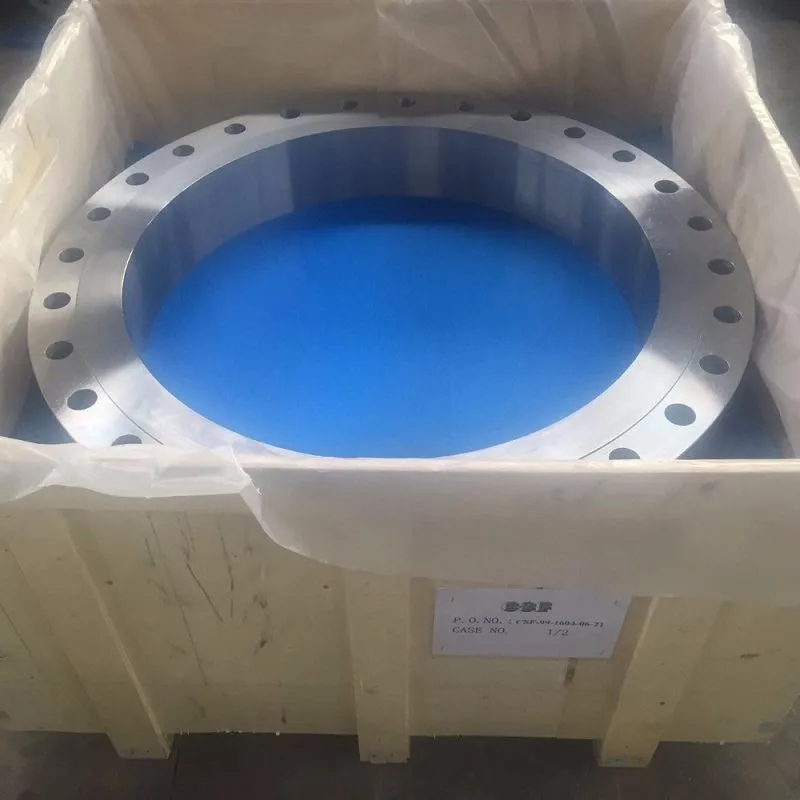
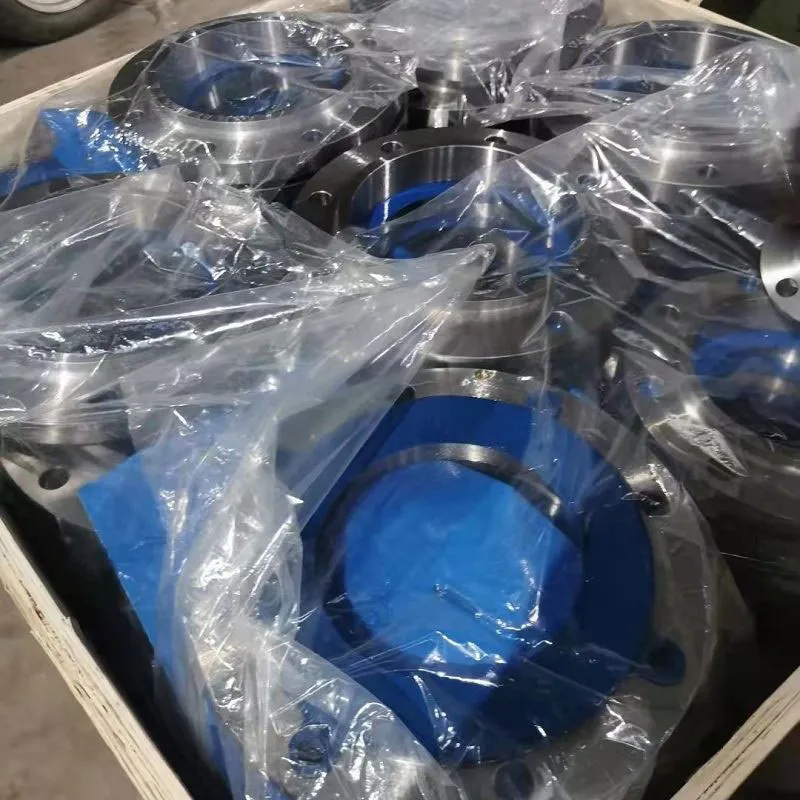
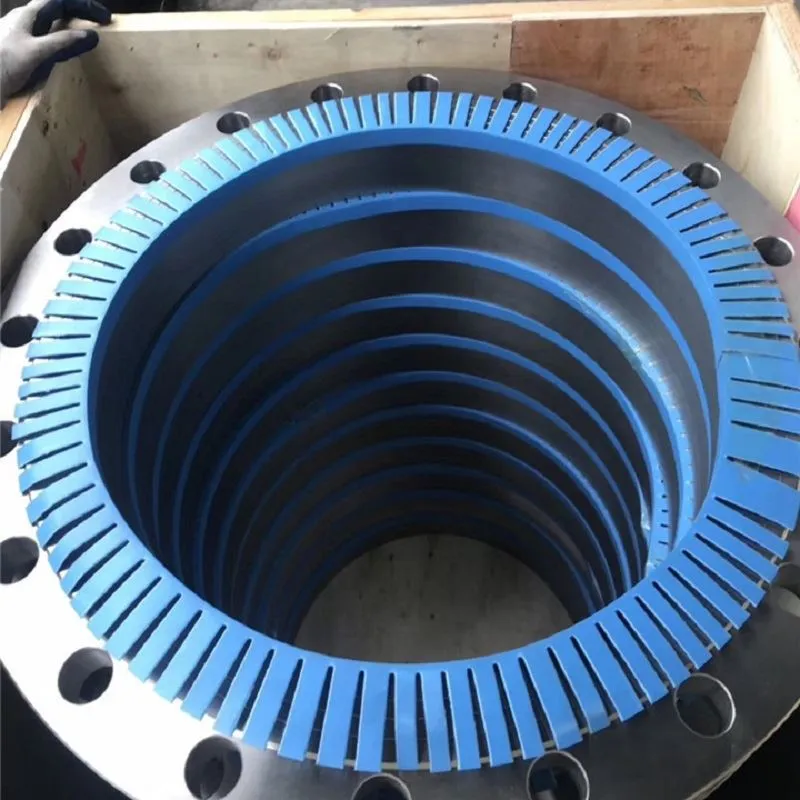
- Discuss packing conditions. The flanges must be packaged so that the sealing surfaces do not touch each other and are not damaged during transportation.
- Specify penalties for missed delivery deadlines in the contract. In 2026, this is the only incentive for the plant to work efficiently.
Conclusion: The cost of error is too high
To summarize, I want to say one thing that may seem banal, but it is key. There are no small details in industrial fittings. The LS flange connection is not just a piece of hardware. This is a security element.
By chasing the lowest price from the factory, you risk getting a problem whose solution will cost ten times more. The market of 2026 requires a balanced approach. Choose a partner not by the bottom line in the commercial offer, but by reputation, the presence of its own testing laboratories and willingness to bear responsibility.
Yes, the factory price is attractive. Yes, it allows you to save money during the construction phase. But remember: operation lasts for decades. And in five years, when the first serious problems with tightness begin due to the pennies saved on the quality of metal or processing, remember this text.
Look for balance. Request documents. Check the geometry. And never, hear me, never install flange connections without first inspecting the sealing surfaces. In the harsh Russian conditions, this rule was written in blood and lost millions.
I hope this review will help you navigate the complex sea of 2026 offers and choose a truly reliable solution. Protect your pipelines and budgets.