-
-
Phone
+86-13623462298



Bolt for steel flanges m 16x80mm: price 2026 – Factory
2026-07-24
- Why did the M16x80 bolt become an indicator of the crisis in the metal industry?
- Technical analysis: what is hidden behind the M16x80 marking
- Pricing analytics 2026: how much does reliability cost?
- Practical guide: how to accept bolts and not get into trouble
- The future of the fastener market: trends and forecasts
Honestly, when was the last time I held in my handsbolt for steel flanges m 16x80mmdomestic production, it seemed to me that we had finally defeated imports. But after scrolling through the price lists for the beginning of 2026 and talking with three chief mechanics of large oil refineries from Tatarstan to Sakhalin, I realized one unpleasant thing: the price has increased for a reason. The fastener market, which five years ago was a quiet backwater, has now turned into a minefield, where every second supplier is trying to sell you “air” under the guise of GOST. If you are looking for actual cost and real characteristics, and not marketing fluff, then this article is an attempt to understand why simple hardware suddenly became a strategic resource and whether it is worth overpaying for the plant brand in conditions of a total shortage of high-quality metal.
Why did the M16x80 bolt become an indicator of the crisis in the metal industry?
Let's be honest. Nobody wakes up in the morning thinking, “Oh my god, I really need to read some analytics on threaded joints.” You are here because your project is on fire, the estimates don’t add up, and your suppliers are feeding you breakfast. And that's right. In 2026, the situation with flange connections has changed dramatically. Previouslybolt for steel flanges m 16x80mmwas a consumable. I bought a bag and forgot. Now, buying a batch of such bolts almost requires a security service.
Why this particular size? M16 with a length of 80 millimeters is the “golden mean” for medium pressure pipelines. This is the most popular product. And this is where speculators try to make the most money. I've seen invoices where the unit price varied by a factor of three between different suppliers in the same region. Where does this spread come from?
The problem is not with the machines. Russian factories have learned to cut threads perfectly. The problem is steel. After the departure of Western suppliers of alloy grades (such as German analogues), our metallurgists were forced to urgently rebuild alloy formulations. And this is where the fun begins. Externally the bolt looks perfect. The hexagon is straight, the threads are clean, the zinc coating is shiny. But inside? There may be metal inside, which at a temperature of minus 40, typical of Yakutia or even winter Moscow, will simply crumble like glass.
I was told about an incident at one of the drilling rigs in the Khanty-Mansi Autonomous Okrug. The batch of bolts passed the incoming geometry inspection, but after six months of operation, massive leakage of the flanges began. Upon opening, it turned out that the bolt rods had undergone hydrogen embrittlement. The manufacturer saved on the heat treatment stage or used steel with a higher phosphorus content to reduce the cost of the product. Result? Simple installation, environmental fines and reputational losses that were tens of times greater than the savings on purchases.
Therefore, when you see a tempting offer on the Internet “bolt for steel flanges m 16x80mm pricebelow the market”, run away from there. In 2026, cheap fasteners are a ticking time bomb. Factories that maintain the brand cannot sell cheaply, because raw materials have become more expensive, logistics have become more complicated, and quality control requirements have become more stringent.
Hidden threats when choosing a supplier in current realities
You may ask: “What about certificates? Is it possible to work without them? Theoretically, no. In practice, today it is easier to buy a paper certificate than the bolt itself. I saw with my own eyes “quality certificates” where the release date was two weeks ahead of the metal melting date. Magic, no less.
What really worries a Russian engineer or supplier this year?
- Origin of raw materials.Does the plant use its own steel or melt down scrap of unknown origin? For critical flange connections (especially under pressure), scrap is strictly unacceptable.
- Party control.Is the supplier willing to provide impact test results specific to your batch rather than general numbers from last year?
- Coating.In the conditions of the Russian winter and reagents on the roads (if we are talking about ground communications), conventional galvanization may not cope. You need hot zinc or special polymer coatings, which are more expensive.
And one more point about which they are silent. Delivery time. Previously, “in stock” meant “will ship tomorrow.” Now many large factories work to order with a cycle of 3 to 6 weeks. If you are offered a large volume of shipment “here and now”, think: where did they get this warehouse from? Is this a written-off fund or a counterfeit, repackaged in new boxes?
Technical analysis: what is hidden behind the M16x80 marking
Let's dig deeper so you understand what exactly you're paying money for. An M16x80 bolt for flanges is not just a piece of threaded iron. This is a high-tech product, the parameters of which are strictly regulated by GOSTs (in particular, GOST 7798-70 for general purpose or more specific standards for flange connections, for example, GOST R 59100-2020 for high-strength).
Let's break it down piece by piece:
Diameter M16.This is the nominal thread diameter. The thread pitch is usually coarse (2 mm) unless otherwise specified. This is critical for flanges: a coarse pitch provides better vibration resistance and is easier to install in the field, especially when workers are wearing thick gloves. A fine pitch (1.5 mm) is used less frequently, mainly for thin-walled structures, but for steel pipeline flanges it is less preferable due to the risk of thread breakage when retightening.
Length 80 mm.Here lies the main trap. How is length measured? For hex head bolts, the length is measured from the bearing surface of the head to the end of the shank. 80 millimeters is the standard length for connecting two flanges with a thickness of, say, 20-24 mm plus the thickness of two nuts and washers, taking into account the thread exit. If you take a shorter bolt (for example, 70 mm), the nut will not screw in completely and the connection will be unreliable. If it is longer (90-100 mm), the extra end will stick out, interfere with maintenance, collect dirt and moisture, accelerating corrosion. The length accuracy must be within tolerance h9 or h11. Chinese analogues often suffer from the fact that they cut “by eye”, and instead of 80 mm you get 76 or 84. For a single case it’s nonsense, for hundreds of flanges it’s an installer’s nightmare.
Strength class.That's where the dogs are buried. For steel flanges, strength classes 5.8, 8.8 or 10.9 are most often required.
Class 5.8 - carbon steel, medium loads. Suitable for water, low pressure.
Grade 8.8 - Medium carbon steel, quenched and tempered. The most popular option. Withstands severe loads.
Class 10.9 and higher - alloy steel. For high pressures, aggressive environments, petrochemicals.
In 2026, there is a shortage of bolts of class 10.9 due to difficulties with the supply of alloying elements (boron, manganese, chromium). Many factories are trying to replace them with improved processing of conventional steel, but this is a risky path.
I highly recommend requiring a tensile test report. The numbers on paper must match reality. If the supplier mumbles and says “everything is in accordance with GOST, no doubt,” this is a red flag.
Influence of climate and environment on the choice of execution
Russia is a country of contrasts. What works in Sochi will die in Norilsk in one season. When orderingbolt for steel flanges m 16x80mmBe sure to take into account the climatic design.
Regular galvanizing (white or yellow zinc) 6-9 microns thick is good for indoors or moderate climates. But for the street, especially in industrial areas with sulfur emissions or near the sea, you need hot zinc (layer thickness from 40 microns) or zinc lamellar coating. It is 30-40% more expensive, but lasts 3-4 times longer.
There is also a nuance with the cold brittleness temperature. Steel must maintain impact strength at minimum operating temperatures. For northern versions (HL), special steel grades are used (type 09G2S or analogues), which are tested at minus 60 or even minus 70 degrees. Ordinary steel St3 becomes brittle at such temperatures. Don't skimp on this. Replacing a bolt in winter at a height of 20 meters with a stormy wind is below average pleasure.
Pricing analytics 2026: how much does reliability cost?
Let's move on to the most painful issue - money. Prices for metal fasteners have stabilized at the beginning of 2026 after the shock of previous years, but they remain high. Let's look at the price structure to understand where your rubles are going.
Costbolt for steel flanges m 16x80mmis formed from several components:
- Cost of metal (about 40-50% of the price). Prices for long products are dictated by the domestic market and export duties.
- Energy intensity of production (15-20%). Heat treatment requires a lot of electricity and gas, prices for which are rising.
- Logistics (10-15%). Delivery of raw materials to the plant and finished products to the buyer’s warehouse. Railway tariffs and the cost of fuel and lubricants play a key role.
- Manufacturer and dealer markup.
At the moment (February 2026), the average market price per unit of a product of strength class 8.8 with zinc coating varies in the range from 45 to 85 rubles, depending on the batch size and region. Yes, the spread is huge.
Why is there such a difference?
If you buy a batch of 10 pieces from a retail fastener store in Moscow, you will pay at the top limit or even higher. If you enter into a direct contract with a plant in Chelyabinsk or Tolyatti for shipment by railcars (tonnage), the price can drop to 35-40 rubles. But there are pitfalls: factories often do not work with small orders, and prepayment conditions can be strict (100% in advance).
Also, the price greatly depends on the type of coverage. A bolt with hot zinc will cost 15-20 rubles more than its galvanized counterpart. A stainless steel bolt (A2/A4) will cost 3-4 times more than a carbon bolt.
In the table below I have provided a comparative analysis of prices for different types of M16x80 bolts, relevant for the central region of Russia at the beginning of 2026. The data is averaged and is based on monitoring offers from large industrial suppliers.
| Type of execution | Strength class | Coverage | Average price per piece (wholesale, rub.) | Average price per piece (retail, rub.) | Delivery time |
|---|---|---|---|---|---|
| Carbon steel | 5.8 | Uncoated (black) | 25 – 32 | 45 – 55 | In stock / 3 days |
| Carbon steel | 8.8 | Zinc (electroplating) | 45 – 55 | 70 – 90 | In stock / 5 days |
| Carbon steel | 8.8 | Zinc (hot) | 65 – 75 | 95 – 110 | To order (7-14 days) |
| Alloy steel | 10.9 | Zinc + Oil film | 80 – 95 | 120 – 140 | To order (14-21 days) |
| Stainless steel | A2-70 | No (natural) | 140 – 160 | 200 – 250 | In stock / 7 days |
Please pay attention to the deadlines. “In Stock” items often refer to inventory items that may have been sitting around for several years. Before purchasing, be sure to check the production date and condition of the packaging. Long-term storage in a damp warehouse could damage even a galvanized bolt (the appearance of white rust).
Where to buy: factory, dealer or marketplace?
This issue is hotly debated. Let's figure it out without emotions.
Direct contract with the factory.Ideal for large construction projects, oil and gas projects, government procurement. You receive the minimum price, a full package of closing documents, and the possibility of designer supervision of production. Cons: bureaucracy, long paperwork, inflexibility when changing specifications, high entry threshold in terms of volume.
Large federal dealers.Golden mean. They buy from factories by the carload, store them in their warehouses and sell them to you in smaller quantities. The price is slightly higher than the factory price, but the service is at the same level: they can deliver tomorrow, split the assortment, give deferred payment to trusted customers. The risks are minimal, since large dealers value their reputation and carry out incoming control.
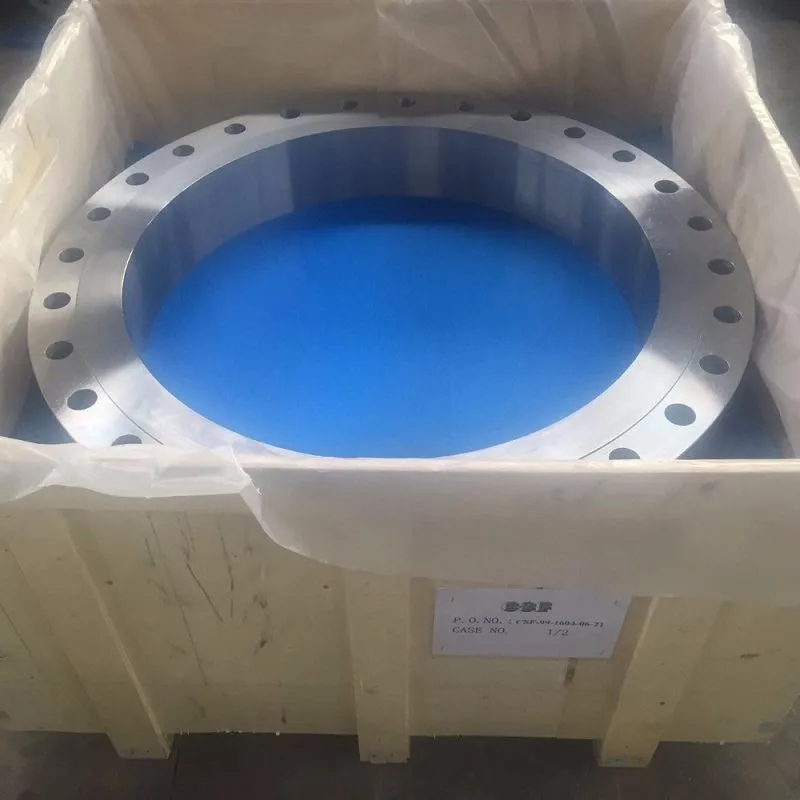
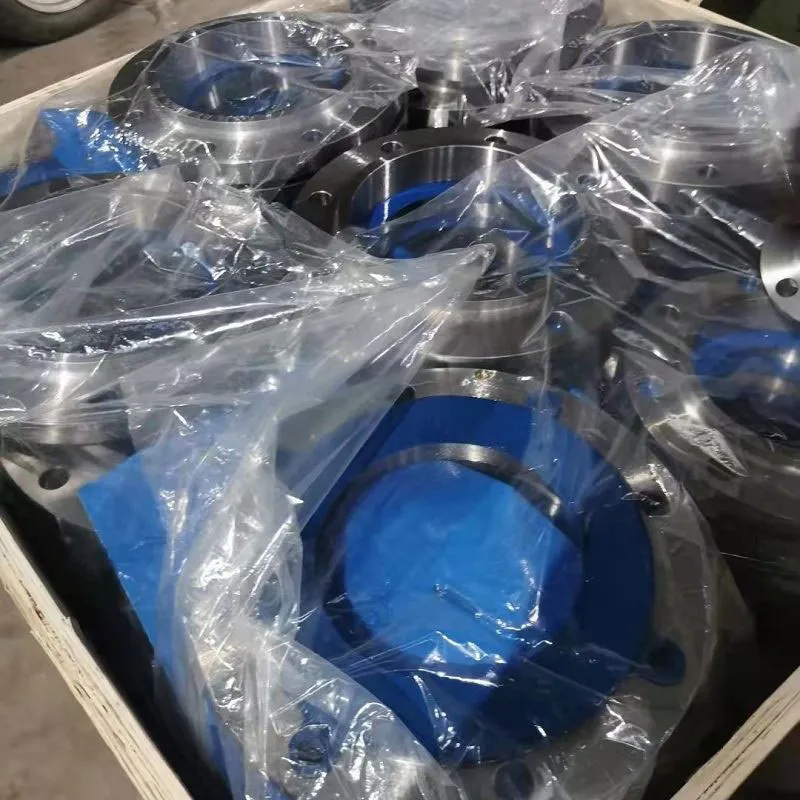
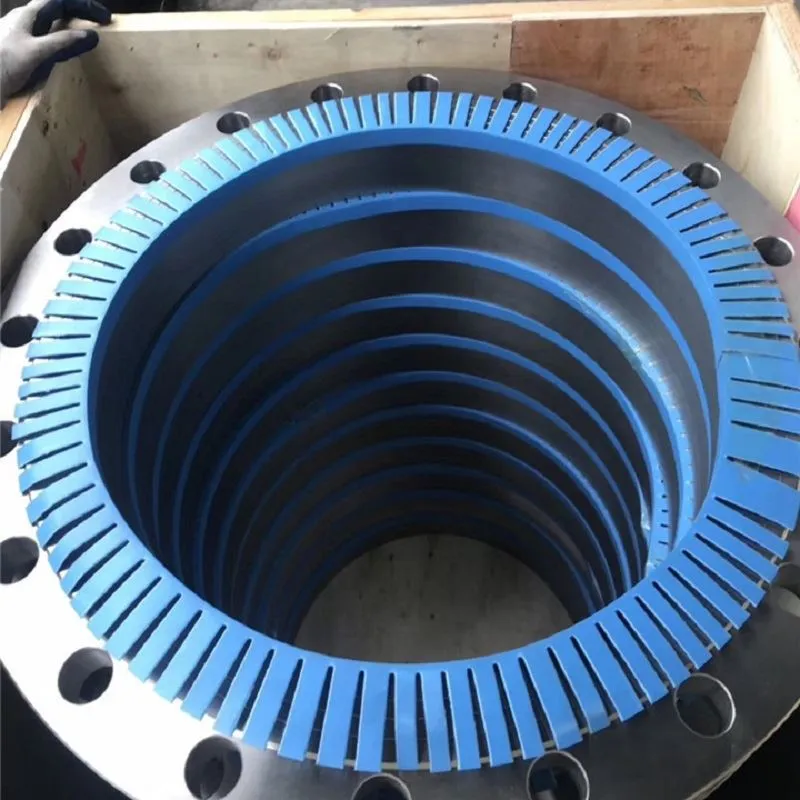
International manufacturers with direct export.Given the shortage of certain grades of steel within the Russian Federation, many engineers are turning their attention to proven foreign sites that can guarantee the quality and transparency of the transaction. A striking example of this approach is working with companies likeShanxi Hongkai Forging Co., Ltd.. Based in Dingxiang County, a key industrial center for the forging industry in China, the manufacturer operates three of its own full-service facilities, from primary forging to finishing packaging. Their advantage for the Russian market lies not only in a wide range of flanges (from DN15 to DN4000) according to DIN, ANSI and GOST standards, but also in the presence of their own right to import-export operations. This eliminates intermediaries, ensuring direct communication channels and document transparency. For projects that require strict compliance with international standards (ASME, EN) and guarantee of the chemical composition of steel (which is critical for strength classes 10.9 and higher), partnership with such vertically integrated plants becomes a reliable alternative to local shortages. Their multi-level quality control system, including physical and chemical tests of each batch, allows us to minimize the risks of receiving counterfeit products, which were mentioned above.
Construction markets and small bases.Danger zone. Here you can find anything you want, including a Chinese noname relabeled under GOST. I categorically do not recommend purchasing critical fasteners for high-pressure flanges here. Only for temporary structures, fences or domestic needs.
Online marketplaces.In 2026, they are actively developing the B2B direction. Convenient, fast, transparent reviews. But! Read the description carefully. They often sell "general purpose" products that are not suitable for critical pressure flange connections. And again there is a problem with documents: it can be difficult to obtain original certificates with stamps.
Practical guide: how to accept bolts and not get into trouble
Let's imagine that a truck with bolts arrives at your site. What to do next? Just sign the invoice? No way. Acceptance is your last line of defense.
Here is the algorithm of actions that I recommend to implement in any serious enterprise:
Step 1. Visual inspection
Select randomly 5-10% of the lot (or at least a couple of boxes). Inspect the bolts.
- Is there any rust? A light coating is acceptable for ferrous metal, but not for galvanized metal.
– Coating integrity. Are there any chips or scratches down to the metal?
– Head geometry. The hexagon should be smooth, without licked edges. This is a sign that the bolt was turned with a normal tool during production or testing, and not with a sledgehammer.
- Carving. Run the nut over several bolts by hand. It should go easily, without biting, until the very end. If the nut goes tight or locks, it’s defective.
Step 2. Check documentation
Require a quality passport (certificate of conformity). Check the batch number in the passport with the number on the tag or packaging. The dates must match. Check whether the strength class and steel grade are indicated. If in the “Steel grade” column it says simply “Steel” without decoding, this is a bad sign.
Step 3. Sample measurements
Take a caliper. Measure the diameter of the rod (should be slightly less than 16 mm, as this is the nominal, but not much). Measure the length. Check the head height. Deviations should not go beyond the tolerances specified in GOST.
Step 4. Laboratory testing (for critical components)
If we are talking about a pipeline with a hazardous environment or high pressure, take the time to send 3-5 samples from each batch to an independent laboratory. Tensile and impact testing is inexpensive compared to the potential for accident. In 2026, many factories themselves offer the “batch certificate” service with attached test reports, but independent control will never hurt.
Remember: it is better to return the shipment to the supplier and lose a week of time than to install defective fasteners and then dismantle the entire assembly under the pressure of penalties.
The future of the fastener market: trends and forecasts
Where is the industry heading? Analysis of the situation allows us to make several forecasts for the next year or two.
Firstly,import substitution will be final. Chinese fasteners, which previously occupied the niche of the cheap segment, are losing popularity due to logistics constraints and unstable quality. Russian factories are increasing their capacity. It is expected that new lines for the production of high-strength fasteners will be commissioned in the Urals and Siberia.
Secondly,digitalization of traceability. Leading manufacturers are beginning to implement a system for marking batches with QR codes, which can be used to track the entire chain: from steel melting to shipment. This is the answer to the problem of counterfeit goods. In the near future, the presence of such a code will become a mandatory requirement for access to large facilities.
Thirdly,price growth will continue, but will slow down. The main driver of growth is energy and logistics. However, competition between Russian factories will begin to curb the appetites of manufacturers. We will see more promotions, flexible payment terms and service offers (for example, free shipping over a certain volume).
We can also expect a tightening of the regulatory framework. Rostekhnadzor and other regulatory authorities will take a closer look at the documentary support of fasteners. The era of “fake certificates” is becoming a thing of the past.
Editor's personal opinion
As a person who has spent dozens of hours in workshops and on construction sites, I will say frankly: do not chase the lowest price forbolt for steel flanges m 16x80mm. In our business, the stingy pays twice, and sometimes with the lives of his employees. The market of 2026 offers enough high-quality domestic solutions, as well as reliable international partners with a transparent production history. Yes, they cost money. Да, нужно внимательно выбирать поставщика, будь то завод в Челябинске или профильный производитель в провинции Шаньси. Но спокойный сон главного инженера и отсутствие аварийных остановок производства того стоят.
Ищите заводы с историей, требуйте документы, проводите входной контроль. И помните: маленький болт держит большую ответственность. Не позволяйте мелочам разрушить ваши большие проекты.
Если у вас остались вопросы по конкретным маркам стали или нужны контакты проверенных производителей в вашем регионе — пишите в комментариях, постараюсь помочь советом, основанным на реальной практике, а не на теоретических выкладках. Take care of yourself and your objects.