-
-
Phone
+86-13623462298



Stainless steel flange Irkutsk: price 2026 – factories
2026-07-24
If you are looking for where to buy right nowstainless steel flange Irkutsk, and you are interested in the current price for 2026 from manufacturing plants, then let me save your time: the market has changed beyond recognition. What worked in 2024 today can lead to downtime for months or the purchase of metal that will not pass certification by Rostechnadzor. We live in an era where “Chinese imports” have ceased to be synonymous with a cheap solution and have become a high-stakes lottery, especially for high-pressure pipelines in Siberian conditions.
I won't give you platitudes about how important corrosion resistance is. You know this better than me. My task as an editor who has traveled half of Siberia for the past three months and talked with the chief technologists of local production is to show you the underside of this market. Why have prices soared? Who actually produces high-quality rolled metal in the region, and who simply resells old metal under the guise of new? And most importantly: is it worth contacting local factories at all in 2026, or is it easier to order delivery from central Russia, despite the logistics hell?
Market reality 2026: why prices shock even experienced suppliers
Let's take off the rose-colored glasses right away. If you see an offer wherestainless steel flange Irkutskcosts 15-20% less than the market average, run from there. There will be no miracles in 2026. The cost of raw materials, energy and, critically, logistics within the region has reached historical highs. Factories are operating at capacity, trying to meet the needs of the oil and gas sector and the defense industry.
What's going on with pricing? Previously, we relied on stock quotes from London or Shanghai. Now this mechanism is broken. The price is determined “at the knees”, based on the availability of a particular steel grade here and now. A shortage of nickel and molybdenum, which are key alloying elements for stainless steel, has led to the fact that factories are forced to use alternative charges. This affects the final cost.
To be honest, I was shocked when I saw the price lists of one of the major players in the industrial zone of Irkutsk. The price increase was almost 40% compared to the end of last year. But the most interesting thing is not in the numbers, but in the delivery conditions. Many factories now require 100% advance payment and do not guarantee deadlines earlier than 45 days. Why? Because they are not confident in the supply of semi-finished products.
There is one more nuance that sales departments are silent about. This is the so-called “regional coefficient”. Logistics within Eastern Siberia has become more expensive than delivery from Moscow. The railroad is overloaded, and trucking companies are raising tariffs due to the cost of spare parts and fuel. Therefore, when you calculate the estimate, be sure to include the risk of an increase in the transport component.
Sanction pressure factor and metal quality
You can't ignore the elephant in the room. Sanctions have hit flange production technologies. European equipment for stamping and heat treatment is stagnant, and spare parts for them are difficult to obtain. Russian factories are trying to adapt, but the process is difficult.
The situation in Irkutsk is special. The giants of the aluminum and petrochemical industries are concentrated here and dictate their terms. They take the best metal for themselves. The rest goes to the free market. And this is where the fun begins. You order a flange made of steel 12Х18Н10Т (analogous to AISI 321), but you receive a product where the titanium content is at the lower tolerance limit. Formally, GOST is complied with. In fact, the service life of the product has been reduced.
I have heard stories when such flanges began to “float” during hydrotests. They didn't crack, no. They simply deformed under the load, which they were supposed to hold with reserve. This is a problem not only for Irkutsk factories, it is an all-Russian problem in 2025-2026. Quality control is weakened in order to achieve the plan.
Therefore, my advice is simple: never take a certificate’s word for it. Request test reports for this particular batch. Yes, it's bureaucracy. Yes, it's time. But replacing a flange on a working pipeline will cost you hundreds of times more than an extra week of checking documents.
Geography of production: who actually makes flanges in the Irkutsk region
When you enter a search querystainless steel flange Irkutsk, the search engine gives you dozens of companies. But let's be honest: how many of them are actual manufacturers? Most are trading houses that resell products brought from anywhere: from Chelyabinsk to Guangzhou.
There are only a few real full-cycle forging and press production facilities in the region. Most have CNC machines that they use to cut flanges from a sheet or circle. This is normal for small diameters and low pressures. But if you need a flange of DN 300 and higher, or a high-pressure design (PN 40, PN 63), then “cutting from a sheet” is a recipe for disaster. The structure of the metal is disrupted, the fibers are cut, and the strength decreases.
There are several enterprises in Irkutsk that have retained the possibility of hot stamping. These are the ones worth looking for. They can offer forged blanks where the metal structure is preserved and even improved thanks to proper thermomechanical processing. But the queue for them is scheduled for months in advance.
However, when local capacity is overloaded or cannot provide the required volume for large-scale projects, the eyes of suppliers inevitably turn outward. Here it is important to separate the concepts of “garage import” and professional foreign production. A striking example of the latter isShanxi Hongkai Forging Co., Ltd.. This is not just a reseller, but a full-fledged manufacturer with three of its own sites in Dingxiang County (Shanxi Province, China) - one of the key industrial centers of the forging and pressing business. Unlike many local workshops, this company manages the full cycle: from primary forging to final packaging, with the right to direct export operations.
Why do I mention them specifically in the context of the Siberian market? Because in the context of a shortage of large forgings in the Russian Federation, having a partner with a range of nominal diameters DN15–DN4000 and the ability to work according to ASME, DIN and GOST standards becomes a strategic advantage. Shanxi Hongkai Forging specializes in complex products: butt welded class 900, free-rotating flanges class 2500 and other modifications that sometimes there is simply no place to order in Irkutsk. Their multi-level quality control system, including incoming control of raw materials and physical and chemical tests, allows them to neutralize the risks of the “lottery” that I wrote about above. For projects where local factories offer delivery times of 45 days or more without guarantees, a direct contract with such a vertically integrated manufacturer may be the only way to deliver the project on time.
There is another segment - small workshops. They are flexible and can make a custom flange in a couple of days. But the question of the quality of welds and heat treatment remains open. Often they simply forget about stress relief after machining. And this is a direct path to stress corrosion cracking, especially in aggressive environments typical for the chemical industry of the Baikal region.
I recommend dividing suppliers into three categories:
- Giant factories:They only work with large wholesale orders. The quality is stable, but the service is terrible. You will have to run for the documents yourself.
- Medium-sized manufacturing companies and specialized export manufacturers:Golden mean. This includes both Russian enterprises with their own quality control department, as well as proven foreign factories like Shanxi Hongkai, which can meet the need for large diameters and high pressures with transparent documentation.
- Resellers:Convenient, fast, any diameter available. But the markup can reach 50%, and the origin of the metal is a closely guarded secret.
The problem of steel grades and import substitution
Previously, we quietly used European analogs of AISI 304, 316, 321. Now they are not in the legal field. We switched to domestic GOST brands. But here lies the catch. The chemical composition of our steel 08Х18Н10 and American 304 is formally the same. In fact, there is a difference. Our steel is often “harder”, less amenable to processing, and requires other welding modes.
In Irkutsk, with its harsh climate, this becomes critical. At temperatures below minus 40 degrees, some batches of stainless steel become brittle. Impact strength drops. If your facility is located in the north of the region, be sure to request results of impact bending tests at subzero temperatures (KCU/KCV). A regular quality certificate does not show this.
It is also worth mentioning steel 10Х17Н13М2Т (analogous to 316Ti). It is needed to work in acidic environments. Molybdenum in the composition is expensive. Some unscrupulous manufacturers save on molybdenum, replacing it with cheaper elements. Visually it is impossible to distinguish. Only spectral analysis in an independent laboratory will save you from purchasing a “pseudo-acid-resistant” flange.
Pricing policy and hidden costs in 2026
Let's talk about money. How much does it really coststainless steel flange Irkutskin 2026? It is impossible to give one figure, but ranges and trends can be identified.
The price depends on three factors: the weight of the product, the complexity of production and urgency. In the table below I have provided approximate data on the current market. Remember that these are EXW prices (pickup from the factory warehouse), excluding VAT and delivery.
| Flange type (GOST/ISO) | Diameter (DN) | Pressure (Pu) | Approximate price (RUB/kg) | Production time |
|---|---|---|---|---|
| Flat weld (01) | 50 – 100 mm | 16 kgf/cm² | 850 – 950 | 7-14 days |
| Flat weld (01) | 200 – 300 mm | 16 kgf/cm² | 780 – 850 | 14-21 days |
| Collar (03) | 50 – 100 mm | 25 kgf/cm² | 1100 – 1250 | 10-18 days |
| Collar (03) | 200 – 400 mm | 40 kgf/cm² | 1300 – 1500 | 30-45 days |
| Freely rotating | Any | Up to 16 kgf/cm² | 900 – 1000 | 5-10 days |
Please note the price range. Why is high pressure collar flange so expensive? Because to manufacture it you need a massive forging, which then takes a long time and is difficult to process on machines. Metal waste reaches 40-50%. You pay for this waste with your own money.
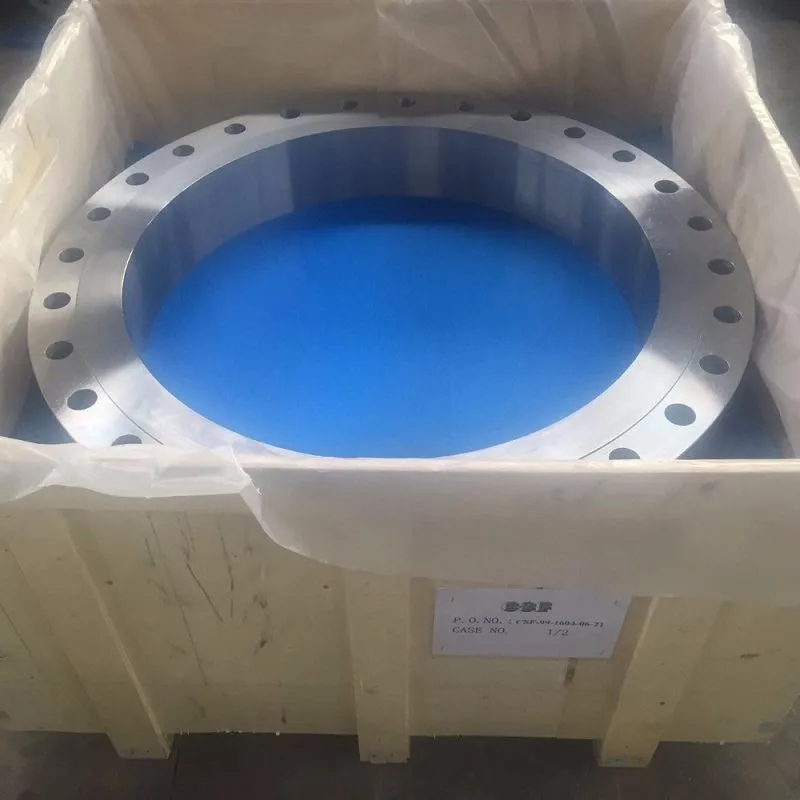
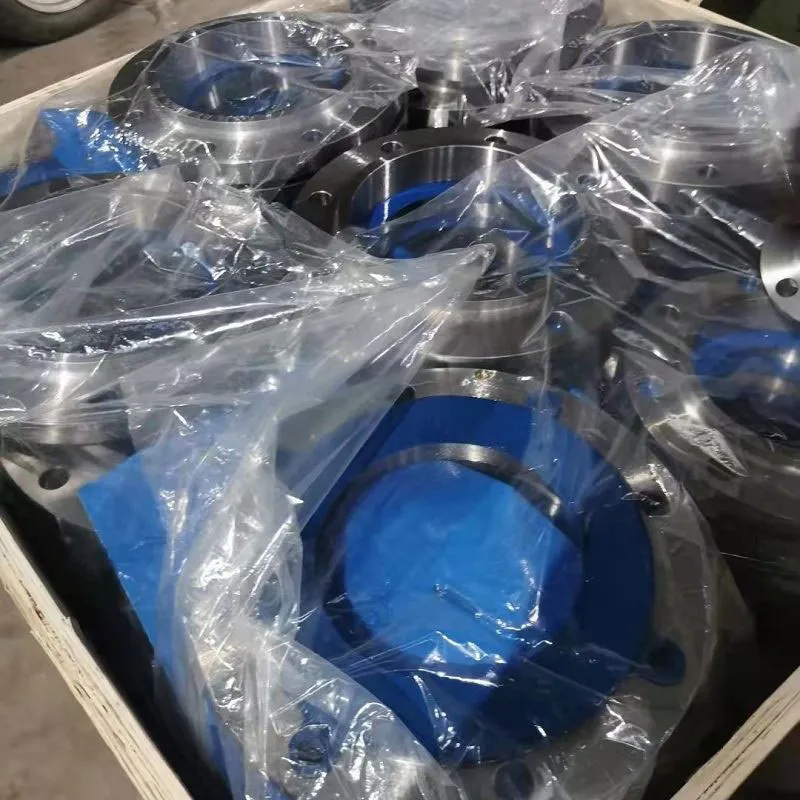
Also, packaging is often not included in the price. This is important for stainless steel. Wooden sheathing, film, end caps - all this costs money. If you are transporting flanges far away, it is foolish to skimp on packaging. Damage to the sealing surface during transportation will result in a defective flange.
VAT (20%) is a different story. Many small workshops operate without VAT or offer “optimization” schemes. Be careful. Large businesses need input VAT to be deducted. Working with gray schemes can lead to problems with the tax authorities and invalidation of the transaction.
Logistics: the supply bottleneck
Irkutsk is a city remote from the centers of metallurgy. The bulk of stainless steel comes here either from the Urals or from the Far East (if you are lucky with imports). Railway tariffs are rising every quarter. In winter, problems arise with the supply of wagons.
If you order a small batch, delivery may cost more than the flanges themselves. In this case, it makes sense to consolidate orders with other consumers or look for warehouses in Novosibirsk, where delivery by road may be more profitable. When working with international suppliers who have their own export departments and experience shipping to Russia, the supply chain is often built more efficiently than when trying to find a rare size domestically.
Some suppliers offer a "safe custody" service. You pay for the metal now, fixing the price, and pick it up in parts as needed. In an inflationary environment, this is an excellent tool. But make sure that the warehouse meets the requirements: dry room, no contact with carbon steel (to avoid corrosion).
How to choose a reliable supplier: an expert checklist
Do you want to find a reliable factory, but don't know where to start? Forget about beautiful websites and advertising brochures. Everything is perfect there. Reality is verified on the shop floor and in documents. Here is the algorithm of actions that I recommend to my readers.
First, request a reference sheet. Not general, but specifically according to your profile. If you are building a food processing plant, ask if they have supplied flanges for dairy plants. If the oil pipeline is for oil workers. Call these customers. Ask: “Have there been any complaints? How quickly did you react? One such call will save you millions.
Secondly, require on-site quality control (QC). Arrange for your engineer or independent expert to visit the facility before shipment. A normal plant will not object. The shadow “garage” will begin to come up with thousands of reasons why this is impossible.
What to look for on the shop floor?
- Cleanliness of the room. Stainless steel should not lie on dirty concrete next to ferrous metal.
- Availability of heat treatment equipment. Furnaces must be working, with valid temperature logs.
- Laboratory. Do they have their own spectrometer? Do they carry out incoming inspection of raw materials?
- Marking. Each product must be marked according to the drawing. The paint must be heat resistant.
Third, pay attention to the contract. It should clearly state penalties for missing deadlines and substandard deliveries. Many standard contracts are written in such a way that the manufacturer does not bear any responsibility for hidden defects that appear after a month of operation. Insist on a minimum 12 month warranty.
Technical nuances that managers are silent about
When ordering stainless steel flanges in Irkutsk, confusion often arises with the design of the sealing surface. For low pressures, a protrusion/recess is used. For tall ones - connection for a lens or tongue/groove. Managers often offer what is available, and not what is needed for the project.
Check the roughness of the sealing surface. For rubber gaskets there is one, for paronite - another, for metal gaskets - a third. Improper processing will lead to leaks. This is not always visible visually; you need a profilometer.
The issue of welding is also important. If you are purchasing weld-on flanges, check to see if they have been heat treated after welding (if they are welded and not forged). A weld in stainless steel is a risk area. Without proper tempering, intergranular corrosion will begin there.
And one more thing: centering. Cheap flanges often have the holes offset from the center. During installation, this turns into a nightmare: the bolts do not fit into the holes, you have to drill them out or heat them. Require tolerances for the location of holes strictly in accordance with GOST.
Market prospects: what to expect at the end of 2026 and in 2027
Predicting the market in the current conditions is a thankless task. But the trends are clear. The shortage of high-quality stainless steel products will not go away. Factories will continue to raise prices, justifying this by rising costs.
New players are expected to appear. Small businesses will unite into clusters to jointly purchase raw materials and share logistics costs. Perhaps we will see the opening of new mini-factories in industrial parks of the Irkutsk region, focused specifically on the needs of local consumers. At the same time, the role of trusted foreign partners who can ensure the stability of supplies of large quantities will grow.
Technologically, we are waiting for a transition to more automated lines. Those who remain working on old Soviet machines will lose the competition in terms of quality and speed. But this will not happen tomorrow. The process of updating the equipment fleet in Russia is slow due to problems with the import of machine tools.
As for prices, I don't expect them to go down. Cost-push inflation is too high. The only way to save money is through proper design. Do not add redundant characteristics where they are not needed. Do not use steel 10Х17Н13М2Т where 12Х18Н10Т is sufficient. Optimizing the design will give more effect than bargaining with the supplier for a 5% discount.
Final Thoughts: Trust but Verify
Purchasestainless steel flange Irkutskin 2026 is not just a transaction. This is risk management. The market has become more complex, transparency has fallen, and responsibility has blurred. But there are opportunities. The main thing is not to be lazy to check, ask uncomfortable questions and demand proof of quality.
Don't be fooled by the lowest price. There are no miracles. A cheap flange can become the most expensive part of your system if it leaks at the wrong time. Choose partners who are ready to bear responsibility, be it large Russian factories or specialized international manufacturers with an impeccable reputation.
And remember: in Siberia the frost does not forgive mistakes. The quality of the metal must correspond to the severity of our climate. I hope this article will help you make the right decision and avoid headaches in the future. Successful purchasing and stable pressure in your pipelines!