-
-
Phone
+86-13623462298



Steel rotating plugs for flanges: prices 2026 – Factory
2026-08-09
When you're lookingrotating steel plugs for flanges prices 2026, most managers on plant websites will sing your praises about “high quality” and “European standards”, but let’s be honest: in the current reality of pipeline fittings in the Russian Federation, these words are often worthless. The market is oversaturated with offers where, under the guise of 09G2S steel, they can slip you regular St3, and the price will be inflated by 30% simply because of the beautiful logo on the form. In this article I will not retell GOSTs - you will find them yourself. I will talk about what is happening in the shops right now, why forecasts for 2026 look alarming for buyers, and how to really save money without risking a fistula in the pressure system after six months of operation.
Why the plug market is storming: hidden supply problems 2025-2026
You may have noticed that production times have suddenly increased from two weeks to one and a half months. This is not an accident. Rolled metal manufacturers supplying sheet metal to our factories are faced with a shortage of certain grades of steel. Yes, we have learned to do a lot of things ourselves, but specific alloying additives still create bottlenecks. And this is where the fun begins.
Many factories, trying to keep old contracts, begin to cheat with wall thickness. Formally, they comply with GOST, but use minimum permissible deviations, which, in an aggressive environment (especially in oil and gas or chemicals), reduce the life of the product by half. To be honest (if I may allow such a lyrical digression in the technical text), I saw games where the “rotary” part jammed already during the first revision after three months. Why? Because they saved on lubrication of the hinge mechanism or used a cheap seal that becomes dull in the cold.
And now about the main fear of any engineer in Siberia or the Far East.Steel rotating plugs- it's not just a piece of metal. This is a mechanism. And if the hinge jams at -45°C, you will not be able to quickly close off a section of pipe for repair. You will have to cut with a grinder or wait for a thaw. Is saving 500 rubles per unit of production worth the risk of stopping the production line? The question is rhetorical, but everyone accepts the answer to it themselves by signing the acceptance certificate.
Real Cost of Ownership vs Purchase Price
Let's face it. When you request a quote with the request "rotating steel plugs for flanges prices 2026 – Factory", you get a number. But this figure is just the tip of the iceberg. The actual price consists of:
- The cost of the part itself (obviously).
- Logistics (which in Russia can now amount to up to 40% of the order cost, especially if the plant is in Chelyabinsk and the facility is in Yakutia).
- Cost of installation and subsequent maintenance.
- Risks of downtime due to defects.
Energy prices are expected to rise further in 2026, which will directly impact steel production costs. Factories are already including 15-20% indexation in their price lists. Therefore, those “promotional” prices that you see today may become history tomorrow. But there is a nuance: large market players often fix the price in the contract at the advance stage. This is your leverage.
Technical nuances: where the dogs are buried
It would seem that what could be simpler than a steel plug? A round pancake with an eye or a turning mechanism. However, the devil, as always, is in the execution details. Rotary plugs (often called “disc plugs” or “wafer plugs”) have a critical component—an axis of rotation and a locking system.
In cheap options, which are offered en masse by small resellers, the axle is not protected in any way from the ingress of abrasive particles from the working environment. Imagine: a pipeline with process water, which is full of sand. Sand gets into the gap between the disc and the body (or flanges). After a year, you try to turn the plug to the “open” operating position, but it doesn’t go. The chain breaks, the lever breaks. It's good if there are no injuries.
What to look for in the documentation?
Do not blindly believe the inscription “Manufactured according to GOST”. Request a quality certificate indicating the steel heat number. For working environments with high pressure (Ru16, Ru25 and higher), the steel grade must correspond to the design. Most often this is 09G2S for northern versions or 12Х18Н10Т for aggressive environments. If you are offered St20 for an acidic environment, run away from such a supplier.
Another point that catalogs are silent about: the quality of processing of sealing surfaces. If the disc mirror is scratched or roughened above normal, tightness in the closed position will not be achieved even if the bolts are perfectly tightened. Leakage is guaranteed. Visual inspection is mandatory here, but it is better to order ultrasonic inspection of welds if we are talking about critical areas.
Comparison of execution types: What to choose for your object?
So that you don't get confused in the terms, I have compiled a small comparison table. It will help you understand what exactly you are paying for when choosing this or that type of plug.
| Plug type | Application | Pros | Cons and risks | Estimated service life (years) |
|---|---|---|---|---|
| Rotary (disc) with lock | Frequent switching and inspection of pipelines | Quick access, no need to remove bolts completely | Risk of axle jamming, more difficult to manufacture | 10-15 (with proper maintenance) |
| Wafer (damn) | Long-term killing of areas, conservation | Cheap, simple design, high reliability | Requires complete disassembly of the flange connection for removal | 20+ (almost eternal) |
| Elliptical (welded) | High pressure main pipelines | Maximum tightness, no detachable connections | Inability to quickly access, welding required | 25+ |
As can be seen from the table,steel rotating plugs for flangesoccupy their niche where efficiency is important. But this efficiency comes at the cost of a higher price and increased attention to maintenance. If your pipeline is in a “set it and forget it for 5 years” mode, it may be worth considering simpler options. But when it comes to production lines, where operating modes often change, a rotary plug is an indispensable tool.
Pricing policy 2026: forecast and reality
Let's talk about money. Prices for metal structures in Russia have always been volatile, but now the situation is aggravated by logistics burdens and exchange rate differences (even with internal calculations, many factories rely on imported equipment). At the beginning of 2026, the average price range for rotary plugs with diameters from DN100 to DN300 is as follows:
- Budget segment (St3, small diameters): from 1,500 to 3,000 rubles per piece.
- Middle segment (09G2S, standard version): from 4,500 to 9,000 rubles.
- Premium/Special version (stainless steel, low-temperature version KL1/KL2): from 15,000 rubles and above.
Please note: these are EXW (ex-factory) prices. Delivery to the site can double these amounts. Some factories offer a turnkey service with installation supervision, but this is usually 20-25% more expensive. Is it worth it? If you do not have your own qualified installation team, then definitely yes. Incorrect installation of the plug (misalignment, under-tightening of bolts) will negate all the advantages of an expensive product.
An interesting trend for 2025: the emergence of “gray” sales schemes. Small companies buy defective or substandard goods from large factories at a 40% discount, paint it and sell it as a first-class product. Externally it is almost impossible to distinguish. Marking is applied with any brand. How to protect yourself? Only work under a contract with strict penalties for non-compliance with the steel grade and mandatory incoming inspection at the site with the involvement of an independent laboratory.
Import substitution factor: myth or reality?
Previously, about five years ago, European plugs (Italy, Germany) were often used for critical components. They cost 3-4 times more than Russian ones, but lasted longer. Now the situation has changed. Russian factories, such as Tyazhpromarmatura, ARMATECH and a number of enterprises in the Urals and Siberia, have improved quality to a level where the difference becomes unnoticeable for most tasks. Moreover, Europeans no longer provide a guarantee for work in Russian winters and specific environments.
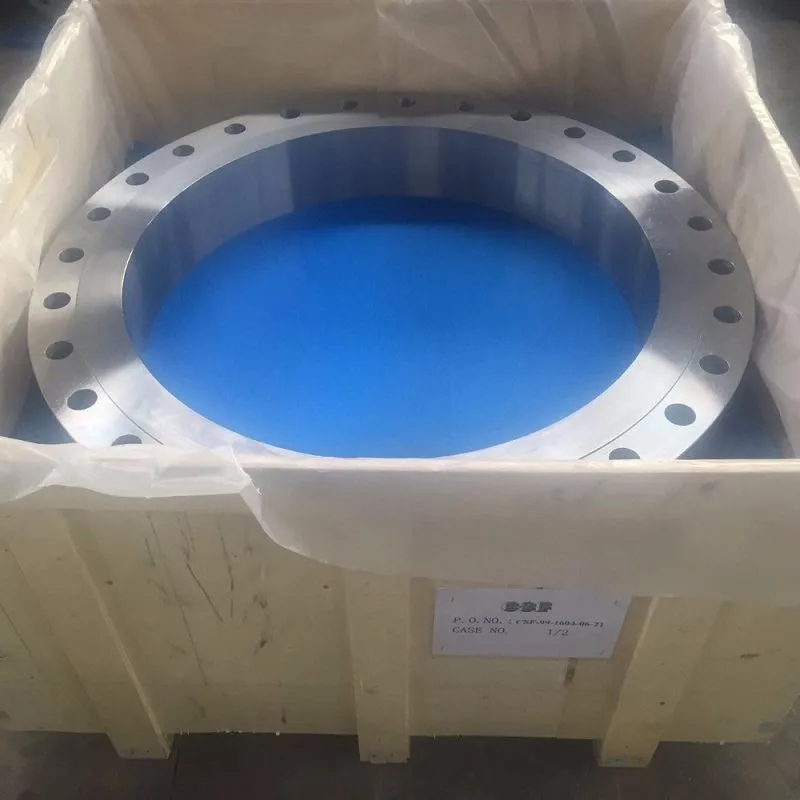
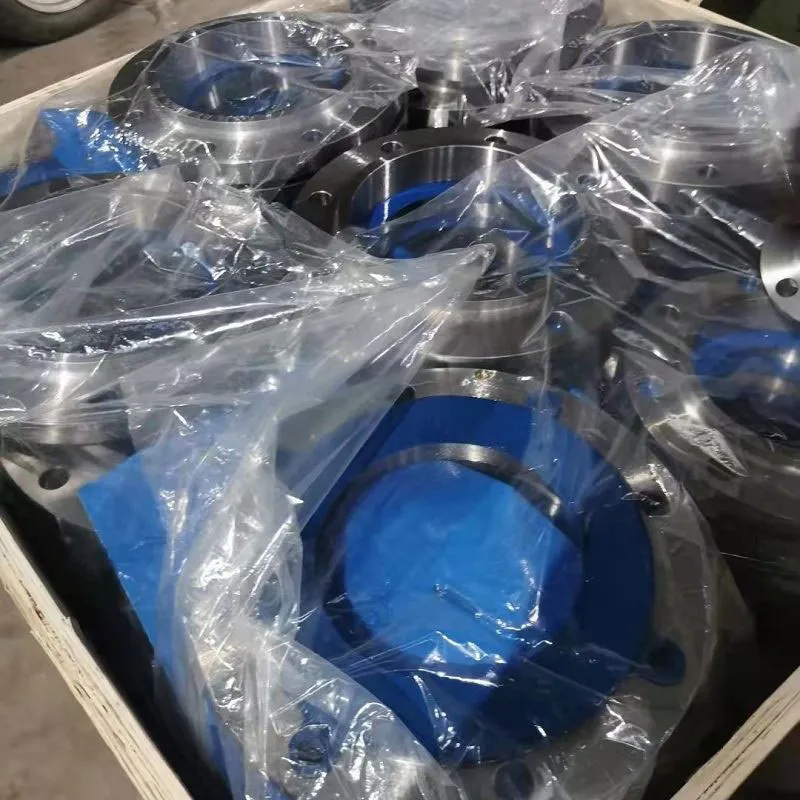
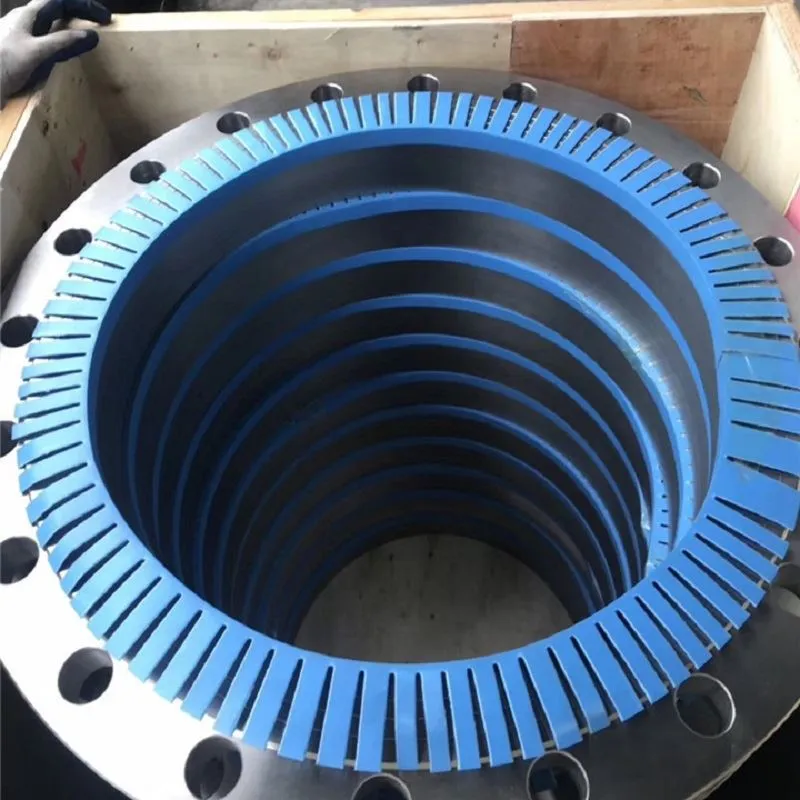
However, market globalization dictates its own rules: the search for a reliable partner is no longer limited to internal borders. Increasingly, Russian buyers are turning their attention to proven manufacturers from China, who are able to offer quality comparable to European ones, but at a more competitive price thanks to vertically integrated production. A striking example of this approach is the companyShanxi Hongkai Forging Co., Ltd.. Based in Dingxiang County, a key industrial center for forging and pressing production in China, this manufacturer operates three of its own sites covering the full cycle: from primary forging to final packaging and quality control.
While Shanxi Hongkai Forging's core business is focused on producing a wide range of forged flanges (applied, welded, threaded, blind) in the DN15-DN4000 range to DIN, ANSI, ASME and GOST standards, their approach to quality has direct implications for related products such as swivel plugs. The presence of our own cycle of heat treatment, mechanical processing and a multi-level control system (including physical and chemical tests) guarantees the stability of the metal’s characteristics. For buyers looking for an alternative to the overheated Russian market or in need of large quantities of non-standard products for individual drawings, cooperation with such export-oriented enterprises that have the right to independent foreign trade operations becomes a strategically advantageous solution. Direct deliveries allow you to avoid intermediary markups and receive a product manufactured in compliance with strict international standards, which is critical for the oil, gas and energy industries.
However, when working with any suppliers, be it local factories or international partners, there remains one problem that is not talked about much: components. The plain bearings or O-rings in the swing mechanism are sometimes still dependent on imports. If the plant does not have a spare parts warehouse, repairing your plug can turn into a quest to find analogues. When choosing a supplier, be sure to ask: “Do you have a repair kit in stock and what is the price for it?” If a manager starts to mumble, this is a bad sign.
Practical guide: how to order and not make a mistake
Suppose you decide to update the valve fleet at your enterprise. Here is a step-by-step algorithm that will save your nerves and budget.
Step 1. Audit of existing conditions.
Don't order "as was". Check the condition of the old plugs. Why did they fail? Corrosion? Mechanical wear? Installation error? If the old plugs rotted within 2 years, it means there was a mistake in choosing the steel grade. Fix it now.
Step 2. Formation of technical specifications (TOR).
The terms of reference must clearly state:
– Conditional diameter (DN) and pressure (PN).
– Working medium (water, oil, gas, acid, alkali).
– Ambient temperature (minimum and maximum). This is critical for choosing a cold resistance class.
– Type of connection (wafer, welded).
– Coating requirements (anti-corrosion paint, galvanizing?).
– The need for a passport and certificate of conformity.
Step 3. Selecting a supplier.
Look not just for a “factory,” but for a manufacturer with its own quality control (QC). Ask for photos of the finished product from their production, not stock pictures from the Internet. Call the plant's chief engineer, not just the sales manager. He will resolve technical issues faster and more honestly. Do not be afraid to consider options for cooperation with foreign manufacturers who have experience in supplying to the Russian Federation and the CIS, if they can confirm the quality with laboratory tests.
Step 4. Contract and acceptance.
Include in the contract a clause on the possibility of returning the entire batch if a defect is detected in the sample (for example, 10% of the batch). Carry out an incoming inspection: check the markings, check the geometry, make sure that the rotating mechanism moves easily (if it is a rotating plug). It should run smoothly, without jamming, even without lubrication (dry test).
Frequent errors during operation
Even the beststeel swivel plugwill fail if handled incorrectly. Here are the top 3 errors that I see on objects:
- Use of lever extensions.“Doesn’t turn? Let’s take a longer pipe!” This is what mechanics do to increase the force. Result: deformation of the axle, cutting off the key or destruction of the housing. If the plug does not work, then there is a reason (coking, corrosion). It needs to be disassembled and cleaned, not broken.
- Lack of lubrication.Pivot joints require regular lubrication, especially in dusty conditions. Forgot to lubricate for a year - hello, replacement of the unit.
- Incorrect installation of gaskets.Often they put one gasket on two flanges or use gaskets of the wrong thickness. This creates a load imbalance on the plug disk.
A look into the future: what awaits the industry after 2026?
It is difficult to predict in our country, but the trends are obvious. Automation of control processes will also come to the production of valves. We will see more plugs with integrated position sensors (open/closed) that transmit a signal to the control center. This is no longer science fiction, but a requirement of modern safety systems at hazardous production facilities (HIF).
We can also expect stricter environmental regulations. Factories that cannot provide waste-free production or high-quality protection against emissions during painting will be closed or consolidated. This will lead to a decrease in the number of players in the market, but an increase in the average quality of products. Monopolization? Maybe. But for the consumer, this may mean stability of supply and predictability of prices, albeit slightly higher ones.
Another important aspect is the digitalization of product passports. QR codes on the plug body leading to a page with a full production history, test results and service recommendations. This will make the market more transparent and make it difficult to sell counterfeits. Large factories are already implementing such systems.
Final resume for a manager
Purchaserotating steel plugs for flangesin 2026, this is not just a money-to-goods transaction. This is an investment in the safety and continuity of your production. Savings at the procurement stage can result in millions in losses in the event of an accident.
Key findings:
- Don't go for the lowest price on the price list. There are no miracles.
- Require complete documentation and have the steel grade checked by an independent expert.
- Consider the climatic features of your region when choosing a design.
- Work directly with manufacturing plants (including considering reliable international partners with a full production cycle), bypassing intermediaries, if the order volume allows.
- Set aside a budget for regular maintenance and repair of shutoff valves.
The market is changing, technology is improving, but one thing remains unchanged: the reliability of the system is determined by the reliability of the weakest link. Let this link not become your plug. Choose wisely, check meticulously and demand quality. After all, in the end, the cost of downtime for your enterprise is disproportionately higher than the cost of any, even the most expensive, steel part.
And remember: if a manager promises “mountains of gold” and delivery “yesterday” at a price 30% lower than the market price, most likely they are trying to deceive you. There are no miracles in metallurgy. There is only honest work, high-quality metal and strict control. Focus on those who are ready to show their production, and not just a beautiful office in Moscow.
I hope this material will help you make an informed decision and avoid common mistakes. Take care of your pipelines and budgets!