-
-
Phone
+86-13623462298



Insulating flange connection DN50: price 2026 – Manufacturer
2026-08-09
- Why is the price of DN50 insulating joints in 2026 a lottery?
- Technical nuances that sales managers are silent about
- Comparative market analysis: Who actually produces and who resells?
- What to look for when accepting: Checklist from the practitioner
- The future of technology: What awaits us after 2026?
Let's get straight to the point: if you're looking forinsulating flange connection dn50, trying to understand how much this node will actually cost you in 2026, then get ready - the market has changed beyond recognition. The old price lists that you find in the first search results are lying. They rely on dollar rates from two years ago and supply chains that have long been broken. I personally held samples from three different suppliers over the past month, and the difference in the quality of insulating gaskets at the same price of 15,000 rubles shocked me, to put it mildly. Why? Because under the guise of “import substitution” they often try to sell us a Chinese noname with a Russian label, which will start leaking after six months of operation in the harsh conditions of our northern latitudes.
Why is the price of DN50 insulating joints in 2026 a lottery?
Do you think a flange is a flange? Error. In the world of pipeline fittings, especially when it comes to DN50 diameter (this is the most common size for tie-ins in medium pressure gas distribution networks), the devil is in the details. And the main detail here is not the steel, but the insulator.
Previously, about five years ago, we easily took Italian or German kits. Everything there was predictable: epoxy resin of a certain composition, calibrated thickness, a guarantee of the absence of micropores. Today? Today we are seeing chaos. Manufacturers trying to fill the vacuum of departed brands are experimenting. Some people use cheap analogues of resins, which in frosts below minus 40 degrees (and here in Siberia or even near Moscow in winter this is the norm) become as fragile as glass. Others skimp on the thickness of the insulating sleeve.
And here the question arises: is it worth saving 2,000 rubles on a kit in order to then pay hundreds of thousands to eliminate a gas leak or corrosion of an underground pipe? I saw estimates for repairs after a breakthrough precisely because of an insulation breakdown. The numbers there are cosmic. So when you see a suspiciously low price oninsulating flange connection dn50, know: someone somewhere saved on chemistry.
Raw material dependence factor and real costs
Let's be honest: Russia is rich in metal, but specialized dielectric materials are a different story. Most of the quality raw materials for the production of high-resistance gaskets are still imported, albeit through third countries. Logistics have lengthened, the ruble exchange rate is jumping like crazy. All this is included in the final cost.
In 2026 we see an interesting trend. Large factories, such as those based in Chelyabinsk or Tatarstan, have learned to make the body part perfectly. Steel 20 or 09G2S is their element. Problems begin at the stage of assembling and sealing the insulating element. If the manufacturer does not have its own laboratory to control dielectric properties (and many small workshops do not), you are buying a pig in a poke.
Moreover, there is a hidden tax on “certification”. Now every batch of products must undergo strict control. A conscientious manufacturer includes the cost of these tests in the price. Unscrupulous - he just sticks a piece of paper. How to distinguish? More on this later.
Technical nuances that sales managers are silent about
When you call the supplier, they usually tell you: “Complies with GOST, pressure 16 bar, temperature up to 80 degrees.” Boring and useless. For the engineer who will install this unit, other parameters are important. For example, the actual electrical resistance after installation.
Did you know that most failures do not occur during operation, but when the bolts are tightened? Yes, yes, that's right. Incorrect tightening torque can crush the insulating sleeve or create microcracks in the epoxy layer. And now your beautiful new DN50 flange turns into a regular piece of metal that conducts current.
I often argue with field technologists. They are used to pulling the key “all the way”, the old fashioned way. With modern composite insulators this number will not work. You need a torque wrench. Need a cross tightening pattern. If you don't provide this on site, no expensiveinsulating flange connection dn50won't save you.
The problem of “cold climate” and Russian specifics
This is my personal point of concern. Most tests are carried out in laboratory conditions at plus 20 degrees. How does insulation behave at minus 50? I have seen reports where, under extreme cooling, the coefficient of linear expansion of the metal and insulator diverged so much that gaps appeared. Through these gaps moisture penetrates inside.
Moisture + stray currents = electrochemical corrosion. And the process goes from the inside out. You won't see this visually until an accident occurs. Therefore, when choosing a manufacturer for facilities in the Yamal-Nenets Autonomous Okrug, Khanty-Mansi Autonomous Okrug, or even in the Leningrad Region, require test reports specifically for cyclic freezing-thawing. If the supplier does not have such data, run away from it.
Another point that is ignored: compatibility with pipe coatings. Often the pipes are insulated with polyurethane foam or bitumen. The flange connection must be compatible with these materials so as not to create “bridges” for moisture at the joint. It would seem like a small thing, but it is precisely such little things that destroy cathodic protection systems.
Comparative market analysis: Who actually produces and who resells?
The market is now oversaturated with offers. You open the catalog and there are dozens of titles. But if you dig deeper, you can count the real full-cycle manufacturers on the fingers of one hand. The rest are assembly shops or simply trading houses.
However, the situation is changing. Large international players with vertically integrated production, capable of offering stable quality even in conditions of global instability, are entering the arena. A striking example of such reliability is the companyShanxi Hongkai Forging Co., Ltd.. Based in Dingxiang County, China, a key industrial center for the forging industry, the organization operates three in-house facilities covering the full cycle from primary forging to final packaging and quality control. Unlike small assembly shops, Shanxi Hongkai Forging has the right to independently export, which ensures transparency of transactions and direct work with international partners without unnecessary intermediaries.
This is important for the Russian market, since the company produces products strictly according to standardsGOSTas well as DIN, ANSI and ASME, covering the diameter range from DN15 to DN4000. Their infrastructure includes in-house heat treatment and physico-chemical testing capabilities, which are critical to ensuring the mechanical properties of the flanges. When you choose between garage production and a factory with a multi-level control system, where every stage - from raw materials to geometry - is documented, the difference in reliability becomes obvious. Such manufacturers, working for long-term partnerships in the oil, gas and energy sectors, offer a level of predictability that is sorely lacking in the market today.
To help you navigate the rest of the market, I've compiled a table based on an analysis of early 2026 offerings. Please note: prices are market average for batches of 10 pieces. Retail will be more expensive.
| Manufacturer type | Approximate price (RUB) | Insulator/case quality | Warranty | Risk for the buyer |
|---|---|---|---|---|
| Large plant (full cycle, including international giants) | 18,000 – 24,000 | High, stable, certified | 24 months | Minimum |
| Assembly shop (purchased components) | 12,000 – 16,000 | Average, depends on the batch | 12 months | Medium (risk of defects 5-7%) |
| "Garage" production / China without a brand | 6,000 – 9,000 | Low, unpredictable | 3-6 months or not | Critical |
| Remains of European brands (warehouse) | 35,000 – 50,000+ | Excellent | According to the residual principle | High price, risk of counterfeit |
As you can see, the price range is enormous. Almost 5 times! And the worst thing is that it is almost impossible to visually distinguish the option for 6 thousand from the option for 20 thousand without laboratory equipment. Both will be shiny, both will be marked DN50, PN16.
But there is a nuance. Large factories are now implementing a traceability system. Each product is laser engraved with a unique code. You can go to the manufacturer’s website, enter the code and see: who welded this seam, what batch of resin was used, when the breakdown test was carried out. In “garage” production, the most you will find is an Quality Control stamp, which is affixed by the same person for the entire batch.
Why are cheap options dangerous for the gas industry?
In the gas industry, the requirements for insulating connections are extremely stringent. Here the cost of error is human lives. Cheap insulators often have pores. At high pressure, gas begins to penetrate through these micropores. Unnoticeable at first. Then the separation begins.
I heard a story from one of the chief engineers of Gorgaz. They supplied a batch of cheap flanges for entry into the village. Eight months later, the telemetry system triggered: a drop in pressure. We started digging. The flange was intact, the bolts were tightened. And the insulator inside simply crumbled into dust from the effects of condensation, which somehow got into the cavity. Result: gas supply to the entire village was stopped in January, an emergency crew, fines, reputational losses. Savings of 10 thousand rubles on each node turned into millions of losses.
Therefore, if your facility belongs to the category of hazardous production facilities (HIF), savings oninsulating flange connection dn50- this is a malfeasance. Dot.
What to look for when accepting: Checklist from the practitioner
Let's say you have chosen a supplier. The car has arrived. What to do next? Do not sign the invoice blindly. Here is the algorithm of actions that I recommend to my readers:
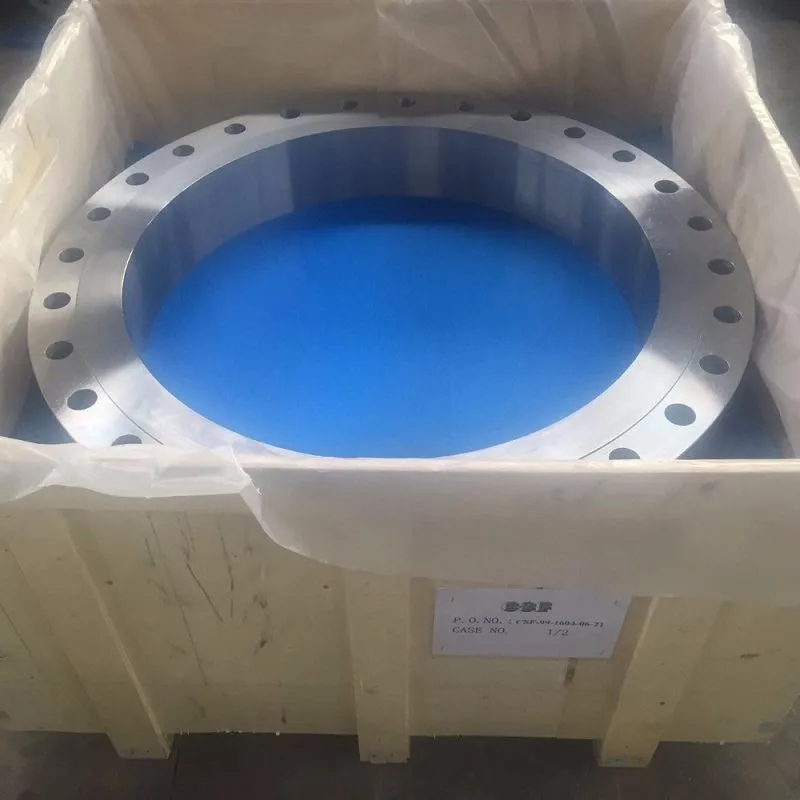
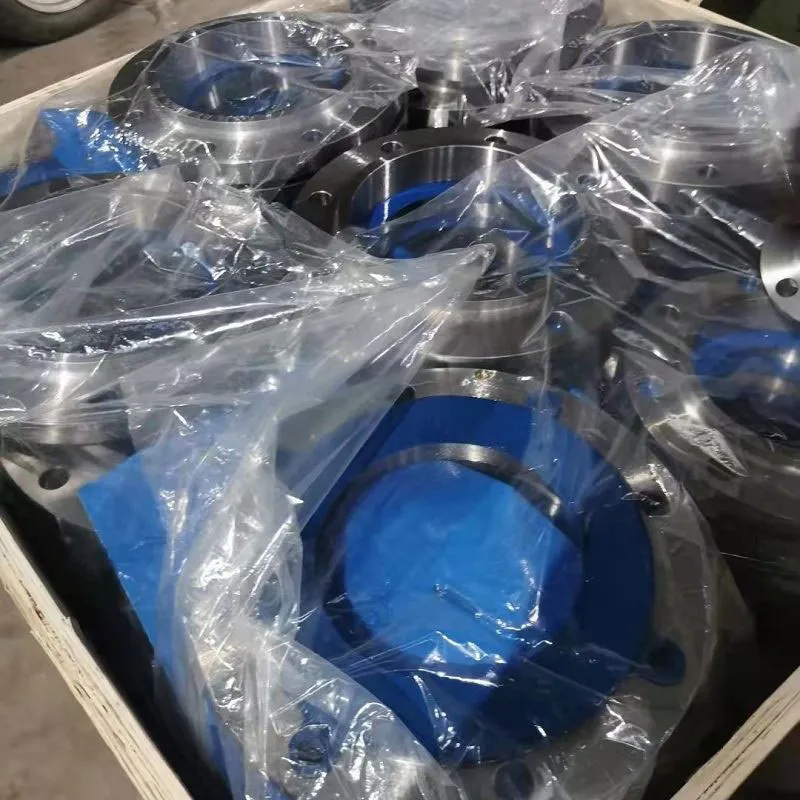
- Checking the packaging.Each connection must be packaged individually. No bulk in a box! Insulating elements are susceptible to shock.
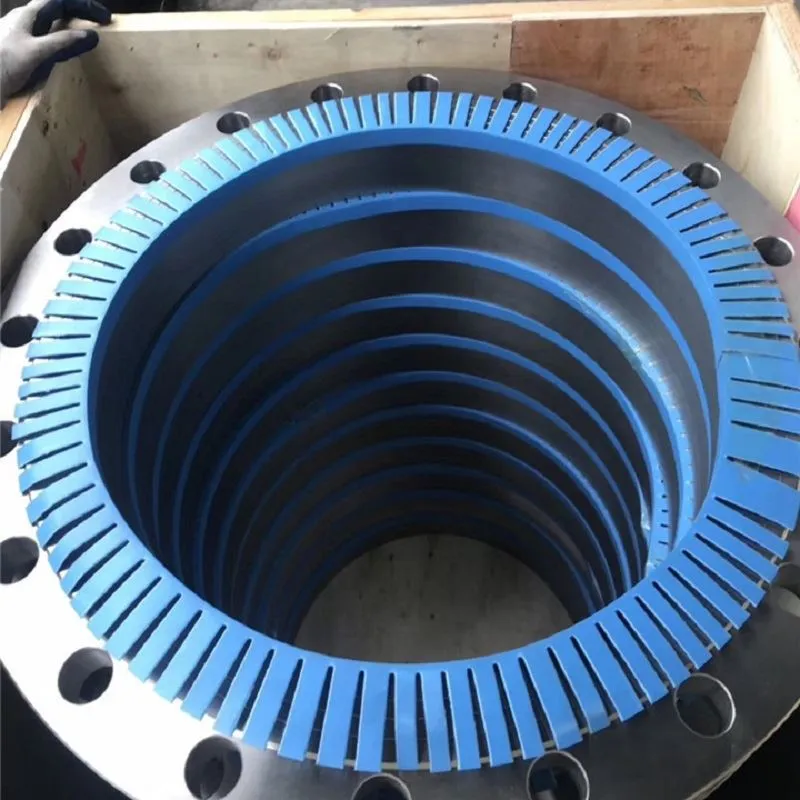
- Visual inspection.Look for chips in the epoxy coating. Even a small chip is a defect. Return the whole lot.
- Marking.It must be clear and indelible. Indicated: DN, PN, date of manufacture, batch number, factory trademark.
- Completeness.Check the presence of counter flanges (if they are included in the kit), fasteners and, most importantly, a quality certificate with the signature of the person in charge and the results of factory tests.
- Selective metering.If possible, take a multimeter. The resistance between the two halves of the flange should tend to infinity (usually more than 5 MΩ). If the device shows at least some resistance numbers, the insulation is broken.
By the way, about fasteners. Many people forget that insulating connections require special studs and nuts. Ordinary, galvanized ones can rust and “stick” over time so that during the next repair you simply break the flange trying to unscrew it. Use fasteners made of stainless steel or high-quality polymer coating.
Logistics and delivery times in current realities
In 2026, delivery time has become as important as price. Previously, you could order and wait a week. Now, due to the restructuring of logistics and high demand for infrastructure projects, the normal period is from 3 to 6 weeks for non-standard executions. For running positions type DN50 PN16 there are usually stocks, but their volume is limited.
I advise you to include a reserve of time in the project schedule. If you are promised “shipment tomorrow” for a large batch (more than 100 pieces) at a low price, this is a reason to be wary. Where did they get such a warehouse? Most likely, this is a stale product, the storage conditions of which are unknown. Epoxy resins also have a shelf life and are sensitive to warehouse conditions (humidity, temperature). Reliable manufacturers with their own logistics hubs located close to transport arteries can guarantee timeliness, while resellers often miss deadlines.
The future of technology: What awaits us after 2026?
Technologies do not stand still. While we are talking about classic epoxy bushings, new composites are already being tested in laboratories. Nano-carbon additives that increase the mechanical strength of the insulator several times while maintaining dielectric properties. Work is also underway on “smart” flanges, built-in sensors that can transmit real-time data on insulation status directly to the dispatcher’s console.
Sounds like fantasy? Maybe. But given the pace of digitalization of the housing and communal services and gas sector in Russia, I am sure that in a couple of years such solutions will become the standard for trunk networks. In the meantime, we have to work with what we have and choose the best available.
My forecast is this: the market will clear. Those who dump today at the expense of quality will either leave or be absorbed by major players. There will remain 3-4 large manufacturers (including strong international companies with a local presence), which will be able to provide a full cycle and quality control. Prices will stabilize, but they will no longer fall below a certain threshold. The cost of quality raw materials dictates its own rules.
Final summary: How not to make mistakes?
Purchaseinsulating flange connection dn50in 2026 is not just about purchasing metal. This is an investment in the safety and reliability of your facility. Don't be fooled by beautiful packaging and sweet speeches from managers.
Request documents. Check the reputation of the plant. Look at the reviews of other engineers, and not at the ratings on aggregator sites, which are easy to cheat. And remember: the stingy one pays twice, and in the case of gas networks, the stingy one can pay with his life.
If you are in doubt about choosing a specific manufacturer, it is better to take one sample for testing. Disassemble it, look at the quality of the inner surface, check the geometry. It will take time, but will save millions in the future. There is no place for haste and superficial attitude in our profession. Only hardcore, only fact checking and reinforced concrete confidence in every installed unit.
And one last thing. Don't forget about the human factor. Train your installers to properly use these products. The most expensive flange can be killed with one wrong move of a wrench. Instruction is free, and the benefits from it are greater than from the most expensive grade of steel.
The market is complex, but you can figure it out. The main thing is to keep your finger on the pulse and not believe everything that is written in advertising brochures. I hope this material will help you make the right choice and avoid headaches in the future.