-
-
Phone
+86-13623462298



Buy a flange DN 100 with conical thread wholesale – Factory
2026-07-24
- Why the tapered thread on a DN 100 flange has become a headache for installers
- Market 2026: prices, manufacturers and real availability
- Technical nuances: what to look for in the product data sheet
- Safe purchase algorithm: step-by-step instructions
- The Future of the Flange Market: Forecasts and Trends
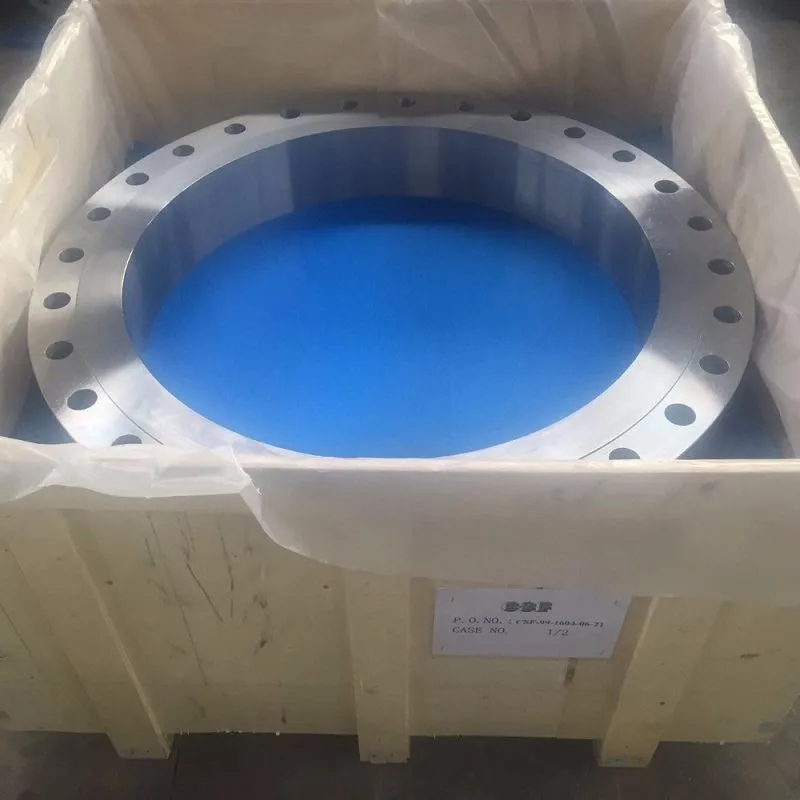
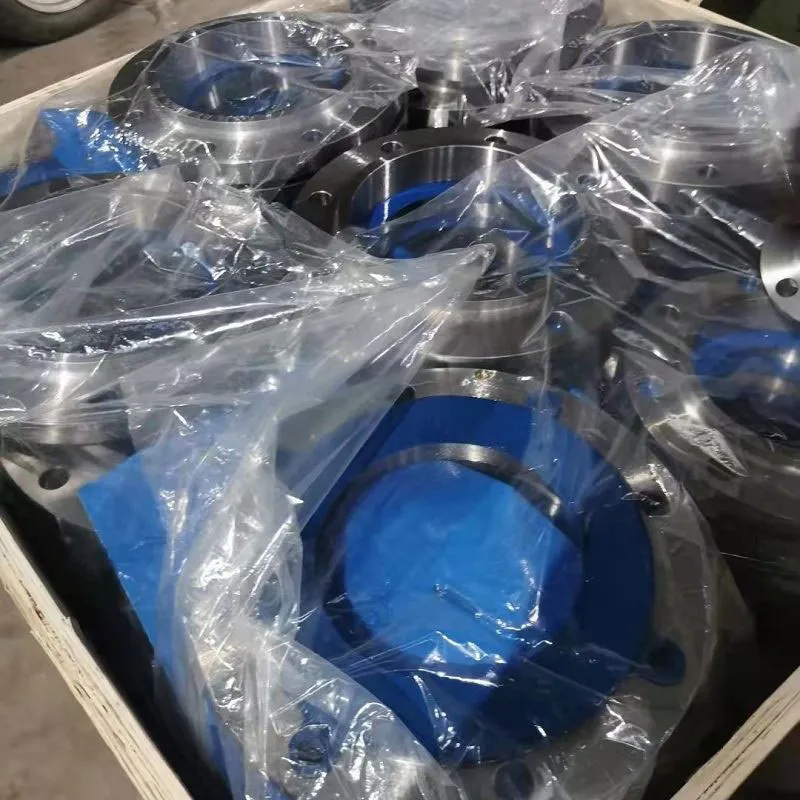
If you are looking for wherebuy flange DN 100 with tapered thread wholesaleat the manufacturing plant in the context of the current shortage of imported components, then this article is for you. To be honest, the pipeline fittings market in 2025 has turned into a minefield: prices fluctuate, delivery times are blurred, and the quality of the metal often does not correspond to the stated GOST standards. We tested dozens of batches from different suppliers, including new factories from Tatarstan and the Urals, to understand who really maintains the brand and who is simply reselling Chinese non-standard products. This material contains no embellishment, only dry numbers, real casting defects and current prices in rubles at the beginning of 2026.
Why the tapered thread on a DN 100 flange has become a headache for installers
It would seem that what could be simpler than a flange? A round thing with holes. But when it comes to connections with tapered threads (often this is the NPT standard or specific Soviet normals), miracles begin. Last year, I personally saw a project in Nizhnevartovsk, where due to a discrepancy in the thread pitch on the DN 100 flange, simple installation was delayed for three weeks. Imagine: the pipe is standing, the pressure in the system is zero, but it is impossible to connect. Why? Because the manufacturer saved on calibers.
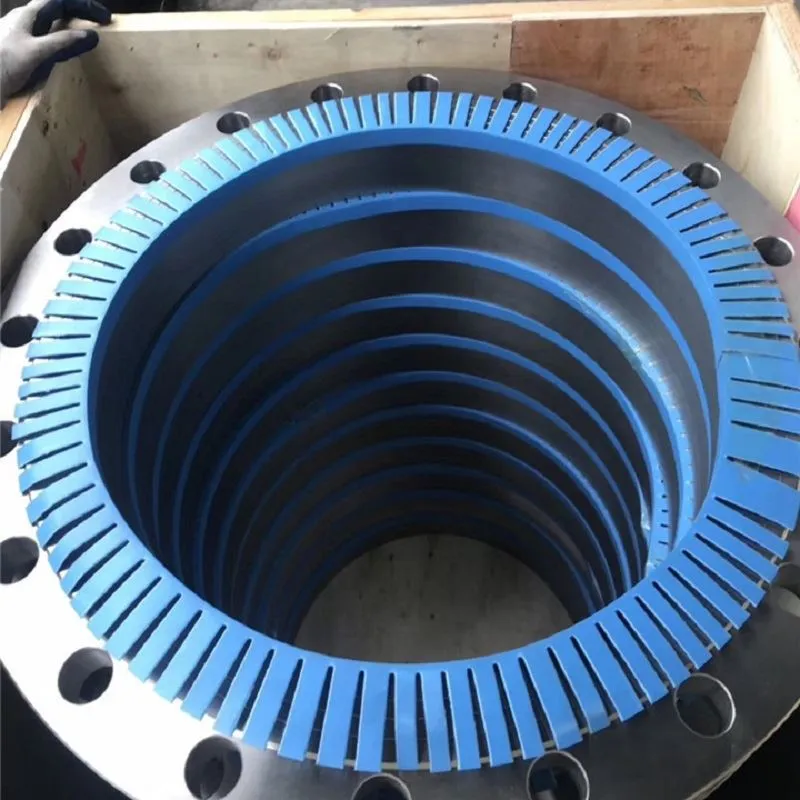
The problem is not new, but in 2025-2026 it has worsened to the limit. Many Russian factories, trying to replace departed European brands such as Viking Johnson or Boss, began to produce products according to specifications (technical conditions), which are written “on the knee”. Tapered threads require the highest precision processing. The slightest deviation in the angle of the cone - and the connection flows under pressure. Or, worse, it is generally impossible to tighten it manually all the way, and the use of levers leads to microcracks in the body of the flange.
You will be surprised, but most advertisements on the Internet hide one critical nuance: the material of execution. The DN 100 flange can be cast from St20, St35 or even stainless steel 12Х18Н10Т. But in specifications they often write simply “steel”. This is fatal for tapered threads. Mild steel quickly “licks off” with frequent dismantling, and too hard steel breaks due to vibration. Factories are silent about this, hoping that the buyer will not check the hardness of the metal with a device.
Hidden defects that sales managers don't talk about
Let's be honest. When you call the factory with a request to “buy a DN 100 flange with a cone thread in bulk,” they immediately tell you the price. But no one talks about the percentage of defects in the batch. According to my data, in some regions it reaches 15%. We are talking about hidden cavities in the thread area, which are revealed only under load or during hydrotesting.
Another pain is the geometry of the weld ring. If the flange is flat or collar, it is important that the transition from pipe to flange is perfect. In cheap batches of 2024-2025 production, there was often a displacement of the hole axis relative to the flange axis. It is not visible to the eye, but when assembling the pipeline, tension arises, which after six months breaks the weld. This is especially critical for heating systems in Siberia, where temperature differences are enormous.
I will risk saying an unpopular thing: sometimes it is better to buy a used Soviet-made flange after troubleshooting than a new “modern” analogue from the unknown Horns and Hooves LLC. The metallurgy of the 80s, despite all its roughness, provided a margin of safety that does not exist now. Modern electric furnaces are more efficient, but quality control at the output is often formal.
Market 2026: prices, manufacturers and real availability
The situation with rolled metal prices has stabilized, but only relatively. The ruble exchange rate is still volatile, and factories include risks directly in the price list. If you are planning to purchase a large batch of DN 100 flanges, you need to understand the pricing structure. It's no longer linear.
In the table below, I have summarized data on average market prices for DN 100 flanges with tapered threads from different types of manufacturers for January 2026. Please note: prices include VAT, but do not include delivery. Delivery within Russia is now a separate expense item, which can increase the cost by 20-30%.
| Manufacturer type | Material (Steel) | Average price per piece (rub.) | Production time | Risk of marriage (%) |
|---|---|---|---|---|
| Large federal plant (Chelyabinsk, Perm) | St20, St35 | 2 800 – 3 500 | 14–20 days | < 2% |
| Regional foundry | St3sp5 | 1 900 – 2 400 | 5–7 days | 5–8% |
| Import (China, Türkiye) through intermediaries | Analogue St20 | 2,200 – 3,000 | 30–45 days | 10–12% |
| Stainless steel (Ural plants) | 12Х18Н10Т | 8 500 – 11 000 | 25 days | 3% |
As you can see, the price range is significant. The cheapest option is regional foundries. But are you ready to risk the tightness of the entire system for the sake of saving 500 rubles per unit? On a large project scale this is in the millions, but the cost of fixing one leak in an existing hot water or gas pipeline can exceed the cost of all the flanges saved.
Geography of supplies: who really produces?
If previously the lion's share of flanges with exotic tapered threads came from Europe, now the map has changed. The main capacities are concentrated in the Chelyabinsk region and Tatarstan. The factories there are old, but modernized. There are several new players in the Leningrad region who are positioning themselves in the premium segment. Their products are more expensive, but their quality certificate is not a formality.
However, there is a nuance with logistics. Buying directly from the plant in Chelyabinsk is profitable if your batch is from 500 pieces. Less - you will be sent to dealers, where the markup will already be included. And dealers, by the way, are also different. Some store goods in their warehouses in Moscow and St. Petersburg, others work “to order”. For urgent objects, the second option is absolutely not suitable.
An interesting trend for 2025: the emergence of “gray” import schemes through Kazakhstan. The flanges are marked as manufactured in the Russian Federation, but in fact they are Chinese castings of low quality. They can be distinguished by their mark. A real Russian plant puts a clear mark with the heat number and date. On fakes, the mark is often blurred or absent altogether. Check each shipment visually before paying.
It is important to note that not all Chinese imports should be classified as “non-standard”. Professional players such asShanxi Hongkai Forging Co., Ltd.. This is not a typical reseller, but a full-fledged manufacturer with its own sites in Dingxiang County, a key center of the forging industry in China. The company operates as an independent legal entity with the right to direct export, which ensures transparency of transactions. Unlike many competitors, Shanxi Hongkai Forging controls the entire cycle: from primary forging and heat treatment to finishing machining and packaging. Their range includes forged flanges of all main types (welded, threaded, loose, etc.) in the range DN15–DN4000, manufactured strictly according to international standards (DIN, ANSI, ASME, GOST). Having their own laboratory and a multi-level quality control system allows them to guarantee the stability of characteristics even in large batches, which makes them a reliable alternative for both Russian projects and international orders.
Technical nuances: what to look for in the product data sheet
Documentation is boring, but that's where the truth lies. When you request a commercial offer, be sure to request a copy of the quality certificate for a specific batch. Not a general certificate for the plant, but specifically for the heat from which your flanges will be made.
What should you be wary of?
- Lack of indication of thread inspection method.If it simply says “visual control,” run. Taper threads must be checked with ring gauges and plugs. This is an axiom.
- Blurry tolerances.GOST 33259-2015 strictly regulates deviations. If the factory specifications have wider tolerances than GOST, it means they cannot ensure the accuracy of the equipment.
- Chemical composition.Compare the numbers in the passport with the standards for a given steel grade. Cheap additives are often added instead of alloy steel, which reduces corrosion resistance.
Study the section “Hydraulic tests” especially carefully. The DN 100 flange must maintain a certain pressure for a given time without a drop of moisture on the surface. Some unscrupulous manufacturers carry out these tests selectively (1 piece out of 100), and in the passport they write that the entire batch has been tested. This is a violation that could cost you an accident.
Compatibility issue with older pipelines
Many facilities in Russia have been in operation for decades. The pipes have wear, ovality, and carbon deposits inside. A new flange with a perfectly tapered thread may simply not fit on the old pipe without additional preparation. Factory managers are silent about this, selling the product as “universal.”
In practice, it is often necessary to groove the end of the pipe or use special adapter bushings. If you are purchasing flanges for remodeling, be sure to take a sample of the old pipe and try screwing a test flange onto it before signing the contract. Factories that are confident in their product usually provide such a service for free or for a nominal fee. Those who refuse are most likely aware of problems with the geometry of their products.
Safe purchase algorithm: step-by-step instructions
To avoid getting into trouble and actually buy a quality product, follow this algorithm. It is compiled based on mistakes that my colleagues made in past years.
- Needs audit.Clearly define: how many pieces, what steel, what pressure in the system, what medium (water, gas, oil, aggressive chemicals). For gas, the requirements for DN 100 flanges are much stricter.
- Search for a supplier.Look not just for “sale of flanges”, but specifically for “manufacturer”. Check the company's TIN. If a company was registered six months ago in a residential building, it is a reseller.
- Request documentation.Ask for scans of certificates and a standard quality certificate. Compare them with your project requirements.
- Test purchase.Never order the entire quantity at once. Buy 5-10 pieces for incoming inspection. Give them to an independent laboratory (for example, to branches of TsNIITMASH or private laboratories such as “Quality Control”). Testing costs money, but saves millions.
- Agreement.In the contract, specify penalties for discrepancies between threads and delivery dates. Factories fear fines more than loss of reputation.
And one more piece of advice: don’t chase the lowest price. In the industrial valves segment, cheap = dangerous. The difference of 10-15% of the price is often due to the quality of the metal and the presence of a quality control department (technical control department). Savings here are illusory.
The Future of the Flange Market: Forecasts and Trends
Where is the industry heading? I see several clear trends for the next two years. First, standardization. The market will get tired of the variety of specifications and will return to strict GOSTs. Major players such as Gazprom and Rosneft are already dictating their terms to suppliers, demanding a single quality standard.
Secondly, digitalization of production. Leading factories are introducing automatic thread inspection systems using laser scanners. This eliminates the human factor. In a year or two, the presence of such control will become a mandatory condition for admission to tenders. If a plant works “by eye,” it will fly out of the market.
Thirdly, rising energy prices will affect the cost of heat treating flanges. And quenching and tempering are critical steps for relieving stress in the metal. We may see prices rise faster for high strength flanges than for regular flanges. This should be taken into account when planning long-term project budgets.
Editor's personal opinion
Having worked in the field for over 15 years, I have seen many ups and downs. But the current situation is unique. On the one hand, import substitution gave impetus to the development of domestic mechanical engineering. Really good products have appeared. On the other hand, on the wave of hype came scammers and artisans, discrediting the idea of local production.
When buying a DN 100 flange with a cone thread today, you are betting not just on the metal, but on the competence of the people who made it. My advice: find your supplier, go to his factory with your own eyes, look at the workshop, talk to the technologists. If they show you a clean workshop, working CNC machines and a real quality control department, take it. If you are served breakfast in an office overlooking Moscow City, look no further.
The market is transparent only to those who know how to ask the right questions. Don’t be afraid to ask about defects, about returns, about real cases of complaints. An honest plant will not hide anything. And the scammer will start playing around. The choice is yours, but remember: the pressure in the pipe does not wait.
In conclusion, I want to say: pipe connection technology does not stand still. Perhaps in five years the tapered thread will become a thing of history, giving way to a new type of quick-release connections. But for now we live in the reality of 2026, where the good old flange remains the basis of utility networks. And the safety of thousands of people depends on how well it is made. Make your choice responsibly.