-
-
Phone
+86-13623462298



Buy steel bushing with flange d16 wholesale from the factory - price 2026
2026-07-24
- Why exactly the D16 flange bushing became a stumbling block for engineers in 2025
- Anatomy of price: what makes up the cost of a bushing in 2026
- Where to look for reliability: the experience of international manufacturers
- Technical nuances: what to look for when accepting a batch of D16
- Logistics and service: how not to lose money on delivery
- Прогноз на 2026 год: чего ждать рынку металлических изделий
Honestly, when I first saw the headline “Buy a steel bushing with a d16 flange wholesale from the factory - price 2026,” I had a strong feeling of deja vu. We are used to seeing such requests in the context of plans for the future, but the reality of the industrial market dictates its own, much stricter rules today. If you are looking for a reliable waybuy steel bushing with flange d16 wholesale from the factory, focusing on cost forecasts for 2026, then you will have to face a paradox: what marketers promise as “the innovation of the future” often turns out to be good old classics, repackaged in a new price list. Let’s dot the i’s right away: the stability of supply of this part in the face of sanctions and logistics collapse is more important than the hypothetical savings of the ruble in two years.
Why exactly the D16 flange bushing became a stumbling block for engineers in 2025
It would seem, what could be simpler? Steel bushing. Flange. Diameter 16 millimeters. A detail that has been around for decades. But if you work in a real manufacturing environment, you know that the devil is not in the details, but in the lack of them. Last year, we were faced with a situation where large manufacturing plants simply stopped shipping small batches of these components, preferring to work only with giants in the automotive or defense industries.
Why did this happen? The answer lies on the surface, but no one wants to voice it out loud. Repurposing of steelmaking capacities. Those lines that previously churned out thousands of bushings for the civilian sector are now working to fulfill government orders. And here the question arises: where can an ordinary entrepreneur or the chief mechanic of a small workshop get this part?
The market is filled with resellers. You go to a popular site, see an attractive price, order a batch, and what arrives is... to put it mildly, substandard. Steel grade 3sp instead of the required 45 or 40X. A flange that simply cracks when the bolts are tightened, because the metal is overheated and has become brittle, like glass. I personally held a sample in my hands, bought “cheaply” from one of the intermediaries - the flange broke off during the first test on a vibration stand. This is not just a defect, it is a threat to the security of the entire node.
So when we talk about buying direct from the factory, we're not talking about price so much as the survival of your equipment. In 2025, the term "wholesale" has changed its meaning. Previously, this meant “from 1000 pieces.” Now many honest factories are ready to ship 100 units or more, understanding that small businesses are also clients who should not be given a reason to switch to low-quality analogues.
Hidden risks when ordering steel components in current realities
You may be surprised, but the main problem now is not finding a manufacturer. The main problem is to prove that he is really a manufacturer, and not a garage workshop with a laser cutter and ambitions. The phenomenon of “ghost factories” flourished. Beautiful website, addresses in industrial zones, managers speaking in correct technical terms. But in fact - resale with a 40% markup and the absence of any responsibility.
How to distinguish the wheat from the chaff? Ask a simple question: “Can I come to your workshop and look at the batch manufacturing process?” A real factory, even loaded to capacity, will find 15 minutes for a potential major client. The “Ghost” will begin to fuss, talk about the secrecy regime, quarantine, or simply suggest “trusting your reputation.”
Another point that catalogs are silent about is the geometry of the flange. It would seem that the standard is the standard. But in reality, the tolerances are scary. If the mounting hole for the shaft has a runout of more than 0.05 mm, your bushing will become a source of vibration that will kill the bearings of neighboring units within a month of operation. Cheap manufacturers skimp on finishing. They sharpen the workpiece and immediately send it to packaging. Factories with this name always include grinding and hardness control in their cycle.
And the most unpleasant thing is the timing. You are promised shipment in three days. A week passes, then two. The manager feeds breakfast: “the steelworkers are sick,” “transport was delayed.” As a result, your machine is idle, every hour of downtime costs money, and you are still waiting for your ill-fated D16 bushing. That is why prepayment work with unknown counterparties in 2025 has become a form of Russian roulette.
Anatomy of price: what makes up the cost of a bushing in 2026
Let's talk about money. Forecasts for 2026 paint us different pictures. Some predict a 20% increase in rolled metal prices, while others talk about stabilization due to new deposits. But let's look at the price structure of an actual flanged bushing right now to get an idea of where the market is heading.
The first and most obvious is raw materials. Round rolled steel. Its prices are tied to stock exchange quotes, but also strongly depend on logistics within the country. It has become more expensive to transport metal from one region to another than to buy the metal itself. This is a fact that we have to put up with. Factories located closer to consumers or with optimized logistics automatically receive an advantage in the price of the final product.
The second component is the energy intensity of production. Turning, flange milling, hole drilling, heat treatment. All this requires electricity and gas. Tariffs are rising, and this is inevitably included in the cost. However, there is a caveat here: modern automated lines consume less energy per unit of production than older machines. Therefore, paradoxically, buying from a modern plant may be cheaper than buying from a “grandfather’s” workshop with an old fleet of equipment.
The third, and often the most significant factor is human resource. The shortage of qualified turners and CNC operators has reached a critical level. Salaries in the shops are growing at an accelerated pace. A factory that pays decent wages to retain staff and guarantee quality cannot sell bushings at bargain prices. If you see an offer significantly lower than the market, know: either illegal immigrants are working there without qualifications, or they are saving on material.
And finally, the logistics of finished products. Delivery by pallets, packaging that prevents corrosion during storage and transportation. Many people forget that steel rusts quickly, especially if it is transported in an open truck in winter, where temperature changes cause condensation. High-quality preservation and packaging also means money.
So what is a fair price? It is pointless to give specific figures in rubles; they will be out of date by the time of publication. But you can designate a corridor. If the average market price per unit is X rubles, then an offer below 0.7X should raise suspicion about the quality of the metal, and an offer above 1.5X most likely includes markups from several intermediaries. A direct contract with the factory usually allows you to save 15 to 25% compared to purchasing through a trading house.
Comparative analysis: Factory production vs Garage assembly
So that you don’t take my word for it, let’s summarize the main parameters in a table. This will help you quickly evaluate the offer that is on your desk or open in your browser.
| Comparison parameter | Certified Factory (Direct Contract) | Reseller/Garage Manufacturing |
|---|---|---|
| Steel grade | Strictly according to GOST (45, 40Х, 09Г2С) or international standards (ASME, DIN). A quality certificate is provided for each melt. | Often “analogue” or re-grade. The passport may be common to the party or absent. |
| Hardness and heat treatment | Controlled quenching and tempering mode. Hardness is checked randomly in each batch. | Often absent or carried out “for show”. High risk of brittleness or excessive softness. |
| Flange geometry | Compliance with tolerances for flatness and perpendicularity. Cleanliness of processing Ra 1.6-3.2. | There may be traces of rough processing, burrs, or misalignment of the hole. |
| Warranty | Official guarantee of 12 months. Replacement of defects at the expense of the manufacturer. | “Claims will not be accepted” or a return is possible only if there is an examination (which is difficult to carry out). |
| Shipping times | Stable, specified in the contract. Fines for delays on the part of the plant. | Floating. Depends on the availability of goods in the reseller's warehouse. |
| Document flow | A complete package of closing documents for accounting and tax. | There may be delays in receiving original invoices and delivery notes. |
Looking at this table, it becomes obvious: savings at the purchase stage can result in multiple losses at the operation and repair stage. Especially when it comes to critical components, where failure of the bushing leads to a stop of the conveyor.
Where to look for reliability: the experience of international manufacturers
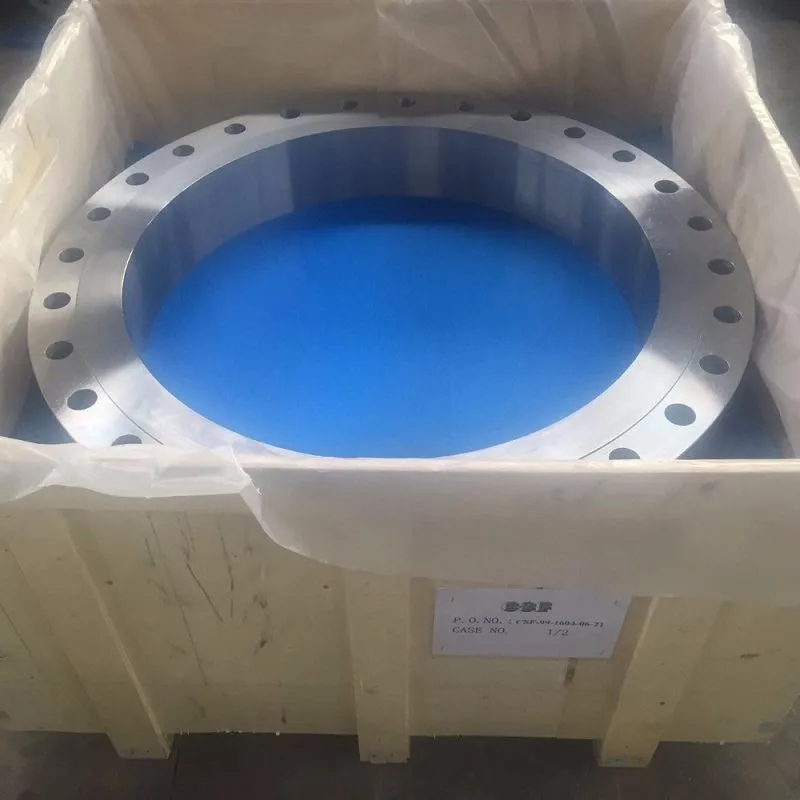
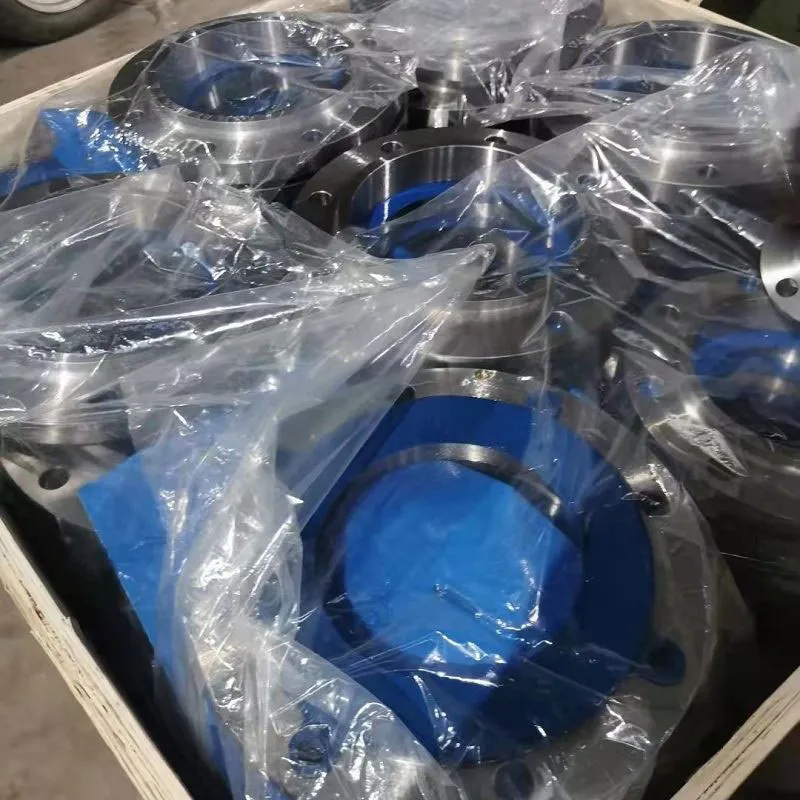
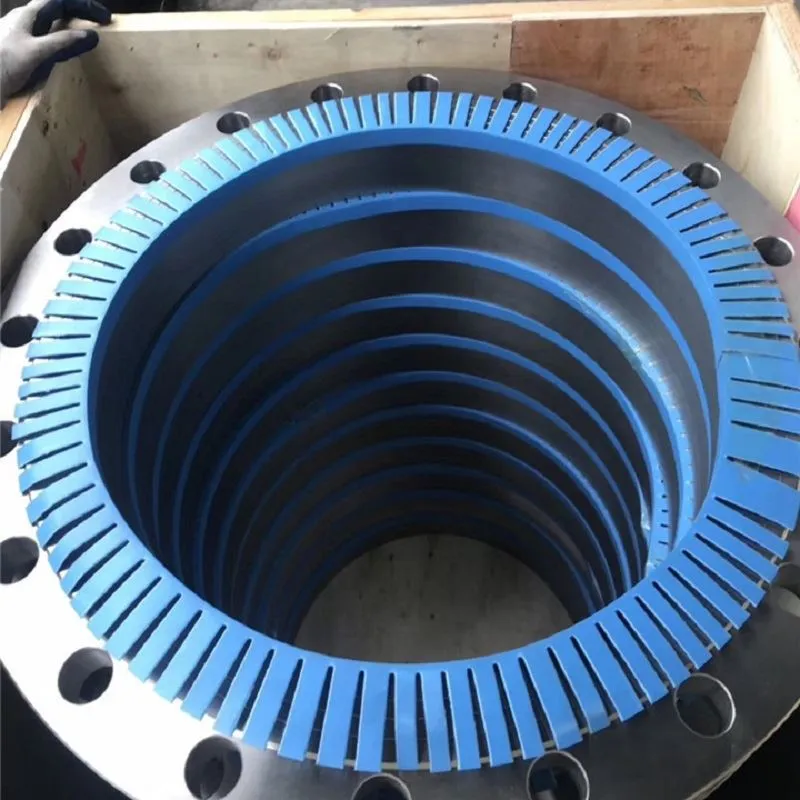
In search of an alternative to local shortages, many engineers are turning to foreign partners with a strong production base and experience working with global standards. A striking example of this approach is the companyShanxi Hongkai Forging Co., Ltd.. Based in Dingxiang County, a key industrial center for the forging industry in China, the organization is a professional full-service manufacturer of forged flanges and forgings.
Unlike many of the "ghost factories" we discussed above, Shanxi Hongkai Forging operates three of its own production sites. A vertically integrated cycle is implemented here: from primary forging and heat treatment to finishing machining and packaging. The company operates as an independent legal entity with the right to export operations, which provides direct and transparent channels of interaction with partners from Russia, the CIS countries, Europe and America.
The company's main product range covers six types of forged flanges (applied, socket weld, threaded, butt weld, loose ring and blind), manufactured strictly according to international standards: DIN, ANSI B16.5, ASME, EN, as well as GOST specifications. The range of nominal diameters from DN15 to DN4000 allows us to cover the needs of both compact solutions (like D16 bushings) and large-scale industrial projects for the oil and gas and energy industries.
The key advantage of such manufacturers is a multi-level quality control system. Incoming control of raw materials, physical and chemical tests, checking geometry and markings at each stage guarantee that you will receive a product that meets the declared characteristics, and not a “pig in a poke.” The geographical location in a developed industrial cluster ensures excellent logistics accessibility and timely delivery, which is critical in modern conditions.
Technical nuances: what to look for when accepting a batch of D16
Let's say you found a supplier (be it a Russian plant or an international partner like Shanxi Hongkai), signed an agreement, and a truck with bushings is already at your gate. What to do next? Just sign the invoice? No way. Acceptance is the stage where 90% of future problems are eliminated.
The first thing to do is a visual inspection. Yes, banal, but effective. Take a few from different places in the box (not just the top!). Inspect the flange. Are there any chips? Is the thickness even? The color of the metal must be uniform. If you see rust spots or oil stains of a strange color, this is a reason to be wary.
The second is geometry. You don't need an expensive measuring system in the receiving shop. A good caliper and, preferably, an indicator head on a magnetic stand are enough. Check the hole diameter. It must comply with the drawing, taking into account the tolerance. For bushings for a bearing or shaft this is critical. If the hole “walks” from 16.00 to 16.10 mm in one batch, this is a defect. The shaft will dangle or, conversely, will not fit without a sledgehammer, which is unacceptable.
Pay special attention to the flatness of the flange. Place the bushing with its flange on the test plate (or just on a very level table if there is no plate) and try to shake it. If it wobbles, it means the flange is not perpendicular to the axis of the bushing. During installation, such a part will create a misalignment, which will lead to uneven wear and rapid failure of the unit.
The third point is labeling. Factory-made products often have a batch mark or manufacturer's logo. Its absence is not always a sign of marriage, but it is important for tracking the origin in the future. Save the quality certificate. Do not throw it away with the packaging. This document is your main weapon in the event of a complaint.
And one more piece of advice that may seem strange: smell the packaging. Seriously. If the bushings have been preserved with high-quality industrial oil, the smell will be specific, but neutral. If it smells like diesel fuel or something pungent, it’s possible that cheap substitutes were used to protect against rust, which can corrode the rubber seals in your unit.
The problem of import substitution: myths and reality
The topic of import cannot be ignored. For a long time, the Russian market was saturated with European and Japanese bushings. SKF, INA, Koyo - these brands were synonymous with quality. Now their official deliveries have been stopped or are extremely difficult. The only thing left on the market is parallel imports, the prices of which are steep and the guarantees are illusory.
Many engineers longingly remember “those imports”, believing that Russian or Asian products do not hold up. This is a dangerous misconception. Yes, about 15 years ago the quality of hardware and shaped products from some regions was poor. But in the last decade there has been a huge leap. Factories working for heavy engineering and export have introduced equipment that is not inferior to Western equipment. The steel cooks well. Heat treatment technologies have been developed.
Moreover, quality bushings from trusted manufacturers are often better adapted to difficult conditions. They are designed to operate over a wide temperature range. European counterparts are sometimes made from steels that require ideal operating conditions and clean oil. Properly selected steel often proves to be more durable under conditions of contaminated lubrication and shock loads.
Of course, there are segments where replacement is impossible. For example, high-precision bushings for robotics or aviation. But for general mechanical engineering, agricultural machinery, and construction equipment, a steel bushing with a D16 flange from a trusted plant (regardless of its geography, be it Russia or a certified Chinese manufacturer) is an absolutely complete and sometimes more profitable replacement.
The main problem is not the quality of the product as such, but the chaos in the market and the lack of verification of counterparties. Due to the departure of brands, many fakes have appeared. They can sell you a Chinese bushing in a box with a German logo for the price of the original. Or pass off ordinary structural steel as alloy steel. That is why a return to direct contracts with real manufacturers with their own history and reputation is not just patriotism or a tribute to fashion, it is a pragmatic necessity.
Logistics and service: how not to lose money on delivery
You have chosen a plant. You are satisfied with the quality. The price is reasonable. All that remains is to deliver. And then the second act of the Marlezon ballet begins. Russia is a huge country, and international deliveries require careful planning. Delivering a ton of metal from one end to the other is a non-trivial task.
Many factories offer delivery in-house or through partners. It's convenient, but often expensive. Transport companies charge by volume and weight. Bushings are a heavy and compact product. The loading density of the machine is high, but the weight is also significant. Sometimes it is cheaper to hire passing transport or use railway containers if the shipment is truly wholesale. When working with foreign suppliers, it is important to take into account Incoterms (FCA, EXW, CIF) and calculate customs procedures in advance, although the partner’s right to export (like Shanxi Hongkai) greatly simplifies this process.
Please note the shipping conditions. If you're picking up yourself, make sure your shipping company has the ability to load heavy pallets. Not all courier services work with palletized cargo weighing up to a ton.
Cargo insurance. Be sure to insure your cargo when transporting long distances. Loss, damage to packaging, exposure to rain - all these are risks. The cost of insurance is peanuts compared to the cost of your production downtime due to a missing part.
And an important point about the service. How does the plant respond to complaints? Try calling the claims department before purchasing. Ask to speak to an engineer. If they answer you quickly, competently and without irritation, that’s a good sign. If you are being chased from manager to manager, and the engineer is “always at lunch” - run away from there. In case of marriage, you will be tortured to prove that you are right.
Некоторые передовые заводы внедряют системы отслеживания заказа в реальном времени. Вы можете видеть, на какой стадии находится ваша партия: в обработке, на контроле качества, отгружена. Это мелочь, но она здорово экономит нервы.
Прогноз на 2026 год: чего ждать рынку металлических изделий
Заглядывая в будущее, можно с уверенностью сказать: эра дешевого металла прошла. Мы входим в период технологической зрелости. Заводы, которые выживут в ближайшие два года, будут те, кто инвестирует в автоматизацию и контроль качества, а не те, кто пытается демпинговать за счет ухудшения свойств материала.
Цены на втулки и подобные изделия будут расти, но темпы роста должны замедлиться относительно инфляции, за счет повышения эффективности производства. Ожидается консолидация рынка. Мелкие гаражные мастерские либо закроются, либо станут субподрядчиками крупных холдингов. Покупателю станет проще выбирать: либо крупный надежный завод с собственной историей и инфраструктурой, либо дорогой импорт с сомнительными гарантиями.
Также стоит ожидать ужесточения требований к экологии производства. Заводы, которые не смогут соответствовать новым нормам по выбросам и утилизации стружки, потеряют лицензии. Это может временно сократить предложение, но в долгосрочной перспективе оздоровит рынок.
Технически мы увидим расширение номенклатуры. Заводы начнут предлагать не просто стандартные втулки, а готовые узлы с предустановленными подшипниками или уплотнениями. Это тренд на удобство для клиента. Зачем вам покупать втулку, подшипник и стопорное кольцо отдельно, собирать это, запрессовывать, если можно купить готовый модуль? Для диаметра 16 мм такие решения уже появляются.
And one last thing. Цифровизация закупок. Процесс заказа втулки станет таким же простым, как заказ такси. Электронные чертежи, автоматический расчет стоимости, онлайн-трекинг производства. Те заводы, которые останутся в бумажной эпохе с факсами и долгими согласованиями, проиграют борьбу за клиента.
Чек-лист перед оформлением оптового заказа
Чтобы закрепить материал, вот краткий список действий, который спасет вас от ошибок:
- Проверьте наличие действующего сертификата ISO 9001 у завода. Это не гарантия качества каждого изделия, но гарантия наличия системы управления качеством.
- Запросите образец перед заказом большой партии. Потратьте 5000 рублей на тест, чтобы не потерять миллионы на простое.
- Уточните марку стали в договоре. Не пишите просто «сталь». Пишите «Сталь 45 ГОСТ 1050-88» или аналог по ASTM/EN. Юридически это защитит вас.
- Обсудите условия возврата брака заранее. Кто оплачивает обратную доставку? Как проводится экспертиза?
- Проверьте репутацию завода в открытых источниках. Убедитесь, что у компании есть собственные производственные площадки, а не только офис продаж.
Покупка такой простой вещи, как втулка, в современных условиях превратилась в стратегическую задачу. Но если подойти к делу с умом, проверить поставщика и не гнаться за самой низкой ценой, можно обеспечить свое предприятие надежными комплектующими на годы вперед. Помните: скупой платит дважды, а в промышленности — трижды: за деталь, за ремонт и за потерянное время.
Рынок 2026 года будет принадлежать тем, кто строит долгосрочные отношения. Найдите свой завод (будь то локальный гигант или проверенный международный партнер), подружитесь с их технологами, и проблема «где купить втулку» исчезнет из вашей повестки навсегда. А цена? Цена будет справедливой, ведь вы платите не за металл, а за спокойствие и уверенность в том, что ваш механизм будет работать как часы.