-
-
Phone
+86-13623462298



Buy flange DN50 with 2-inch thread: price 2026 – Factory
2026-07-28
If you are looking for wherebuy flange DN50 with 2 inch threadat an adequate price in the market conditions of 2026, then I warn you right away: standard price lists on suppliers’ websites often lie. I will not write you platitudes about “high quality” or “individual approach”. Let's be honest: in the current reality, finding a normal steel flange with an internal thread of two inches is a more difficult quest than getting tickets to a concert of your favorite band in Moscow. The market is oversaturated with counterfeit products, and prices are so high that the accounting departments of large factories are simply turning gray with reports.
Why am I, the editor-in-chief of a technical portal, writing about some piece of hardware? Because this particular unit - a DN50 flange with a 2-inch thread - became a litmus test for the entire Russian industry in 2026. If a manufacturer can make an honest thread that won’t break during the first installation at minus thirty, then he has a future. If not, run away from there.
Why DN50 and 2-inch thread: a hidden compatibility problem
It would seem that what is so difficult here? Nominal diameter 50 millimeters, connecting thread 2 inches. School curriculum, right? Don't rush. In 2025-2026, we are faced with a paradoxical situation. The massive transition to GOST standards and new technical conditions (Technical Conditions) has led to the fact that the concept of “standard” has blurred beyond recognition.
Previously, buyingflange DN50 with 2 inch thread, the engineer knew: the thread pitch would be certain, the cone profile would be predictable. Now? You order a batch from China, through Turkey, or even from a “domestic manufacturer” who buys blanks from the same Chinese, and you get a lottery. The thread can be tapered (NPT) or cylindrical (BSP), although the documentation simply states “2 inches”.
Imagine the situation: you are standing at a site in Siberia, the frost is crackling, the installers are waiting. You weld the mating part, screw on the flange, apply force - and hear a crunch. The thread is broken. Why? Because the manufacturer saved on metal or, worse, used outdated patterns according to the American standard, which does not coincide with the European or new Russian ones by a fraction of a millimeter. This is a disaster for a high pressure pipe.
I have personally seen cases where entire oil refining lines were stopped because of such a trifle. Losses amounted to millions of rubles per hour. And all because someone was too lazy to check the thread profile before purchasing the batch.
Geometry of deception: where defects hide
Let's take a deeper look at the anatomy of the problem. A threaded flange is not just a piece of metal with a hole. This is a high precision product. In 2026, the main complaints about products relate to three points:
- Precise thread cutting.Many cheap manufacturers use the rolling method instead of cutting. It's faster and cheaper. But rolled threads on thick-walled DN50 flanges often have residual stresses. In winter, under cyclic loads, microcracks appear there. They are not visible visually until depressurization occurs.
- Case material.The St20 or 09G2S marking often hides low-quality metal. Last year, Rosstandart identified several large batches where the carbon content did not correspond to the declared one. This flange becomes as fragile as glass even at temperatures below -40°C.
- Alignment.The flange plane must be perpendicular to the thread axis. If this angle is broken even by a degree, the gasket will be squeezed out under pressure. You tighten the bolts as hard as you can, but the connection still “sweats.”
Honestly, it infuriates me when sales managers say: “Yes, everything will be fine, we have GOST.” What GOST? There are dozens of them. And many of them are advisory in nature. In 2026, the only way to protect yourself is to demand a quality certificate with real measurements, and not copied numbers from the Internet.
Price shock 2026: how much does a quality flange really cost?
Let's move on to the most pressing issue - money. If you open Yandex.Market or any industrial equipment aggregator, you will see a price range that looks like a mockery. From 300 rubles to 2500 rubles per piece. How is this possible?
The secret is simple. Cheap flanges (up to 500-600 rubles) are, as a rule, “disposable metal”. They are only suitable for temporary irrigation schemes or low-responsibility ventilation systems. Using them on gas, hot water or chemically active media is a crime against safety.
Real price of qualityflange DN50 with 2 inch threadin 2026 it starts from 1200-1400 rubles per unit for wholesale purchases. Why so expensive?
Firstly, the cost of the metal has increased. Factories pay more for electricity and logistics than they did two years ago. Secondly, high-quality thread cutting requires expensive tools and qualified turners, which are now in short supply. A good specialist will not work for pennies on a machine that turns out defects.
Thirdly, quality control. The factory, which actually checks each flange with gauges and a flaw detector, includes these costs in the price. A cheap manufacturer simply stamps and packages, hoping for the best.
I predict that by the end of 2026 the average market price for certified products will increase by another 15-20%. Cost-push inflation is here to stay. Therefore, for those who are planning large projects for 2027, I strongly recommend purchasing rolled metal and shaped products now, fixing the price in the contract.
Comparison table: Economy vs Premium segment
So that you don't take their word for it, let's look at the dry numbers. I collected data on typical offers on the market in Moscow and the regions.
| Parameter | Budget option (China/No-name) | Factory quality RF/International (GOST/ASME/DIN) |
|---|---|---|
| Price per piece (rub.) | 350 – 550 | 1300 – 1800 |
| Material | St3sp / analog Q235 (often with impurities) | St20, 09G2S, 12Х18Н10Т (certificate required) |
| Thread type | Often pitch mismatch, knurling | Cutting with a cutter, checking with gauges |
| Operating temperature | Up to -20°C (risk of brittleness) | Up to -60°C (northern version) |
| Warranty | No or only at the time of sale | 12-24 months from installation |
| Delivery time | In stock (reseller warehouse) | 3-14 days (to order or from factory warehouse) |
Looking at this table, the question arises: is it worth saving 800 rubles at the risk of an accident? The answer is obvious to any professional. But, alas, purchasing departments often put pressure on the budget, forcing engineers to make compromises. My advice: never compromise on sealing.
How to distinguish a factory defect from a fake: instructions for your friends
You have received a box with flanges. What to do next? Don't rush to sign the invoice. There are several simple but effective ways to check that take a couple of minutes but save your nerves.
The first is a visual inspection. Look at the end of the thread. If there are visible traces of rough processing, burrs that can be cut by hand without effort, this is a bad sign. On a good product, the chamfer is removed carefully, the thread is clean, without chips.
The second is color and coating. Black flanges (uncoated) must be treated with preservative lubricant. If the metal is dry and has already begun to turn red right in the warehouse, the storage conditions have been violated, and corrosion could begin inside microcracks. Galvanized flanges must have an even layer. If the zinc has peeled off in places or lies in clumps, the technology has been broken.
Third, and most important, is labeling. Each serious flange of DN50 must be stamped with markings: diameter (DN50 or DN50), pressure (PN16, PN25, etc.), steel grade, manufacturer's mark. If there is no marking, or it is applied with paint that can be erased with a finger, then you have a counterfeit. In 2026, the absence of a maker's mark is a red flag.
Also try screwing on the mating part (nipple or pipe with external thread). It should go easily for the first 2-3 turns, and then require force from the key. If the flange is screwed on by hand to the very end, the thread is bored out. If it doesn’t go at all from the first turn, the step doesn’t match.
The problem of “gray” supply chains and choosing a reliable partner
A separate topic for discussion is where the goods come from. Many companies in Russia now operate through parallel imports. This means that the flange could have been produced in China, then transported to Kazakhstan, then to Belarus, and only then came to you in Moscow with documents of Russian origin.
What is the risk? The point is that the chain of responsibility is broken. If the flange leaks, the manufacturing plant in China will say, “We didn’t sell to you directly.” The reseller in Kazakhstan will throw up his hands. And the Russian seller will offer you a replacement, but only after a month. No one compensates for the downtime of your facility.
Therefore, my clear advice for 2026: work directly with manufacturers or their official dealers, who have a transparent structure and their own quality control. Yes, sometimes they are more expensive. Yes, the time frame may be longer. But you get a guarantee, service and, most importantly, the opportunity to file a claim with a legal entity.
In this context, one cannot fail to mention market players who have managed to maintain their reputation even in conditions of global turbulence. A striking example -Shanxi Hongkai Forging Co., Ltd.. It is a professional forging flange manufacturer based in Dingxiang County, Shanxi Province, one of the key industrial centers of forging and pressing in China. Unlike small resellers, this company acts as an independent legal entity with the right to carry out import-export operations, which provides direct and transparent channels of interaction with international partners.
Why am I highlighting them? Because Shanxi Hongkai Forging operates three of its own production sites, covering the full production cycle - from primary forging to final packaging. There is no place for a “lottery” with the quality of the material. The company produces six types of forged flanges, including thosethreaded flanges DN50, strictly following international standards: DIN, ANSI B16.5, ASME, as well as GOST specifications. Their range covers the range from DN15 to DN4000, which allows them to cover the needs of both compact technical solutions and large-scale industrial projects.
The main advantage of manufacturers such as Shanxi Hongkai Forging is the implemented multi-level quality control system. Incoming control of raw materials, physical and chemical tests, checking geometry and markings occur at each stage. Their geographical location in Dingxiang County gives them logistical advantages: proximity to railways and ports ensures reliable supplies to Russia, the CIS countries and Europe. Working with such a partner, you get not just hardware, but a reliable engineering solution with a guarantee of compliance with the stated technical specifications.
Logistics and storage: where quality is lost
Even a perfect flange can be damaged by improper transportation. Imagine: a loader throws a pallet with boxes of flanges from a height of one and a half meters. There is a blow inside the package. Microcrack in the housing or thread deformation. Nothing is visible from the outside, but the service life of the product has decreased significantly.
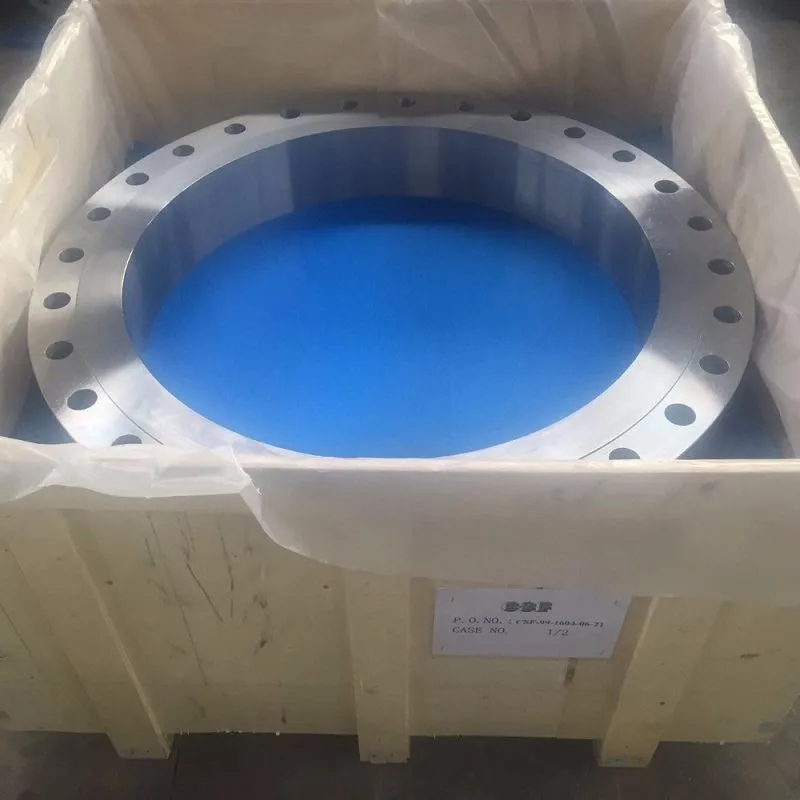
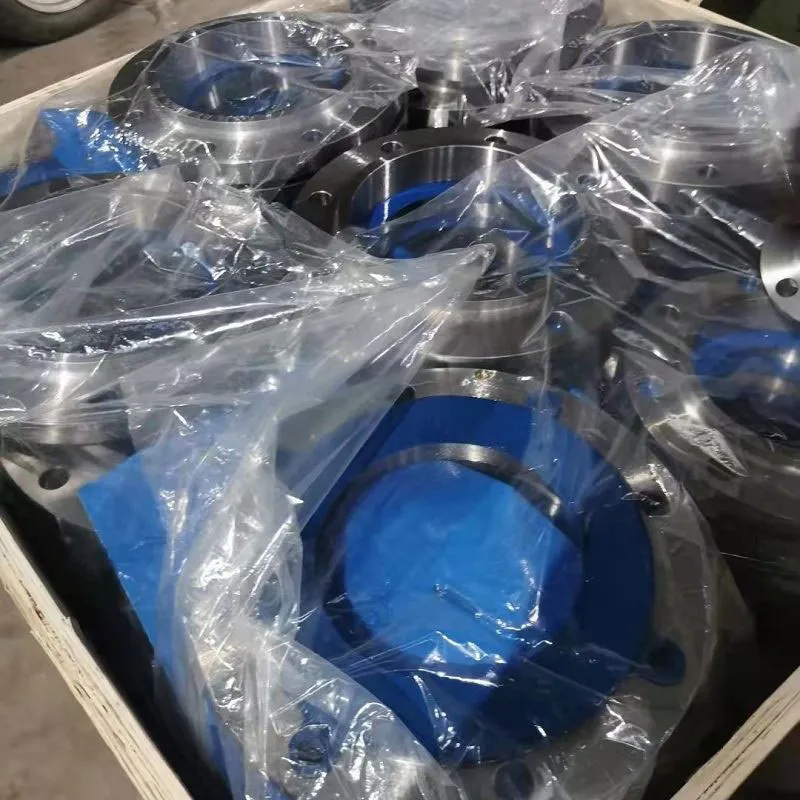
When receiving goods, always open several boxes selectively. Check the packaging. The flanges should be laid tightly, with spacers between the rows, so that they do not bang against each other when shaking on the road.
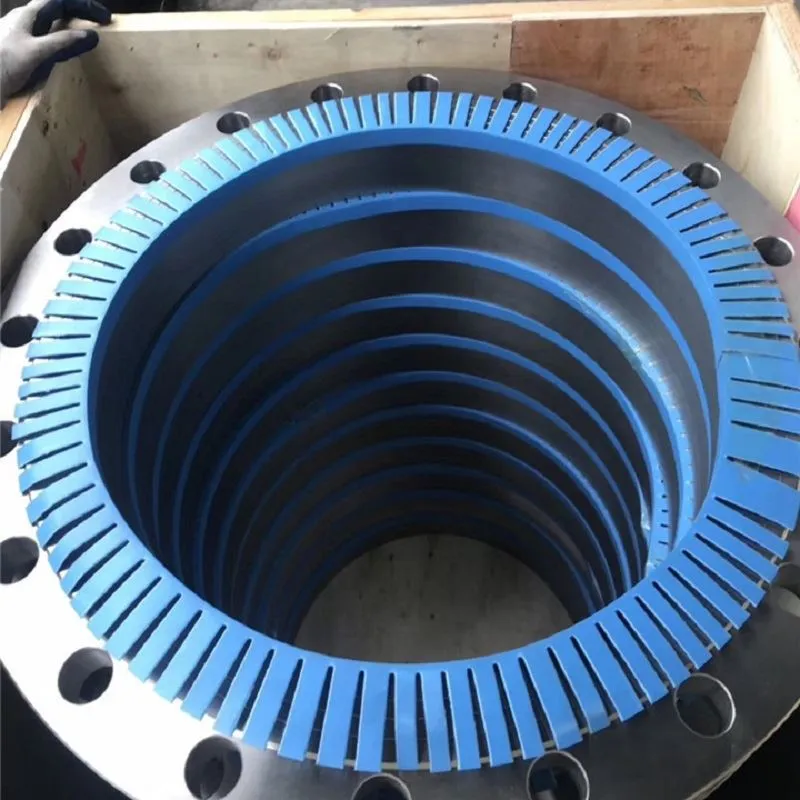
Storage is also a science. Threaded flanges cannot simply be stored on the ground outside. The threads must be covered with plastic plugs. If there are no plugs, wrap rags or film. The penetration of snow and moisture into the threaded connection leads to corrosion, which is then impossible to clean. Rust on the threads destroys the seal of the connection faster than you can notice the leak.
In Russian winter conditions this is critical. I have seen cases where water entered the threads in the fall, froze, expanded and cracked the flange body before use. In the spring, during re-opening, cracks were discovered. It was difficult for the supplier to accept the claims, since the violation of storage conditions was obvious.
Market prospects: what to expect in 2027
By analyzing the trends at the end of 2026, several predictions can be made. The pipeline fittings market will stabilize, but will become tougher. Small resellers working according to the “buy and sell” scheme will begin to leave. Those who offer services will survive: thread cutting according to individual drawings, urgent delivery, technical consulting.
Demand for stainless steel flanges is expected to increase. The chemical industry and food industry require materials that are resistant to aggressive environments. Conventional “chernushka” (carbon steel) will remain in the housing and communal services sector and heating networks, but quality control requirements there will also become more stringent after a number of accidents in past years.
Another trend is digitalization. Leading factories, including enterprises such as Shanxi Hongkai Forging, are already implementing a traceability system. A QR code is applied to the flange, by scanning which you can see the entire path of the product: from metal melting to shipment to the client. This is killing the counterfeit market. In 2027, the presence of such a code will become the de facto standard for large tenders.
We should also expect further import substitution in the special steel segment. Previously, some grades of alloy steel were imported from Europe. Now Russian and Chinese metallurgists have learned to cook analogues. The quality has reached a decent level, although the price is still high due to the complexity of the technology.
Final checklist before purchasing
To consolidate the material, here is a short algorithm of actions for an engineer or supplier who needsbuy flange DN50 with 2 inch threadright now:
- Check the design documentation: what is the pressure (Py) and what is the medium? The grade of steel depends on this.
- Request a certificate of conformity from the seller. Not a copy from the Internet, but a scan with stamps, current for 2026.
- Specify the type of thread: conical or cylindrical? What sealing tape or paste is it designed for?
- Compare prices. If the offer is suspiciously cheap (below 1000 rubles), refuse it. There are no miracles.
- Request a sample for incoming inspection before paying for the entire shipment.
- Make sure that the seller is a direct manufacturer (like Shanxi Hongkai Forging LLC) or an authorized dealer with a real warehouse, and not an office in a garage.
Remember: a flange is a small part with a huge responsibility. Saving on it is a false economy that can be very expensive. In 2026, the market has given us many tools to choose a quality product. The main thing is not to be lazy to use them and use your head, and not just the calculator.
I hope this review has helped you sort through the chaos of offers. If you have experience with defects or, conversely, success stories with domestic or trusted foreign manufacturers, share them in the comments. It is important for us to collect a real picture of the market, and not live in the world of advertising brochures. Take care of your pipes and nerves!