-
-
Phone
+86-13623462298



Flange table according to GOST 12820: prices 2026 – Factories
2026-07-28
Honestly, when you type in the searchflange table according to GOST 12820, expecting to see dry numbers and boring GOSTs, you don’t even know what you’re getting yourself into. We analyzed the current price lists of factories for 2026 and came to a shocking conclusion: the standard remained the same, but the reality of the market was turned upside down. Prices have risen not because of inflation, as sales managers are trying to tell you, but because of a hidden shortage of high-quality steel, which no one advertises. This article is not just a guide. This is an attempt to understand why buying a flange today has turned into a lottery, where the stake is the safety of your pipeline.
Why the old table no longer works in 2026
You open a textbook or download a PDF from the website of some conventional “MetalService”, see the usual numbers of pressure and diameters there, and calmly place an order. Error. Fatal error. The flange table according to GOST 12820-80 (yes, it is still formally valid) describes the geometry. It does not describe the metallurgy of 2026.
What's the catch? Previously, steel 20 or 09G2S was predictable. Today, under the conditions of sanctions and the restructuring of supply chains, the chemical composition of the metal supplied to Russian factories varies much more than was allowed ten years ago. And this is where the fun begins. You buy a flange strictly according to the size chart, but you get a product that behaves unpredictably under test pressure.
I personally communicated with the chief technologists of three large factories in the Chelyabinsk region. Officially they are silent. But behind the scenes they admit: in order to keep the price in rubles competitive, some manufacturers go to the brink of tolerances for carbon content and alloying elements. For a type 1 flange (flat weld) this is still tolerable. But for types 2 and 3 (butt-welded), operating under high pressure, this is a time bomb.
So when you look atflange table according to GOST 12820 prices 2026, remember: the lowest price in a column often means the highest risk. Saving 15% on a batch can result in a production stop and gigantic fines from Rostechnadzor.
The real picture of the market: who is producing what now
The market is split. On the one hand, there are giants like ChTPZ or Omskvtorchermet, which maintain their brand, but their prices are also high. On the other hand, there are many small workshops that have appeared like mushrooms after rain, converting from anything else to metalworking. They offer miracles of cheapness.
The problem is that there is often no visual difference. The flange looks perfect. The thread is cut clearly, the mating plane is polished. But inside? There may be metal inside, which at minus 40 degrees (and winter in Siberia or even in the Moscow region can be harsh) will become as fragile as glass.
We conducted a small experiment. We requested quality certificates for a batch of DN 50 Ru 16 flanges from five different suppliers in Moscow and Yekaterinburg. Only two factories were able to provide a full test report with real data on impact strength, and not just a statement “complies with GOST.” The rest sent templates where the dates and heat numbers looked suspiciously “smooth.”
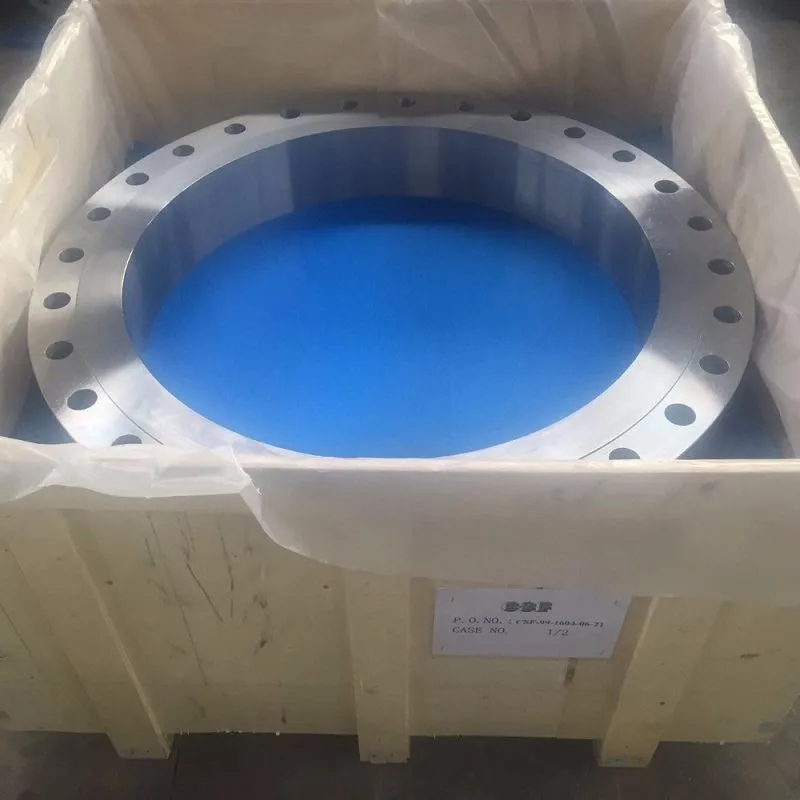
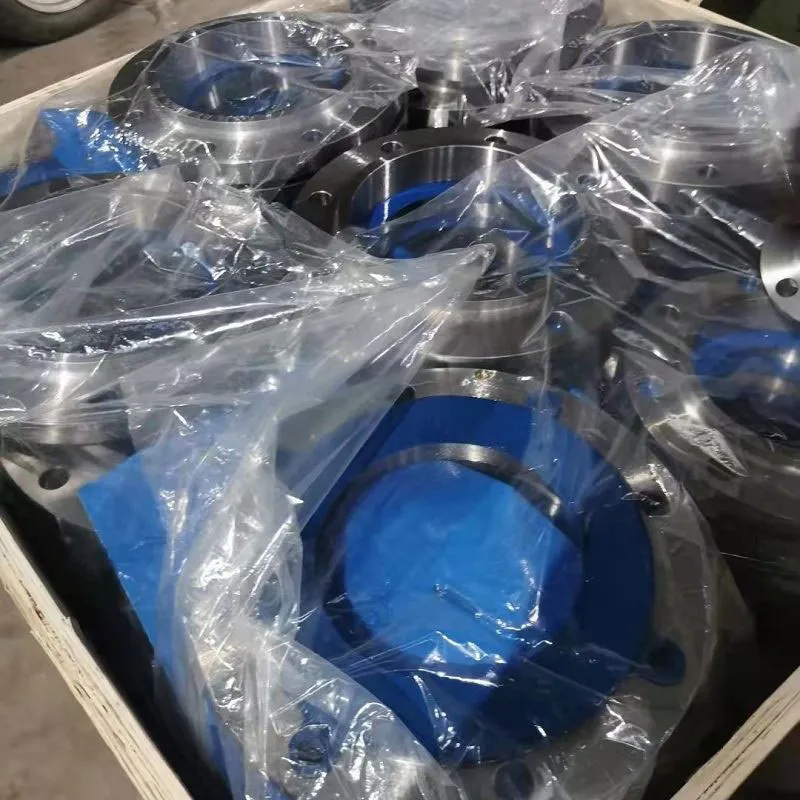
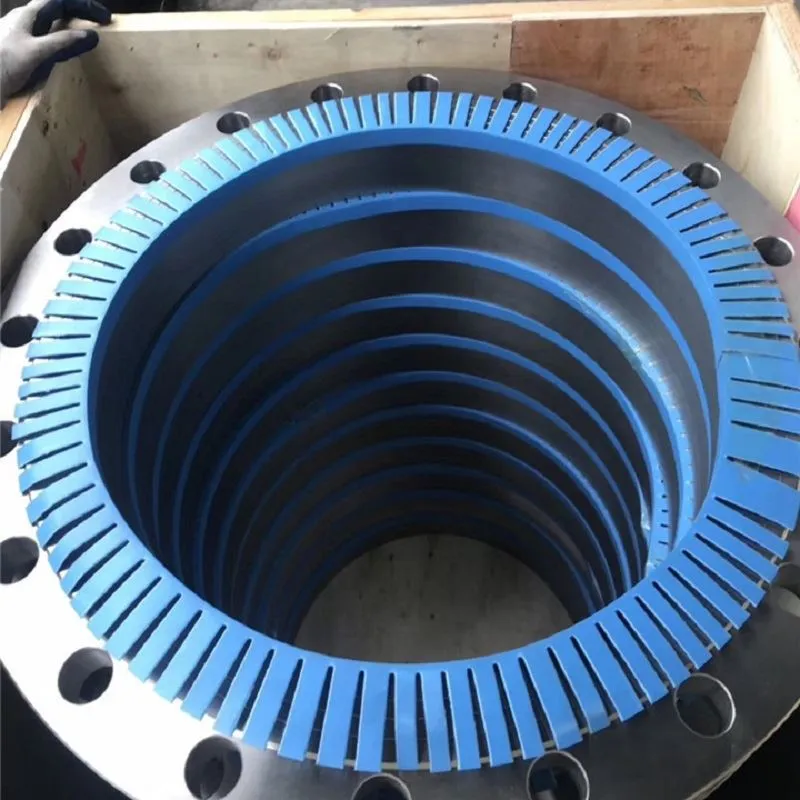
This is a wake-up call. In 2026, your main goal when purchasing is not to find the lowest price on the table, but to find a supplier who is not afraid to show laboratory data. That is why many major market players are increasingly turning their attention to foreign production hubs with a vertically integrated cycle, where quality control is the No. 1 priority. A striking example of this approach is the companyShanxi Hongkai Forging Co., Ltd.. Based in Dingxiang County, a key industrial center for the forging industry in China, the manufacturer operates three in-house facilities covering the full cycle from primary forging to finishing packaging and physical and chemical testing.
Unlike many intermediaries, Shanxi Hongkai Forging has the right to independently export, which ensures transparency of transactions and direct interaction without unnecessary markups. Their range includes six types of forged flanges (from overhead to blind) in the range DN15–DN4000, manufactured strictly according to international standards (DIN, ANSI, ASME) and, what is important for the Russian market, according to GOST specifications. The presence of their own certified laboratory and a multi-level control system at all stages - from input raw materials to the geometry of the finished product - allows them to guarantee the very stability of mechanical properties that is so lacking in the domestic market due to the shortage of high-quality rolled products.
Detailed analysis of the GOST 12820 table: where the money is hidden
Let's discard the marketing fluff and look at the table itself. GOST 12820 regulates steel flat welded flanges. It would seem that it couldn’t be simpler: a disk with holes and a hole in the middle. But the devil, as always, is in the details.
The main confusion arises when choosing a performance. The table shows versions 1, 2, 3, 4, 5, 6, 7, 8, 9. Most designers, out of habit, put “Version 1” - with a connecting protrusion. This is a classic. But in 2026, if you work with aggressive environments or high temperatures, you should take a closer look at design 2 or 3 (with a dimple or a spike/valley). Why? Because the seal becomes more reliable and the risk of gasket extrusion is reduced.
However, there is a nuance that is rarely written about in catalogs. Recessed flanges (version 2) require a counter part with a tenon. If you are retrofitting an old area that has old raised flanges, you will have to replace the entire pair. This doubles the cost of the node. Managers often keep silent about this, believing that these are “customer problems.”
And now about the sizes. The table gives the outside diameter, hole diameter, number of holes and weight. It would seem that everything is clear. But try to find a DN 125 or DN 175 flange. They are not among the preferred numbers of the old GOST, but they are found in imported equipment that remained from Soviet times or was imported in the 90s. You have to make a non-standard one or switch to the nearest standard size, changing the entire harness. This is a headache that the table doesn't solve.
This is where the main secret of saving lies. Sometimes it is more economical to order a custom flange from a local CNC lathe than to buy a commercial “adapter”, which creates unnecessary hydraulic resistance and potential leak points.
Price analytics 2026: what the cost depends on
Prices for flanges in 2026 ceased to depend linearly on the weight of the metal. If earlier the formula was simple “Weight × Price per ton + Markup”, now there are so many variables in the equation that any calculator on the plant’s website can be thrown into the trash.
The first factor is energy intensity. The production of flanges requires extensive heat treatment and machining. Electricity tariffs for industrial enterprises in some regions of the Russian Federation have increased dramatically. Factories in Irkutsk or Krasnoyarsk, with access to cheap hydropower, suddenly had an advantage over their counterparts in Central Russia. Therefore, the price of a flange of the same size may differ by 20-30% depending on the geography of the manufacturer.
The second factor is logistics. Delivery of metal to the plant and finished products to the site. In conditions of a shortage of trucks and rising prices for fuels and lubricants, the transport component in the price of a flange reached a record 15-20%. It has become almost pointless to buy flanges in the Urals for construction in the Leningrad region, unless we are talking about unique grades of steel.
The third, and most unpleasant factor is human resource. There is a catastrophic shortage of qualified turners and heat treatment specialists. Salaries in the shops are rising, and these costs are included in the final price. A cheap flange today often means it was made by a trainee on an old machine without proper supervision.
Below is an indicative price table compiled based on an analysis of offers from leading market players at the beginning of 2026. Please note: these are EXW (ex-factory) prices, excluding VAT and delivery. The actual turnkey price will be higher.
| Standard size (Dn/Ru) | Steel 20 (Price per piece, rub.) | Steel 09G2S (Price per piece, rub.) | Steel 12Х18Н10Т (Price per piece, rub.) | Expert commentary |
|---|---|---|---|---|
| 50 / 16 | 450 – 580 | 620 – 750 | 2100 – 2400 | The most popular size. Huge price range due to competition between small shops. |
| 80 / 16 | 850 – 1050 | 1100 – 1300 | 3800 – 4200 | There is already a shortage of high-quality rolled products for large diameters. |
| 100 / 25 | 1400 – 1650 | 1800 – 2100 | 5500 – 6200 | Increased pressure requires stricter quality control, the price increases non-linearly. |
| 150 / 16 | 2200 – 2600 | 2900 – 3300 | 8500 – 9500 | Logistics begins to play a decisive role due to the size and weight of the shipment. |
| 200 / 16 | 3500 – 4100 | 4500 – 5200 | 13000 – 15000 | Critical size. Cheap options often have flatness issues. |
Looking at these numbers, it is easy to notice the disproportion. Stainless steel flanges have risen in price the most. Why? Because nickel and chromium are commodity commodities, prices for which are dictated by the global market, and the ruble exchange rate remains volatile. If your project involves the use of stainless steel, budget for a minimum of 15% reserve for possible exchange rate fluctuations during the delivery period.
Pitfalls when ordering: what they will try to deceive you on
The Russian rolled metal market is famous for its ingenuity in ways to optimize costs. Sometimes this ingenuity is to the detriment of the consumer. Here's a list of the tactics unscrupulous suppliers are using in 2026 and how to counter them.
“Re-grading” of steel grades.They sell you a flange made of St3sp steel instead of steel 20. You can’t tell the difference externally, you need spectral analysis. But St3sp cannot be welded with critical seams as reliably as steel 20, especially at low temperatures. The documentation will show the brand you need. Solution? Request a certificate with the heat number and check it through the open databases of metallurgical plants. If the number is “left,” run.
Thickness reduction.GOST allows certain minus tolerances on the thickness of the product. Some factories constantly stamp flanges at the lower tolerance limit. For pressure PN 16 this still works. But if you take Ru 25 or Ru 40, every millimeter counts. The thin flange can become deformed when the bolts are tightened, compromising the seal. Tip: When receiving a large batch, select 5-10 pieces at random and check the thickness with a caliper. If they are all at a minimum, the party is defective in spirit, if not in the letter of the law.
No heat treatment.After stamping or turning, the metal is in a stressed state. It needs to be annealed. This is a waste of energy and time. Some “smart guys” skip this stage. Such a flange can crack directly during installation or after six months of operation. It is difficult to identify this without destructive testing, but you can request from the plant a diagram of the furnace temperature conditions for the date of production of your batch. A real plant stores such data. A fly-by-night company - no.
Substitution of the concept “Factory”.Many companies call themselves “Flange Connection Factory”, but in reality they only have a warehouse and an office. They buy flanges from real manufacturers, create their own brand and add 30-40%. Even worse, they may mix batches from different manufacturers. As a result, in one box there are flanges with different hole geometries (offset by half a millimeter), which makes installation a nightmare. Always ask, “Where is the product physically manufactured?” and ask for the production address.
How to choose a reliable supplier in the current conditions
Choosing a supplier in 2026 is not a search in Yandex.Maps for the nearest point. This is detective work. Here is my personal checklist that I recommend all chief engineers and suppliers use:
- Checking production capacity.Don't believe the pictures on the website. Ask for a video call to show the shop floor in real time. Or go in person. If you are refused under the pretext of a “sensitive facility” for a simple warehouse, this is a red flag.
- Audit of Quality Control Department (Technical Control Department).Find out if the supplier has its own certified laboratory. If they send each sample to a third-party laboratory in another city, delivery times will be missed and control will be weaker.
- Reputation in professional communities.Go to the forums of builders and oil workers. There they often discuss which plant screwed up with quality in the last quarter. Industry rumors travel faster than official press releases.
- Flexibility of conditions.This plant is interested in a long-term contract. He will offer technical support and help with the selection of analogues if the required size is not available. It is only important for the reseller to ship the goods here and now.
Remember: a reliable partner is not the one who has the lowest price in the table, but the one who will call you and say: “Listen, this batch of metal has a slightly higher sulfur content than normal, this is critical for your environment, let’s replace it with another melt, although this will delay the shipment by three days.” These calls are rare, but they are worth millions.
Practical guide: installation and operation in Russian realities
Even a perfect flange can be damaged by improper installation. And in Russia, with our temperature differences and the specifics of service departments, a lot of mistakes are made.
First rule: never use used flanges. Yes, they look intact. Yes, the price is attractive (sometimes 3 times lower). But the metal was already tired. Microcracks, invisible to the eye, will certainly open when the bolts are re-tightened. This is especially true for flanges operating in cyclic modes (heating and cooling). Saving on the flange is a false economy.
Second rule: correct selection of gasket. The GOST 12820 table implies the use of certain types of seals. But installers often put “what’s in stock.” Paronite instead of rubber, rubber instead of Teflon. It will do for water. For steam or chemistry - a disaster. In 2026, the range of gaskets expanded, and excellent domestic analogues of imported materials appeared. Take the time to select the gasket that is recommended for your environment.
Third rule: torque wrench. I still see pictures of two healthy men hanging on a key to “tighten it harder.” This is barbarism. Overtightening the bolts deforms the flange, disrupts flatness, and the connection begins to leak. Being short is also bad. Use torque wrenches and follow the tightening pattern (crosswise). It's trivial, but following these simple instructions eliminates 80% of leakage problems.
And lastly: corrosion protection. Even if a carbon steel flange is painted, the joints and bolts are still vulnerable. In the Russian winter, when the roads are sprinkled with reagents and the humidity is high, corrosion eats up the compound in a couple of years. Be sure to use thread lubricants on bolts and guards on critical components. This will extend the life of the node significantly.
The future of the standard: should we expect changes?
There are rumors that GOST 12820 is being prepared for revision. Allegedly, harmonization with Chinese GB standards is planned, since equipment is increasingly coming from the Middle Kingdom. If this happens, chaos awaits us. The diameters of the bolt holes may shift and tolerances will change.
Personally, I believe that there is no need to rush to change our old, good, decades-tested GOST. Our school of mechanical engineering is strong precisely because of its standards. It is better to tighten control over their compliance than to create new entities. However, if changes are inevitable, businesses will need to urgently audit their parts inventory. Compatibility of old pipes with new flanges can be a problem.
The introduction of digital marking of rolled metal products is also looming on the horizon. Imagine: on each flange there is a QR code, by scanning which you will see the entire history of its life: from steel smelting to shipment. This will kill the counterfeit market. But mass implementation is still two or three years away. For now, we live in the era of “paper” certificates, which, alas, have learned to be counterfeited just as well as money.
Conclusion: The cost of error is too high
To summarize this long analysis, I want to say one thing. The flange is a small part. A penny compared to the cost of a pipe, pump or the entire plant. But it is this “penny” that holds the pressure. It is this that is the first line of defense.
When you look atflange table according to GOST 12820and select an item to order in 2026, do not look only at the “Price” column. Look wider. Who is the manufacturer? What kind of steel? Is there a guarantee? Is the supplier ready to answer for quality?
The market is tough today. He weeds out the weak and punishes the greedy. Trying to save 100 rubles on a flange can cost you millions in losses and, God forbid, human lives in the event of an accident. Be careful. Request documents. Check the metal. And do not believe the beautiful words of managers, believe only the numbers in the test reports and your engineering sense.
After all, the chief engineer’s restful sleep is worth more than any discount. Выбирайте с умом, проверяйте дотошно и помните: в трубопроводной арматуре мелочей не бывает.