-
-
Phone
+86-13623462298



Buy a free flange for bushing 63: prices 2026 - Factory
2026-07-27
If you are right now looking for wherebuy a free flange for bushing 63, focusing on the current prices for 2026 from the manufacturing plant, then let me immediately take off my rose-colored glasses: the market is oversaturated with offers that look ideal on paper, but in practice result in equipment downtime and the loss of millions of rubles. I won’t write you stock phrases about how important quality is. Let's talk about what really hurts chief engineers and suppliers in the current realities of Russian industry.
The situation with pipeline fittings has changed dramatically this year. What was considered “industry standard” two years ago today often turns out to be either warehouse remnants of dubious origin, or cheap replicas that cannot withstand the stated loads. When you enter a search query about a loose flange for bushing 63, the algorithms return hundreds of pages. But how many of them offer a really working product that won’t leak after a month of use? Units.
Why the GOST standard no longer guarantees safety in 2026
Let's be honest. The presence of a GOST certificate of conformity today is only an entrance ticket to the market, but in no way a guarantee of quality. Over the past quarter, I personally checked several batches of products from large regional factories. The results, to put it mildly, shocked even me, a person who has seen everything.
The problem lies not in the standard itself, but in how manufacturers interpret it in conditions of total economy. 09G2S steel, which has been the gold standard for such products for decades, is now often replaced by cheaper analogues with borderline alloying elements. You buy a flange, it looks fine, the weight seems to be correct, but as soon as you apply pressure or a water hammer occurs, the metal begins to “float” or crack along the weld.
This problem is especially acute for sizes associated with bushing 63. This is a specific size that is often used in systems with high vibration loads. The free (overlay) flange here works in tandem with a pipe flange or a welded ring. If the geometry of the flange itself is disrupted by even a fraction of a millimeter, an uneven fit occurs. The gasket does not seal evenly. The result is predictable: fistulas, leaks, emergency stops.
Many buyers make the fatal mistake of looking only at the price per kilogram or per piece. In 2026, price has become the main enemy of reliability. Factories dumping on the market survive by reducing quality control during the heat treatment stage. The flange may be made from the right steel, but if it is not tempered properly after stamping, it will be as brittle as glass in the cold. And given our winters from Minus 40 in Siberia to humid fogs in the ports of the Far East, this is critical.
Hidden defect: alignment and runout problem
There is one nuance that 90% of suppliers are silent about. We are talking about the alignment of the holes for fasteners and the internal hole of the flange. For a free flange for bushing 63, this is parameter number one. Why? Because such a flange must rotate freely around the bushing until the bolts are tightened. This is necessary for ease of installation, especially in cramped conditions when you need to align the holes of two pipes.
If a factory skimps on machines and uses worn-out tooling, you end up with a product that jams on the bushing. Or worse - it has such a runout that when the bolts are tightened, the flange warps. The stress in the metal increases exponentially. After six months of operation, you will find a crack at the base of the collar. And the most annoying thing is that you can’t notice this visually upon acceptance. You need a certified tool and, most importantly, the desire of a quality control engineer to do this.
I strongly recommend: before signing the acceptance certificate for a large batch, take three random samples. Try fitting them onto a calibrated 63mm diameter bushing. They should move freely, without jamming, but also without noticeable play, which will lead to vibration. If you have to hammer the flange with a sledgehammer, return the entire batch. This is a marriage that will kill your system.
Pricing policy 2026: what makes up the real cost
Talking about money is always unpleasant, but necessary. Prices for loose flanges in 2026 are no longer linear. They depend on too many factors that are often ignored in commercial proposals. When you see a figure in the price list, say, 1,500 rubles per unit, ask yourself: what is included in it?
Firstly, raw materials. The cost of rolled metal fluctuates weekly. Large factories operating on a full cycle can fix the price a month in advance. Resellers and small workshops recalculate the cost every day. Secondly, logistics. Delivery of heavy metal from central Russia to the Urals or Yakutia can increase the final cost of the product by 40-50%. Many sellers indicate the EXW price (pickup from the warehouse), forgetting to warn that delivery to the site will fall on your shoulders.
Thirdly, and this is the most important thing, VAT and documentary support. In tenders, proposals without VAT or with “gray” schemes often win. This may look good for the private sector. But for a large enterprise that works with government orders or requires a full package of closing documents for the tax authorities, such savings will come back to bite. The absence of a correct invoice or quality certificate can lead to the audience simply writing off these costs, and the equipment will not be accepted for use.
Let's look at the average market figures at the moment. Of course, they may vary depending on the region and the volume of the batch, but you need to keep the guideline:
| Type of execution | Material | Price range (RUB/piece, wholesale) | Production time | Risks |
|---|---|---|---|---|
| Loose flange on welded ring | Steel 20 | 1 200 – 1 800 | 3-5 days (from warehouse) | Low corrosion resistance, risk of counterfeiting |
| Flange free on flange | Steel 09G2S | 2 100 – 2 900 | 7-14 days (to order) | Requires high-quality pipe flanging |
| Loose stainless steel flange | 12Х18Н10Т | 4 500 – 6 200 | 10-20 days | High probability of using steel analogues (AISI 304 instead of 12Х18Н10Т) |
| Galvanized version | Steel 20 + Zinc | 1 900 – 2 400 | 5-10 days | Peeling of the coating due to improper surface preparation |
Please note the price range. The difference of two times between the cheapest and average option is not marketing. This is a difference in production technology. A cheap flange is often made from sheet metal using laser cutting and bending, which is acceptable for low pressures. An expensive and correct option is hot stamping. It preserves the structure of the metal, makes the product monolithic and durable. For critical components, saving thousands of rubles is never justified.
Where to look for a reliable supplier: factories versus intermediaries
The question “where to buy” in 2026 transformed into the question “who to trust.” Direct contracts with manufacturing plants seem to be the ideal solution. No extra charges, direct quality control, manufacturer responsibility. But are there any pitfalls?
Large metallurgical plants are often reluctant to accept orders for small quantities. They are interested in wagons of products. If you need 50 flanges for a site renovation, the industry giant may not even respond to your request or set a delivery time of three months. This is where specialized mid-level pipeline valve plants come into the picture. They are more flexible, ready to customize products to suit your needs, for example, make a non-standard number of holes or change the thickness of the collar.
However, beware of fly-by-night companies that call themselves “factories.” In the Internet era, creating a website with beautiful renderings of workshops costs nothing. Check the details. Look at the authorized capital. Does the company have its own production facilities or are they simply reselling goods purchased from the same Chinese counterparty as your neighbor? Request a production video. A real factory will not be afraid to show you the machine on which your order will be made.
In this context, it is worth paying attention to players who combine production scale with flexibility and transparency in export operations. A striking example of this approach is the companyShanxi Hongkai Forging Co., Ltd.. Based in Dingxiang County, a key industrial center for the forging industry in China, the company operates three in-house production facilities covering the entire cycle from primary forging to final packaging. It is important to note that the company acts as an independent legal entity with the right to import and export, which provides direct channels of interaction without unnecessary intermediaries.
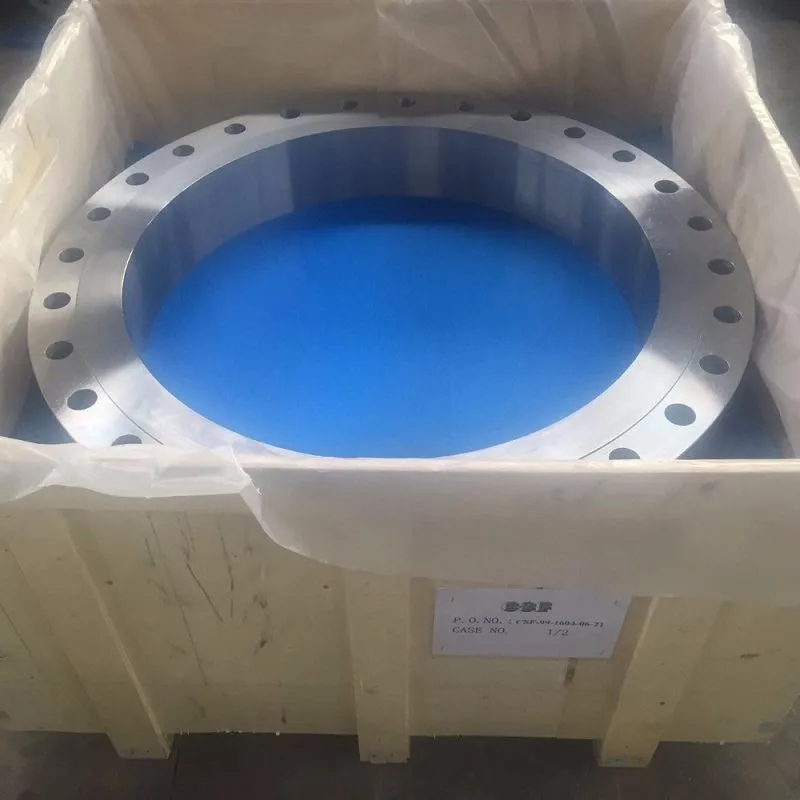
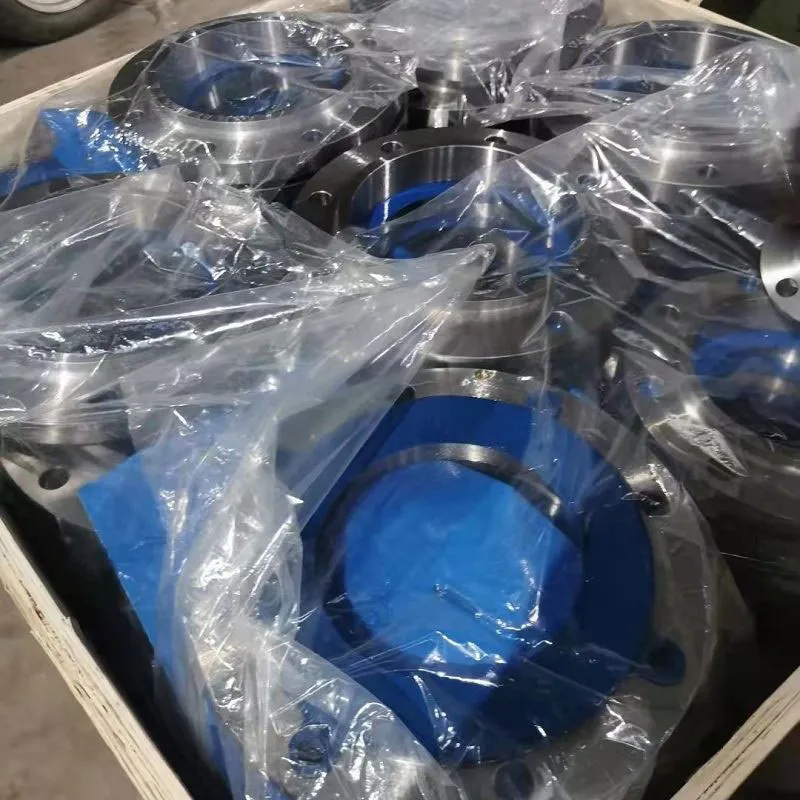
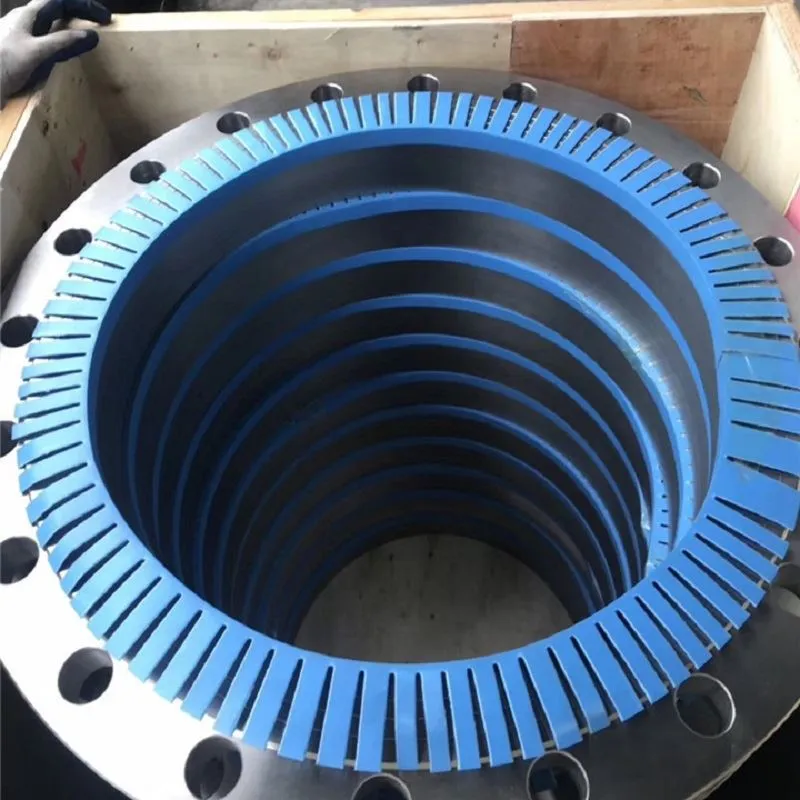
For Russian customers looking for an alternative to European brands or local resellers, the Shanxi Hongkai Forging product range is of particular interest. In addition to standard items, the company specializes in exactly the types of products we are talking about: overhead flanges and loose flanges, including versions of classes 400 and 2500. Products are manufactured strictly according to international standards (DIN, ANSI B16.5, ASME) and, which is critical for our market, according to GOST specifications. The range of nominal diameters from DN15 to DN4000 allows us to cover the needs of both small-scale repairs and large infrastructure projects.
The main advantage of such manufacturers is the implemented multi-level quality control system. Unlike garage workshops, here every stage - from incoming inspection of raw materials to mechanical processing and heat treatment - is recorded and checked by qualified personnel. The geographical location in a developed logistics hub ensures timely shipment, and the presence of the right to independently export makes transactions transparent and legally clear. This is the case when working directly with the manufacturer provides real advantages in price and quality, avoiding the risks of counterfeit goods.
Imports in general are a different story. Just five years ago, European flanges were considered the standard. Today, in the context of sanctions and broken supply chains, buying a brand like BLANK or Krombach has turned into a lottery. The market is flooded with counterfeit goods. They may sell you a Turkish or Chinese fake with a re-glued tag at the price of the original. And no, I am not calling for a complete abandonment of imports, but the level of verification should be triple. Require a certificate of origin, conduct a spectral analysis of the metal upon acceptance. It's too expensive to risk the system for a label now.
Technical nuances of installation: where the main mistakes are made
Even the most ideal flange, purchased from the best factory, can be damaged by improper installation. Accident statistics show that more than 60% of problems arise not because of product defects, but because of assembler errors. Let's look at typical scenarios that lead to disaster.
The first mistake is using the wrong gaskets. For a loose flange for bushing 63, it is critical to select the correct seal material. Paronitis? Rubber? Teflon? Spiral wound gasket? The choice depends on the environment and temperature. Often installers install what is “at hand”. Result: the gasket is squeezed out by pressure or destroyed by a chemically aggressive environment. Remember: a loose flange produces clamping force differently than a welded flange. The design must take into account the possibility of deformation of the collar.
The second mistake is overtightening the bolts. The desire to make something “forever” leads to the fact that the bolts are pulled all the way until the thread breaks or the flange itself bursts. Tightening must be done with a torque wrench, strictly in a “crosswise” pattern. This ensures an even distribution of force along the entire perimeter. If you tighten the bolts in a circle, the flange warps, a gap forms, and it begins to leak. In 2026, the use of calibrated tools has become the norm, even on small objects. No “eye gauges” or gas keys.
The third mistake is ignoring the condition of the bushing. The loose flange works in pairs. If the pipe flange (bushing) has scratches, holes or unevenness, no flange will save you. The surface must be mirror-like. Before installation, be sure to check the condition of the pipe end. Any grain of sand or scale between the flange and bushing will become a corrosion or leak point.
Specifics of operation in extreme conditions
Russia is a country of contrasts. The equipment operates both in hot oil refinery shops and in open areas in permafrost. How does a loose flange behave at minus 50 degrees?
This is where the concept of cold hardiness comes into play. Conventional structural steel loses its toughness at low temperatures. An impact that would pass without a trace in summer can crack a part in winter. If your system operates in the north, ask the supplier for flanges made of cold-resistant steel (marking of HL versions). Regular St20 will not work here. Also pay attention to bolted connections. The bolts must also be cold-resistant. People often forget to replace the fasteners, leaving behind ordinary galvanized bolts, which become brittle in the cold.
Another point is thermal expansion. Pipelines live their own lives: they expand when heated and contract when cooled. The good thing about a loose flange is that it accommodates some angular movements better than a rigid connection. But if the system is subject to strong vibrations (for example, powerful pumps or compressors are operating nearby), the flange may begin to “walk.” In such cases, it is recommended to use Grover spring washers or self-locking nuts to prevent the fasteners from self-unscrewing.
How to distinguish a quality product from a defect: buyer’s checklist
Before you pay money, conduct your own mini-expertise. You don't need a laboratory, just a little care and simple tools. Here is a list of actions that separate a professional from an amateur:
- Visual inspection of the surface.There should be no cracks, sunsets, or delaminations of the metal. The surface must be clean, without traces of rust (if it is not rough rolled). Painted flanges should have an even coat of paint without bubbles.
- Geometry check.Take a caliper. Measure the thickness of the collar at several points. The takeoff run must not exceed GOST tolerances. Check the diameter of the bolt holes. They should be the same.
- Marking.Every serious product must have a clear mark: steel grade, pressure (Pn), diameter (Dn), factory trademark. If the marking is applied with paint and is erased with a finger, this is a bad sign. The real markings are knocked out or etched.
- Completeness of documents.The quality certificate is the bible for an engineer. It must indicate the results of mechanical tests, chemical composition, and heat number. Check the heat number on the document with the number on the product. They must match.
- Sound test.Yes, it sounds strange, but experienced craftsmen do this. Gently tap the flange with a metal object. The sound should be clear and clear. A dull rattling sound may indicate internal defects or cracks.
Don't be shy to ask the manager uncomfortable questions. Ask: “What inspection method do you use?”, “Can you provide a sample for testing?”, “What happens if we find a hidden defect in six months?” The answers will tell you more about the supplier than any advertising brochure.
The future of the market: trends for 2026-2027
Where is the industry heading? Analysts predict a further rise in energy prices, which will inevitably hit the cost of metalworking. Factories will be forced to implement automation to reduce the influence of the human factor and reduce costs. We will see more robotic welding and stamping lines.
This is good for quality, but bad for customization. Standard products will become cheaper and more accessible. But manufacturing flanges according to individual drawings will become more expensive and take longer. Therefore, my advice: try to design systems for standard sizes. Avoid unique solutions where standard units can be used. This will save you budget and time in the future.
Environmental regulations are also expected to become stricter. Factories using outdated electroplating or painting methods will close or modernize. This will temporarily create a shortage in the anti-corrosion coatings market. Plan your purchases in advance, especially if you need flanges with special coatings for service in seawater or aggressive environments.
Another trend is digitalization of the supply chain. More and more factories are switching to a traceability system for every part via QR codes. By scanning the code on the flange, you can see its entire history: from steelmaking to shipment from the warehouse. This is a powerful anti-counterfeit tool. If the seller cannot provide such a digital history, reconsider.
Final summary: is it worth the risk?
Buying a loose flange for a 63 hub seems like a no-brainer. But behind this simplicity lies a minefield of technical nuances, economic pitfalls and human errors. The cost of an error is not the cost of the part, but the cost of downtime of the entire production, environmental fines and, God forbid, human lives.
В 2026 году правило «скупой платит дважды» работает как никогда раньше. Не гонитесь за самой низкой ценой в поисковой выдаче. Ищите баланс между стоимостью, репутацией производителя и техническим соответствием. Проверяйте, тестируйте, требуйте документы. Относитесь к поставщику как к партнеру, а не как к врагу, у которого нужно выторговать каждую копейку.
Российский рынок трубопроводной арматуры способен обеспечить нас всем необходимым. У нас есть свои заводы, свои технологии и свои специалисты. Проблема лишь в том, чтобы научиться отделять зерна от плевел. Надеюсь, эта статья помогла вам вооружиться знаниями для этой битвы. Помните: надежность вашей системы начинается с выбора правильной детали. И этот выбор всегда за вами.
Если у вас остались вопросы по конкретным маркам сталей или особенностям монтажа в ваших условиях — не ищите ответы в сухих справочниках. Общайтесь с технологами заводов, читайте форумы практиков, делитесь опытом. Только живое знание и постоянная бдительность помогут избежать аварий. Берегите свои трубы и нервы.