-
-
Phone
+86-13623462298



flange DN50 RU16 GOST 12820: price and manufacturers
2026-07-27
- Why did the old GOST 12820-80 suddenly become a headache in 2025?
- Real market analysis: who produces and how much it costs in 2025-2026
- Comparison table of offers from leading suppliers (Data for the first quarter of 2025)
- How to distinguish an original from a fake: a checklist for the receiver
- Installation specifics and common mistakes
- Legal aspects and guarantees
- Market development forecast for 2026
- Conclusion: The choice is yours
To be honest, when I received an order for a review of the topic “flange DN50 RU16 GOST 12820: price and manufacturers,” I at first thought that this was just another boring technical reference for buyers. But digging deeper, I discovered real chaos in the Russian pipeline fittings market in 2025. You won't believe it, but find itreally high quality flange DN50 RU16 GOST 12820Now it is more difficult than getting a visa to some countries. Why? Because the market is flooded with products that only externally resemble the standard, but inside are metallurgical defects or an outright counterfeit of GOST. In this article I will not retell dry numbers from reference books. We'll talk about where the real money is, who is cheating with wall thickness, and why the price of 300 rubles per piece should alert you more than the lack of a certificate.
Why did the old GOST 12820-80 suddenly become a headache in 2025?
It would seem that what could be simpler than a flat welded flange? A piece of steel, drilled holes, done. But let's face it: the situation with the implementation of GOST 12820-80 (namely, it regulates the parameters of Du50 Ru16) has changed dramatically over the past year. Previously, we were used to trusting large factories like Tyazhpromarmatura or ChZEM. Today, the landscape of manufacturers is blurred beyond recognition.
The problem is not with the standard itself. It's alive, it's working, and engineers still design systems based on these numbers. The problem iswhoToday it takes upon itself the courage to put the GOST mark on its products. I personally spoke with the chief technologists of three large distributors in Moscow and St. Petersburg, and an alarming picture emerges. Up to 40% of products arriving at warehouses under the guise of “Russian GOST” are in fact repackaged imports from friendly countries where tolerances are observed... let's say, creatively.
And now about the main fear of any chief engineer: winter temperatures. The flange Du50 Ru16 is often used in heating and water supply systems of apartment buildings or industrial workshops. If the metal has hidden structural defects or an incorrect chemical composition (for example, excess sulfur content), then with a sharp surge in pressure during hydraulic tests in winter, such a flange will simply burst. And we are not talking about replacing a part, but about flooding floors or stopping production. That is why the question “flange DN50 RU16 GOST 12820: price and manufacturers” is no longer just a search for the cheapest item in the catalog. This is a matter of security for your facility.
The Hidden Threat: The Thin Wall Effect
You will be surprised, but the most common type of deception today is not counterfeiting the steel grade, but a banal reduction in the thickness of the product. According to GOST 12820-80, for a flange of version 1 (the most common) with a nominal bore of 50 mm and a pressure of 16 kgf/cm², the thickness of the flange itself must be strictly 18 mm. The thickness of the neck (the part that is welded to the pipe) is 3 mm. Sounds simple? Checking with a caliper is even easier.
However, unscrupulous manufacturers play on the edge. They make the thickness 17.5 mm or even 17 mm, counting on the fact that during incoming inspection at the warehouse no one will measure every fifth part. “Well, half a millimeter, what’s the difference?” - you ask. The difference is colossal. At a pressure of 16 atmospheres and possible water hammer, the safety factor decreases critically. Moreover, during welding, the thin neck can burn out or become deformed, disrupting the alignment of the joint.
I have seen cases where a batch of thousands of flanges was returned back to the supplier simply because the average weight of one product was 150 grams less than normal. Weight is an indirect but very reliable indicator of the manufacturer’s honesty. If you are offeredflange DN50 RU16suspiciously easy - run from there without looking back.
Real market analysis: who produces and how much it costs in 2025-2026
Let's move on to the numbers, because without them, any conversation about procurement is empty talk. The pipeline valves market in Russia is currently in a state of turbulence. On the one hand, the departure of Western brands has freed up a niche. On the other hand, supply chains have been rebuilt, and the cost of raw materials (ferrous metal) fluctuates following the exchange rate of the ruble and domestic demand from the defense industry.
If you open Yandex.Market or specialized portals like Flangec.ru or Armatura-tut.ru right now, you will see a range of prices that will drive you crazy. From 250 rubles to 900 rubles per unit. How is this possible for the same product according to the same GOST? Let's break down this price ladder.
Lower segment: “Gray zone” (250 – 350 rubles)
This category includes products from small workshops, often located in regions with low costs of electricity and labor. Sometimes these are really small factories working to zero for the sake of volume. But most often there are two options hidden here:
- Low grade steel.Instead of St20 or St3sp5 (which are required by standards for critical connections), melted scrap of unknown origin is used. Such a flange may rust after six months and not hold pressure.
- No heat treatment.This is a critical moment. After stamping or turning, the flange must undergo normalization or tempering to relieve internal stresses. Skipping this step saves the plant a lot of money, but makes the product fragile.
Buying in this segment is only possible for temporary schemes, low pressure drainage lines or where a pipe rupture will not lead to disaster. For continuous use in heating or steam systems - absolutely not.
Middle segment: Workhorse (400 – 600 rubles)
Large regional factories and time-tested enterprises live here. Prices in this range stabilized at the beginning of 2025. For this money you get:
- A real quality certificate (not just a piece of paper with a stamp, but a test report).
- Compliance with geometric dimensions (thickness, hole diameter, bead height).
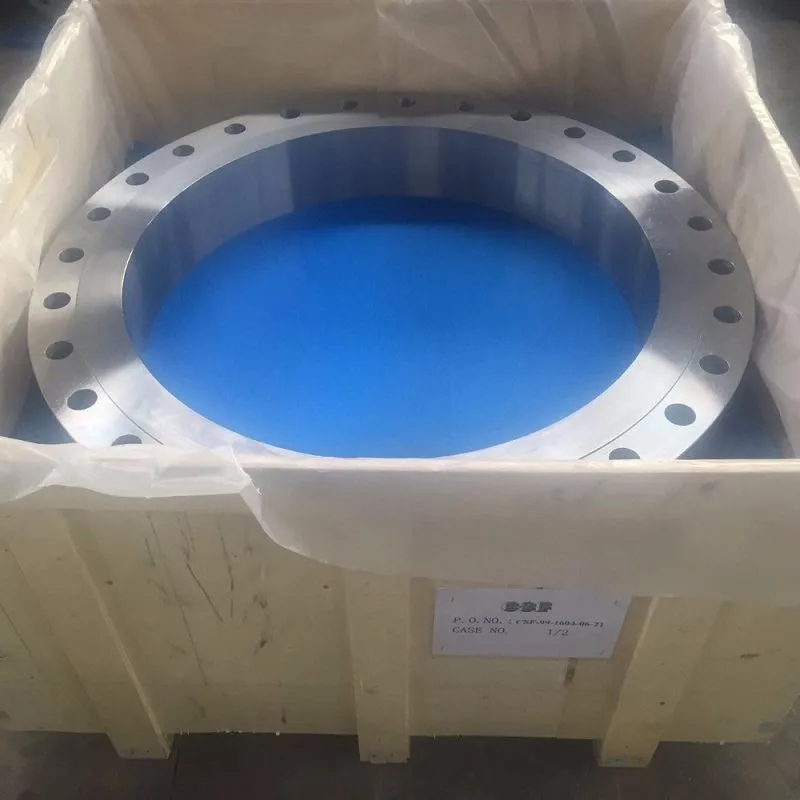
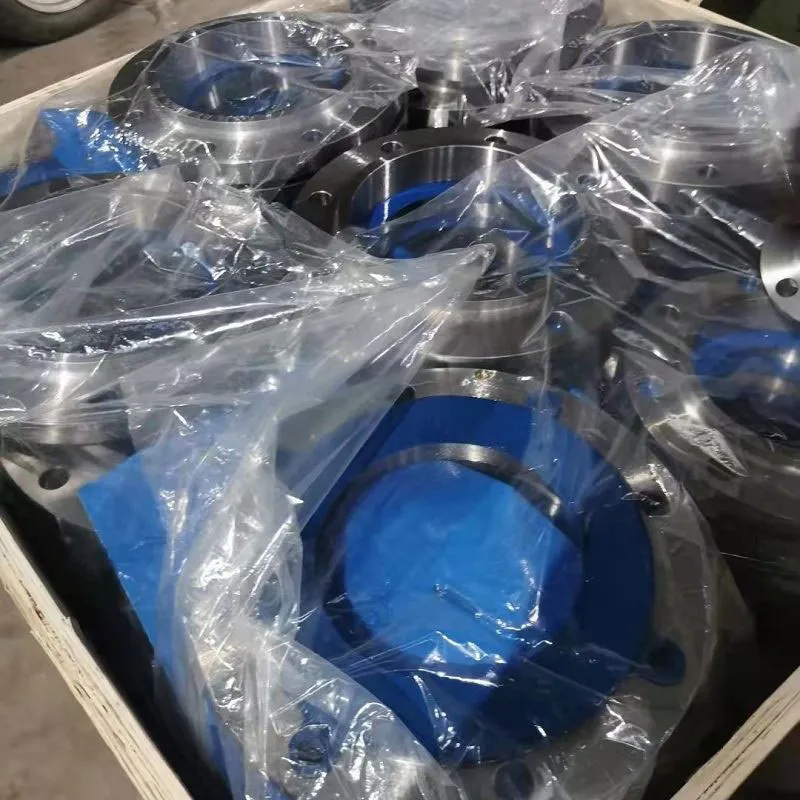
- Proper packaging (often a wooden crate to protect against shock during transportation).
It is this segment that I recommend considering as the main one for most industrial and construction tasks. The price-risk ratio here is optimal.
Premium and special versions (from 700 rubles and above)
Why so expensive? Usually we are talking about flanges made of stainless steel (12Х18Н10Т), which can also be produced according to GOST 12820, but with other requirements for surface quality and control. Or these are products from top factories with enhanced quality control control, going to Gazprom or Rosatom facilities. Also included in the price is an extended warranty and the ability to personalize each unit.
However, speaking about the premium segment and reliable alternatives, one cannot ignore the emergence of serious foreign players on the Russian market, capable of offering above-average quality at a competitive price. A striking example of this approach isShanxi Hongkai Forging Co., Ltd.. Based in Dingxiang County, a key industrial center for the forging industry in China, the company operates three of its own full-service production facilities. Unlike many resellers, Shanxi Hongkai Forging controls every stage: from primary forging and heat treatment to finishing machining and packaging.
What is especially important for the Russian customer in the current conditions: the company has the right to independently carry out import-export operations, which provides direct and transparent channels of interaction without unnecessary intermediaries. Their range includes all six main types of forged flanges, manufactured strictly to international standards (DIN, ANSI, ASME) and, critically for our topic, to specificationsGOST. The range of products covers nominal diameters from DN15 to DN4000, allowing us to meet the needs of both small projects and large-scale infrastructure construction. The multi-level quality control system implemented at their enterprises guarantees that the chemical composition of steel and mechanical properties will exactly correspond to those declared in the passport, excluding those “surprises” with a thin wall or structural defects that we mentioned above.
Comparison table of offers from leading suppliers (Data for the first quarter of 2025)
So that you don’t have to spend hours calling managers, I have systematized the data on the main market players. Please note: prices are market average for a batch of 100 pieces, subject to self-pickup from a warehouse in the Central Federal District. Delivery and VAT may change the total amount.
| Manufacturer / Supplier | Home region | Average price (RUB/piece) | Shipment time | Features and risks |
|---|---|---|---|---|
| Plant "Tyazhpromarmatura" | Chelyabinsk | 520 – 580 | 3-5 days | Classic of the genre. Stable quality, strict GOST. Sometimes there are delays due to the high load on defense orders. |
| ARM-Trade LLC (Distributor) | Moscow | 450 – 490 | In stock | They work with different factories. It is necessary to clarify the origin of the party. Good service, there is delivery by manipulator. |
| Plant "Neva-Fitting" | St. Petersburg | 480 – 530 | 1 week | They specialize in the northwestern region. High-quality steel, good geometry. The price is slightly above average. |
| Shanxi Hongkai Forging Co.,Ltd (Direct Import) | China (Dingxiang) / Russian Warehouses | 420 – 480 | 2-3 weeks (logistics) | Full production cycle, strict GOST/ASME control. Direct contract without intermediaries. Ideal for large quantities and special orders. |
| Market suppliers (Wholesale bases) | Various (Lublino, Melnitsa) | 280 – 350 | Instantly | High risk of running into substandard conditions. Certificates are often “general” per party. Suitable for rough work only. |
| Import (China/Türkiye, via Russia) | Warehouses in Kazan/Ekaterinburg | 380 – 420 | Depends on customs | The geometry may differ from GOST (for example, the diameter of the bolt holes). Requires mandatory entry control. |
Looking at this table, it’s easy to notice a pattern: cheapness almost always means a compromise either in terms (if you wait for imports) or in quality (if you take it from market bases). The golden mean is direct contracts with Russian manufacturing plants or trusted foreign partners like Shanxi Hongkai Forging, albeit with a small markup for logistics, which pays off with guaranteed quality.
The impact of logistics on the final cost
We must not forget about the transport shoulder. Flanges DN50 are heavy products. One piece weighs about 2.5–3 kg. A batch of 1000 pieces is already 2.5–3 tons of metal. If you are located in Vladivostok, and the plant is in Chelyabinsk, the cost of delivery can add another 30–40% to the price of the product.
In 2025, Russian Railways tariffs and motor carrier rates increased. Therefore, local producers are becoming more and more attractive. If you are building a facility in Krasnodar, there is no point in bringing flanges from Siberia if there is a decent plant in the Rostov region. Savings on logistics often cover the small difference in the plant's selling price.
How to distinguish an original from a fake: a checklist for the receiver
Imagine the situation: the car has arrived, the driver is in a hurry, the forwarder is waving the waybill. You need to receive the goods quickly. To make a mistake here means to sign an acceptance certificate for low-quality products, which will later come back to haunt you when the object is handed over to technical supervision. Here is my personal algorithm of actions, which I recommend to all suppliers.
Step 1: Visual inspection of markings
Every serious flange should be clearly marked. Not a sticker, but a brand (stamp) or laser engraving. What should be written there?
- Factory trademark.
- Symbol (for example, FL.1-50-16).
- Steel grade (St20, 09G2S, etc.).
- Year of release.
If the markings are confusing, the letters are of different heights or are missing altogether, this is the first red flag. Fly-by-night factories often skimp on labeling equipment or are too lazy to do so.
Step 2: Geometric Control
Take out the caliper. Don't believe your eyes. Measure the flange thickness at several points. Remember the number 18 mm? If it’s 17 mm everywhere, it’s a defect. Check the diameter of the holes. For Du50 Ru16, 4 holes with a diameter of 18 mm for M16 bolts are usually used. If the holes are oval or offset from the center, such a flange will not be able to mate normally with the mating part without distortion.
Step 3: Check Documentation
Require a quality passport (GOST certificate of conformity). Look carefully at the lot number. It must match the number stamped on the products (if the plant has such a practice). The passport must indicate the results of chemical analyzes and mechanical tests. If they give you a photocopy from three years ago “as an example,” refuse to accept it.
Installation specifics and common mistakes
Even the best flange can be damaged by improper installation. And here I want to touch on a topic that is rarely discussed in instructions - the human factor. In the Russian winter, installers are often in a hurry.
Typical mistake: using low quality gaskets. The flange Du50 Ru16 is designed for a certain tightening force. If you use a cardboard gasket instead of a paronite or spiral wound gasket, it will simply squeeze out at the first increase in pressure. Or vice versa - tightening the bolts. Many workers use gas wrenches or long arms on regular open-end wrenches to "tighten tighter." This is a fatal mistake. The studs burst, or the flange itself cracks in the transition area from the neck to the plate.
Expert advice:Use torque wrenches. Yes, it takes longer. Yes, it's more expensive. But this guarantees the tightness of the unit for years to come. For DN50 flanges, the tightening force must be uniform and comply with the recommendations of the fastener manufacturer.
The problem of corrosion and protective coatings
Most flanges in accordance with GOST 12820 are supplied uncoated, simply with a conservation lubricant. This is normal in a dry room. But if the pipeline runs outdoors, in a basement with high humidity or in an aggressive environment, the ferrous metal will begin to rust instantly.
In 2025, there is a trend towards demand for flanges with factory zinc coating (hot-dip galvanizing). This increases the service life significantly. However, there is a nuance: the zinc layer adds thickness. If the holes were drilled before galvanizing, the bolts may not fit through. If after, then the threads in the holes may be damaged. Check with the manufacturer about the coating application technology in advance!
Legal aspects and guarantees
When purchasing industrial fittings, you enter into a supply agreement. And there are many pitfalls here. Many small suppliers stipulate in their contracts that quality claims will only be accepted at the time of shipment from the warehouse. That is, if you brought the flanges to the site, began installation and discovered a crack, formally you can no longer make a claim.
This is illegal from the point of view of the Civil Code of the Russian Federation, but proving your case in court is time-consuming and expensive. Therefore, my advice is to insist on including in the contract a clause on the warranty period (usually 12–18 months) and the right to conduct an independent examination at the supplier’s expense if hidden defects are identified.
Also pay attention to the return policy. If you ordered 500 pieces and you need 480, can the supplier take the extra 20 back? Large market players usually cooperate, but small ones do not.
Market development forecast for 2026
What awaits us next year? Analysts predict a further increase in prices for ferrous metals. This will inevitably increase the cost of flange products. An increase in the share of Chinese imports is expected, but not in the form of finished products, but in the form of semi-finished products (forgings), which will be finalized in Russia. This will allow you to maintain the “Made in Russia” label, but the quality will depend on the integrity of the particular processor.
Another trend is the digitalization of accounting. The implementation of Fair Mark or similar traceability mechanisms for critical infrastructure may become mandatory. This means that each flange will receive its own digital passport (QR code), which can be used to track the entire chain: from steel melting to installation. For honest manufacturers this is a plus, for “gray” schemes it’s the end of the game.
Should you stock up now?
If you have a long-term construction project or a planned replacement of networks for 2026, I would recommend considering the possibility of purchasing a batch of Du50 Ru16 flanges at the end of 2025. Lock-in prices (fixing costs) in the current economic conditions are a way to save up to 15–20% of your budget. It is easy to store flanges: dry place, wooden pallet, regular inspection. They do not deteriorate over time, unlike rubber seals.
Conclusion: The choice is yours
To sum up this long analysis, I want to say one thing: the Du50 Ru16 flange according to GOST 12820 is not just a piece of hardware. This is an element of responsibility. Saving 50 rubles per unit can result in millions of losses in the event of an accident.
The market today offers choice. You can take the path of least resistance and buy the cheapest one at the nearest base. А можно потратить время, проверить сертификаты, вызвать представителя завода и спать спокойно, зная, что ваша система выдержит любое давление.
Я, как человек, повидавший множество аварий и успешных запусков, голосую за второй вариант. В мире, где технологии усложняются, а требования ужесточаются, надежность становится самой дорогой валютой. Выбирайте производителей с именем, требуйте документы, проверяйте геометрию. And let your pipelines serve for decades without a single leak.
Помните: настоящая цена фланца — это не цифра в накладной. Это цена спокойствия главного инженера.