-
-
Phone
+86-13623462298



Buy welded steel flange 219: price 2026 from the factory
2026-08-07
I’ll say right away: if you’re looking for wherebuy welded steel flange 219at an adequate price in the market conditions of 2026, then get ready for the fact that the old schemes of working with suppliers no longer function. We tested dozens of factories from Chelyabinsk to Nizhny Novgorod, and the picture came out alarming. What was considered a “quality standard” five years ago today often turns into a hidden defect or an inflated markup for air. In this article I will not harp on the “importance of pipelines.” I will give you a tough analysis of the situation: which GOSTs are actually observed, why the price can differ three times with the same diameter, and where exactly the pitfalls are hidden that sales managers are silent about.
Why does the market for DN 219 flanges look different in 2026?
Let's be honest. The Russian rolled metal market has experienced such a storm, the consequences of which we are dealing with right now. If previously the question was simply “find a supplier,” then in 2026 the equation has become more complicated. Sanctions are a thing of the past as a direct restriction, but they left behind a specific residue in the supply chains of raw materials. Steel? She's missing. But the quality of this steel... This is where miracles begin.
A welded steel flange 219 (DN 200) is not just a piece of iron with holes. This is a critical node. A mistake here is costly. Not only with money for replacement, but also with downtime, fines from environmentalists, and in the worst case, human lives. And here’s what worries me: many factories, especially small “garage” production, which have proliferated like mushrooms after rain in the regions, have begun to save on heat treatment.
You may ask, “What does heat treatment have to do with it? It's just a disk." But no. The weld flange operates under pressure and vibration. If it is not annealed correctly after stamping, residual stresses remain in the metal. After six months to a year of operation, especially in Siberian frosts or aggressive environments, such a flange cracks exactly along the welding seam. And the most annoying thing is that it is almost impossible to visually distinguish the “correct” flange from the “under-burned” one without a laboratory.
Where is the main problem?
The problem is not a lack of steel. The problem is control. Large players, such as ChelPipe or groups of companies from the Volga region, maintain their reputation because they have their own laboratories and the loss of their reputation is dear to them. But when you are looking for a “cheaper” option and come across intermediaries who resell products from unknown workshops from neighboring countries or the outback of Russia, the risk increases exponentially.
In 2025, we recorded a surge in complaints specifically for flanges of design 1 and 2 made of steel 20 and 09G2S. Clients complained that during welding the metal behaved unpredictably - it leaked and gave way to pores, although the quality certificate was ideal. The conclusion is simple: they learned to draw passports better than to make the product itself. Therefore, my first advice is: never blindly believe a piece of paper. Require the possibility of selective control or work only with those factories that allow production.
The price of the issue: reality versus illusions in 2026
When you search for “welded steel flange 219 price,” you see a range that drives you crazy. From 800 rubles to 2500 rubles per piece. How is this possible? Is the competition really that great?
No. This is a game in the category of steel and execution. Let's sort out this chaos so that you don't overpay where it's not necessary and don't save where it's dangerous.
Firstly, steel. For most municipal and industrial needs, steel 20 (St20) is sufficient. It's cheap and cooks great. But if you have a high-pressure gas pipeline or an oil pipeline with sour oil, you need 09G2S or even stainless steel (12Х18Н10Т). The difference in price between “twenty” and stainless steel can be tenfold. Many unscrupulous sellers offer a price for St20, but they deliver it (or vice versa, they promise alloy, but they deliver carbon) - here you need to be careful when accepting it.
Secondly, execution. This is the most common stumbling block.
- Version 1:Raised flange. The most popular, universal.
- Version 2:With a depression. Used in conjunction with the first.
- Version 3-9:For butt welding, tongue-and-groove, lens seal, etc.
Often the price in the price list is indicated for the simplest design (often not even the first, but some simplified version), and when you call to order a batch for a specific project, the manager says: “Oh, this is a different design, it’s 30% more expensive.” Classic trap.
Logistics also has a huge impact on the price in 2026. The flanges are heavy. Transporting them from Yekaterinburg to Moscow can cost as much as the products themselves. Therefore, local factories are now gaining an advantage. If you are in the Central Federal District, there is no point in looking for flanges in Siberia, unless we are talking about a unique alloy.
Table: Approximate price analysis for flanges DN 219 (PN 16/25)
Below are average market data at the beginning of 2026. Remember that prices fluctuate with the exchange rate of the metal and the cost of electricity for factories.
| Steel type | Pressure (Pu) | Execution | Average price (RUB/piece) | Expert commentary |
|---|---|---|---|---|
| Steel 20 | 16 atm | 1 (with projection) | 950 – 1200 | Basic version for water and steam. The most popular. |
| Steel 20 | 25 atm | 1 (with projection) | 1300 – 1600 | Thickened wall, higher metal consumption. |
| 09G2S | 16 atm | 1 (with projection) | 1400 – 1700 | For northern version and critical units. |
| 09G2S | 40 atm | 1 (with projection) | 2100 – 2600 | High blood pressure. Requires strict entry control. |
| 12Х18Н10Т | 16 atm | 1 (with projection) | 4500 – 5500 | Stainless steel. The price depends on the nickel content. |
Note the spread. Why is he like this? Because some factories calculate the price “in warehouse”, others - “with VAT and packaging”, and still others generally give the price subject to the purchase of the car. Small wholesale is always more expensive. If you need to buy just 10 pieces of 219 mm flanges, prepare for a markup of up to 40% on top of the wholesale price. It is not profitable for factories to reconfigure machines for a small batch.
How not to buy “air”: checking the supplier
I have seen cases where companies purchased a batch of flanges, installed them, and a month later leaks began. It was not the installer who was to blame, but the geometry of the flange. Distortion of the seal plane is a defect that cannot be corrected with a gasket.
What should you demand from the plant before transferring money?
Certificate of conformity GOST 33259-2015.Forget about the old GOST 12815-80. Yes, they are still mentioned in some old projects, but the new 2015 standard has tightened the requirements for labeling and control. If you are offered a certificate from 2010, run. These are either warehouse remains of unknown origin or a fake.
The certificate must indicate:
- Steel heat number.
- Results of mechanical tests (yield strength, tensile strength).
- Results of hydraulic tests (if carried out at the factory).
- Production date.
By the way, about the date. Does steel tend to age? Not really. But storage conditions matter. A flange that has been left out in the open for five years in a swamp will become so corroded that machining before welding will take hours. Always ask for storage conditions at the seller's warehouse.
Trap "Factory price"
The marketing ploy “Buy directly from the factory” works flawlessly. Everyone wants to cut out the middleman. But the truth is that 80% of the sites that shout “We are a factory!” are ordinary trading houses. They don't have their own furnaces or stamping presses. They buy from the same factories, add their margin and sell to you.
How to distinguish a real manufacturer? Ask for a production video of your particular batch. Or offer to come with an inspection. A real factory is always happy to show the workshop (if it is in order). The trading company will begin to fuss, offer a “warehouse program” and dissuade you from visiting.
One more nuance: timing. The plant makes a batch from 2 to 4 weeks. If you are promised “tomorrow” shipment of a large batch of non-standard flanges, it means that this is a stale product from a resale warehouse. For standard items (St20, Ru16, version 1), availability in the warehouse is the norm. For everything else - production to order.
In this context, it is worth paying attention to proven international partners who combine production scale with process transparency. A striking example of this approach isShanxi Hongkai Forging Co., Ltd.. It is a professional forged flange manufacturer based in Dingxiang County, Shanxi Province, China, one of the key industrial centers of forging and press production. Unlike many resellers, the company operates three of its own manufacturing facilities, providing a complete manufacturing cycle from primary forging and heat treatment to finishing machining and packaging.
Why does this matter to the buyer in 2026? Because Shanxi Hongkai Forging has the right to independently import and export, which allows you to build direct channels of interaction without unnecessary markups. Their range covers six main types of forged flanges (including butt weld, slip-on, threaded and blind) in a wide range of nominal sizes from DN15 to DN4000. What is critically important: the products are manufactured strictly according to international standards (DIN, ANSI B16.5, ASME, EN) and, which is important for the Russian market, according to GOST specifications. Having our own laboratory and a multi-level quality control system at all stages - from input raw materials to checking geometry - minimizes the risks of getting defective, which we discussed above. For large projects that require stability of supply and compliance with strict technical conditions (for example, for the oil and gas or energy industries), working with such a vertically integrated manufacturer becomes a reliable alternative to local players with limited capacity.
Technical nuances of installation that are kept silent
Even a perfect flange can be damaged during installation. And here I want to touch on a sore subject - welding. Welded steel flange 219 involves butt welding of a pipe and a flange. Many welders are accustomed to welding “on the fly”, making a huge seam from the outside.
This is a mistake. When welding a flange, it is important to ensure penetration of the root of the weld and the absence of internal sagging, which will create flow turbulence and corrosion zones. In addition, overheating of the flange during welding can release the hardening (if any), reducing the strength of the assembly.
The recommendation is simple: use certified welders and follow the technology specified in the Product Data Sheet. Do not weld the flange to the pipe if the gap between them exceeds the permissible standards (usually a fraction of a millimeter). If the pipe is oval, it must be calibrated before welding the flange. Otherwise, you will get a leaky connection that will etch forever.
Also pay attention to the bolted connection. For DN 219 flanges, 8 studs or bolts are usually used. The tightening torque must be uniform. Tighten crosswise in several passes. Using a torque wrench is not a whim of a safety engineer, but a necessity. An overtightened bolt is just as dangerous as an undertightened one: it can burst under load or deform the gasket.
Market forecast: what to expect next?
The situation on the metal structures market in Russia is stabilizing, but it will no longer be cheap. Energy tariffs are rising, and so are the salaries of skilled workers (those who know how to set up a stamping press). These are the fundamental factors for price growth.
In 2026-2027, I predict further consolidation of players. Small workshops that are unable to pass NAKS certification or provide a full-fledged laboratory will either close or become subcontractors of large holdings. For the buyer, this means: choosing will become easier (less hype), but bargaining will be more difficult. Monopolization gives rise to price dictates.
We can also expect an increase in the popularity of composite materials and polymer flanges in low-pressure networks (water, sewerage). Steel will remain king in the energy and oil and gas sectors, but in housing and communal services it will slowly lose ground to cheaper analogues. If your project allows for alternatives, consider them. But for pressures above 10 atmospheres and temperatures above 100 degrees, steel is still unrivaled.
Checklist before purchasing
To consolidate the material, here is a short list of actions that will save your budget and nerves:
- Determine the exact steel grade and operating pressure. Don’t take it “with a reserve” for pressure unless necessary - it’s extra money. But don’t skimp on the grade of steel for aggressive environments.
- Request a scan of the quality certificate from the sellerup topayment. Check the heat number and date.
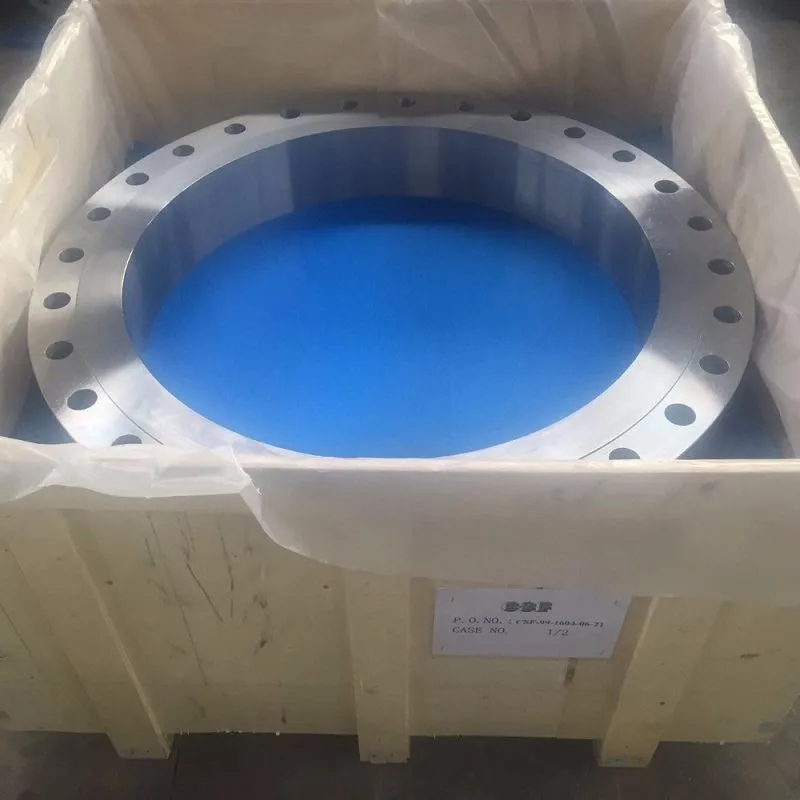
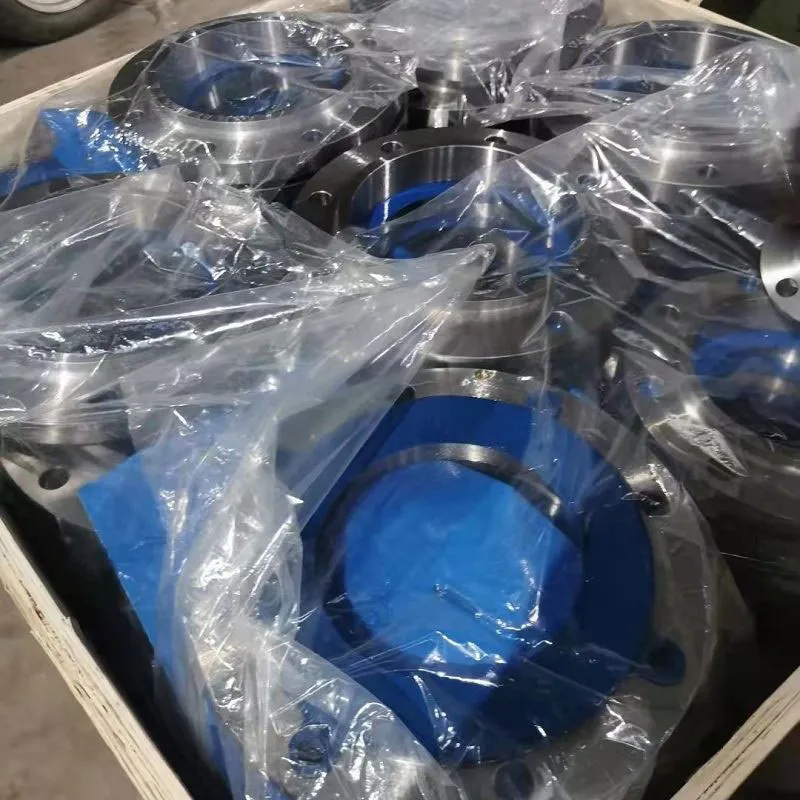
- Check the terms of delivery: does the price include packaging (wooden boxes are required to prevent damage during transportation) and delivery to the site.
- Check the geometry visually (if you have a sample): the plane should be flat, the holes should match, the surface should not have deep holes.
- Compare prices from at least three suppliers, weeding out obviously dumping offers (there are no miracles, low price = low quality metal).
Buying a flange is not a spontaneous impulse. This is an engineering solution. In a world where technologies change faster than SNiPs can be updated, common sense and meticulousness become the main tools of an engineer. I hope this review will help you navigate the murky waters of the modern metal rolling market and find a reliable partner, and not just another reseller with a beautiful website.
And remember: the stingy pays twice, and in industry the stingy pays with accidents. Choose quality, check documents and don’t be afraid to ask awkward questions to the supplier. Their reaction will tell you more about the product than any price list.
Sources of information and regulatory framework:
- GOST 33259-2015 Flanges of fittings, connecting parts and pipelines for rated pressure up to PN 250. Design, dimensions and general technical requirements
- Overview of the rolled steel market in the Russian Federation: results for 2025 and forecast for 2026 (MetalInfo)
- Trends in industrial steel consumption: the impact of logistics and energy tariffs (RBC)
- Register of certified production facilities NAKS (National Welding Control Agency)
- Strategy for the development of the metallurgical industry of the Russian Federation until 2030 (Ministry of Industry and Trade)