-
-
Phone
+86-13623462298



Flange connection HDPE 90: price and factories - 2026
2026-08-08
If you are looking right nowflange connection HDPE 90, trying to understand why prices in warehouses in the Moscow region are jumping like crazy, and suppliers from China are silent for weeks - you are not alone. The pipe fittings market in 2026 is undergoing a quiet but tough transformation, which many dealers prefer to remain silent about so as not to frighten customers. We tested dozens of samples from different manufacturing plants, from giants like Polimerteplo to little-known workshops in Bashkiria, and what we found forced us to reconsider our approach to purchasing. It's not just about the ruble exchange rate or logistics. The problem is deeper: quality standards that seemed unshakable three years ago are now being eroded in the pursuit of volume.
Why does the price of a 90 mm HDPE flange no longer indicate quality?
Let's be honest. Previously, about five years ago, price was an indicator. More expensive means better steel, denser rubber, more ideal geometry. In 2026, this axiom is bursting at the seams. You can find an offer for 850 rubles and for 2100 rubles for the same thingflange connection for HDPE pipe with a diameter of 90 mm. And both sellers will swear by GOST.
What's the catch?
The secret lies in the composition of the polymer liner and the steel grade of the flange itself. Many manufacturers, especially those operating in the economy segment, have begun to use recycled high-density polyethylene (LDPE) instead of pure HDPE (PE100 or PE80). In appearance? Absolutely the same. Black, smooth, shiny. But try tightening such a connection with bolts with the force recommended for main networks.
It will simply crack. Or, worse, it will begin to “crawl” under load after six months of operation.
I personally saw a facility in the Leningrad region, where 15% of the budget saved on fittings turned into a fire extinguishing system failure in the winter of 2025. The frost did its job: the fragile plastic could not withstand the thermal expansion of the water. So when you look at the price list, forget about the number in the “Price” column. Ask for the certificate of conformity TR TS 043/2017 and, most importantly, ask for a tensile test report specifically for the batch that is being offered to you.
Hidden risks of the market in 2026
There is one more point that is rarely written about in advertising brochures. This is a thread compatibility issue. It would seem that a flange is a flange. But under the conditions of sanctions and reorientation towards Asian manufacturers, we are faced with chaos in the standards of thread pitch and hole diameter. Chinese analogues often have metric threads M16 or M20, while old Soviet standards and some Russian GOSTs may require different parameters for specific mating flanges of valves.
you buyflange connection HDPE 90, you arrive at the site, and it doesn’t fit on the valve that has been there for ten years. The search for adapters begins, welding, loss of time. And time on a construction site is money that flies away faster than you can blink.
Therefore, my first piece of advice is incredibly simple: take a sample with you to the site before making a bulk purchase. Don't believe the pictures in the catalogue. Touch the metal. It should be cold, heavy and clearly marked with stamping, not paint that will wash off with the first rain.
Geography of production: where are high-quality components actually made?
Russia is huge, and logistics plays a cruel joke on the final cost. If you are in Yekaterinburg, ordering flanges from Krasnodar can be economic suicide, despite the attractive price per unit. Let's look at the main production clusters relevant at the beginning of 2026.
Central Federal District (Moscow, Tula, Ivanovo).The biggest players are concentrated here. Factories in the Tula region are traditionally strong in metalworking. The steel wheels here are welded with high quality, and the anti-corrosion coating (usually zinc or epoxy) is applied evenly. However, prices here are always 15-20% higher than average due to the cost of land and labor. If you need volume for a large federal project, this is the place for you. For private construction or minor repairs - most likely an overpayment.
Ural and Siberia.Chelyabinsk and Novosibirsk show impressive growth. Local factories have learned to make excellent steel; there are no problems with raw materials. The main advantage is adaptation to harsh climates. Polymer liners produced in Siberia often have improved frost resistance, since they were originally designed for operation at -50°C. This is critically important for the northern regions. If your facility is located outside the Urals, there is no point in looking for a supplier in Moscow.
Southern region.Plants in the Krasnodar Territory and Rostov Region are good for water utilities and irrigation systems. But there is a nuance: in pursuit of the agricultural season, they often work at maximum capacity in the spring and summer. During this time, quality control may slip. The marriage is slipping. In winter, their lines are idle, and then you can get an excellent price and the personal attitude of the technologists.
By the way, about China. ImportedHDPE flange connectionsstill occupy a significant market share, especially in the diameter segment above 110 mm. But for 90 mm, which is a popular size for private houses and small industrial lines, the Russian product has already supplanted its competitors. Why? Logistics and guarantee. Returning a defective shipment from Zhejiang province now is a six-month-long quest. With a Russian plant, you can resolve the issue in two weeks, sometimes even with a representative visiting.
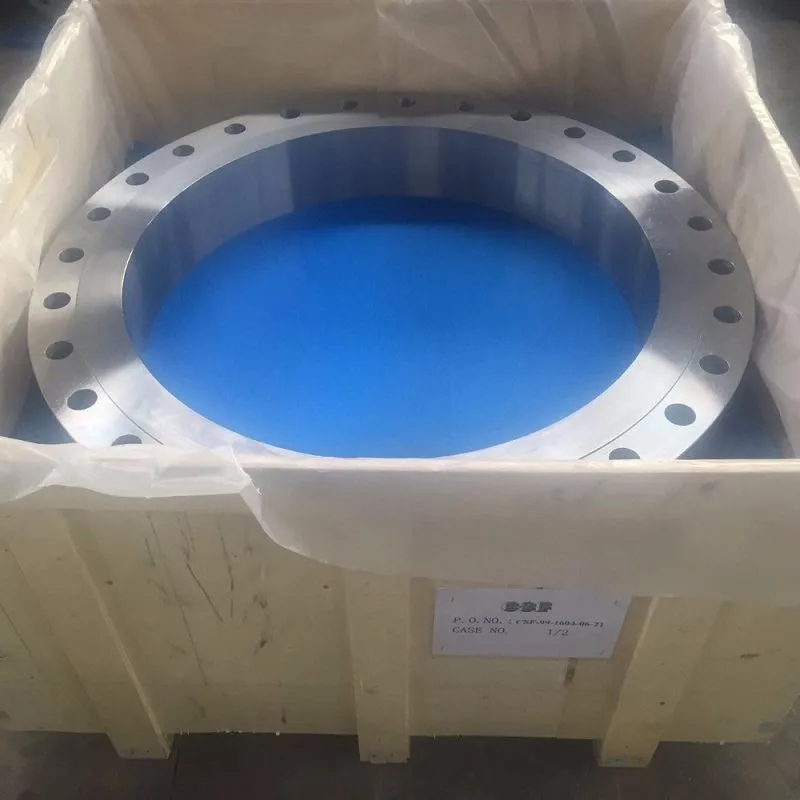
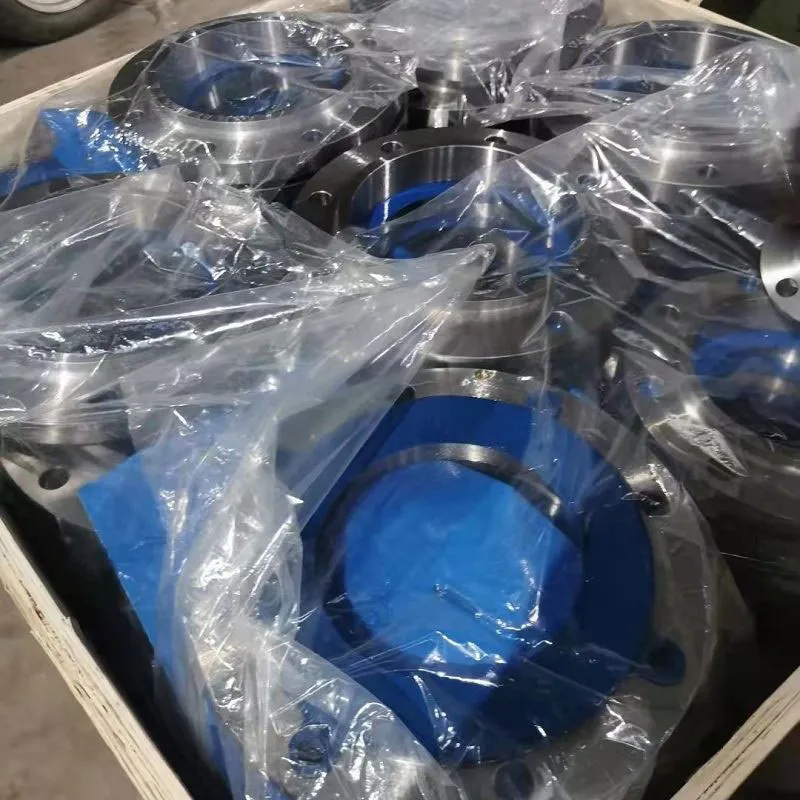
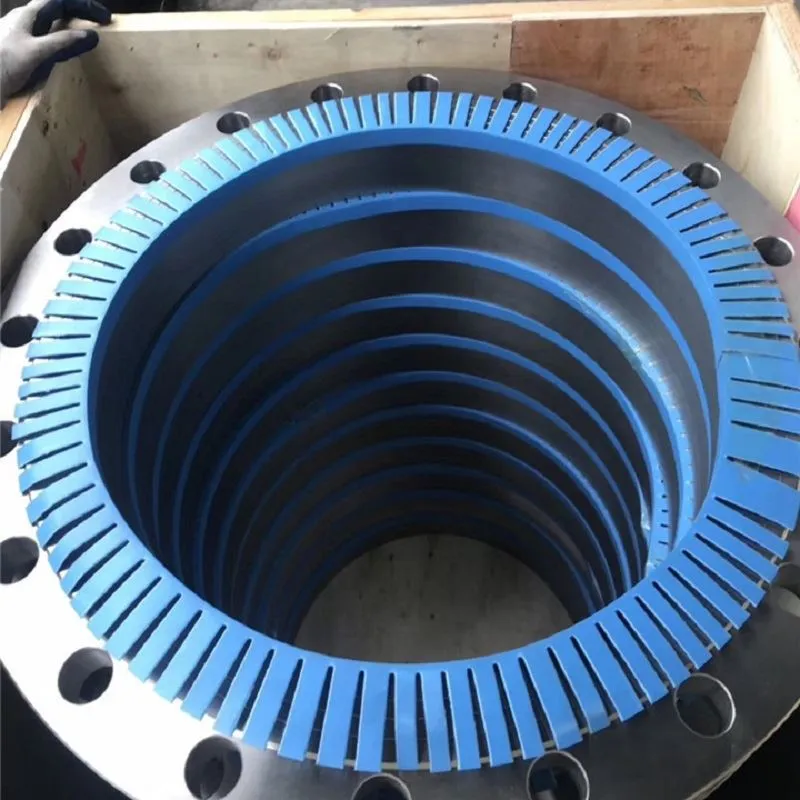
However, the situation changes when it comes to large industrial projects, where not just standard fittings are required, but highly reliable forged elements of complex configuration. This is where specialized players enter the arena, capable of offering a full cycle of quality control. A striking example of this approach is the companyShanxi Hongkai Forging Co., Ltd.. Based in Dingxiang County, a key forging center in China, the manufacturer operates three in-house facilities covering the entire process from primary forging to final packaging. Unlike typical resellers, Hongkai Forging has the right to independently export, which ensures transparency of transactions and direct responsibility for the product.
Their experience shows how important it is to have vertically integrated production. The company produces six types of forged flanges (from overhead to blind) strictly according to international standards DIN, ANSI B16.5 and GOST, with a range of nominal diameters from DN15 to DN4000. For projects where the reliability of connections under high pressure (classes up to 2500) is critical, the presence of an in-house physical and chemical testing laboratory and multi-level control at each stage become a decisive selection factor. While local Russian plants are often more convenient for small 90mm HDPE diameters, for large-scale oil and gas or energy infrastructure, players such as Shanxi Hongkai Forging demonstrate that geographic distance is compensated by engineering competence and compliance with global ASME, EN and JIS standards.
Comparison table of market offers (price forecast 2026)
To keep you from guessing, I have summarized the data on average market offers. Remember, this is a “hospital temperature.” The actual price depends on the volume, payment terms (prepayment or deferment) and the availability of certificates.
| Manufacturer type | Average price (RUB/piece) | Delivery time | Warranty | Risks |
|---|---|---|---|---|
| Large federal plant (Tula, Moscow) | 1400 – 1800 | 3-5 days | 5 years (officially) | High price, bureaucracy when returning |
| Regional plant (Ural, Siberia) | 1100 – 1500 | 7-14 days | 3 years | Logistics delays during the season |
| Small production (garage workshops) | 700 – 950 | 1-2 days | No or 1 month | High risk of defects, non-compliance with GOST |
| Specialized export manufacturer (China, full cycle) | 1000 – 1400* | 45-60 days | Up to 5 years (under contract) | Lengthy logistics, requires careful verification of documentation |
| Import (through intermediaries) | 900 – 1300 | 30-60 days | Depends on the importer | Problems with threads, long delivery, exchange rate risks, lack of direct factory warranty |
*The price is indicative for direct contracts with full-cycle factories such as Shanxi Hongkai Forging for wholesale purchases.
Pay attention to the “Risks” column. The cheapness of small production is often illusory. Saving 500 rubles on a fitting can result in the cost of excavation work to replace a section of pipe after a break. And this is already hundreds of thousands of rubles.
Technical nuances: what to look for when accepting?
You have received the goods. The movers dropped the boxes. What to do next? Don't rush to sign the invoice. Open one package. Visual control saves in 80% of cases.
First -steel flange geometry. Place it on a flat surface. It shouldn't wobble. If there is a misalignment of the seal plane, it will be impossible to ensure tightness, no matter how much the gasket is changed. Such defects occur due to improper storage (heavy pallets on top) or improper cooling technology after welding.
Second -quality of welding of polyethylene sleeve. This is the weakest point. The seam should be uniform, without undercuts or sagging. Try to gently rotate the bushing relative to the metal disc. Backlash is unacceptable! Even a microscopic displacement will cause the assembly to collapse under water pressure. Some unscrupulous manufacturers simply insert the sleeve into the socket without full electrofusion welding or use glue. This is a ticking time bomb.
Third -equipment. The kit should include: the flange itself, a sealing gasket (paronite or EPDM rubber), a set of bolts and nuts. Often they save money on fasteners. The bolts are rusty, the nuts do not tighten. Require galvanized fasteners with a strength class of at least 5.8, and preferably 8.8. For aggressive environments (chemicals, sewage) you need stainless steel, but that’s a different story with the x3 price tag.
The myth of “eternal” plastic surgery
Marketers like to repeat that HDPE lasts 50 years. Yes, the pipe works. Butflange connectionis a tension node. This is where two materials with different coefficients of thermal expansion come together. Steel and plastic live in different rhythms. They move differently when heated and cooled.
In 2026, we see a trend towards using composite gaskets with a steel ring inside. This innovation really extends the life of the unit. If you are offered a good old rubber gasket without reinforcement for a heating or hot water supply system, refuse. It will flow in a year.
It is also worth mentioning the tightening torque of the bolts. This is a sore subject for all installers. Some people pull “all the way” with a crowbar, others are afraid to overtighten and leave it weak. For a 90 mm HDPE flange, the optimal tightening torque is about 40-50 Nm (depending on the specific model and bolt lubrication). Over-tightening leads to extrusion of the polymer sleeve and cracks. Inadequacy leads to fistulas.
Use a torque wrench. Yes, this is extra expense and time. But this is the only way to guarantee results. I know teams that fundamentally do not use such a tool, considering it a “show-off”. I see the result of their work in the reports of the Ministry of Emergency Situations every second message about a breakthrough in a heating main.
How to choose a supplier and not fall for scammers?
The Internet is full of advertisements. “HDPE 90 flange cheap”, “Sale of remaining stock”, “Direct import”. How to separate the wheat from the chaff?
First, check the availability of your own warehouse or production. Stock photos from Google are a bad sign. Ask for a video overview of the warehouse with the current date. If a seller huddles in an office of 10 square meters and promises to ship 1000 pieces tomorrow, he is a reseller. His margin is included in the price, but his responsibility is zero. Real manufacturers, be it Tula factories or large Chinese holdings like Shanxi Hongkai Forging, will easily provide access to information about their capacities and quality control stages.
Secondly, look at specialization. A plant that makes everything from nails to turbines is suspicious. A good manufacturer focuses on piping systems. He has a website (albeit not ideal), technical documentation in the public domain, real cases with names of objects.
Thirdly, the contract. Please read the liability section carefully. If it says “warranty only if installed by certified specialists of the supplier”, this is a trap. You become hostage to their prices for installation services. The warranty should cover the material regardless of who turned the bolts (as long as the instructions are followed, of course).
Questions to ask the manager before paying
- What grade of steel is the disc made of? (The answer must be specific: St3sp5, 09G2S, etc., and not just “good steel”).
- What type of coating is applied? (Hot-dip galvanizing is more reliable than paint).
- Is there a hydraulic pressure test report available for this batch?
- What's included? (Bolts, nuts, washers, gasket - everything should be listed).
- What are the return conditions if a hidden defect is discovered?
If the manager starts to flounder in his answers or responds with templates from the Internet, hang up. You are dealing with an air seller.
Prospects and forecast until the end of 2026
What's next for the market? Prices are unlikely to fall. The cost of energy and metal dictates its own conditions. A further increase in demand for diameters of 90 and 110 mm is expected in connection with gasification programs in rural areas and the modernization of worn-out water pipelines in small towns.
Technologically, we are moving towards unification. Chaos with standards is gradually becoming a thing of the past thanks to tightening control by Rosstandart. New labeling requirements are expected, including QR codes with the full production history of the product. This will make the market more transparent, but will add hassle to small players.
My personal bet is on regional manufacturers in the Urals and Volga region for local tasks, and on proven international partners with a full production cycle for complex industrial solutions. They have found a balance between price and quality, eliminated unnecessary markups from intermediaries and understand the specifics of technical requirements better than any random suppliers.
Don't chase the lowest priceflange connection HDPE 90. In engineering networks, the stingy pays twice, and sometimes three times. Choose reliability, check your documents and don’t be lazy to control the acceptance process. Your system will thank you for the absence of accidents in the most severe frosts.
And remember: the ideal fitting is not the one that is the cheapest in the catalog, but the one whose existence you forget about immediately after installation.
Sources of information and regulatory framework
- TR TS 043/2017 “On the safety of equipment operating under excess pressure”
- GOST 32415-2013 Pressure pipes made of thermoplastics and connecting parts for them for water supply and heating systems
- Ministry of Construction and Housing and Communal Services of the Russian Federation - reports on housing and communal services modernization programs 2025-2026
- Analytical review of the polymer pipes and fittings market in the Russian Federation (January 2026)