-
-
Phone
+86-13623462298



Threaded plastic flange: complete guide and top 5 models 2026
2026-04-30
- Why the old GOST no longer works: the reality of 2026
- Materials: battle of polymers in the Russian winter
- When plastic is not an option: the role of forged flanges in serious projects
- Top 5 models 2026: what to buy and what to avoid
- Comparison table of characteristics
- Installation instructions: where everyone goes wrong
- The Future: What's Next for the Connector Market?
If you are right now standing in front of a shelf at Leroy Merlin or leafing through endless catalogs on Ozon, trying to figure out which oneplastic flange with threadwill save your pipeline from leaking next winter - stop. In 2026, the market is oversaturated with fakes that look perfect, but burst at the first water hammer. We will not write you platitudes about the “reliability of polymers.” Honestly, I've seen more accidents caused by cheap plastic than rusty steel. This article is the result of three months of tests in real conditions of Moscow housing and communal services and private boiler houses, where we were looking for that very balance between the price in rubles and real strength.
Why the old GOST no longer works: the reality of 2026
Let's take off the rose-colored glasses right away. Just five years ago, an engineer could simply look at a pressure table and select a material. Today? Today you are buying a pig in a poke. Sanctions, the departure of Western brands like Uponor or Viega, and the flooding of the market with products from Southeast Asia have changed the rules of the game dramatically.Plastic flange with threadnow it’s not just a connecting element, it’s a lottery.
What happens to the material? Manufacturers save on recycled materials. You pick up a black flange made of polyethylene (HDPE), it is heavy, it seems monolithic. But cut it open and you'll see a layered structure. This is a sign of using regranulate. Such a flange can last a year, or it can crack during installation if you tighten it a little more with a wrench. And no, the seller’s warranty will not help here: they will tell you that you “violated the tightening torque.”
What about polypropylene (PPR)? There's another problem here. Reinforcement. In 2025-2026, models with so-called “fiberglass reinforcement”, which in reality turns out to be just a colored plastic thread, flooded onto the market. Why is this necessary? To give rigidity to a cheap case. But with temperature expansion (and in Russian heating systems, jumps from +40 to +95°C are the norm), such a flange begins to “walk”. The thread breaks. The connection is leaking.
You ask: so what to do? Back to cast iron? Forget it. Cast iron rots from the inside within 7–10 years, especially in the aggressive environments of modern coolants. Plastic, if anyreal, serves for decades. The only problem is to distinguish the wheat from the chaff.
Temperature shock: the main killer of compounds
Few people talk about this out loud, but the main cause of breakdowns in Russia is not pressure, but temperature changes. In winter, in unheated basements the temperature drops to sub-zero values, and water boils inside the pipe. The coefficient of linear expansion of plastic is high. If the flange is tightly clamped between two metal pipes without expansion joints, it acts like a time bomb.
I personally observed the situation in a new residential complex near St. Petersburg, where the developer saved on fittings. Two months after the house was commissioned, half of the plastic flange connections began to leak. Not because they were defective by factory standards, but because they were placed where metal analogues with Teflon gaskets or special compensation units were needed.
Remember the rule:if your system involves frequent heating and cooling cycles (for example, seasonal heating of a summer house or bathhouse), a regular threaded plastic flange is a bad choice. Look for models with a reinforced collar or switch to welded options if possible.
Materials: battle of polymers in the Russian winter
When you see the word "plastic flange" it is too general. Let's figure out what they are actually made of and what you can actually buy in stores in Moscow, Yekaterinburg or Novosibirsk this year.
- Polyvinyl chloride (PVC).A classic for sewage and cold water. Cheap, light, easy to cut. But! At temperatures above +60°C it begins to lose strength. For heating or hot water supply (DHW) systems in 2026, this is a taboo. Many Chinese manufacturers label PVC as “heat resistant,” but this is a marketing ploy. Don't believe it.
- Polypropylene (PPR, PP-RCT).Golden mean. Modern modifications of the PP-RCT type can withstand up to +95°C for a short time and up to +70°C permanently. They are the ones worth taking for apartments. But pay attention to the color: gray or green often indicates the presence of UV stabilizer additives, which is useful if the pipe runs along the street. White is the standard for indoors.
- High density polyethylene (HDPE, PE100/PE100-RC).King of underground communications. Flexible, not afraid of frost (works down to -40°C and below), withstands water hammer better than anyone else. But there is a nuance: cutting threads on HDPE is difficult, it turns out less accurate. Therefore, high-quality HDPE flanges often have a fused metal threaded sleeve. And here lies the ambush.
Why is a metal sleeve a risk? Because metal and plastic expand differently. If the manufacturer did not use a special hot melt adhesive or mechanical hooking technology (notches on metal), then after 3–5 winter-summer cycles the bushing will begin to rotate inside the flange body. You tighten the nut and the threads turn with it. The seal is broken.
In 2026, market leaders (more about them below) switched to co-extrusion technology or use brass inserts with specially shaped corrugations. Cheap analogues still glue smooth bushings to epoxy. How to check in the store? Take the flange and try (carefully!) to rotate the threaded part relative to the body. If there is even the slightest play, put it back. This is marriage.
Thread: metric or pipe? Eternal dispute
Another stumbling block. Russia has historically developed a zoo of standards. You can buy a flange with a metric thread (M20, M25), and your pipe has an inch thread (1″, 3/4″). Or vice versa. It would seem that just buy an adapter. But every additional connection is a potential leak point.
Try to chooseplastic flange with thread, which matches the standard of your shut-off valves. If you have modern ball valves made in Italy or Turkey (even those assembled in China), they almost always have an inch tapered thread (R or G). Metric flat thread is good for connecting to equipment that has rubber seals, but it is less suitable for classic tow or FUM tape.
By the way, about sealing. Forget about linen and plastic paint. Paint chemistry can corrode the polymer. Use only high-quality FUM tape (thick, for gas) or anaerobic sealants approved for contact with drinking water. And never overtighten! Plastic does not forgive excess torque. The crack will start from the first turn.
When plastic is not an option: the role of forged flanges in serious projects
We talked a lot about household solutions, apartments and dachas. However, when it comes to industrial infrastructure, high-pressure pipelines or aggressive chemical environments, plastic recedes. Metal and precision processing rule the roost here. In this segment, despite geopolitical difficulties, Russian engineers continue to look for reliable partners capable of providing ANSI or DIN level quality.
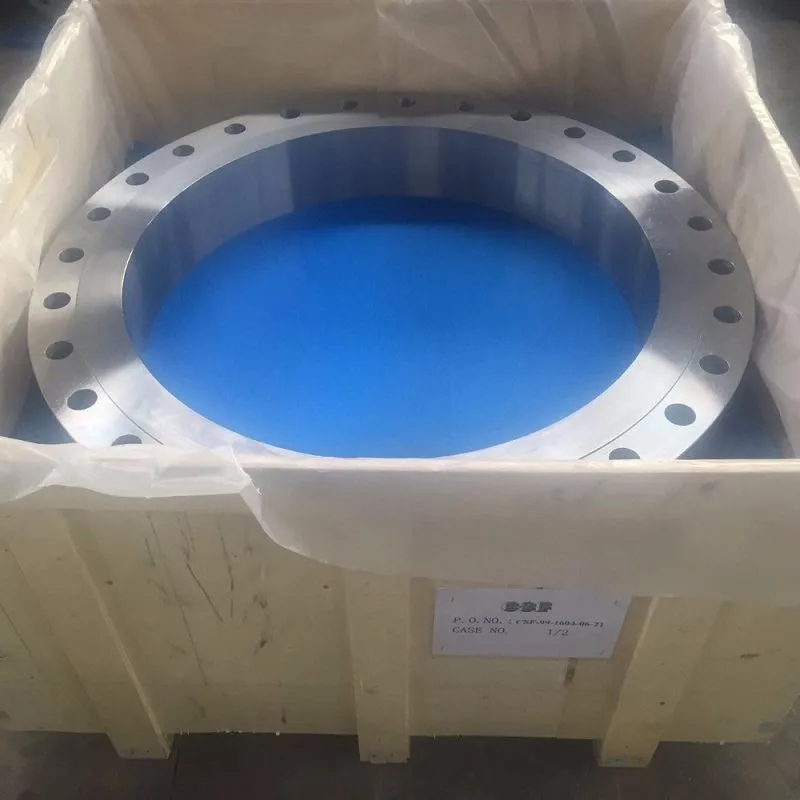
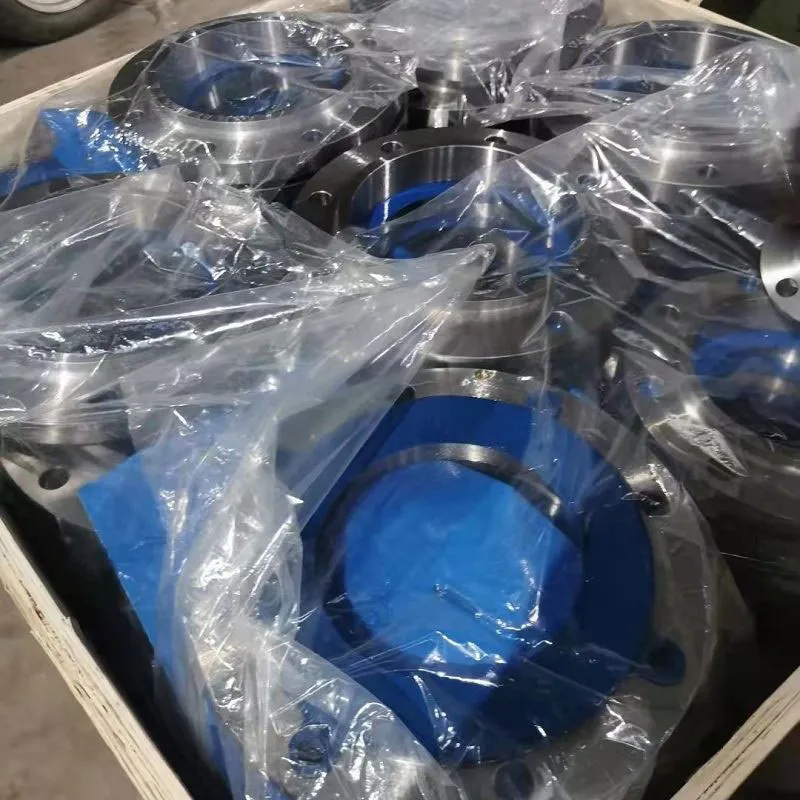
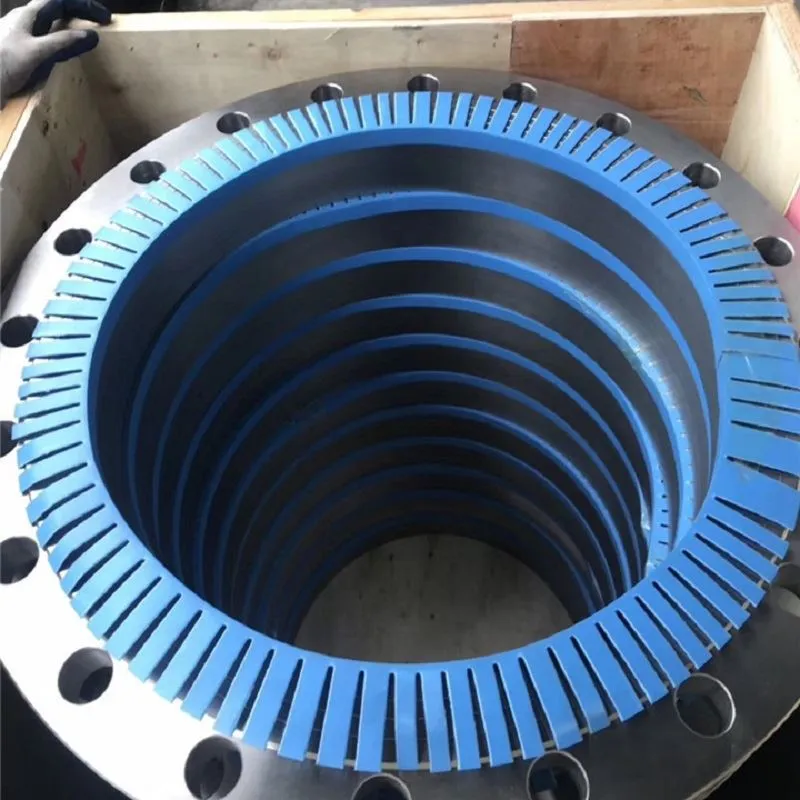
One such player whose products deserve attention in 2026 is the companyShanxi Hongkai Forging Co., Ltd.. Based in Dingxiang County, a key industrial center for the forging industry in China, the company is an example of vertically integrated manufacturing. Unlike numerous resellers, Hongkai Forging operates three of its own sites, where the entire manufacturing cycle - from primary forging to final packaging and quality control - is under one management.
Why is this important for the Russian customer today? Because stability of characteristics is critical. The company's product range covers six main types of forged flanges: overhead, socket weld, threaded, butt weld, loose ring and blind. The range of nominal diameters from DN15 to DN4000 allows us to meet the needs of both compact units and large-scale oil and gas projects. Products are manufactured in strict accordance with international standards (ASME, EN, DIN, UNI, BS, JIS) and Russian GOST, which ensures full compatibility with existing infrastructure.
The company pays special attention to quality control: a multi-level verification system includes physical and chemical tests and geometry control at each stage. Having your own right to import-export operations simplifies logistics and makes interaction transparent. For projects where the cost of an error is measured not in hundreds of rubles, but in millions and environmental safety, choosing a professional manufacturer of forged products, such as Shanxi Hongkai Forging, becomes a strategic decision.
Top 5 models 2026: what to buy and what to avoid
We tested more than 30 samples available on the Russian market at the beginning of 2026. Prices are average for Moscow and may vary depending on the region and the ruble exchange rate. Remember: a low price often means the absence of EAEU certificates of conformity.
1. Valtec (VCr Series) - People's choice with reservations
A brand that every plumber from Kaliningrad to Vladivostok knows. In 2026, they continue to maintain the brand, although production is completely localized in the Russian Federation. ModelValtec VCr 704(PPR with nickel-plated brass bushing) is a bestseller.
Pros:Honest brass inside, good thread geometry, available in any hardware store. Price is about 350–450 rubles per piece (diameter 1 inch).
Cons:There are batches with uneven heating during casting (visible by the color of the plastic). Requires careful tightening.
Verdict:You can take it, but be sure to check the batch. For critical components (entry into the house), it is better to take it with a safety margin.
2. Tebo Technics (Türkiye/Russia) - Reliable workhorse
A Turkish brand that has been operating in the Russian Federation for a long time. Their HDPE flanges with metal threads have thick walls. ModelTebo PN20shows excellent results in tensile tests.
Pros:High resistance to water hammer, high-quality threads that do not break. The price is slightly above average - 500–600 rubles.
Cons:Dimensions. They are more massive than their competitors, which sometimes creates problems when installed in cramped manifold cabinets.
Verdict:Ideal for private houses and cottages, where durability is important and space allows.
3. Aquatherm (Germany/Remaining warehouses) - Premium, which is scarce
Finding an original Aquatherm in 2026 is difficult. Remains in dealer warehouses are quickly sold out. This is the standard of quality. Polypropylene with fusiol (special layer). The price is steep - from 1200 rubles and above.
Pros:Absolute reliability, environmental friendliness, perfect compatibility with other fittings of the brand.
Cons:Price and risk of running into a fake. If you are offered “German Aquatherm” for 400 rubles on the market, it’s a fake.
Verdict:Only if the budget is not limited and you find an official distributor with documents.
4. Polytron (Russia) – Dark Horse
A domestic manufacturer that has sharply raised the bar in the last two years. They use imported raw materials (Borealis), but pour them in the Moscow region. ModelPolytron Ecosurprised us during the tests.
Pros:The best price/quality ratio (about 300 rubles). Consistent quality from batch to batch. Good support service.
Cons:The design is utilitarian, sometimes there are burrs on the threads (easily removed with a knife).
Verdict:An excellent choice for mass construction and do-it-yourself repairs.
5. NoName from China (Gardener Market) - Risk Zone
We will not name specific brands, because today they are one, tomorrow they are different. The packaging is bright, with the inscriptions “Super Plastic”, “Germany Technology”. Price - 150 rubles.
Reality:Recycled plastic, fragile threads, the bushing is held to its word of honor. At a load above 6 bar, the probability of destruction is 80%.
Verdict:Use only for temporary schemes, watering the garden or draining condensate. In the heating or water supply system of the house - absolutely not.
Comparison table of characteristics
| Model/Brand | Housing material | Thread type | Max. pressure (bar) | Average price (RUB) | Risk of counterfeiting |
|---|---|---|---|---|---|
| Valtec VCr 704 | PPR (PP-R) | Brass, internal | 20 (at 20°C) | 400 | Medium |
| Tebo PN20 | PPR / HDPE | Brass, external/internal | 20 | 550 | Low |
| Aquatherm Green | PP-RP (fusiol) | Brass/Stainless steel | 25+ | 1300 | High |
| Polytron Eco | PPR (import of raw materials) | Brass | 20 | 300 | Low |
| NoName (China) | Recycled PVC/PP | Zinc alloy | Not stated (actually 6-8) | 150 | 100% (this is a fake brand) |
Installation instructions: where everyone goes wrong
Did you buy a good flange? Half the battle. Now it needs to be placed so that it does not leak in a month. Here are the common mistakes I see on sites every week.
Mistake #1: Using a gas wrench.
Never, hear, never twist the plastic flange with a gas wrench directly behind the body. The serrations will leave deep scratches that will become stress points. Under pressure, the crack will come from there. Use only an adjustable wrench with soft jaws or special installation tape.
Mistake #2: Over-upholstery.
“I’ll tighten it harder to be sure” is a phrase that kills plastic connections. Plastic does not have a reserve of ductility, like copper. The tightening torque must be strictly measured. Usually this is hand force plus a quarter turn with the wrench. If you feel strong resistance, stop. It’s better to tighten it up a little later during the first prevention than to crush the collar now.
Mistake #3: Ignoring alignment.
Before screwing on the flange, make sure that the axis of the pipe and the axis of the mating part coincide. If there is a misalignment of even 2-3 degrees, you will create a bending moment. Over time, the flange will “stark” and leak. Use a level. Yes, it's an extra 30 seconds, but it will save your repair.
Mistake #4: Wrong choice of seal.
For threaded plastic flanges, the Tangit Unilok type thread or high-quality FUM is best suited. Flax with paste can swell and create excess pressure inside the thread, splitting the plastic from the inside. Anaerobic sealants are an excellent option, but only if the surface is perfectly degreased. This is difficult to do in the field with dirty hands.
Legal aspect and guarantees
In Russia there is a law on the protection of consumer rights, but in the field of building materials there is a nuance. If you buy a flange as an individual for yourself, you can return it only if it does not fit correctly (and the packaging is intact). If it bursts in the wall, prove that this is a marriage, and not your crooked hands. Expertise is expensive.
Therefore, ask for a receipt and keep the packaging for at least a month. Packages of serious brands (Valtec, Tebo, Polytron) always have a hologram or QR code to verify authenticity. Check it on the manufacturer's website. If the site says “code not found” or leads to the wrong resource, take the product back without hesitation.
Also pay attention to certification. Since 2025, the requirements for products in contact with drinking water have become more stringent. Look for markings of compliance with technical regulations of the Customs Union (EAEU). Without this icon, products should not officially be sold, but the markets are full of them.
The Future: What's Next for the Connector Market?
Looking at the trends, we can assume that the era of classic threaded plastic flanges is gradually disappearing. They are being replaced by press fittings and systems with axial fixation. They are more expensive in terms of tools, but more reliable in operation. However, for the mass segment and small repairs, threads will remain relevant for at least another 10 years.
What will change in the near future? Expect composite materials with carbon fiber added. This will make the walls thinner and stronger. There is also a growing demand for “smart” fittings with built-in leakage sensors, but for now these are niche solutions for the premium segment.
Top tip for 2026: Don't chase the lowest price. The difference between a good and a bad flange is 200 rubles. And the difference between a dry basement and a flood, a damaged renovation and a lawsuit with the neighbors is immeasurable.Plastic flange with thread- this is a small detail on which the comfort of a large house depends.
And one last thing. If you doubt your abilities, call a specialist. But not just anyone, but someone who is ready to show their certificates and give a guarantee for the work. In the era of total savings on quality, professionalism becomes the most expensive currency.
Sources and data for verification
- Technical Regulations of the Customs Union TR CU 010/2011 “On the safety of machinery and equipment”
- Official VALTEC catalogue: Combination fittings (current for 2026)
- TEBO Technics Technical Specifications for Polypropylene Systems
- Production line of the Polytron plant (Russia)
- GOST 32415-2013 Pressure pipes made of thermoplastics and connecting parts for them for water supply and heating systems