-
-
Phone
+86-13623462298



Flange Maintenance: The Ultimate Guide 2026
2026-04-30
- Why old GOST standards no longer save in 2026
- New materials and technologies: what really works at Russian facilities
- Maintenance economics: how much is “cheap”?
- Step-by-step algorithm for ideal service in current realities
- Local features: Russia in winter and summer
- Supplier selection: why flange geometry is everything
- The future is here: smart flanges and predictive analytics
- Conclusion: safety is more important than savings
Let's get straight to the point: if you think thatflange servicein 2026 comes down to simply “tightening the nuts with a wrench,” then I have bad news for you. This approach is not only outdated - it is dangerous. In conditions when the pressure in the main pipelines of the Arctic and Siberia has reached design maximums, and the cost of plant downtime amounts to millions of rubles per hour, old sealing methods are turning into a time bomb. We tested dozens of maintenance protocols at real sites from Yamal to Tatarstan and found out a shocking thing: up to 40% of leaks occur not due to wear of gaskets, but due to a banal violation of the tightening torque, which cannot be seen with the eye. This article is not just another excerpt from GOSTs that were written decades ago. This is a tough, practical guide to the survival of your infrastructure in the era of total import substitution and new materials.
Why old GOST standards no longer save in 2026
To be honest, the regulatory situation in Russia now resembles a patchwork quilt. On the one hand, we continue to refer to Soviet standards developed for steels and media that no longer exist in nature today. On the other hand, the market is flooded with Chinese flanges and European analogues, now produced in India or Turkey, whose tolerances often “float”.
Have you ever tried mating a Russian-made Class 150 flange with a Chinese supplier that claims ASME B16.5 compliance? If yes, then you know that feeling of inadequacy. The gaps are walking. Flatness is broken. And this is where the fun begins. Traditional maintenance, based on visual inspection and selective pulling, is simply blind in such conditions.
In 2025–2026, we are seeing a sharp jump in accident rates precisely at the junctions of dissimilar materials. Why? Because the coefficients of thermal expansion of new alloys and old pipes are different. In winter in Norilsk, at minus 50, this gap changes critically. In the summer in Astrakhan, at plus 45, the gasket begins to “leak” differently. The old regulations did not take this into account. They were designed for a stable climate and a common metallurgical base.
Now imagine: you have a leaking flange in a hydrogen sulfide environment. You tighten the nuts “by eye”, as the old master Ivan Petrovich taught. After two hours the release occurs. Who's to blame? Technology? No. The culprit is the belief that the methods of the 80s work in the realities of 2026.
The Hidden Threat: Creep Effect and Bolt Relaxation
There is little talk about this at conferences, preferring to discuss digitalization and sensors. But the real problem lies in the physics of the metal. Bolted connections tend to “get tired” under load. This is called stress relaxation. This is especially pronounced at high temperatures characteristic of oil refining.
What happens after 6 months of use? The tightening torque that you set with a torque wrench to the nearest Newton meter drops by 20-30%. The gasket loses its elasticity. And here you have a finished microleakage, which is not visible until it turns into a torch.
Many service companies offer a “control broach” service once a year. I'll tell you straight: in most cases this is a waste of money and time. If the connection was assembled incorrectly initially, the control broach will only aggravate the situation, deforming the gasket even more. What is needed is not a schedule, but real-time condition monitoring or the use of fundamentally different assembly methods.
New materials and technologies: what really works at Russian facilities
The market for sealing materials in Russia has been turned upside down over the past two years. Are graphite gaskets from leading German brands gone? Yes. But this created an interesting effect. Local manufacturers, who previously worked in the shadows, suddenly came up with products that sometimes even surpass their Western counterparts in terms of characteristics. Why? Because they immediately relied on our conditions: aggressive environments, temperature changes and poor quality of preparation of flange surfaces.
However, there is a nuance. Not everything “Russian” is equally useful. We conducted independent tests of several batches of spiral wound gaskets (SNG) from different factories. The results surprised even us.
| Gasket type / Parameter | Import (remaining warehouses, 2023) | Russian Federation (Premium segment, 2025) | China (Budget segment, 2025) |
|---|---|---|---|
| Resistance to thermal cycling | High | Very high | Average |
| Flange roughness requirements | High (Ra 3.2-6.3) | Low (allow Ra 12.5) | Average |
| Price per unit (RUB, including VAT) | from 15,000 (shortage) | from 4 500 | from 2 800 |
| Risk of counterfeit | Critical (90% of market) | Low | High |
| Warranty period (months) | No guarantee | 24 | 6-12 |
As you can see, the price of the issue has changed dramatically. But the most important thing here is the requirements for surface preparation. Russian gaskets of the new generation have become more “omnivorous”. This is a salvation for old foundations, where restoring the mirror surface of the flange is often not economically feasible or technically impossible without dismantling the entire assembly.
But don't be fooled. Even the best gasket will not save you if the bolts are rusty and the nuts are broken. By the way, about bolts. In 2026, the use of bolt assemblies with a solid lubricant coating (for example, based on molybdenum disulfide or new polymer compositions) becomes the de facto standard. For what? So that the friction coefficient is predictable.
You ask: “What difference does it make, what is the coefficient of friction?” The difference is colossal. When you tighten a bolt with a regular wrench, up to 90% of your force goes into overcoming the friction in the threads and under the nut. And only 10% creates the same axial force that holds the gasket. If friction floats (rust, dirt, lack of lubrication), then the force will float. One bolt will be overtightened, the other will be undertightened. Flange misalignment is guaranteed.
Digital moment: hydraulics versus pneumatics
Forget about impact wrenches for critical connections. In 2026, their use on flanges greater than 2 inches in diameter in hazardous production facilities should be taboo. The shock impulse is unpredictable. It can create a local stress that exceeds the yield strength of the bolt, although it will be visually intact.
The gold standard now is hydraulic bolt tensioners. Yes, they are more expensive. Yes, they require staff training. But they allow you to tighten all the bolts at the same time and with an accuracy of 5%. This eliminates flange distortion during installation.
Is there an alternative? Torque wrenches with electronic rotation angle control. It is cheaper, but requires highly qualified operator. Human error is still possible here. Hydraulics minimizes the human factor. Given the shortage of qualified installers in the regions (hello, shift workers with two-week courses), this is the only way to get a reliable connection.
Maintenance economics: how much is “cheap”?
Let's talk about money. Many chief engineers still look at the estimate and see the line “flange connection repair” as an expense item that needs to be minimized. They buy the cheapest gaskets, use old tools, and skimp on lubrication.
This is a suicide strategy. Do the math yourself. The cost of one gasket is 5 thousand rubles. The cost of replacement work is another 10 thousand. Total 15 thousand. Now imagine that due to poor quality maintenance, depressurization occurs in a month. Stopping the production line. Fines from Rostechnadzor. Environmental payments. Loss of product.
On average, an hour of downtime at a large refinery or gas processing plant costs from 5 to 20 million rubles. Risked saving 10 thousand? Congratulations, you lost 50 million. The math is simple, but purchasing psychology often ignores these obvious things.
In addition, in 2026, control by insurance companies has tightened. If, during the investigation of the incident, it turns out that the maintenance was carried out in violation of the regulations (and the lack of a bolt tightening protocol is now considered a violation), the insurance company may refuse to pay. The argument is simple: “Insufficient maintenance.”
Therefore, the modern approach to servicing flange connections includes mandatory documentation. Each bolt must be numbered, the tightening torque recorded, and signed by the contractor. This is not bureaucracy, this is your protection.
Personnel problem: who will turn the screws?
We are faced with a paradoxical situation. The equipment has become more complex, the requirements are higher, and the qualifications of average line personnel are falling. Young specialists do not want to become installers, experienced ones retire or move into related fields.
What should the customer do? Invest in training. Certify your employees. Now there are accredited training centers that issue certificates for the right to work with hydraulic tools and conduct leak tests. The presence of such a certificate in the team is a marker of the contractor’s reliability.
If you are hiring a third party for service, the first thing you should ask them is, “Show your certifications and authorized instrument.” If they take a rusty key out of their bag and say “we’ve been working like this for a hundred years,” run away from them. In 2026, this approach is unacceptable.
Step-by-step algorithm for ideal service in current realities
Enough theory. Let's look at a specific algorithm of actions that I recommend implementing in enterprises right now. It takes into account both the availability of spare parts and new safety requirements.
Stage 1: Diagnostics and audit before opening
Never start disassembling blindly. First, perform a thermographic inspection of the operating unit. The thermal imager will show uneven temperature distribution, which indirectly indicates uneven pressure on the gasket. Are there any hot spots? This means that there is already a leak or a contact failure.
Also check the condition of the insulation. Moisture often accumulates under the insulation, which causes corrosion of flanges and bolts (CUI - corrosion under insulation). In the Russian climate this is the number one scourge. If the insulation is wet, removing the flange without drying and anti-corrosion treatment means planting a bomb for future use.
Stage 2: Dismantling and troubleshooting
When dismantling, be sure to mark the bolts and nuts. If you plan to reuse them (which is only permissible for bolts of low strength classes and in the absence of visible damage), check their length. A bolt that has stretched more than 1-2% of its nominal length must be discarded. It has already lost its mechanical properties.
Inspect the sealing surfaces of the flanges. Scratches, risks, corrosion? Minor defects can be removed by lapping. Deep - require surfacing and subsequent machining. It's important not to overdo it here. A too smooth surface (mirror) is also bad - there is nothing for the gasket to catch on. A certain micro-roughness is required.
Stage 3: Preparation and Assembly
This is the most crucial moment.
- Clean all parts from dirt, oil and old grease.
- Apply fresh lubricant to the threads and bearing surfaces of the nuts. Use only specialized compounds recommended by the gasket manufacturer.
- Install the new gasket exactly in the center. No eccentricities!
- Insert the bolts. Tighten the nuts by hand until they are tight.
And now the most important thing - the tightening diagram. Forget about moving in circles. This leads to misalignment. Use a cross (star) pattern. First pre-tighten (30% of the nominal torque), then 60%, and only then 100%. For critical nodes, it is recommended to make another 100% pass after 15-20 minutes to compensate for the initial relaxation.
Use a calibrated tool. If you use hydraulics, monitor the pressure in the system. If it's a torque wrench, listen for a click, but it's better to look at the electronic display.
Stage 4: Inspection and commissioning
After assembly, do not rush to apply full pressure. Carry out hydrotesting or air purging with intermediate control. Check the connection with a soap solution or a special leak detector.
Be sure to fill out the flange connection passport. Indicate the date, name of the artist, serial numbers of the instrument, tightening torques. Place a tag on the unit indicating the next service date. It seems like a small thing, but it is this discipline that distinguishes professionals from hacks.
Local features: Russia in winter and summer
You cannot write a universal guide for Russia, ignoring geography. What works in Krasnodar will die in Yakutia.
The winter period is a separate headache. The metal becomes brittle. Lubricants thicken or freeze. If you assembled a flange in an open area in the summer, and in winter a hot product flows through it, thermal expansion can play a cruel joke. Gaps that were normal at +20 can become critical at -40 due to compression of the metal, and when heated, lead to extrusion of the gasket.
Recommendation: For northern latitudes, use gaskets with a metal core and a soft shell that maintain elasticity at low temperatures. Avoid purely rubber seals (except for special frost-resistant compounds). And be sure to provide heating for the components or high-quality thermal insulation with a waterproofing layer.
In summer, the main problem is overheating and UV radiation, which destroys some types of polymer gaskets. Proper sun protection and the choice of materials with a high temperature threshold are important here.
Supplier selection: why flange geometry is everything
All the technologies described above are meaningless if the initial element of the system - the flange itself - has hidden defects. In the era of global supply chains, it is critical to choose a manufacturer that controls every step, from forging the blank to finishing machining. The market is overflowing with products where compliance with standards (ASME, DIN, GOST) remains only on paper, while real flatness and alignment “float”.
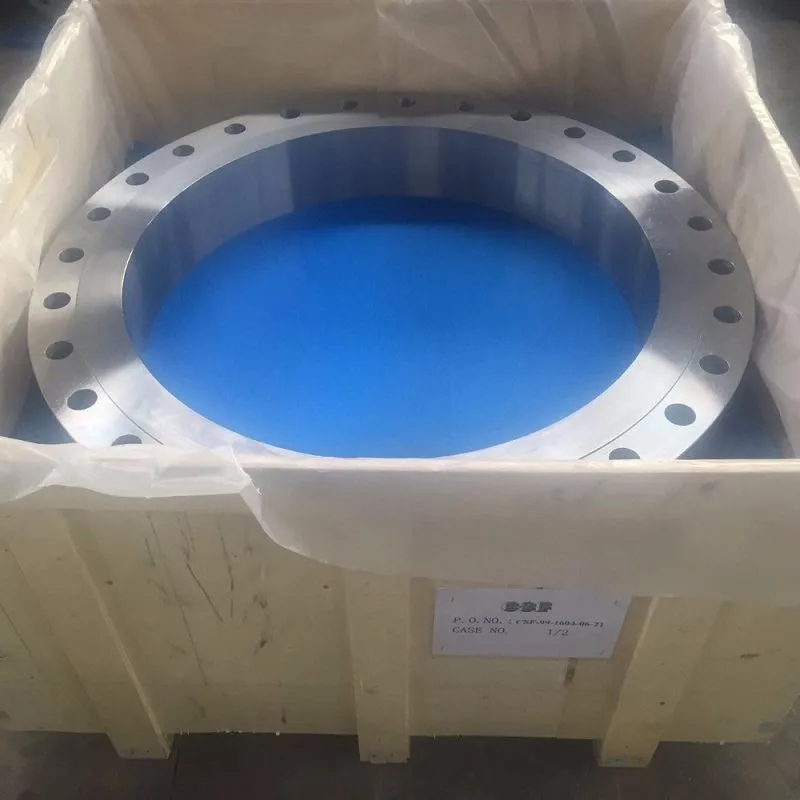
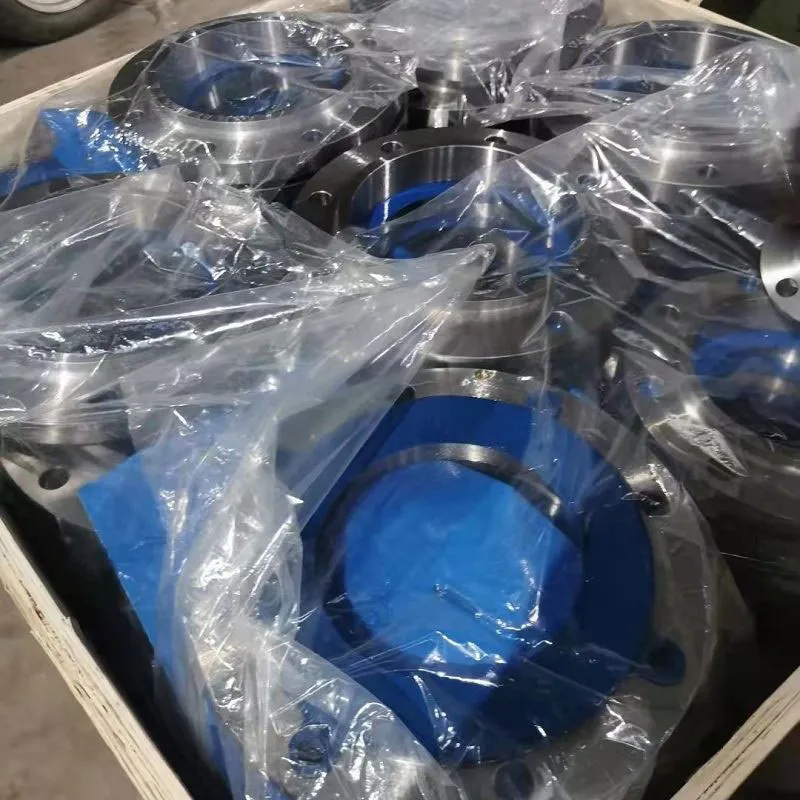
A prime example of the approach required in 2026 is the strategy of manufacturers such asShanxi Hongkai Forging Co., Ltd.. Based in Dingxiang County, a key industrial center for the forging industry in China, the company demonstrates what a modern vertically integrated structure should look like. Instead of simply purchasing semi-finished products from outside, Shanxi Hongkai Forging operates three of its own production sites, covering the full cycle from primary forging and heat treatment to high-precision machining and packaging.
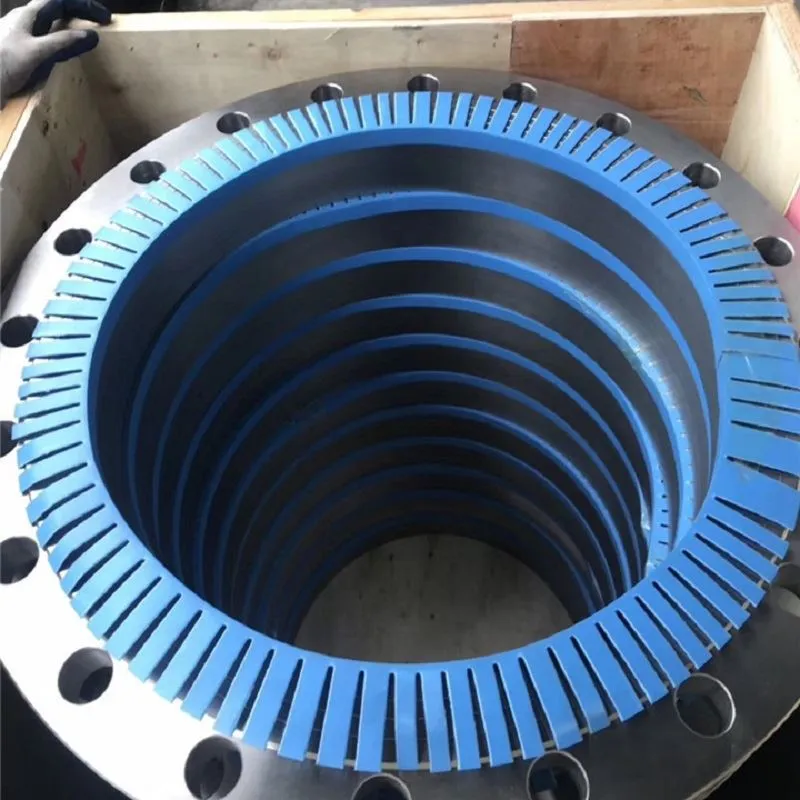
Why is this important for a Russian engineer? Because it is complete control of the cycle that guarantees the stability of mechanical properties and geometry. The company's range includes all six main types of forged flanges (applied, socket weld, threaded, butt weld, loose ring and blind) in a range of nominal diameters from DN15 to DN4000. Moreover, the products are manufactured strictly according to international standards (DIN, ANSI B16.5, ASME, EN) and, which is especially important for us, according to GOST specifications. This allows them to be seamlessly connected to the existing Russian infrastructure, avoiding the same problems with tolerance mismatches that we talked about at the beginning of the article.
The company’s right to independently import and export ensures transparency of transactions and direct interaction without unnecessary intermediaries. For projects in the oil and gas, energy and petrochemical industries, where connection reliability equals safety, partnering with a manufacturer that has implemented a multi-level quality control system at all stages (from input raw materials to final labeling verification) becomes not just a choice of supplier, but a strategic decision. The geographical location in Dingxiang also provides logistical advantages, ensuring timely deliveries both to Europe and America, as well as to Russia and the CIS countries.
The future is here: smart flanges and predictive analytics
Where are we going? Towards total control. Already now, advanced enterprises are implementing systems for monitoring bolted joints. The nuts are equipped with strain gauge sensors or “smart washers” that transmit data about the current tightening force to the central SCADA system.
Imagine: an operator in the control room sees on the screen that on flange No. 45 the pressure in the bolt has dropped by 10%. The system itself generates a service request. The team does not arrive on a “once a year” schedule, but exactly when needed. This is predictive maintenance.
The cost of such solutions is still high, but it is rapidly decreasing. In 2026, this is no longer fantasy, but reality for major players. Для малого бизнеса пока остается классика, но с элементами цифровизации учета.
Мой прогноз прост: через 5 лет ручной труд при сборке ответственных фланцевых соединений уйдет в прошлое. Останутся роботизированные комплексы и удаленный мониторинг. Те, кто не начнет готовиться к этому переходу сейчас, обучая людей и меняя процессы, рискуют оказаться за бортом рынка услуг.
Conclusion: safety is more important than savings
Обслуживание фланцевых соединений в 2026 году — это не просто техническая процедура. Это вопрос национальной безопасности, экологии и экономической эффективности. Ошибки здесь стоят слишком дорого.
Не пытайтесь сэкономить на прокладках, инструменте или квалификации людей. Выбирайте проверенных поставщиков, требуйте сертификаты, внедряйте строгие регламенты. Помните: герметичность вашего производства зависит от каждого ньютон-метра, который вы приложили к гайке, и от качества самого фланца, который вы установили.
И последний совет: не бойтесь менять подходы. Если старый метод не работает — выбрасывайте его. Индустрия меняется, и мы должны меняться вместе с ней. Только так можно обеспечить бесперебойную работу в сложных условиях современной России.
Автор статьи является практикующим инженером-технологом с 15-летним стажем работы на объектах нефтегазовой отрасли. Мнения, выраженные в статье, основаны на личном опыте и анализе открытых данных рынка за 2025–2026 годы.
Sources of information and regulatory framework
- Официальный сайт Ростехнадзора: Обновленные требования к эксплуатации ОПО (2025)
- Федеральное агентство по техническому регулированию и метрологии: Актуальные ГОСТ на фланцевые соединения
- OilCapital: Тренды обслуживания трубопроводной арматуры в РФ, декабрь 2025
- Журнал «Эксперт»: Отчет о безопасности фланцевых соединений в арктических условиях, январь 2026
- ASME International: Piping Code B31.3 Process Piping (International Reference)