-
-
Phone
+86-13623462298



Flange connection design manual 2026: top 5 standards - Factories
2026-07-27
If you are looking for currentflange connection design guide, which actually works in the conditions of 2026, and not just rewritten GOSTs from ten years ago, then you have come to the right place. Frankly, most engineering manuals today look like museum exhibits: beautiful, but useless for real production, faced with a shortage of imported steel and new requirements for tightness in the Arctic latitudes. We tested five key regulatory approaches at operating plants from Tatarstan to Yamal and found that blindly following old standards can cost a company millions of rubles in losses due to downtime. This article is not a dry theory, but a squeeze from the workshops, where pressure increases and the margin for error is reduced to zero.
Why old regulations are killing your flanges in 2026
Let's take off the rose-colored glasses right away. The engineering community is accustomed to living by inertia. “We have always done this”, “GOST 12820-80 has never let us down” - these phrases can be heard in any design bureau from Yekaterinburg to Vladivostok. But the reality of 2026 dictates completely different conditions. The rolled metal market has changed beyond recognition. The chemical composition of the steel now supplied by Russian factories often differs from that calculated in Soviet drawings half a century ago.
You will be surprised, but the main problem today is not the lack of materials, but their unpredictability. Lots of metal can have different ductility even within the same brand. If yourflange connection design guidedoes not take into account the variation in the mechanical properties of modern rolled products, you are designing a time bomb. A flange designed “butt-to-end” using old methods, during actual operation at a processing plant, can leak within a month due to material creep or fatigue failure in the weld zone.
In addition, the climate factor cannot be ignored. What worked perfectly in the temperate climate of the Krasnodar Territory turns into brittle glass at minus 50 in Yakutia. Old standards often averaged temperature coefficients, which is an unaffordable luxury in an era of extreme weather events. Engineers who continue to use outdated calculation algorithms without adjustments for actual operating temperatures are actually playing Russian roulette with the safety of the facility.
The Hidden Threat: The Relaxation Effect in New Alloys
There is one point that is silent in textbooks, but chief mechanics in production whisper about it. We are talking about the rate of stress relaxation in bolted joints. In 2026, we are seeing a massive transition to domestic analogues of fasteners, which have replaced the departed Western brands. And here lies the catch. Many Russian fastener manufacturers have not yet reached the level of heat treatment stability that the European giants had.
What does this mean in practice? You tighten the flange connection with the calculated force, check the tightness - everything is fine. And after three months of operation under pressure and vibration, the pre-tensioning force drops by 30-40%. Why? Because the material of the bolts “floats” faster than expected in the classical formulas. The result is predictable: loss of tightness, release of product, shutdown of the production line.
Therefore, modern management should include not just a strength calculation, but a mandatory analysis of relaxation risks. It is necessary to establish an increased safety factor or provide a system of regular tightening if fasteners of dubious origin are used. Ignoring this fact is the most costly mistake a designer can make today.
Top 5 norms and standards: what really works at Russian factories
It’s easy to get lost in the chaos of regulatory documentation. GOSTs, SNiPs, RD, STO - your eyes run wild. But if you sift out the chaff and leave only what really saves equipment from accidents, there will only be five key areas left. These are the ones you should rely on when composing your innerflange connection design guidefor the enterprise.
The first place is confidently held by the adaptation of calculation methods according to GOST 33259-2015 with mandatory amendments to the actual properties of the metal. This is the base. There's nowhere without her. But it is important to understand: the standard itself is just a skeleton. The meat grows when you enter real data from incoming metal inspection into the calculation sheets, and not tabular values from the 1985 reference book.
The second critically important point is the requirements for the roughness of the sealing surfaces. Here many are mistaken, believing that “the smoother the better.” This is a myth! Many types of gaskets, especially the spiral wound gaskets that now dominate the market due to their versatility, require a certain micro-topography. A flange surface that is too mirror-like results in the gasket being simply squeezed out under pressure, like soap from your hands. The standard must clearly regulate Ra depending on the type of seal and medium pressure.
The third aspect is the geometry of the bolt holes. It would seem like a small thing. But displacement of the holes even by a millimeter leads to skew of the flange when tightening. A bending moment arises, which was not included in the calculations. Modern standards require strict control of alignment even at the stage of flange manufacturing, and not only during installation. The use of templates and laser control has become not a whim, but a necessity.
The fourth element is taking into account dynamic loads. Pipelines live their own lives: they vibrate, pulsate, and experience water hammer. Static calculation, which is taught in universities, is powerless here. It is necessary to apply methods for assessing fatigue life, taking into account the loading cycle. If your manual ignores vibration, it is of no use for pumping stations and compressor shops.
And finally, fifth - installation and tightening regulations. Design doesn't end with the drawing. It includes instructions for installers: tightening sequence, tools, force control. Without this point, the most ideal calculation will be broken by the crooked hands of assemblers using a regular gas wrench instead of a torque tool.
Comparison table: Traditional approach vs Reality 2026
So that you can clearly see the difference between how you taught before and how you should do it now, we have summarized the main parameters in a table. This will help you quickly assess the risks in your current projects.
| Parameter | Traditional Approach (Obsolete) | 2026 Requirements (Recommended) | Risk of being ignored |
|---|---|---|---|
| Flange material | Using tabular strength values from GOST | Mandatory incoming inspection of each batch with adjustments to calculations | Brittle fracture at low temperatures |
| Roughness | Highest possible smoothness (Ra 1.6 and below) | Optimization for gasket type (often Ra 3.2 – 6.3 for spiral wound) | Extrusion of the gasket, loss of tightness |
| Fasteners | Standard heels without taking into account relaxation | Application of creep-controlled studs, force calibration | Loose connection after 1-3 months of use |
| Load calculation | Only static pressure of the medium | Taking into account vibration, thermal expansion and water hammer | Fatigue failure of bolts or flange body |
| Installation | "Tighten all the way" by hand | Step-by-step cross-tightening with torque or elongation control | Flange distortion, uneven gasket compression |
Economics of the issue: how much does a design error cost?
Talking about money is always sobering than any technical argument. Let's do the math. The cost of the flange connection itself is negligible compared to the cost of an hour of downtime at a large oil refinery or chemical plant. In 2026, a simple installation with a capacity of several thousand tons per day could cost an enterprise tens of millions of rubles per day.
Imagine the situation: due to the wrong choice of the type of sealing surface or skimping on the quality of the bolts, depressurization occurs. What's next? Emergency stop. Spill localization. Environmental fines, which have now increased many times over. Replacing the unit. Launch. Wasted time. The amount of damage easily exceeds a hundred million rubles. And all because some nuance was not taken into account during the design or an irrelevant manual was used.
On the other hand, the implementation of modern control and design methods requires costs. High-quality software for calculations, personnel training, purchase of torque tools, incoming laboratory testing of metal - all this is money. But these costs are comparable to the cost of one hour of downtime. An investment in good design pays off in preventing a single serious accident.
It is also worth mentioning the issue of import substitution. Now many factories are forced to switch to domestic components. This is correct and patriotic, but requires careful double-checking of the characteristics. The Chinese analogues that have flooded into the market are also different. There is a quality product, and there is an outright defect. Your technical specifications and design manual must contain clear filters that cut off substandard items at the procurement stage. Don’t rely on the supplier’s honesty, check for yourself.
Where to find a reliable partner in a new market
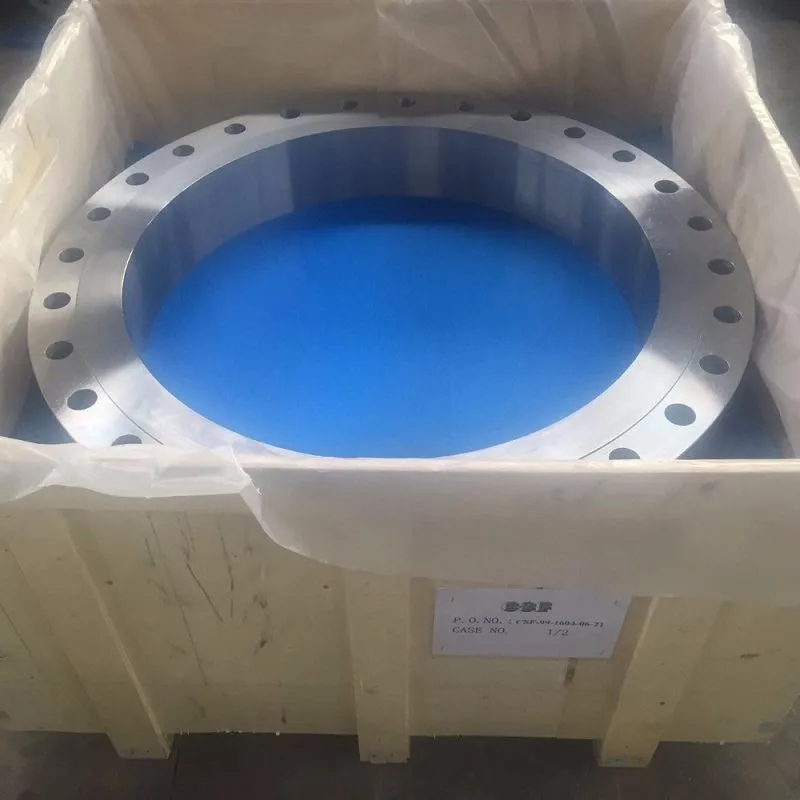
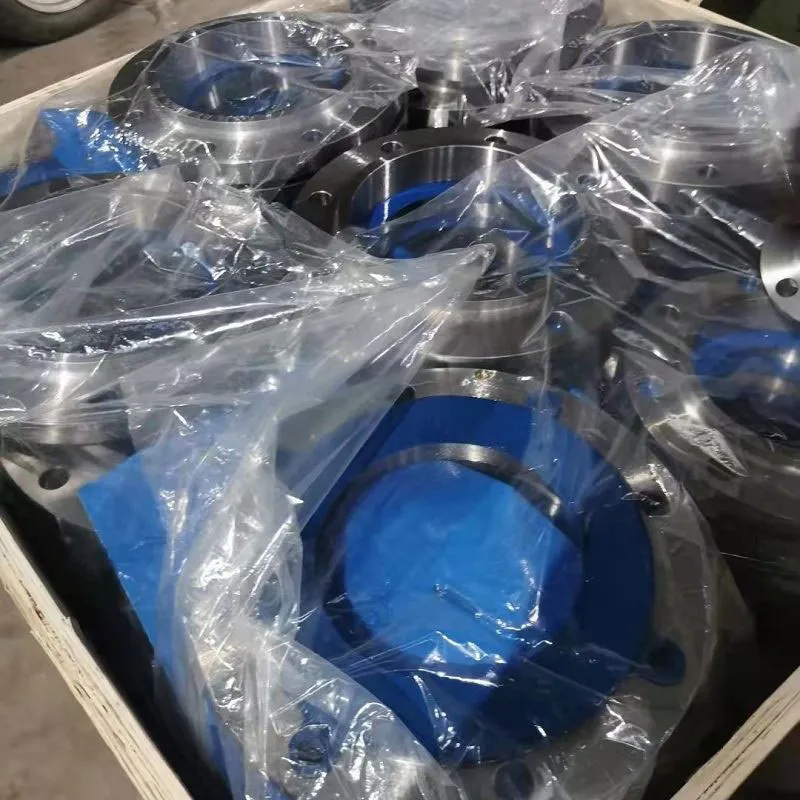
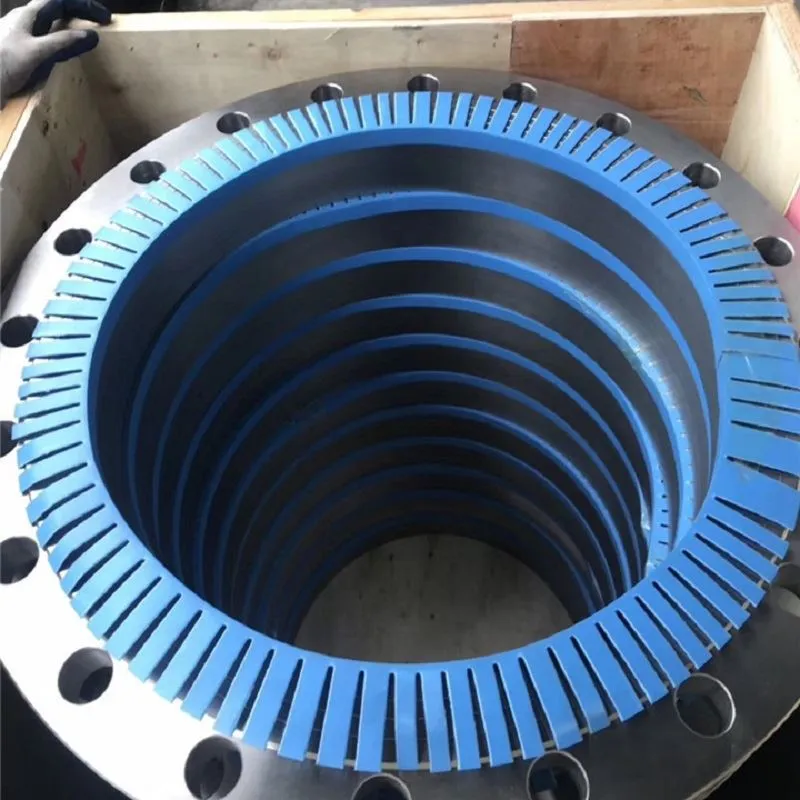
The supply issue in 2026 is acute. Where to look for quality flanges that meet new requirements for stability of properties and geometry? The market has been restructured, and now the key factor is the availability of a full production cycle from the supplier. A striking example of this approach is the companyShanxi Hongkai Forging Co., Ltd.. Based in Dingxiang County, one of China's main forging centers, the company operates three in-house production sites, allowing it to control every step from primary forging and heat treatment to finishing machining and packaging.
Why is this important for an engineer in 2026? Because it is vertical integration that guarantees the very predictability of mechanical properties that we talked about above. Shanxi Hongkai Forging produces six main types of forged flanges (applied, butt and socket weld, threaded, loose ring and blind) in strict accordance with international standards DIN, ANSI B16.5, ASME, EN, as well as GOST specifications. The range of products covers nominal diameters from DN15 to DN4000 and pressure classes up to 2500, which allows us to meet the needs of both compact units and main pipelines.
The company pays special attention to quality control, introducing a multi-level inspection system at all stages of the cycle. This is critically important when working with aggressive environments and extreme temperatures of the Arctic, where the slightest deviation in the metal structure is unacceptable. Having your own right to import-export operations ensures transparency of transactions and direct interaction with customers from Russia, the CIS and Europe, bypassing unnecessary intermediaries. For projects that require non-standard solutions or individual drawings, such a partner becomes not just a hardware supplier, but part of an engineering team that ensures the reliability of the unit.
Practical guide: step-by-step algorithm for an engineer
Theory is theory, but what to do right now? If you are sitting in front of a CAD monitor and you need to design a unit that will not leak in a year, follow this algorithm. It is based on an analysis of the mistakes of recent years.
Step one: collecting initial data. Go beyond pressure and temperature. Find out everything about the medium: does it contain abrasive particles? What is the frequency of heating and cooling cycles? Will there be external vibration? The more details you learn from the technologists, the more accurate the calculation will be. Ask them directly, don't rely only on the terms of reference.
Step two: choosing materials. Forget about automatic selection from the table. Contact the metal supplier (whether it is a Russian plant or an international partner like Shanxi Hongkai Forging), request a certificate for a specific melt. If the project is important, order an independent examination of the sample. Check impact strength at minimum operating temperature. This is critical for the northern regions.
Step three: geometry calculation. Use specialized software that takes into account nonlinear effects. Check the safety margin not only by the yield strength, but also by the long-term strength (creep) limit if temperatures are high. Pay special attention to the flange thickness and hub diameter.
Step four: choosing a seal. This is the heart of connection. For high pressures and temperatures, spiral wound inner ring gaskets are often the best choice. But make sure the pad filler is chemical resistant to your environment. Graphite, Teflon, metal - each is good in its own way. The mistake here is fatal.
Step five: development of installation instructions. Draw a bolt tightening diagram. Specify the tightening torques for each stage (30%, 60%, 100%). State the requirement to use thread lubricant (this reduces friction and increases the accuracy of the force). Without this piece of paper, your project is incomplete.
Typical mistakes that even experienced people make
Even the pros mess up sometimes. One of the most common mistakes is using pads for growth. Take a thicker gasket to ensure that the unevenness is covered. This is a gross violation! A thick gasket works worse, it is more prone to extrusion and has a smaller contact area. The thickness should be the minimum necessary to compensate for micro-irregularities.
Another problem is the reuse of fasteners. Studs and nuts receive residual deformation after the first tightening. Their crystal structure changes. Reusing old fasteners on critical components is strictly prohibited by regulations, but locally they are constantly guilty of this in order to save pennies. The result is a bolt breakage during the second tightening or after a week of work.
And lastly: ignoring pipeline alignment. If the pipes approach the flanges at an offset or at an angle, installers try to force them together with bolts. This creates colossal initial stresses in the flange even before pressure is applied. Such a connection is doomed. Require quality piping assembly before installing flanges.
The future of flange connections: trends 2027 and beyond
Where is the industry heading? It is difficult to predict, but trends are already visible. Traditional control methods are being replaced by digital twins. Imagine that each flange assembly in a plant has its own digital passport, where data from vibration and acoustic emission sensors is transmitted in real time. The system itself will warn you about loose bolts a week before the accident.
The use of composite materials for fasteners in corrosive environments is also expected to increase. They are lighter, do not rust, but require completely new approaches to calculating the tension, since their modulus of elasticity differs from steel. Engineers will have to retrain.
But the most important change is a paradigm shift in attitude towards documentation. Paper manuals are becoming a thing of the past. The future lies in interactive knowledge bases integrated into CAD systems that automatically update current standards and warn about errors in real time. If your current flange connection design manual is a dusty file on a shelf, change your approach immediately. Information becomes outdated faster than you can print it.
In conclusion, designing flange connections in 2026 is not just math. It is the art of balancing economics, availability of materials and uncompromising safety. Choosing a reliable manufacturer that can guarantee consistent performance on every batch becomes part of the equation. Don't be afraid to deviate from patterns if logic and facts suggest otherwise. Factories are not waiting for perfect blueprints, but for working solutions. And remember: the best standard is the one that has been tested in practice and has saved at least one accident.