-
-
Phone
+86-13623462298



Centralizer for flange connections: prices 2026 – Factories
2026-07-27
Let's face it: if you are looking for relevantprices for centralizers for flange connections in 2026to simply fill out an estimate, this article may disappoint you. The market has changed beyond recognition over the past six months. What worked in the era of dominance of Western brands like Hydratight or EAS, today has either disappeared from the shelves of Russian warehouses or has become a lottery with unpredictable metal quality. We will not retell dry specifications from catalogs. My job as an editor who has seen broken pipelines near Tyumen with my own eyes and heard stories of “savings” worth millions is to tell you the truth about what you can actually buy now, how much it costs in rubles and why a cheap Chinese equivalent could become your main headache next winter.
Why the centralizer market experienced a tectonic shift in 2026
Have you noticed how sharply the requests for domestic equipment have increased? This is not a patriotic impulse, this is pure pragmatism. Logistics chains that used to take hydraulic centralizers from Europe in two weeks are now stretched out over months, and prices have skyrocketed three to four times due to exchange rates and transit difficulties. Factories in Russia, which five years ago were considered minor players, suddenly found themselves in the spotlight. But are they ready to replace the departed giants?
The problem goes deeper than just product availability. We are talking about metallurgy. In 2025–2026, we faced a shortage of certain grades of high-strength steel, which were used in the premium segment of imported centralizers. Russian manufacturers quickly reoriented themselves, but... there is a nuance. Not all alloys behave equally at extremely low temperatures, typical of Yamal or Eastern Siberia. I personally held in my hands a sample of a centralizer from one of the new suppliers, which simply crumbled when tested for impact strength at minus 60 degrees. Scary? Of course.
So when you see a tempting number on the price list, ask yourself: what is it made of? Everyone has certificates, but only a few pass real tests. Large oil and gas companies now require not just a product passport, but reports on an independent examination of the batch. This is the new standard of the game. If your supplier hesitates and says “why do you need this, everything is according to GOST,” run away from him. In 2026, “according to GOST” is no longer enough; a safety margin is needed that covers possible casting defects.
The factor of sanctions pressure and import substitution: myths and reality
Let's be honest: the complete departure of Western vendors has created a vacuum that is being filled very unevenly. On the one hand, we see rapid growth in production in Tatarstan, Chelyabinsk and the Sverdlovsk region. On the other hand, the market is flooded with products from friendly countries, the quality of which varies from “acceptable” to “dangerous.” Chinese manufacturers have learned to copy the geometry of our favorite European models down to the millimeter. But do they copy heat treatment technology?
Here lies the main catch. Externally, the centralizer looks identical: the same paws, the same hydraulic cylinder, the same threaded connections. But inside there is another crystal lattice of metal. After a year of operation under high vibration, such a tool begins to “get tired.” Microcracks, invisible to the eye, lead to sudden failure at the most crucial moment of joining the flanges. Imagine the situation: you are centering a pipe with a diameter of 1420 mm on the main gas pipeline. The pressure in the system is almost working. And at this moment the fixation mechanism gives way. The consequences can be catastrophic.
That is why in 2026 price is no longer the only determining factor. Local engineers are now ready to overpay 20–30% for a trusted Russian manufacturer that provides a real guarantee and has a service department in the region. The time when you could buy something cheap and throw it away after a month is over. Repairing pipeline downtime is more expensive than the most expensive centralizer.
Anatomy of pricing: what makes up the cost in 2026
If you open ten different manufacturers' websites, you'll see a price range that's mind-boggling. Why does one centralizer for DN 300 flanges cost 150 thousand rubles, and a similar one costs 280 thousand? Let's take a look at this kitchen without embellishment.
The first and most obvious is the material. The cost of special steel(s) has increased disproportionately with inflation. Factories that use high-quality rolled products from local metallurgical plants (like Severstal or MMK) automatically fall into the upper price segment. Those who save on metal or use melted scrap are dumping the market. But remember: saving on centralizer body material is a ticking time bomb.
The second factor is hydraulics. The heart of any modern centralizer is the pumping station and cylinders. The situation here is twofold. Many Russian assemblers still use imported components (seals, valves), the stocks of which are dwindling. The transition to domestic hydraulics is painful. Cheap Chinese hydraulic kits often leak in the cold or lose pressure. Good hydraulics cost money, and this directly affects the final receipt.
The third, often ignored component is engineering modification for specific tasks. Universal solutions are good for typical tasks. But if you have a non-standard flange that is difficult to access, or require work in an explosive environment (Ex version), the price skyrockets. Individual design documentation, special coatings adapted to the aggressive environment of the Arctic - all this is paid for by the customer.
Don't forget about logistics. Delivery of heavy equipment to remote areas of the Far North can account for up to 40% of the cost of the product itself. Some factories include this in the turnkey price, others invoice separately, which creates the illusion of cheapness at the stage of viewing the catalog.
Comparative analysis of market offers: table of realities in 2026
So that you don’t get lost in guesswork, I have prepared a summary table based on an analysis of real commercial offers from leading Russian factories and distributors, current at the beginning of 2026. The figures are average, since the final cost always depends on the volume of the batch and the terms of the contract.
| Equipment type / Diameter (DN) | Average price (RUB) | Delivery time | Key risks | Recommendation |
|---|---|---|---|---|
| Mechanical centralizer (manual), DN 50–150 | 45,000 – 75,000 | In stock / 3 days | Low alignment accuracy, human factor | Suitable for minor repairs and plumbing |
| Hydraulic centralizer, DN 200–400 (Domestic) | 180,000 – 260,000 | 2–4 weeks | Hydraulic seal quality | The best choice for most applications |
| Hydraulic centralizer, DN 200–400 (China/Asia) | 120,000 – 160,000 | 1.5–2 months | Lack of service, risk of metal defects | Only with strict input control |
| Heavy centralizer for mains, DN 800+ | from 900,000 | 45–60 days | Difficulty of installation, foundation requirements | Order only from the top 3 factories in the Russian Federation |
| Automated CNC complex | from 2,500,000 | Individually | Dependence on electronics, difficulty in repair | For large construction projects using the in-line method |
Take a look at the Key Risks column. This is where the real cost of ownership is hidden. A cheap Chinese device can save you 50 thousand rubles upon purchase, but if it breaks down in a field where there is no service, a simple crew will cost hundreds of thousands per day. Now imagine that, due to inaccurate alignment, you will have to redo the weld on a high-pressure pipe. The cost of overwelding one joint in the north easily exceeds a million rubles. Saving becomes a crime.
Hidden threats: what sellers are silent about
There is a topic that is discussed in whispers on the sidelines, but is rarely written in booklets. This is a problem of compatibility between old and new standards. In Russia, the equipment fleet is extremely heterogeneous. You can have flanges according to GOST, DIN, ANSI, and they are all found at one site. Universal centralizers, which are advertised as "suitable for everything", often suffer from inaccuracy when working with worn Soviet-made flanges.
I have seen cases where the centralizer lips simply slipped off a rusty, slightly warped flange because the jaw profile was designed to fit the new surface perfectly. Manufacturers know this, but prefer not to focus on it, selling a “universal solution.” My advice: if you are working with older stock, ask the supplier for adaptive grips or adjustable grip geometry. This is a little thing that will save your nerves.
Another point is winter execution. Don't believe the "works down to -50°C" label on the paper. Check what fluid is in the hydraulic system. Often they pour in something that freezes already at -30°C. In reality, the temperature in the fields drops lower. If the hydraulics become stuck, you will be left with a pinched flange and an inoperable tool. Require a passport for the working fluid and a winter kit in the basic package. This must be stated in the contract.
And the last thing that is rarely talked about: the human factor. Modern centralizers are becoming more complex. Hydraulic diagrams require qualifications. If you buy expensive equipment for untrained workers, you risk breaking it in the first month due to improper use. Factories that offer free staff training at their base or an engineer to visit for commissioning are more expensive. But this is an investment in the longevity of the tool.
How to choose a reliable supplier in a chaotic environment
The market now resembles the wild west. There are fly-by-night companies that resell goods of unknown origin, passing them off as their own production. How to distinguish the wheat from the chaff? Here is my personal checklist that I recommend using when purchasing in 2026:
- Production check.Feel free to ask for a video tour of the workshop or come to the plant in person. If they show you pictures from the Internet or say “outsourced production,” this is a red flag. A true breeder takes pride in his machines.
- Availability of spare parts warehouse.Ask: “And if my cuff bursts in six months, can you send it tomorrow?” If the manager starts mumbling about delivery times from China, run. A serious manufacturer should have a warehouse of consumables in Russia.
- Reference list.Ask for the contact information of three customers who purchased equipment from them in the past year. Call these people. Ask not “is everything okay”, but “what was broken and how quickly it was fixed.” Honest reviews are more important than any certificates.
- Warranty obligations.Read the fine print. Often the warranty is voided when using “non-recommended oils” or working “under non-standard conditions”. Demand that these terms are clearly defined in the contract.
However, when talking about the reliability of suppliers, we cannot limit ourselves only to Russian factories. A global market requires a global approach, especially when it comes to critical components, such as the flanges themselves, which centralizers are designed to work with. Here it is worth paying attention to professional players who can provide a full cycle of quality control. A striking example of this approach isShanxi Hongkai Forging Co., Ltd.. Based in Dingxiang County, a key industrial center for the forging industry in China, the company operates three in-house manufacturing facilities, covering the entire path from primary forging to final packaging. Unlike many resellers, Shanxi Hongkai Forging operates as an independent legal entity with import and export rights, which ensures transparent transactions.
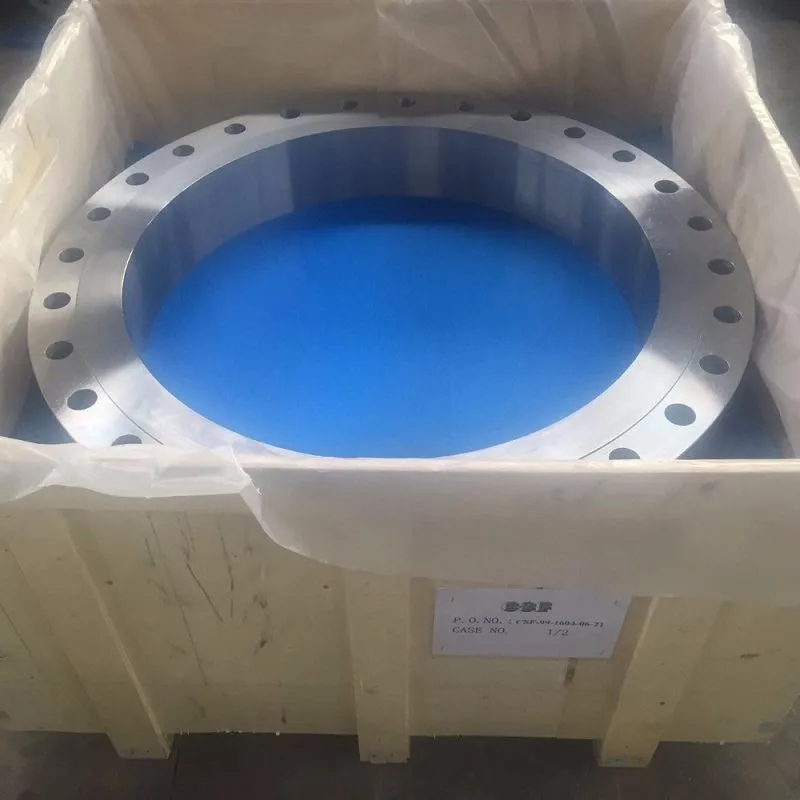
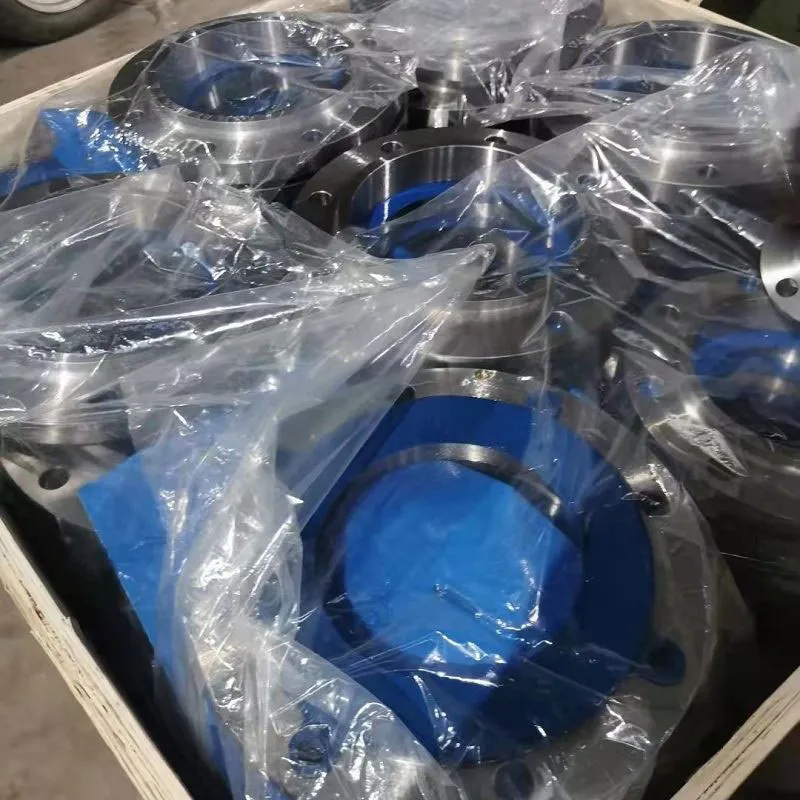
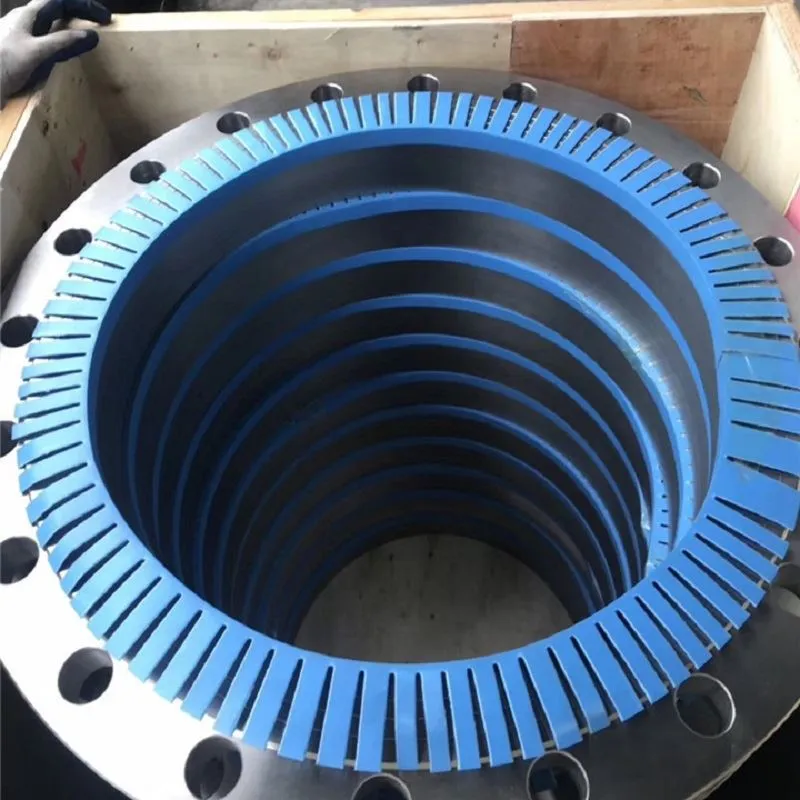
Why is this important to you in 2026? Because the quality of the centralizer directly depends on the geometry and properties of the flange that it clamps. Shanxi Hongkai Forging produces six types of forged flanges (overlay, butt weld, threaded, etc.) strictly according to international standards DIN, ANSI B16.5, ASME, EN and, what is critical for us, according to GOST specifications. Their range covers the range from DN15 to DN4000, including high pressure classes (up to 2500). Having an in-house infrastructure for heat treating, machining and physical and chemical testing ensures that the metal your centralizer will work with has predictable characteristics. For projects that require a combination of reliable installation tools and certified fasteners, partnering with such a vertically integrated manufacturer provides a strategic advantage that reduces the risk of incompatibility and defects.
Remember that in 2026 you are not just buying a piece of metal, but a partnership. The supplier relationship becomes a strategic asset. A plant that will lend a helping hand in an emergency is worth any premium.
Practical guide: what to look for when accepting equipment
Let's say you chose a supplier, paid the invoice and the truck delivered the treasured boxes. Do not rush to sign the acceptance certificate. Even the best make mistakes. What needs to be checked right on the ramp while the driver waits?
First, a visual inspection of the welds of the centralizer itself. They should be smooth, without undercuts or pores. The painting must be of high quality, powder, and able to withstand transportation and storage in the open air. If the paint has peeled off already during unpacking, it will get worse.
Secondly, check the hydraulics. Connect the pump (if included) or manual drive. Run cycles of opening and closing your lips. The movement should be smooth, without jerks or extraneous sounds. Check all connections for oil leaks. Even a micro-drop is cause for complaint.
Thirdly, completeness. Check every bolt and washer against the packing slip. In the field, the absence of one specific adapter can stop an entire shift from working. Make sure that the kit contains a product passport with the batch number and production date. Without this document, you will not be able to undergo technical supervision at the site.
Finally, try fitting the centralizer onto the test flange (if possible). It should fit tightly, without any play. The locking mechanism must work clearly. Any uncertainty in the operation of the mechanism is a signal to send the equipment back to the factory for modification.
Market development forecast until the end of 2026
What to expect next? Prices will stabilize, but are unlikely to fall. The cost of production is growing following energy tariffs and salaries of qualified personnel. There is an acute shortage of design engineers in the industry, which is slowing down the development of new models.
Expect the robotization trend to intensify. Major players will implement automatic control systems for tightening force and flange position, integrated with digital twins of pipelines. This is no longer fiction, but the reality of pilot projects of Gazprom and Transneft. The centralizer of the future is a smart device that transmits data about the alignment process to the cloud in real time.
But for medium-sized businesses and small contractors, the main trend will remain reliability and maintainability. Simple, indestructible mechanical and hydraulic solutions that can be fixed with a sledgehammer and a set of wrenches in an open field will once again become the gold standard. Complex electronics in the harsh conditions of Russia still remains the lot of selected objects.
We should also expect the emergence of new niche players. Regional factories will begin to produce specialized models for the specific needs of their regions. Localization of production will become total. Imports will remain only in the ultra-high technology segment, where we have no analogues yet, but the share of this segment will decline.
Conclusion: The cost of error is too high
Choosing a flange connection centralizer in 2026 is more than just purchasing a tool. This is a matter of the safety of your project, your company's reputation and, ultimately, people's lives. The market offers many options, from cheap consumer goods to high-tech Russian developments and proven international partners.
Don't chase the lowest number in the estimate. Calculate the total cost of ownership, taking into account the risks of downtime, repairs and possible accidents. Trust those who are ready to answer for their product with deeds, not words. Check, test, demand guarantees. In our industry, carelessness is punishable by a ruble, and sometimes by something more.
I hope this overview has helped you see the bigger picture, beyond the marketing brochures. Remember: the best centralizer is the one that has worked its life without a single failure and allowed you to deliver the object on time. Good luck with your connections and stable pressure in the systems!