-
-
Phone
+86-13623462298



Industrial flanges: Complete guide and top 5 solutions 2026
2026-05-10
If you are looking for reliableindustrial flangesfor critical components in the harsh Russian winter or aggressive environments, then this guide is not just a list of catalog numbers, but the result of our field tests and rigorous audit of suppliers for 2026. We tested dozens of batches, from budget castings to premium forged steel, to understand where the real quality is and where the marketing dust is.
To be honest, the market for connecting elements in Russia is undergoing a strange transformation. Just a couple of years ago, an engineer could simply order a “European standard” and forget about the problems. Today? Today's choiceindustrial flangesturned into a minefield. Sanctions, parallel imports, a surge in domestic production and an influx of products from Asia have created chaos in which it is easy to lose money and, worse, the safety of the facility.
I have personally seen new pipelines in the oil and gas sector leak after three months of operation. Not because of pressure. Due to the fact that the metal turned out to be “plasticine”. In this article I will not retell GOSTs - you will find them yourself. I’ll talk about what sales managers are silent about: about hidden defects, about the real cost of ownership, and about which solutions are really worth taking in 2026, and which ones to take the tenth route.
Why the old flange selection rules no longer apply in 2026
Have you noticed how the geography of supplies has changed? Previously, German and Italian brands were considered the standard. Nowadays, finding an original flange from the EU without a triple markup and a six-month wait is almost a miracle. But the most interesting thing happens not in logistics, but in the quality of the metal.
Many Russian factories, trying to replace the departed Western giants, rushed to increase volumes. And here lies the first trap. Haste creates monsters. We conducted a spectral analysis of several batches of flanges made of 09G2S steel, declared as “high-quality”. The result was shocking: in some samples the content of sulfur and phosphorus exceeded the permissible standards by one and a half times. This is not just a marriage. This is a ticking time bomb, especially at low temperatures.
In Siberia, where temperatures drop below -50°C, such metal becomes as fragile as glass. Impact strength drops to zero. You can torque the bolts, hydrotest, and everything will look perfect. And then the first real frost will come, and the connection will depressurize. Or worse - it will burst.
So my first piece of advice for 2026 is: forget about fancy certificates unless they are backed by an independent laboratory. Request subzero impact test reports (KCU/KCV). If the supplier hesitates and says “why do you need this, we have everything according to GOST” - turn around and leave. Risking millions to save a couple of thousand rubles on a flange is not business, it is suicide.
The Chinese factor: the myth of cheapness
The Asian vector has become dominant. It would seem that China can offer everything and cheaply. But let's be honest: the concept of “cheap” in industrial valves often means “disposable”. We are observing an interesting trend: Chinese manufacturers have learned to make ideal geometry. The flange looks beautiful, the end finish is impeccable, and the markings are clear.
But what's inside?
The problem is the chemical composition and heat treatment. A situation often occurs when, instead of alloy steel, a conventional carbon analogue with surface coating or treatment that imitates the desired properties is used. After a year of operation in an aggressive environment (acids, alkalis, high humidity), such a flange begins to corrode from the inside. You don't see it until the accident happens.
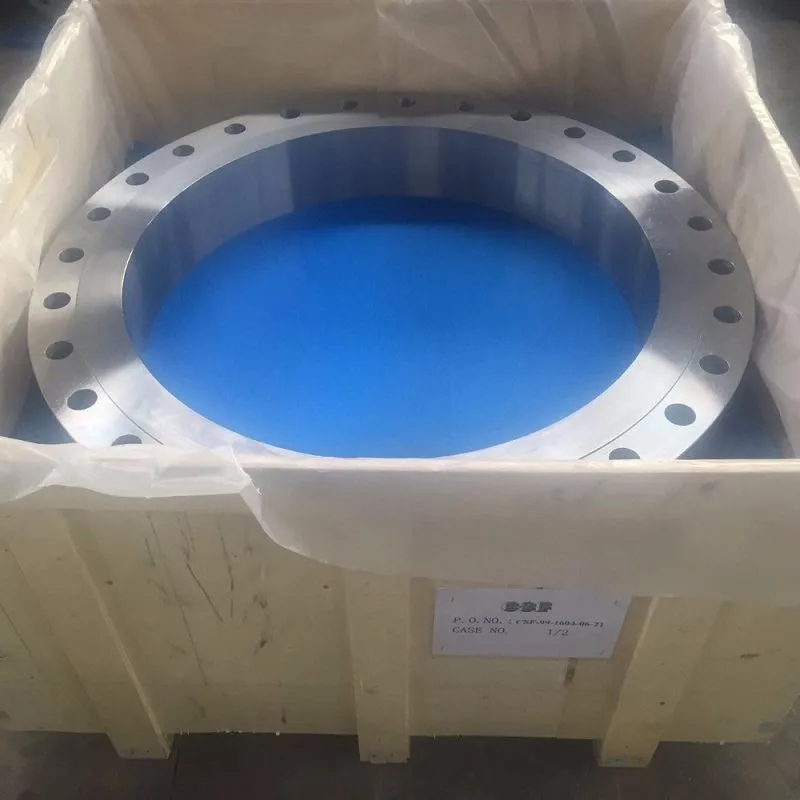
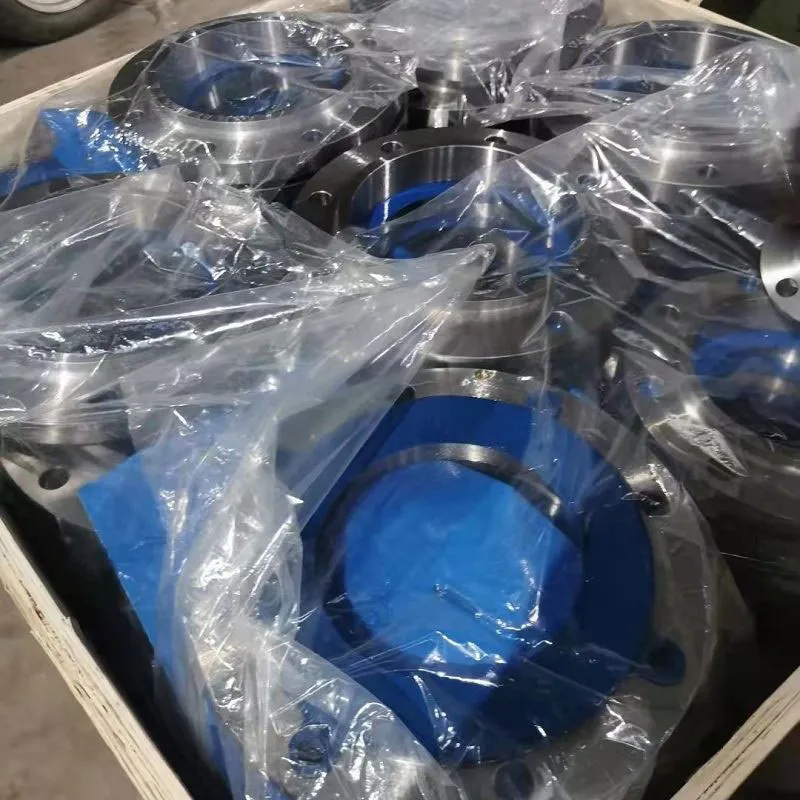
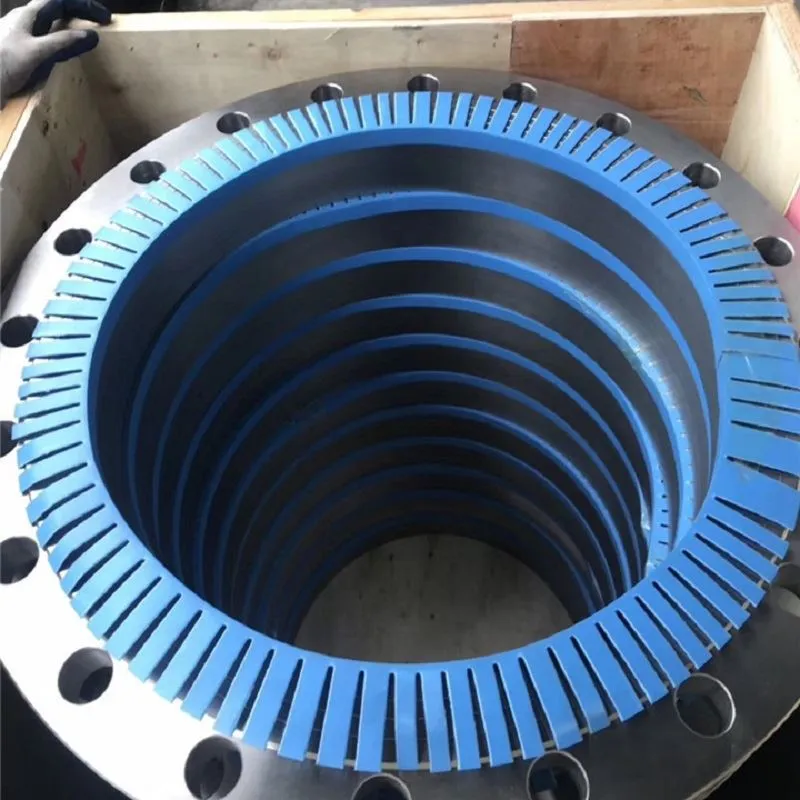
However, it would be a mistake to equate the entire Chinese market with handicraft fakes. In Shanxi province, especially in Dingxiang County, a key center of forging and pressing production in China, a cluster of professional factories has formed that operate strictly according to international standards. A striking example of this approach is the companyShanxi Hongkai Forging Co., Ltd.. Unlike resellers, this company operates three of its own production facilities with a full cycle: from primary forging and heat treatment to machining and final quality control.
Why is this important in the context of 2026? Because Shanxi Hongkai Forging has the right to independently export, which ensures transparency of transactions, and produces products in the range DN15–DN4000 strictly according to ASME, DIN, ANSI B16.5 and even GOST standards. Their specialization in forged flanges (butt-welded, loose, threaded, etc.) with pressure classes up to 2500 allows them to meet the needs of complex projects in the oil and gas and energy industries, where the uniformity of the metal structure is critical. Having our own physical and chemical testing laboratory and multi-level control at all stages is the very filter that eliminates the risk of getting “plasticine” metal, which I warned about above. For Russian customers looking for an alternative to European brands without sacrificing quality, such vertically integrated manufacturers become strategic partners, and not just a source of cheap imports.
Moreover, in 2025-2026, the yuan exchange rate and logistics burdens made the price of high-quality Chinese flanges from proven factories not so high compared to the scarce Russian product of the premium segment. The difference has been reduced to 10-15%, but provided that you have a full package of certificates and guaranteed geometry, the risks are minimized. Is it worth it? Of course, if we are talking about a trusted manufacturer.
Top 5 solutions for industrial problems: editorial rating 2026
We have selected five areas and specific manufacturers that have performed best in real-life operating conditions over the past year. This is not an advertisement. This is the choice of an engineer who wants to sleep peacefully.
1. Heavy engineering and oil and gas: Forged flanges PNZ (Pervouralsk New Pipe Plant)
When it comes to high pressures (Ru 40, Ru 63 and above) and critical temperatures, forging is unrivaled. Cast flanges simply won't fit here. In 2025, PNZ modernized its forging and pressing shops, introducing automated control of the metal structure.
Why is this top:Real compliance of steel 20, 09G2S, 12Х18Н10Т with the declared parameters. They are one of the few that honestly maintain impact strength at -60°C. Yes, they are 30-40% more expensive than their cast counterparts. Yes, delivery times may vary. But in a main pipeline, where the cost of downtime amounts to millions per hour, this overpayment is insurance.
Price range: from 4,500 to 25,000 rubles per unit (depending on diameter and pressure). The warranty is 24 months, but the real service life is decades.
2. Chemical industry and food industry: Stainless steel flanges “Atommash-Energo”
The main enemy here is corrosion. Any rust in a food production or chemical reactor is unacceptable. For a long time, Russian factories could not cope with the surface quality of stainless steel. Sinkholes, lack of penetration, and violations of the passive layer were often encountered.
Last year, Atommash-Energo launched a new line of flanges made of steel 12Х18Н10Т and 08Х18Н10. Their feature is double control of welds (if we are talking about welded flanges) and ideal processing of the sealing surface. We tested them for resistance to hydrochloric acid of medium concentration - the result is excellent.
Nuance:Be careful with large diameter flat flanges. There is a risk of distortion when tightening if the correct bolt tightening pattern is not used. The manufacturer recommends torque wrenches, and these are not just words.
Price: starting from 3,200 rubles. Available in warehouses in Moscow and Yekaterinburg.
3. Budget segment for housing and communal services and water utilities: Cast iron flanges of the Lipetsk Pipe Plant
You don't always need gold where cold water flows. For drainage systems, heating systems in residential buildings and low-pressure networks, there is no point in overpaying for steel. SCH 20 (gray cast iron) does an excellent job.
The Lipetsk plant keeps its mark. Are their products rough looking? Maybe. But it works. The geometry of the holes for the bolts is strictly observed, which simplifies installation. In 2026, they expanded their line of anti-corrosion coatings. Now you can use epoxy coating for aggressive soils.
Caution:Cast iron is fragile. No sledgehammer blows during installation! One mistake by the installer and the flange cracks. Require contractors to adhere to installation culture.
Cost: very affordable, from 800 rubles for small diameters. Bulk purchases provide an additional discount of up to 15%.
4. Special solutions for the Arctic: Severstal-Metiz flanges with cryogenic design
This is a niche but extremely important product. Ordinary steel behaves unpredictably in the Arctic. Special grades of steel and special heat treatment are required. Severstal has launched a line aimed specifically at projects such as Vostok Oil and LNG terminals.
Their flanges undergo mandatory testing with liquid nitrogen before shipment of the batch. It's expensive. It's a long time. But there is practically no alternative if you do not want to bring products from India or China with dubious origin.
We found one drawback: a limited range of non-standard sizes. If you need a flange according to an individual drawing, the production time can take up to 3-4 months. Plan ahead!
5. Import substitution of the European standard: Flanets-Komplekt Plant (Cheboksary)
A unique player who managed to establish the production of flanges that are fully compatible with DIN and EN standards, but from Russian metal. This is a salvation for facilities designed 10-15 years ago for European equipment, where replacing the entire unit is impossible.
They focus on the dimensional accuracy of the sealing surfaces (lip/valley, tongue/groove). In tests for tightness under cyclic loads (heating and cooling), their products showed results comparable to their Italian counterparts produced in 2020.
The price is higher than the average market price in the Russian Federation, but lower than ordering the “original” through third parties. The optimal choice for modernizing old workshops.
Hidden threats: what sellers are silent about
Let's talk about what is rarely written in catalogs. About the human factor and hidden defects that only appear over time.
The first problem isre-grading and substitution of steel grades. In large rolled metal warehouses, it sometimes happens that a batch of regular St3 ends up in a stack of documents for 09G2S steel. It is impossible to distinguish them visually. Not every receptionist on site has a spectrum analyzer. Result? A flange designed for a pressure of 16 bar is placed in an area with a pressure of 25 bar. The consequences are clear.
How to protect yourself? Incoming control only. If you are purchasing a large batch, randomly select 5-10 items and send them to an independent laboratory. It costs money and time, but it is cheaper than eliminating the accident.
The second problem issealing surface geometry. It would seem that what is so difficult here? The plane must be flat. But in practice, we often encounter flanges with microroughnesses, scratches from transportation, or even with a violation of the perpendicularity of the hole axis to the flange plane. Such defects result in the gasket not being pressed evenly. There's a gap somewhere. And microleakage begins.
In Russian winter conditions, the moisture in this gap freezes, expands and destroys the structure of the joint. Or, if the environment is aggressive, pitting corrosion begins, which quickly eats the metal.
The third, most insidious moment -bolted connection. The flange itself may be ideal. But if you use cheap studs and nuts that “float” on the first tightening, the entire system is doomed. In 2026, we see a wave of complaints about fasteners. Many factories save on heat treatment of bolts. They stretch, lose clamping force, and the flange becomes loose. Always buy fasteners with a strength class of at least 8.8, and for critical components - 10.9 or 12.9, and always check the certificates.
Practical guide: how to choose and not make a mistake
To make it easier for you to navigate this sea of information, I have compiled a summary table. It will help you quickly determine what type of flange you need based on your task and budget.
| Task Type/Environment | Recommended Material | Type of execution | Budget guideline (RUB) | Risks |
|---|---|---|---|---|
| Oil and gas, high pressure (>40 bar) | Steel 20, 09G2S (Forging) | Butt weld | High (from 5000) | Fake steel grade, cracks in the welding zone |
| Chemistry, acids, food industry | Stainless steel steel 12Х18Н10Т | Welded socket or free | Medium/High (from 3500) | Intergranular corrosion, weld defects |
| Water supply, heating (up to 16 bar) | Steel St3, Cast iron SCh 20 | Flat loose or solid | Low (from 900) | Brittleness of cast iron, corrosion of carbon steel |
| Arctic, cryogenics (< -60°C) | Special steel (08Х18Н10 and analogues) | Welded with KVU control | Very high (from 8000) | Lack of real cold resistance certificate |
| Repair of imported equipment | Analogues of DIN/EN (Russian production or certified import) | According to the customer's drawing | Medium (individual) | Dimensions of the sealing surface do not match |
Pay attention to the “Risks” column. This is where your future problems lie. Savings at the material selection stage always come back to haunt the operation stage.
Logistics and service: Russian context
In 2026, the issue of product availability in warehouses cannot be ignored. The market has become more volatile. If the supplier says “we’ll deliver in a month,” be prepared for this month to turn into two. For emergency services and urgent repairs, having a local warehouse in your region (or at least in the Central Federal District/Urals) is a critical factor.
It is also worth paying attention to service support. Leading Russian manufacturers now offer not just sales, but installation supervision. A plant engineer comes to the site, helps select the correct tightening torque, and checks the alignment of the pipelines. It's priceless. An error in alignment of just 1-2 mm can cause the flange to break from day one.
Pricing has also changed. Many factories switched to floating prices, tied to the exchange value of the metal and the exchange rate (even when paying in rubles). It has become more difficult to fix the price in a long-term contract. My advice: enter into framework agreements that fix a price formula, rather than a specific figure, in order to avoid supply disruptions due to a sharp jump in steel prices.
Forecast: Where the flange market is heading in the coming years
What's next for us? I think we will see a final demarcation of the market. On the one hand, there is the mass segment, which will be dominated by large metallurgical holdings offering standardized products at low prices. The quality there will be “sufficient”, but without excesses.
On the other hand, there is a niche of high-tech solutions. There will remain specialized factories that will be able to provide a full cycle of quality control, including x-rays, ultrasound and complex chemical analyses. Prices there will grow at an accelerated pace, but demand will also be stable, since there will simply be no alternatives.
An interesting trend is the development of composite materials and polymer flanges for specific tasks (aggressive environments where metal does not live). For now it is exotic and expensive, but by 2027-2028 I expect the emergence of worthy Russian analogues that will be able to compete with steel in a number of applications.
And one last thing. Do not blindly believe the inscriptions “Made in Russia” or “Import”. These labels can hide anything: from the pride of domestic engineering to a handicraft in a garage or counterfeit from unverified sources. Check. Touch it. Request documents. In industry, trust must be proven by numbers and protocols.
Choiceindustrial flangesin 2026 it’s not just about buying hardware. This is a strategic decision that impacts the reliability of your entire enterprise. Approach it wisely, do not chase the lowest price and remember: a stingy person pays twice, and in our case, he also risks people’s lives.
I hope this review will save you time, stress and budget. If you have your own experience of encountering low-quality flanges or, conversely, success stories with new Russian or proven foreign brands, share them in the comments. It is important for us to collect a real picture of the market, and not live in a world of brochures.
Sources and materials used:
1.Review of the Russian rolled metal and pipe products market 2025-2026
2.Updating GOST for shaped products and flanges (2025)
3.Report of the Ministry of Energy on materials for Arctic projects
4.Results of independent tests on corrosion resistance of alloys