-
-
Phone
+86-13623462298



International Flange Standards: The Complete Guide 2026
2026-05-10
If you are right now faced with a choice between a Chinese flange on sale and a European original, trying to understand whichinternational standards for flangesreally work in the Russian climate of 2026, and don’t just look nice on the certificate, then this article was written especially for you. Honestly, the market is oversaturated with information, but 90% of it is tables rewritten from each other, which do not take into account that in Yakutia it is minus 50, and not plus 20, as in ASME standards.
Let's dot the i's right away. In 2026, the concept of an “international standard” has become something of a quicksand. What was considered the standard yesterday (say, a purebred DIN) can today be produced in a basement using steel whose chemical composition raises questions even for a high school chemistry teacher. I won’t go on and on about the “importance of quality.” You already know that a rupture of a flange on a high-pressure line is not just a loss, it is an emergency with a call to the Ministry of Emergency Situations and the prosecutor’s office.
Why old GOST standards no longer save, but new realities frighten
Remember the times when an engineer simply opened GOST 12820-80 and ordered what he needed? Forget it. This approach in 2026 only works for minor low pressure lines. The main problem today is not the lack of standards, but theirconflicting interpretation. Russian factories trying to import European components often fall into a trap: the geometry according to GOST is the same, but the mechanical properties under extreme loads are not.
The situation is aggravated by the fact that many suppliers disguise their products. They may sell you a flange labeled PN16, which on paper meets all the standards, but in reality its yield strength is at the lower tolerance limit. And the worst thing? This becomes clear only after installation, when the system is already filled with coolant or gas.
I personally saw projects in Siberia, where the use of “cheap analogues” led to the fact that after two years of operation the bolted connections simply “floated”. Why? Because no one took into account the difference in linear expansion coefficients between a flange from one batch of steel and a pipe from another, when both products formally comply with different international standards for flanges.
Key differences between standardization systems in 2026
In order not to drown in abbreviations, let's look at the three main pillars on which the modern pipeline world rests. But I warn you: my conclusions may seem too harsh to you.
European system (EN/DIN). For a long time it was the gold standard. The EN 1092-1 series is still considered the standard for the chemical and oil and gas industries. However, taking into account sanctions restrictions and logistical gaps, finding an original European flange in Russia in 2026 is a task with an asterisk. The market is flooded with replicas from Turkey and India. They are not bad, but there is a nuance: Indian manufacturers often skimp on the thickness of the collar, which is critical when butt welding.
American system (ASME/ANSI). Here the pressure class (Class) reigns, not the nominal pressure (PN). Class 150, 300, 600... It would seem that everything is simple. But here's an insider: American standards are initially designed for higher temperatures than European ones. If you're installing an ANSI Class 150 flange on your heating system in Moscow, you may be paying extra for a safety margin that will never be used. But in oil refining there is nowhere without them.
Russian adaptation (GOST + TU). The most difficult point. Now we are seeing a massive transition to Technical Conditions (TS), which are developed for the specific needs of the plant. This is good for flexibility, but bad for unification. Having purchased a flange according to the specifications of one manufacturer, you may find that it does not fit with a mating part from another manufacturer, even if both claim compliance with the same GOST.
In this context, the high-quality segment of Chinese production deserves special attention, which has managed to adapt to the strict requirements of international markets. A striking example of such integration isShanxi Hongkai Forging Co., Ltd.. Based in Dingxiang County, a key industrial center for forging and pressing production in China, the company has built a fully vertically integrated cycle at three of its own sites. This is not just an assembly shop, but a full-fledged factory that controls every stage: from primary forging and heat treatment to final machining and packaging.
The main advantage of manufacturers such as Shanxi Hongkai in 2026 is the ability to work simultaneously with several standards systems without loss of quality. Their range covers six main types of forged flanges (from butt weld to blind) ranging from DN15 to DN4000, strictly complying with the requirements of DIN, ANSI B16.5, ASME, EN and even Russian GOST. Having your own right to import-export operations allows you to build transparent supply chains directly to Russia and the CIS countries, bypassing dubious intermediaries, which is critical to guarantee the authenticity of 3.1 certificates and the traceability of steel melting.
The Hidden Threat: Sealing Surface Compatibility Issues
This is the “skeleton in the closet” that sellers are silent about. Everyone looks at the diameter and number of bolt holes. But in vain. The main headache in 2026 is the mismatch between the types of sealing surfaces when moving between standards.
Do you think that a raised flange (RF) from one manufacturer will fit perfectly onto a counter flange (FM) from another? Naive. The recess depth and protrusion height in DIN and ASME standards may differ by fractions of a millimeter. In static conditions this is not noticeable. But as soon as the system begins to vibrate or undergo thermal cycling (heated and cooled), the tightness is broken.
This is especially true for paronite and graphite gaskets. Last year, I analyzed reports from service departments of several large heat supply organizations in the Moscow region. Do you know which reason for leaks came out in first place? No corrosion or metal defects.Incorrect bolt tightening torquedue to incorrect selection of the flange-gasket pair.
Engineers often use torque tables from 10-year-old manuals, not taking into account that modern graphite gaskets behave differently than good old paronite. They require less force for initial compression, but more force to maintain elasticity when heated.
| Comparison parameter | EN 1092-1 (Europe/RF) | ASME B16.5 (USA) | GOST 33259-2015 (Russian Federation current) |
|---|---|---|---|
| Pressure designation | PN (bar) | Class (psi) | PN (bar) |
| Typical pressure series | PN6, PN10, PN16, PN25, PN40 | 150, 300, 600, 900, 1500 | PN10, PN16, PN25, PN40, PN63 |
| Temperature range (steel) | up to +400°C (standard) | up to +540°C and above | up to +450°C (depending on steel grade) |
| Surface roughness (Ra) | 3.2 – 6.3 µm (often stricter) | 3.2 – 12.5 µm (variable) | Depends on seal type (A, B, C…) |
| Availability in the Russian Federation (2026) | High (local production) | Average (parallel imports/China) | Maximum |
Take a close look at the table. Note the roughness. If you try to connect a flange with a mirror finish (required for some chemical environments) to a flange that has a rough helical finish, no gasket will help. Micro-irregularities will simply cut through the sealing material at the first serious vibration.
The pricing question: where does the savings end and the risk begin?
Let's talk about money. Given the volatility of the ruble exchange rate and the cost of metal, the price of flange products at the beginning of 2026 fluctuates extremely greatly. But blindly chasing a low price is a road to nowhere.
The average cost of a butt weld flange DN100 PN16 made of steel 20 (Russian production) now varies within1800–2500 rublesper unit excluding VAT. If you are offered a price below 1,500 rubles, ask the question: “At what cost?” Most likely, they saved on ultrasonic quality control or used steel with a borderline carbon content.
Imported analogues (even from friendly countries) will cost at least 40-60% more due to logistics and customs duties. Is it worth overpaying? For critical nodes - absolutely. For temporary piping or irrigation systems, perhaps not. But here lies a pitfall: a guarantee.
Russian giant factories (such as those based in Chelyabinsk or the Urals) now provide a real guarantee of up to 3-5 years, subject to operating conditions. Import suppliers working through a chain of intermediaries often decline responsibility after the goods are shipped from a warehouse in Moscow. Who will be responsible if the flange cracks in a year? You.
How to choose and not make a mistake: A practical checklist for an engineer
I don't like to give advice that says "just pay attention." Let's be specific. Here is the algorithm of actions that I recommend to my readers when purchasing flanges in the current realities.
- Certificate verification 3.1.No general “certificates of conformity”. Require a type 3.1 certificate according to EN 10204. It must indicate specific steel heat numbers and the results of mechanical tests for this particular batch. If the seller hesitates and says “will be later,” turn around and leave.
- Visual inspection of markings.Each high-quality flange must be clearly marked: steel grade, pressure (PN or Class), standard number, manufacturer’s logo. Lack of markings or blurred markings is a red flag. In 2025-2026, cases of re-marking cheap flanges for higher pressures have become more frequent.
- Geometric control.Take a caliper. Check the wall thickness and bead height. Deviations of more than 5-7% from the nominal value are unacceptable. Pay special attention to the bolt holes. They must be strictly perpendicular to the plane of the flange. Skewed holes will cause the bolt to bend rather than stretch. This is death for connection.
- Hardness test (if possible).A simple hardness tester can tell you a lot. If the steel is too soft there is a risk of deformation. Too hard - risk of brittle fracture upon impact or cooling. The golden mean depends on the grade of steel, but it must be within the framework of GOST.
By the way, about bolts. Never, hear, never use regular construction studs for high pressure flange connections. Only special flange bolts (studs) in accordance with GOST 9066 or analogues ASTM A193/A194. The difference in price is a pittance compared to the cost of eliminating an accident, but the reliability differs by orders of magnitude.
The problem of “gray” imports and counterfeits
The market in Moscow and the regions now resembles the wild west. Through Kazakhstan, Kyrgyzstan and China there are flows of products that are formally “European”, but were produced unknown where and by whom. The packaging is beautiful, the documents are fake.
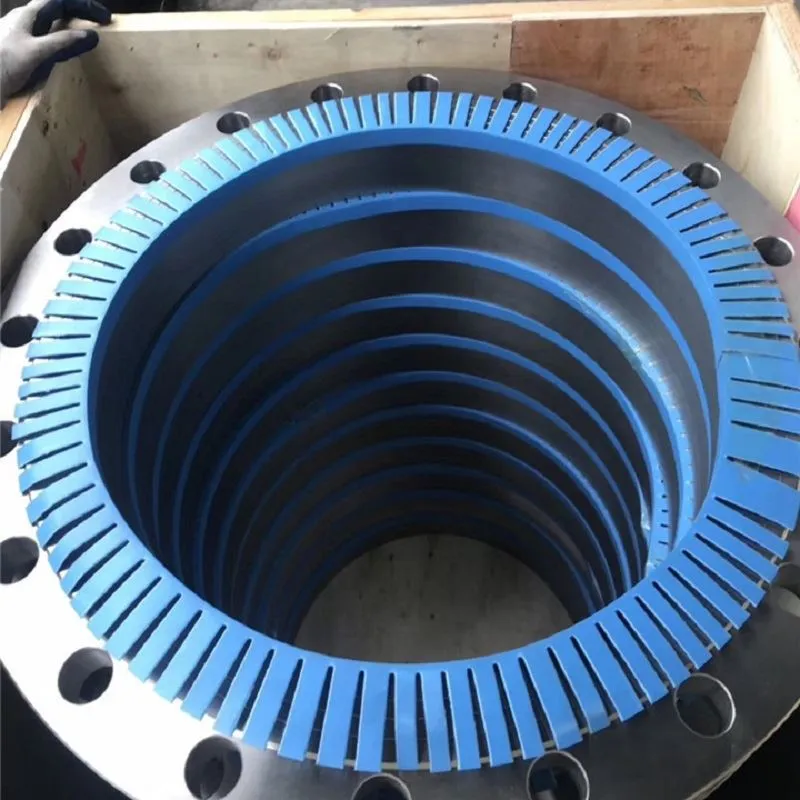
How to distinguish? Look at the quality of the surface finish. European (and high-quality Russian, as well as certified Chinese full-cycle factories) flanges are uniformly sandblasted or painted. “Gray” supplies often have traces of rust under the paint, uneven edges after cutting, and burrs around the holes. Details reveal the level of production culture.
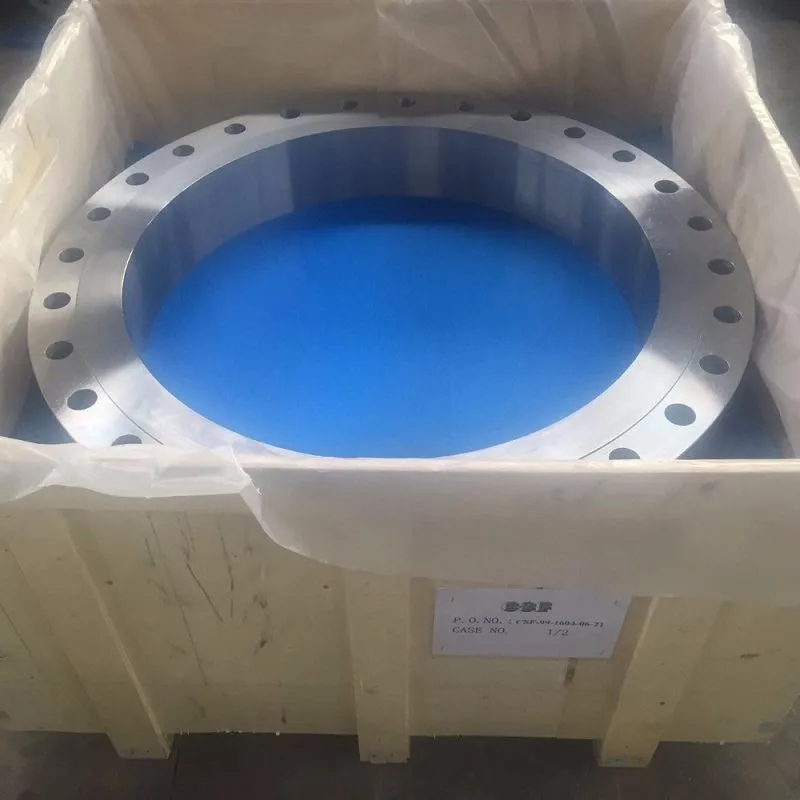
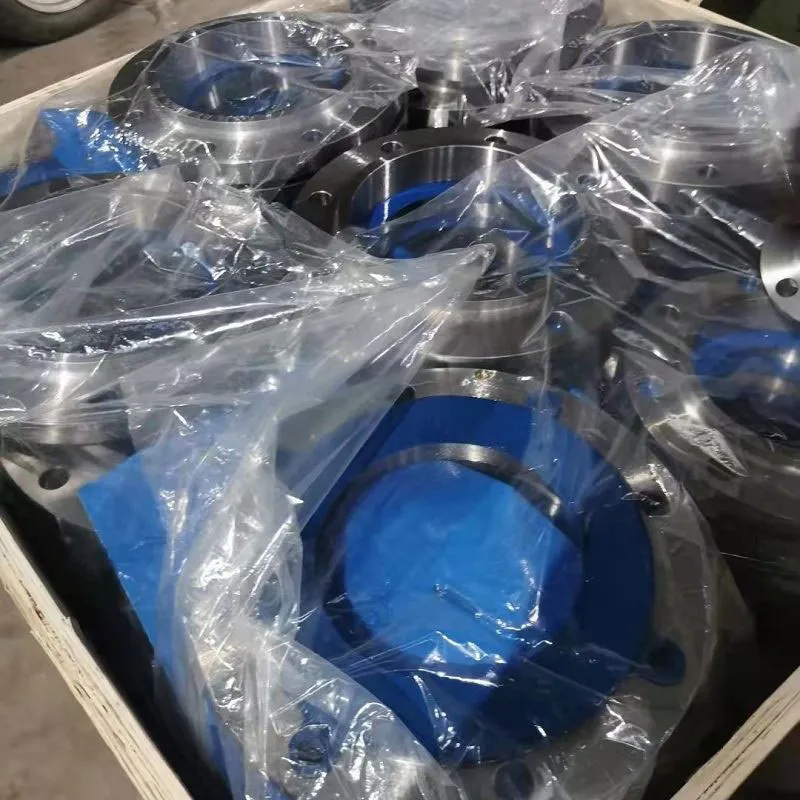
Another marker is packaging. Serious manufacturers pack flanges in wooden boxes or strong pallets with fixation. If you were delivered a bulk item in the back of a Gazelle with a tarpaulin thrown over it, the chances of receiving a product with damaged sealing surfaces are close to 100%.
The future of flanged connections: What awaits us in the coming years?
It may seem that the flange is a conservative part that has not changed for centuries. But no. Technology is making its way here too. In 2026, we see increased demand for flanges with integrated bolt tension sensors. Yes, it is expensive, but for main gas and oil pipelines this is becoming a mandatory safety requirement.
The topic of new generation anti-corrosion coatings is also gaining momentum. Traditional galvanizing is becoming a thing of the past for aggressive environments. They are being replaced by polymer coatings based on epoxy resins with the addition of nanoparticles, capable of withstanding temperatures up to 200°C or more without loss of adhesion.
But the most interesting trend is a return to localization and working with proven foreign partners who have their own production bases. Major market players understand that they cannot depend on long, opaque supply chains. Therefore, new lines are opening in Russia, and companies such as Shanxi Hongkai Forging are strengthening their presence through direct supplies of high-alloy flanges (from stainless steel, duplex steels), which were previously imported exclusively from Italy or Germany. The geographical location of their factories near transport arteries ensures reliability of supplies comparable to local production.
This creates healthy competition. Prices are gradually stabilizing, and quality is increasing. However, the period of “childhood diseases” of new industries has not yet passed. Therefore, we must not lose our vigilance.
Final verdict: Save or overpay?
To sum it up, I’ll say it straight: there is no universal answer. If you are making a heating system for a private home, a high-quality GOST flange from a proven Russian factory will be enough for you. There is no point in overpaying for a brand here.
If we are talking about an industrial facility, a high-power boiler house or chemical production, then the savings are criminal. Choose suppliers who are ready to provide not only paper, but also access to test archives, have their own full production cycle (forging and heat treatment) and service support. Whether it is a large Russian plant or a specialized Chinese plant with an impeccable reputation and direct export status, the main thing is that there is a real manufacturer behind the product, and not a reseller.
Remember thatinternational standards for flangesis just a set of rules of the game. How you play depends on your competence and attention to detail. Don't blindly believe marketing brochures. Check, feel, demand documents. In engineering, trust must be proven with numbers and facts, not fancy words.
And the last tip for backfilling: always include in the project the possibility of easily replacing the sealing gasket without dismantling the entire assembly. Life shows that it is the gasket that fails first, and the ability to quickly eliminate a leak without stopping the entire process for a week is much more expensive than the flange itself.
Take care of your systems and nerves. Errors in the choice of fittings are not forgiven.
Sources of information and regulatory framework
- GOST 33259-2015 Flanges of fittings, connecting parts and pipelines for rated pressure up to PN 250. Design, dimensions and general technical requirements
- Official portal of the Federal Agency for Technical Regulation and Metrology (Rosstandart)
- ASME B16.5 Pipe Flanges and Flanged Fittings: NPS ½ through NPS 24 Metric/Inch Standard
- EN 1092-1:2018 Flanges and their joints – Circular flanges for pipes, valves, fittings and accessories, PN designated – Part 1: Steel flanges
- Report on the market of rolled metal and pipeline fittings in the Russian Federation for 2025 (Analytical Bureau)