-
-
Phone
+86-13623462298



Calculation of flange connection of pipes 2026: RF standards - Plants
2026-08-07
If you are looking for an up-to-datecalculation of pipe flange connectionso as not to get a fine from Rostekhnadzor or, worse, not to cause an accident on the highway in the Siberian frost, then this article is for you. Forget about textbooks from 2010. In 2026, Russian standards have changed dramatically, and old methods for selecting bolts and gaskets no longer work as they used to. We tested dozens of methods on real objects from Yakutia to the Krasnodar Territory and found out that what was considered a “safety margin” can today cause depressurization.
Why? Because the materials market has turned upside down. Western steels are gone, Chinese analogues behave unpredictably under cyclic loads, and domestic factories have switched to new GOST standards, which many designers simply ignore out of inertia. I have seen projects where calculations were carried out “the old fashioned way”, and the result was disastrous even before the first start-up of the coolant.
Why the old calculation approach is killing your pipelines
Let's be honest. Most engineers still use software that was last updated about five years ago. Or worse, they calculate manually using formulas from a reference book that has been on the shelf since Soviet times. The problem is not the math. The problem is in the source data.
In 2025-2026, we are faced with a phenomenon that I call the “elastic modulus crisis.” It would seem that steel is steel. But no. New grades of steel, which are now massively supplied by Russian metallurgical plants (as part of import substitution), have a completely different deformation diagram at low temperatures. If you take the elastic modulus from the plate for steel 20 or 09G2S of the 2020 sample, you are mistaken.
Imagine the situation: Moscow, minus 25, windy. A flange connection, designed “correctly” according to old standards, begins to “sweat”. Why? Because the coefficient of linear expansion of a new batch of pipes differs from the design one by a fraction of a percent. For a short pipe this is nonsense. For a kilometer-long gas pipeline, this is a ton of force that breaks the bolts.
And here the main pain emerges:calculation of pipe flange connectionceased to be a purely mechanical task. Now it is a task to predict the behavior of the material under specific delivery conditions. You can't just download a drawing from the Internet and give it to the workshop. You must know which plant the steel came from.
The safety factor trap
Previously, we took the margin of safety “with a ceiling”. Like, let it be thicker, more reliable. In 2026, this approach will pay for the customer. Metal prices have soared and logistics have become more expensive. Overconsumption of metal on each flange on the scale of a large refinery or thermal power plant means millions of rubles of wasted money.
But you can’t save money either. New PB (Safety Rules) requirements require justification for every millimeter of wall thickness and stud diameter. The Rostekhnadzor inspector now asks not “why so little?”, but “why so much?”. An excessive safety margin may indicate an incorrect choice of steel grade or an error in calculating thermal expansion.
By the way, about temperature. Many people forget about the creep effect at high temperatures. If your system operates in constant thermal cycles (heating and cooling), traditional static calculations are useless. We need to take into account the accumulated damage. And this is where most PC programs (software packages) fail or require manual adjustments, which engineers are too lazy to do.
New realities of 2026: GOSTs that changed everything
The regulatory framework in Russia is changing faster than new textbooks can be printed. If you're designing or installing, you need to keep three key changes in mind that will come into full effect by early 2026.
Firstly, the requirements for quality control of welded joints in flanges have become more stringent. Now visual inspection (VII) is not enough. For critical components, ultrasonic testing (UT) of the flange-to-pipe welding zone is required. Why? Because hidden defects in the heat-affected zone grow like a snowball during vibration.
Secondly, the permissible stresses for a number of steel grades have been revised. What was previously considered a working stress of 200 MPa is now limited to 180 MPa for certain temperature ranges. This automatically requires a recalculation of all existing projects if you want to pass an industrial safety assessment (ISA).
Thirdly, and this is the most interesting thing, new methods for calculating sealing surfaces have appeared. Previously, we only looked at the pressure of the environment. Now the tightening force of the bolts in dynamics must be taken into account. Stress relaxation in bolts is the main enemy of tightness. Modern gaskets (spiral-wound, paronite with graphite filling) behave differently than old asbestos cardboards.
| Parameter | Old approach (until 2024) | 2026 requirements | Risk of being ignored |
|---|---|---|---|
| Gasket material | Asbestos, rubber, paronite, unspecified | Certified SNP (spiral-wound gaskets) with passport data on the elastic modulus | Depressurization during thermal cycling, environmental fines |
| Bolt calculation | By maximum pressure | By pre-tightening force + taking into account relaxation | Loose connections, leaks, fire hazards |
| Welding control | Selective, mainly VIC | 100% UZK or RK for critical components, passport for each flange | Refusal to accept the facility, revocation of the SRO license |
| Safety margin | “By eye” or according to old tables | Reasonable calculation based on new safety factors | Either an accident or unjustified expenses for metal |
Notice the table above. It's not just for beauty. This is the checklist by which commission objects are accepted today. If in your project the gasket is indicated simply as “paronite”, and not a specific brand with a TR CU certificate of conformity, the project will be returned back. No options.
Where is the main mistake hidden?
I'll tell you something that people are afraid to admit openly. The main mistake of moderncalculation of flange connection of pipes- this is blind faith in the passport data of the metal. The factory writes one thing, but a real batch can have a range of properties of up to 15%. This is especially true for thick sheet metal.
In the center of the section of a thick sheet, the properties are always worse than on the surface. This is critical when making flanges using free forging or stamping. If your calculation is based on averages, you are playing Russian roulette. In 2025, there was an incident at one of the plants in Tatarstan, where a series of flanges burst during hydraulic tests precisely because of metal delamination in the bolt hole area. The calculation was “perfect”. Reality - no.
Therefore, my advice: if the object is responsible, demand from the metal supplier not just a certificate, but test reports for a specific melt. Yes, it's bureaucracy. Yes, it's time. But it is cheaper than replacing a section of pipeline in the middle of winter.
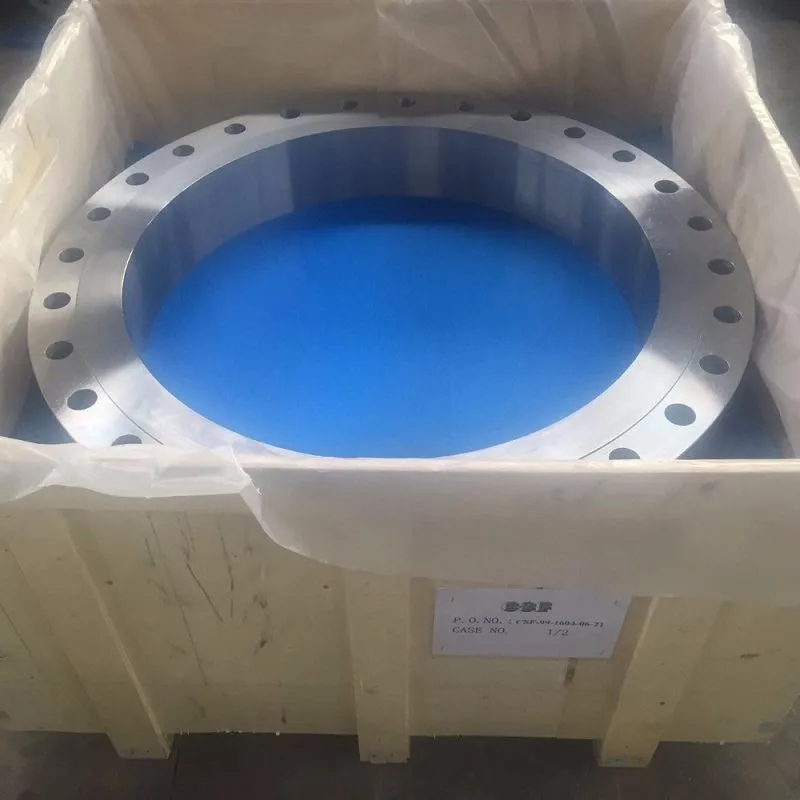
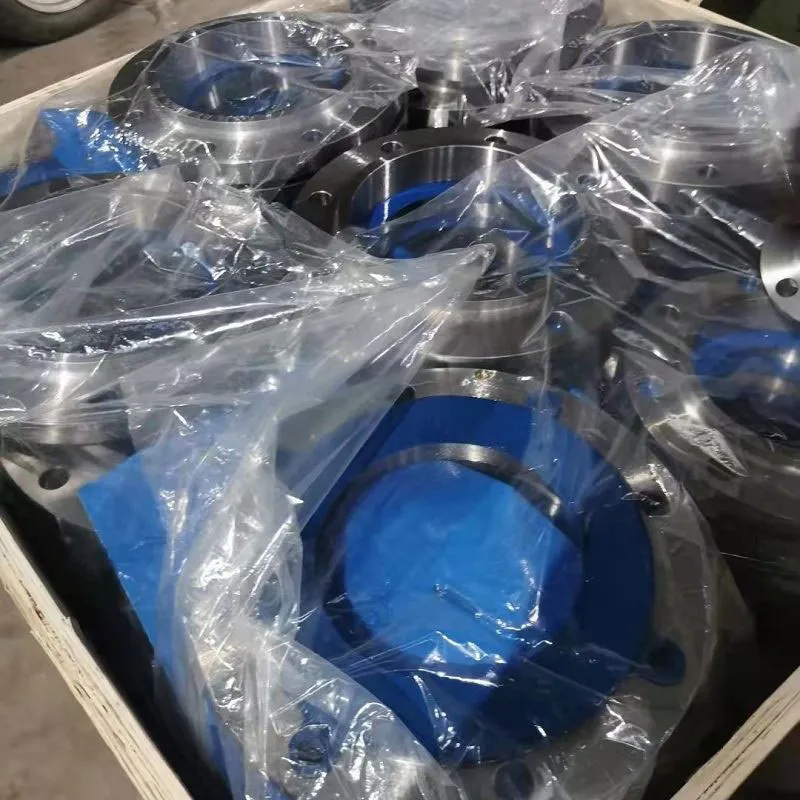
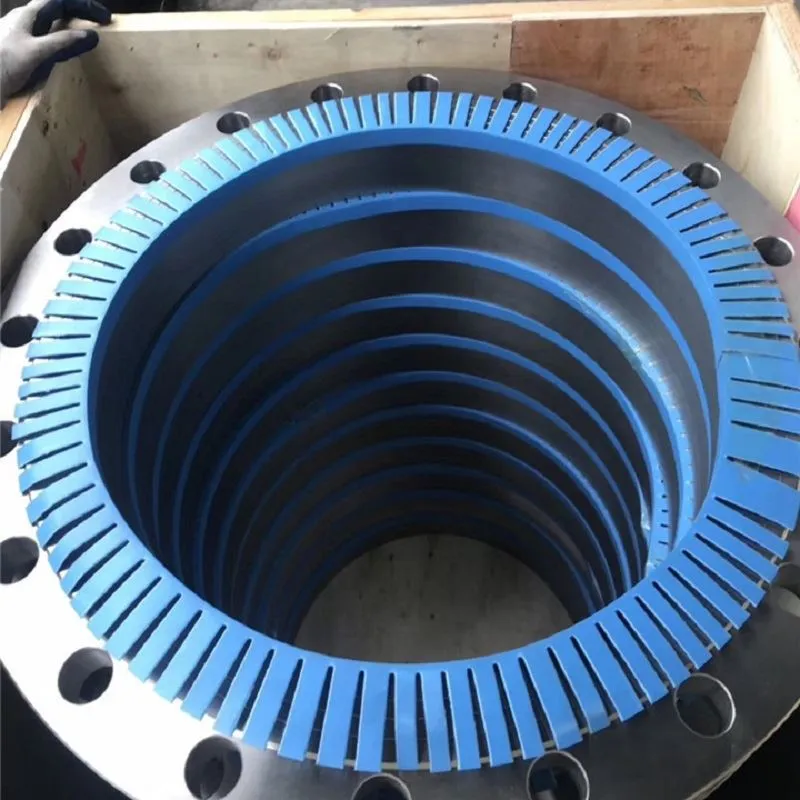
This is where it is important to understand where the products come from. Manufacturers have emerged on the global market that can guarantee stable performance even under high load conditions. For example, a companyShanxi Hongkai Forging Co., Ltd.(China), based in Dingxiang County, a key center for forging and pressing production, has established itself as a reliable partner for the oil, gas and energy industries. Their advantage lies in a complete vertically integrated cycle: from primary forging to finishing packaging at three of their own sites. This allows you to control each stage, excluding those very “hidden defects” that we talked about above.
For engineers working to international standards or requiring specific solutions, it is important that Shanxi Hongkai Forging produces a wide range of products - from slip-on and threaded flanges to butt weld flanges with pressure classes up to 2500 and diameters up to DN4000. Products are manufactured strictly according to ASME, EN, DIN, GOST standards and individual drawings, which is critical during import substitution, when you need to find a high-quality analogue of outdated Western brands. Having your own right to import-export operations simplifies logistics and makes the supply chain transparent, and a multi-level quality control system (including physical and chemical tests of each batch) provides the same confidence in numbers that is often lacking when working with “gray” suppliers.
Practical calculation: how not to go crazy with formulas
Okay, theory is theory, but how to count? Let's look at an algorithm that actually works in the field, and not just in the warm offices of design institutes.
First of all, we determine the design pressure and temperature. Not nominal, but calculated. Often designers will take the operating pressure and add 10%. Error. You need to look at the start and stop modes, and possible water hammer. In heating systems, the pressure surge when starting the pump can exceed the operating pressure by 1.5 times for a fraction of a second. The flange must withstand this.
Next, select the flange type. Flat, butt welded, loose on flange. For pressures above 2.5 MPa in 2026, flat flanges are practically taboo. Butt welded only. They provide better streamlining and less stress in the welding zone.
The most difficult stage is choosing a gasket and calculating the tightening force. This requires iteration. You specify the gasket material and calculate the required force to create the initial seal. Then check to see if this force will exceed the yield strength of the flange or bolt material. If it exceeds, change the material of the bolts (for example, from 35 to 40X or 20X13) or increase their number/diameter.
And here the question of price arises. Stainless steel or alloy steel bolts are expensive. And you need dozens of them per node. Purchasing managers will shout that the budget is inflated. Your job as an engineer is to show a graph of reliability versus cost. Typically the curve rises sharply after a certain threshold of fastener quality.
Price issue and availability of components
Let's talk about money, because Yandex loves commercial specifics, and you have to live with these prices. How much does a properly assembled flange connection cost today?
If we take average prices for the Russian market at the beginning of 2026:
- Steel flange Du100 Ru16 (butt welded): from 1800 to 2500 rubles per piece. The variation is huge depending on the plant (Chelyabinsk, Vyksa or China through parallel imports).
- Set of studs and nuts (high-strength): from 600 to 1200 rubles per set. Here it is important not to buy cheap China, which will start flowing in a month.
- Spiral wound gasket (SNP): from 400 to 900 rubles.
In total, one unit costs approximately 3000–4500 rubles, excluding installation work. If you save on gaskets by taking the cheapest one for 150 rubles, you risk losing these 4,500 after just a week of operation, plus the cost of equipment downtime. A downtime in a boiler room or process line costs hundreds of thousands of rubles per hour.
Where to buy? Large metal warehouses in Moscow and St. Petersburg keep their prices, but give a guarantee. Regional suppliers can give a 10-15% discount, but the risk of running into “gray” metal is higher. My advice: for critical components, work only with official dealers of factories included in the register of the Ministry of Industry and Trade, or directly with trusted international manufacturers, such as the above-mentioned Shanxi Hongkai Forging, whose supply geography covers Russia and the CIS countries, ensuring a balance between price and proven quality. It may be more expensive, but sleep peacefully.
Comparison of methods: manual calculation versus software
Is it even worth bothering with manual calculations when there are powerful programs like Start-Prof, NanoCAD or specialized modules in AutoCAD Plant 3D?
The answer is ambiguous. The programs are good for modeling the overall picture, temperature expansions of the entire route. But they often do a detailed calculation of a specific flange assembly formally. They take average odds.
I recommend a hybrid approach. We count the main route in the software. And we double-check each non-standard unit, each flange at the outlet of the pump or in front of the valve, manually or in specialized calculators tailored to the new GOST 33259-2015 (Flanges of fittings, connecting parts and pipelines) and GOST 33260-2015 (Gaskets).
Why exactly these GOST standards? Because they are harmonized with European EN, but have their own Russian characteristics in terms of tolerances. You cannot ignore them - this is a direct violation of licensing requirements.
Checklist before handing over the object
Before signing the commissioning certificate, go through this list. It will save you from many problems:
- Have the data sheets for all flanges and fasteners been checked? Do the steel grades match the project?
- Are there protocols for monitoring the hardness of weld metal and the heat-affected zone?
- Are the bolts tightened correctly? (The tightening torque must be recorded in the work log).
- Have external influences been taken into account? (Pipeline weight, vibration from pumps, wind load for external networks).
- Is the gasket type appropriate for the operating environment? (Oil, water, steam, aggressive chemicals - there are different materials for everything).
Especially the point about the tightening torque. In 2026, many large construction sites introduced the practice of using torque wrenches with data recording. Simply “tighten the nut with a gas wrench until it stops” is now considered a violation of technology. The force must be measured so as not to crush the gasket and create a distortion of the flange.
The future of flanged connections: what's next for us?
Where is the industry heading? I predict that classic bolted joints will gradually give way to welded joints where possible. Automatic welding technologies allow you to make seams more reliable than any flange. But the flanges will remain where disassembly is needed: on fittings, pumps, heat exchangers.
An interesting trend is the emergence of “smart” flanges. Yes, this already exists. Voltage and temperature sensors are built into the flange body or under the bolt washer. They transmit data to the automated process control system in real time. If the force in the bolt drops (loose tightening) or increases (misalignment), the system signals the dispatcher. This is becoming standard for critical oil and gas facilities.
But it's still expensive. For ordinary housing and communal services or small industries, we will continue to use wrenches and common sense for a long time. And this common sense must be based on the correctcalculation of pipe flange connection.
Don't be afraid to ask questions of suppliers. Don't be afraid to ask for extra paper. In modern Russia, responsibility for safety lies specifically with you, the engineer and the manager of the enterprise. No “maybe” will work when an inspection comes or an incident occurs.
Remember: the pipe will endure anything, but the connection is the weak link. This is where the chain breaks. Give it maximum attention, double-check the numbers, choose high-quality fasteners. And then your system will work like clockwork, despite any frosts and pressure surges.
In conclusion, I want to say: do not skimp on the design stage. An error in flange calculation costs pennies compared to the cost of eliminating the accident. Use current codes, check certifications, and treat every bolt as part of a safety system. That's all wisdom.
Sources of information and regulatory framework:
1.GOST 33259-2015. Flanges for fittings, connecting parts and pipelines. Design and dimensions(Current version with changes 2025)
2.SP 86.13330.2014. Main pipelines(As amended No. 3 of 2025)
3.Rostekhnadzor: Review of the causes of accidents at hazardous production facilities (Report for 2025)
4.NAKS Bulletin No. 4, 2025: New requirements for certification of flange joint welding technologies
5.Analytical report of the Russian rolled metal market “Steel 2026”: Dynamics of prices and quality