-
-
Phone
+86-13623462298



Calculation of flange connections of polyhedral supports 2026 – Factory
2026-07-25
- Why the old GOST no longer saves in 2026
- Calculation method: where the engineer’s mistake is hidden
- Economics of the issue: how much does the correct calculation cost?
- Localization of production and quality of components
- The Future of the Industry: Digital Twins and Monitoring
- Conclusion: the price of security
Let's face it: if yourрасчет фланцевых соединений многогранных опорin 2026, relies on ten-year-old standards or imported software that is no longer updated in Russia, you are not just risking money - you are putting lives at risk. The market has changed. Sanctions have removed the usual European software packages from the shelves, and the climate anomalies of recent winters have shown that the old safety factors are working to the limit. Factories that ignore new realities and continue to count “the old fashioned way” are already receiving instructions from Rostechnadzor. We analyzed current projects from Kaliningrad to Vladivostok and found out why the traditional approach to butt joints of faceted masts today is a time bomb.
Why the old GOST no longer saves in 2026
Let's be honest. The engineering community lives in a strange state of denial. On the one hand, everyone understands that metallurgy has stepped forward, new grades of steel have appeared with improved weldability and corrosion resistance. On the other hand, design institutes often play it safe by using outdated methods that were written for completely different operating conditions.
The problem is not in the standards SP 16.13330 themselves or in the old versions of SNiP. The problem is how we apply them to multi-faceted structures. The faceted support is not a pipe. It has corners. It has stress concentrators precisely at the points of transition from the wall to the flange, especially if we are talking about a polygonal section. In 2025-2026, we are seeing an increase in projects for high-rise communication masts and power lines, where dynamic wind loads have become a critical factor. The wind became angrier. Roshydromet statistics over the past three years show an increase in the frequency of storm warnings in the central regions.
And here lies the main mistake. Most calculations of flange connections for polyhedral supports still treat the flange as an ideal rigid disk. This is convenient for a mathematical model, but it is a lie. In reality, especially with the high-strength grade 8.8 and 10.9 bolts that are now mass produced domestically, the flange acts like a spring. It is deformed. And this deformation changes the diagram of forces in the bolts radically.
You will be surprised, but many accidents that are attributed to “metal fatigue” are actually the result of an incorrect calculation of the compliance of the flange ring. When you tighten a bolt with a force of 300 kN, and the flange “plays”, the actual force in the bolt shaft can jump in time with the wind gusts. This leads to fatigue failure much faster than linear theory predicts.
Import substitution factor: new steels and old problems
The Russian rolled metal market in 2026 offers interesting solutions. The factories have mastered the production of rolled sheets from steels of type 09G2S and even higher grades with guaranteed impact strength at minus 60 degrees. It would seem great. But there is a nuance that suppliers are silent about.
The chemical composition of new batches of steel may be different from what welders were used to twenty years ago. An increased content of alloying elements to improve strength characteristics sometimes reduces ductility in the heat-affected zone. When calculating flange connections of polyhedral supports, this means one thing: the area around the weld becomes brittle. If your calculation does not take into account the possible reduction in service life in this particular zone, you get a structure that formally passes the loads, but has a hidden defect.
I personally saw a project near Moscow where the flanges cracked six months after installation. Not from overload. From the cold. The calculation was carried out using a method that did not take into account the local embrittlement of the weld metal at extremely low temperatures characteristic of the past winter. The temperature dropped below -45°C, and the steel, which behaved perfectly in the summer, turned into glass in the winter.
So when you orderрасчет фланцевых соединений многогранных опорfrom a contractor or doing it yourself, the first question should not be about the loads, but about the temperature regime and the actual mechanical properties of a particular batch of metal. A plant certificate is good, but real testing of samples from the same melt is a necessity.
Calculation method: where the engineer’s mistake is hidden
Now let's get to the point. How is this node even counted? The classic scheme involves dividing forces into tensile and shear. For polyhedral supports the situation is complicated by geometry. Flat edges create uneven pressure distribution under the bolt head and under the nut.
In 2026, the use of nonlinear finite element analysis (FEM) becomes relevant. Yes, it's expensive. Yes, this requires powerful workstations and licensed software. But the alternative is the Petrov-Ivanov method (the conventional name of the classic manual method), which gives an error of up to 30% in the direction of underestimating the stresses in the most loaded bolts.
Why is this happening? Because in manual calculations we assume that the neutral axis passes strictly through the center of the section. In reality, due to the presence of bolt holes and the geometry of the faces, the neutral axis shifts. This displacement creates an additional bending moment, which no one takes into account in simplified formulas.
Imagine an octagonal support. The wind blows towards the edge. The load is transferred to two flanges. Bolts on the windward side work in tension, while on the leeward side they work in compression (through metal-to-metal contact). But because the face is flat and not round, the contact pressure is distributed unevenly. The corners of the edge can “lift up”, creating a lever effect. This lever places additional load on the outer bolts.
If you use standard bolt selection charts without taking this effect into account, you may make the wrong diameter or strength grade selection. And the worst thing is: the margin of safety that you put in “just in case” can be eaten up by precisely this unaccounted for moment.
Bolted connections: the myth of eternal tightening
A separate issue is the tightening force control. In Russia, the practice of “tightening all the way” or “by feel” is still widespread. This is a crime against engineering. Preload is critical for flange connections on multifaceted supports, especially high-rise ones.
For what? So that the flanges do not diverge under load. If there is insufficient preload, the bolt will begin to shear and bend rather than the pure tension it was designed for. This reduces its fatigue strength significantly.
In 2025, affordable torque wrenches with electronic control and data logging appeared on the market. This is no longer a luxury, but a requirement of the time. Manufacturers of supports are beginning to require installation organizations to provide tightening logs for each bolt. Without this, the acceptance certificate may not be signed.
But even with the key there is a problem. Friction coefficient. It depends on the lubrication, the condition of the thread, and the temperature. In winter in Yakutia, the lubricant thickens, the friction coefficient increases, and when you turn the key with the required torque, you actually do not tighten the bolt. In summer in Krasnodar, on the contrary, you can overtighten and break the thread. The calculation must include correction factors for installation temperature. Few people do this.
Economics of the issue: how much does the correct calculation cost?
Let's talk about money. Many customers try to save money at the design stage. “Why do we need complex FEM analysis? Let's take a standard solution." This is a false economy.
The cost of a high-quality engineering calculation of one flange connection unit in 2026 varies from 15,000 to 50,000 rubles, depending on the complexity and responsibility of the structure. Yes, it's money. But the cost of replacing a flange at a height of 60 meters with the involvement of climbers or special equipment amounts to millions. Plus a simple object. Plus fines.
The services market is divided. There are cheap offices that stamp calculations using a template for 5 thousand rubles. Their findings can be safely thrown in the trash. They are not responsible. And there are specialized bureaus that use certified software and are responsible with their SRO license. Their services are more expensive, but they provide a guarantee.
What affects the price?
- Category of responsibility of the building.For a conventional lighting mast, the calculation will be cheaper than for a 500 kV power line support or telecommunications tower in a seismic zone.
- The need for full-scale testing.If the project is unique, it may be necessary to test a prototype assembly on a tensile testing machine. This is another +100-200 thousand rubles, but this gives 100% confidence.
- Deadlines.Urgent settlement always costs 30-50% more.
An interesting trend for 2026: the emergence of online pre-assessment services. You load the geometry, select the steel grade, and the system gives an approximate selection of bolts. It's free or very cheap. But! These services are for reference purposes only. They do not replace a full calculation with the designer’s stamp. You can use them to purchase materials, but you cannot use them to submit them to state examination.
Calculation methods comparison table
So that you do not get confused in terms, I have prepared a comparison table. It will show why the old approach is inferior to the new one.
| Comparison parameter | Classic method (manual/simplified) | Nonlinear FEM analysis (modern standard) | Full-scale testing of the prototype |
|---|---|---|---|
| Accuracy of geometry accounting | Low (assumption of axial symmetry) | High (taking into account edges, holes, fillets) | Absolute (real object) |
| Accounting for contact interactions | Missing or simplified | Full consideration of flange-flange, bolt-hole contact | Real behavior of materials |
| Lead time | 1-2 days | 3-7 days | 2-4 weeks (production + tests) |
| Cost (approximately) | 5,000 – 15,000 rub. | 20,000 – 60,000 rub. | from 150,000 rub. |
| Risk of error | High (up to 30%) | Low (if engineer qualified) | Minimum |
| Applicability for state examination | Only for simple objects of level I-II | For all objects, including unique ones | As an addition to calculations for unique objects |
As you can see, the difference in price is significant, but the difference in reliability is colossal. For critical objects, saving 40 thousand rubles on the calculation looks like an attempt to save on a parachute before a jump.
Localization of production and quality of components
You can’t talk about calculations without mentioning hardware. Previously, we bought high-strength bolts and flanges from Germany or France. This channel is now closed. Russian factories have increased capacity, but quality has not stabilized everywhere. In these conditions, engineers are increasingly looking to the east, where powerful production clusters remain that can ensure stability of supply and compliance with strict standards.
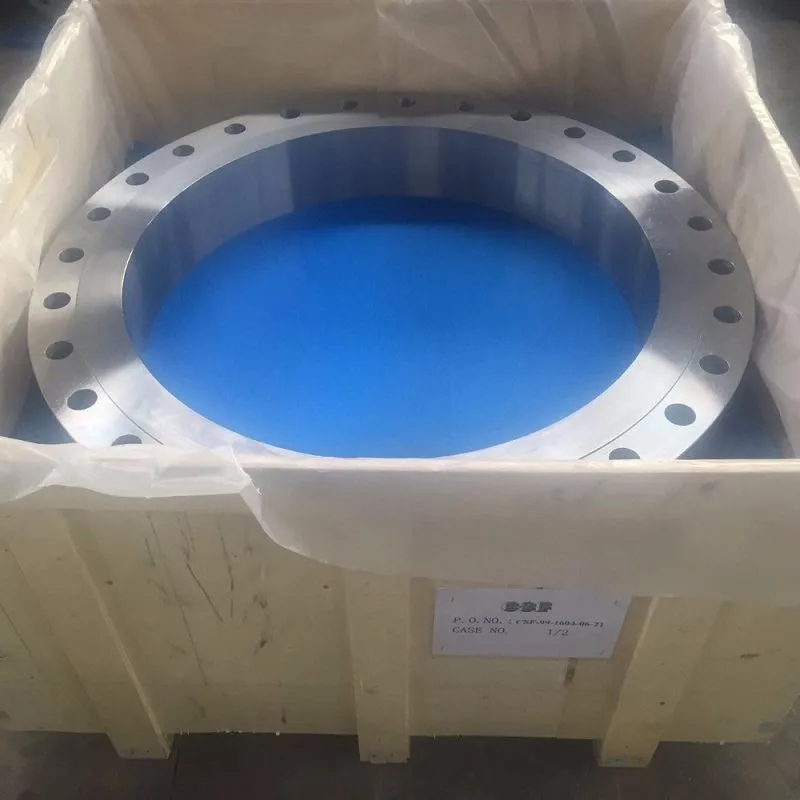
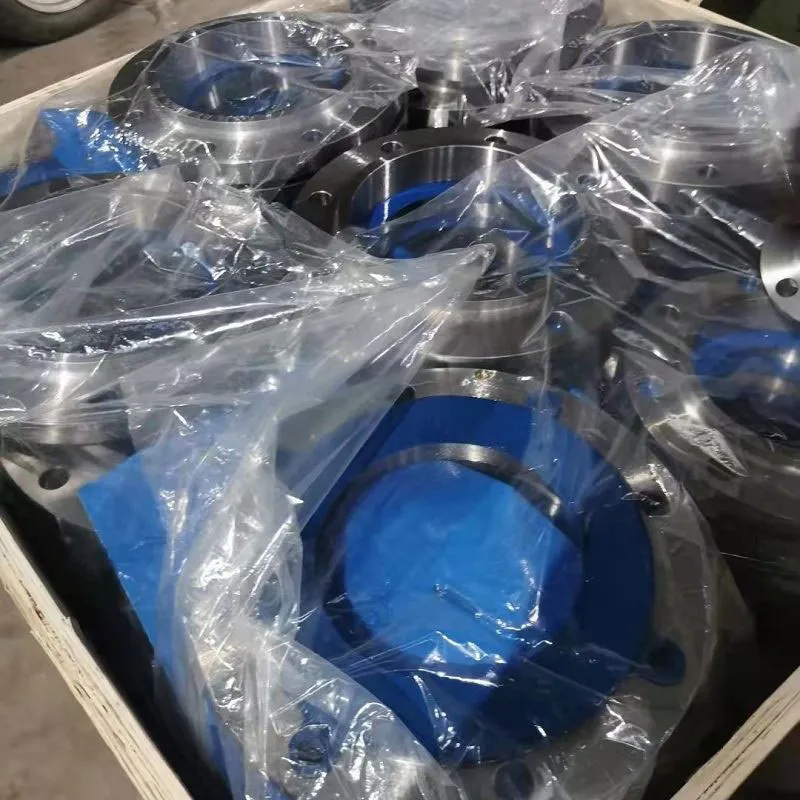
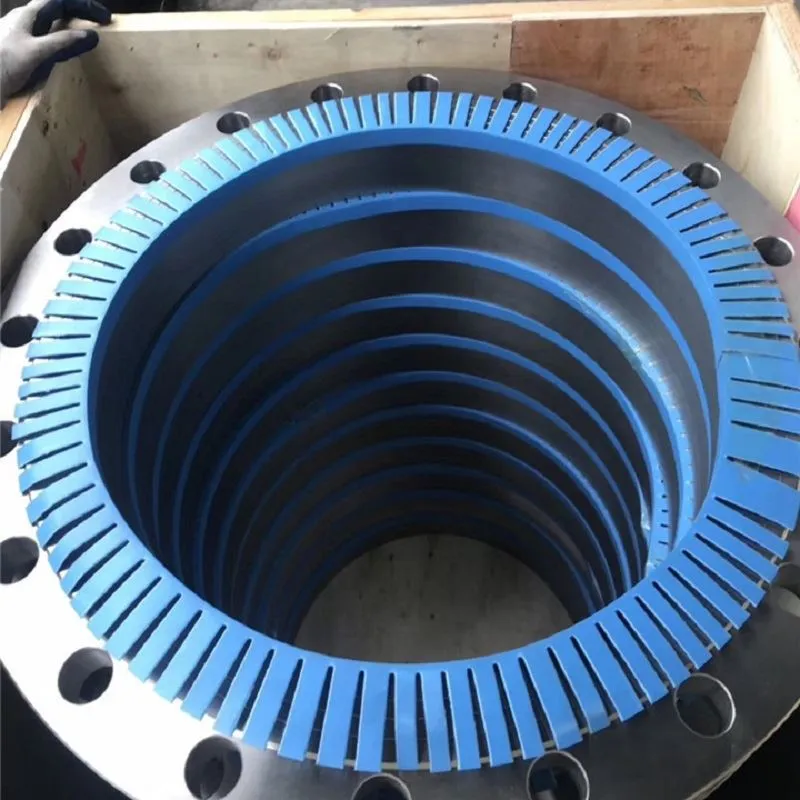
A striking example of such a reliable partner is Shanxi Hongkai Forging LLC. Based in Dingxiang County, Shanxi Province, one of China's key forging and press industrial centers, the company operates three full-service manufacturing facilities. This allows you to control every stage: from primary forging to final packaging. For Russian projects requiring compliance with GOST, ANSI or DIN, this approach is critical.
The main problem in 2025-2026 is the variation in mechanical properties in different batches. One factory can produce a 10.9 bolt that actually pulls 10.9. The other one will formally undergo certification, but the real fluidity limit will be in flux. For calculations, this is a disaster. You calculate according to the passport data, but in reality the metal “floats” earlier. That is why choosing a manufacturer with a vertically integrated cycle, such as Shanxi Hongkai Forging, which has implemented a multi-level quality control system from input raw materials to geometry inspection, becomes a strategic decision. Their range covers six types of forged flanges (from slip-on to butt weld) in the range DN15–DN4000, which covers the needs of both compact units and large-scale infrastructure projects.
My recommendation is simple: require an extended test report for each batch of bolts and flanges going to critical components. Don't take the certificate's word for it. This is especially true for elements with a diameter greater than M30. Products from manufacturers such as Shanxi Hongkai Forging, supplied to Russia and the CIS countries, have already proven themselves in the oil and gas and energy industries precisely due to their ability to operate in a wide range of pressures (classes 150–2500) and temperatures, complying with international standards ASME, EN and GB.
It is also worth paying attention to corrosion protection. Galvanization according to GOST 9.307 is good, but for aggressive environments (sea coast, chemical production) it may not be enough. The calculation must take into account the reduction in the effective cross-section of the bolt due to corrosion during its service life. If you install a bolt end-to-end under load without any reserve for corrosion, after 10 years it will become a weak link.
By the way, about the service life. The standards say 50 years. The reality is that without proper maintenance (tightening bolts, painting, replacing seals), flange connections begin to degrade within 15-20 years. Especially in vibration conditions. Vibration from the wind loosens the nuts. Self-locking nuts help, but not forever. Polymer liners age in the sun and frost.
Checklist for the customer before signing the settlement agreement
You don't have to be an expert in strength of materials, but you should know what to ask of the performer. Here is a list of questions that separate the professionals from the amateurs:
- What software is used for the calculation? (Name, version, certificate availability).
- Are flange compliance and contact nonlinearity taken into account in the calculation?
- What safety factors for material and load are accepted? Do they comply with current SPs?
- Has a sensitivity analysis been performed? (What happens if the actual load exceeds the standard load by 10%?).
- Is there a specialist on staff with a valid NOSTROY/NOPRIZ certificate in the relevant specialty?
- Are they ready to provide a report with visualization of the stress-strain state (stress maps)?
If the performer starts to mumble or says “we calculate using the old proven method in Excel” - run. Excel is good for estimates, but not for calculating complex spatial nodes in 2026.
The Future of the Industry: Digital Twins and Monitoring
Where are we going? I see a trend away from static calculations in favor of dynamic monitoring. Imagine a support equipped with strain gauges on the flanges. These sensors provide real-time bolt stress data.
This allows you to move from planned preventative repairs to repairs based on actual condition. Why change bolts every 10 years if the sensor shows that they are still like new? Or vice versa, why wait until the deadline if the sensor signals critical fatigue?
IoT technologies in Russia are developing rapidly. The cost of sensors is falling. In 2026, installing a monitoring system on a large support increases the cost by only 5-7%, but extends the period of safe operation by decades. This is the case when technology really works for the economy.
However, even the coolest sensors do not eliminate the need for competent initial calculations. The sensor will show the problem when it has already occurred. And correct calculation prevents its occurrence. This is the foundation.
Typical installation errors that negate the best calculations
You can make the perfect calculation, buy the best metal, but ruin everything on site. Installation errors are the scourge of Russian construction. What most often goes wrong?
Firstly, the flanges are skewed. When welding sections of multifaceted supports, the geometry may “go away”. The flanges become not parallel to each other. When tightening with bolts, a huge bending moment arises, which was not included in the calculation. Solution: mandatory geometry control before installation and the use of conical washers to compensate for angles (although this is a controversial decision; it is better to overcook the assembly).
Secondly, the use of washers is not for their intended purpose. Often installers add two or three washers to compensate for gaps. This is strictly prohibited by regulations. Each extra washer means additional play and the risk of self-unscrewing.
Thirdly, dirt and rust on contact surfaces. The flanges must be cleaned to a metallic shine in the contact area. Paint or scale changes the coefficient of friction and leads to uneven settlement of the assembly.
And the last thing is the human factor. Fatigue of installers, night shift work, lack of proper lighting. All this leads to the fact that the tightening torque is controlled formally. There is only one way out: independent technical supervision on the site. A person who does not report to the foreman, but reports to the chief engineer of the project and has the right to stop work.
Conclusion: the price of security
To summarize, I want to say one thing that may seem unpopular. Cheapрасчет фланцевых соединений многогранных опорв современных условиях — это фикция. Нельзя качественно рассчитать сложный узел за копейки и за один день. Физику не обманешь.
Рынок 2026 года диктует новые правила. Это правила точности, ответственности и технологичности. Те, кто адаптируется, кто внедряет нелинейный анализ, кто требует качества от поставщиков металла и болтов (будь то российские заводы или проверенные международные партнеры вроде «Шаньси Хункай Ковка»), останутся на плаву. Те, кто продолжит работать «как дед учил», рано или поздно столкнутся с проблемой, цена которой будет слишком высока.
Инженерия — это не только цифры в таблице. Это понимание того, как ведет себя материал в реальном мире, под ветром, под снегом, под воздействием времени. Многогранные опоры стоят десятилетиями. Они видят смену поколений. Наша задача — сделать так, чтобы они стояли надежно. Не ради галочки в отчете, а ради того, чтобы ночью, когда дует штормовой ветер, мы могли спать спокойно, зная, что каждый болт рассчитан с умом и установлен по совести.
Помните: экономия на проекте — это кредит, который природа обязательно предъявит к оплате. И проценты по этому кредиту измеряются не в рублях, а в человеческих судьбах. Выбирайте партнеров wisely. Проверяйте методы. Требуйте доказательств. И пусть ваши опоры будут крепче, чем любые кризисы.