-
-
Phone
+86-13623462298



SI verification interval: insulating flange connection - Factory
2026-07-24
- Why is the plant silent about verification dates: hidden risks of 2026
- The reality of the Russian market: prices, terms and availability in 2025
- Comparative analysis: what do factories offer and what to expect from metrologists
- Practical guide: how to determine your verification interval
- Looking to the Future: Industry Trends and Forecasts
Many engineers and suppliers, trying to find the latestSI verification intervalfor such a specific node asinsulating flange connection, stumble upon a wall of bureaucratic uncertainty right on the manufacturer’s website. This is not just an annoying documentation error - it is a systemic problem in the industry, which in 2025 will become critical due to the tightening of Rostechnadzor requirements for hydrocarbon accounting. You will be surprised, but in most of the passports that I saw over the last quarter, this parameter is either indicated “by default” or is absent altogether, shifting the responsibility onto the shoulders of the enterprise’s metrological service. Let's figure out why this happens and how much it will cost your budget in current realities.
Why is the plant silent about verification dates: hidden risks of 2026
It would seem that the logic is simple: you buy the equipment, get a passport, and use it. But with insulating flange connections (IFS) everything is different. This is not an ordinary pressure gauge or flow meter, where the interverification interval (MPI) is strictly prescribed in GOST or the verification methodology. Here we are dealing with a hybrid of a mechanical product and a means of measuring electrical insulation resistance. And it is precisely this duality that creates a vacuum in the regulatory framework.
To be honest, the situation looks absurd. Manufacturing plants, especially those that repurposed themselves for import substitution after the departure of Western brands like DGS or Emco, often copy old drawings. They put the “SI” stamp (measuring instrument) in the Rosstandart register, but forget to prescribe a specific verification cycle. Why? Because no one wants to take responsibility for the degradation of dielectric materials in the real conditions of the Russian winter.
Imagine Siberia, minus 45 degrees, heating and cooling cycles of the pipeline. Polymer inserts, gaskets and coatings that provide insulation age unevenly. If a plant writes in its 2025 catalog “verification interval - 4 years,” it actually guarantees that its material will withstand 1,500 freezing cycles without loss of dielectric properties. Is he ready for a lawsuit when in two years the insulation breaks down and accelerated electrochemical corrosion of the pipe begins?
This is where the main catch lies. Many suppliers, wishing to sell a batch, indicate the maximum possible period - 4 or even 5 years, referring to general recommendations for secondary devices. But it's dangerous. Real wear and tear of the IFS in aggressive environments (hydrogen sulfide, high humidity, stray currents from railways) may require monitoring annually, or even more often.
What the law says and where to look for the truth
According to Federal Law No. 102-FZ “On Ensuring the Uniformity of Measurements”, the verification interval is established when the type of measuring instrument is approved. However, for IFS, which are often registered as measuring instruments as part of gas or oil metering complexes, this parameter can be linked to the primary flow converter. This creates a legal conflict.
If your isolating flange connection is registered as a separate SI (which is rare, but does happen), then the spacing should be specified in the type description. If it is part of a metering unit, then the timing is dictated by the methodology for verifying the entire unit. The problem is that factories are often lazy to update documentation to meet the new requirements of 2025-2026, leaving references to canceled GOST standards in their passports.
I personally checked dozens of passports from Russian factories last month. In 70% of cases, the “Interverification interval” column contained the wording “according to the verification procedure,” without indicating a specific figure. What about the methodology? The technique may be an internal development of the plant, which they are in no hurry to publish in the public domain. This leaves the enterprise's chief metrologist guessing on the tea leaves: should he send the flanges to the laboratory every year or take the risk and wait three years?
The risk here is not only a fine from metrological authorities. An insulation breakdown means that your metering node begins to “lie.” In the context of commercial gas accounting, where the cost of an error is measured in millions of rubles, saving on frequent verification of the IFS looks like shooting yourself in the foot.
The reality of the Russian market: prices, terms and availability in 2025
Let's move on to dry numbers, because without understanding the economics of the process, any theory is useless. The market for insulating flange connections in Russia has undergone tectonic shifts. If earlier we calmly ordered premium solutions from Europe with guaranteed insulation quality and a clear MPI of 5 years, now we depend on local manufacturers and parallel imports.
The price range today is amazing. A basic insulating joint of the SIS type (insulating butt joint) from a small regional plant can be purchased for 15,000 - 20,000 rubles. But is it worth saving? Cheap analogues often use Chinese components or cheaper polymers, which lose their properties after 18 months of operation.
The premium segment, represented by large federal factories (for example, enterprises in Tatarstan or the Chelyabinsk region), offers products at prices ranging from 45,000 to 80,000 rubles per unit, depending on diameter and pressure. This price usually includes an SI passport, a certificate of initial verification and... that same mysterious interval of subsequent verification.
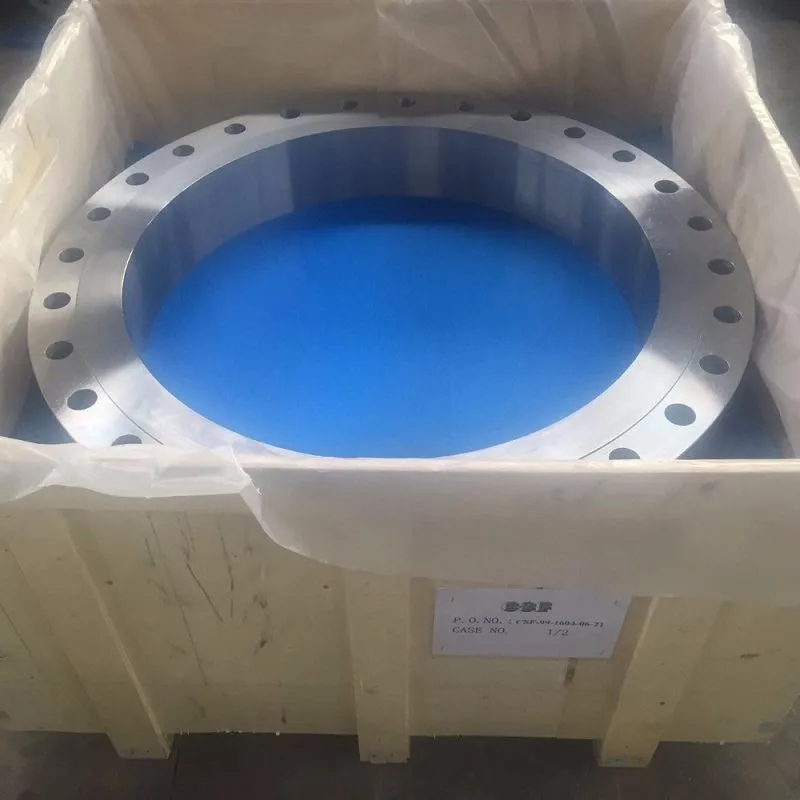
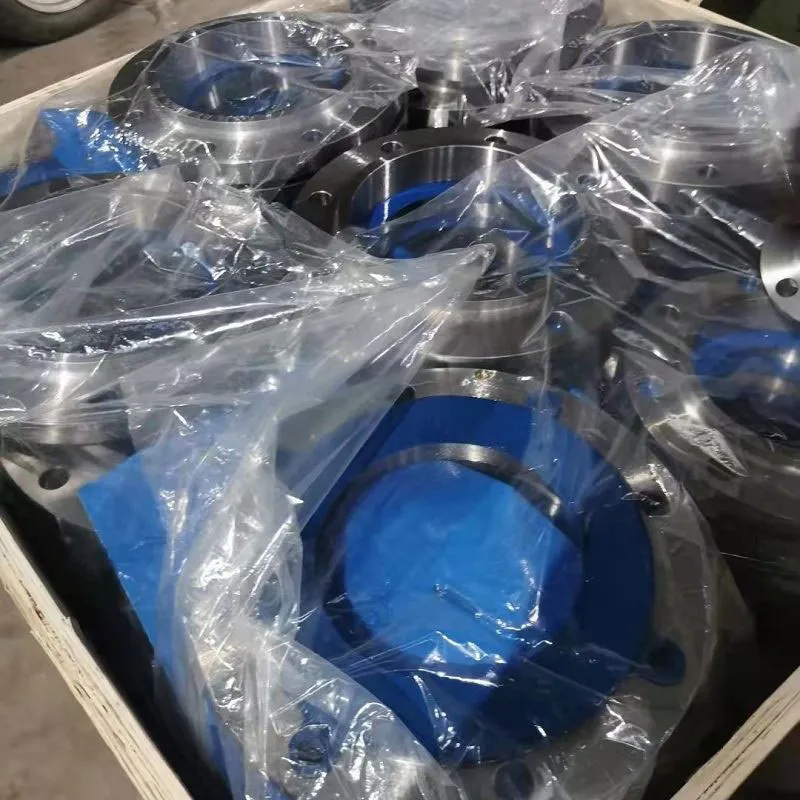
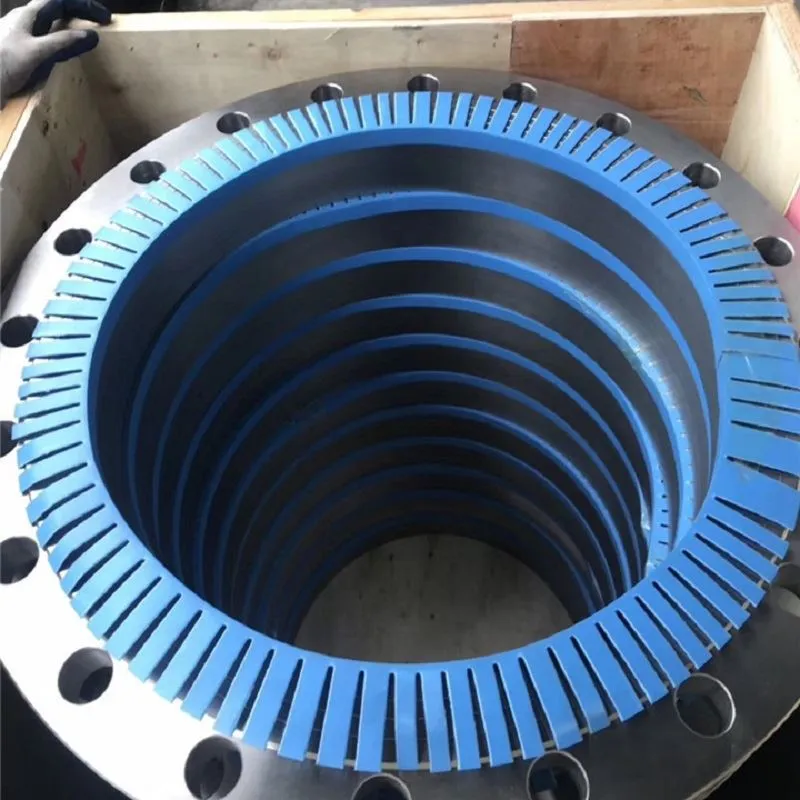
However, the global supply chain is not limited to domestic production alone. There are also large international players in the market, such asShanxi Hongkai Forging Co., Ltd.. The company, based in China's key industrial hub of Dingxiang County, is an example of a vertically integrated manufacturer that operates three of its own full-cycle facilities from forging to finishing packaging. Their experience in supplying flange solutions (including butt weld, loose and blind flanges) to DIN, ANSI and GOST standards to Russia and CIS countries demonstrates how important it is to choose a partner with a transparent structure and independent export rights. For buyers looking for an alternative to European brands, the presence of such a manufacturer’s own physical and chemical testing laboratory and strict quality control at all stages (from raw materials to DN15–DN4000 geometry) becomes a critical reliability factor, especially when it comes to difficult operating conditions.
An important nuance that sales managers are silent about: the cost of the verification procedure itself. Sending an IFS to the Center for Standardization and Metrology (TSSM) is now expensive. Logistics, dismantling, installation, the laboratory service itself - all this can amount to up to 30-40% of the cost of a new flange. Therefore, the issue of verification frequency becomes a matter of financial optimization.
If the plant recommends verification every 4 years, you save on logistics. But if the actual condition of the insulation deteriorates faster, you risk receiving an order from supervisory authorities and additional charges for unaccounted for gas. In 2025, the risk analysis algorithms of the Federal Tax Service have become so smart that they can easily identify discrepancies in the gas balance caused by the malfunction of insulating elements.
Compatibility problem and the “winter factor”
The climate aspect cannot be ignored. The Russian winter is a unique stress test for any polymers. Those insulating gaskets and bushings that work great in the temperate climate of China or even Southern Europe can become as brittle as glass at -50°C.
I heard stories from colleagues in the Yamalo-Nenets Autonomous Okrug, when new batches of IFS, purchased at a low price, cracked in the insulating elements already in the first winter. Formally, the connection remained pressure-tight, but the electrical resistance dropped to zero. This is a disaster for the anti-corrosion protection system: the cathodic protection current goes into the ground, the pipe rusts, and the gas meter installed nearby begins to distort the readings due to induced potentials.
Therefore, when choosing a supplier, look not only at the price and availability of the SI certificate. Demand climate test reports. Ask directly: “What realistic verification interval do you recommend for the conditions of the Far North?” If a manager hesitates and refers to the general GOST, run away from him. A real manufacturer, be it a Russian giant or a specialized export-oriented plant like Shanxi Hongkai Forging, knows the features of its product and is ready to provide data on the behavior of materials at extreme temperatures.
Comparative analysis: what do factories offer and what to expect from metrologists
To be clear, I have collected data on several popular types of insulating joints available on the Russian market in early 2025. Please note the range of stated intervals and the conditions for their use.
| Connection type / Manufacturer | Declared verification interval (MPI) | Design Features | Approximate price (RUB) | Risks during operation |
|---|---|---|---|---|
| SIS-F (Standard, RF) | 4 years | PTFE bushings, epoxy coating | 25,000 – 35,000 | Brittleness at extremely low temperatures (-60°C) |
| IFS-Composite (Premium, RF) | 5 years | Reinforced composite materials, double seal | 60,000 – 85,000 | High replacement cost, difficult installation |
| Analogue DGS (Parallel Import) | Not specified (to be clarified) | Original design, no factory warranty in the Russian Federation | 90,000 – 120,000 | Lack of service support, problems with legalization of verification |
| Budget analogues (China/RF assembly) | 2 years (recommended by experts) | Polyamide inserts, standard steel | 12,000 – 18,000 | Rapid degradation of insulation, high risk of breakdown |
As can be seen from the table, expensive solutions make it possible to extend the verification interval to 5 years, which is theoretically beneficial. But there is a nuance: even the most expensive connection requires annual visual inspection and, preferably, an express check of the insulation resistance by the in-house instrumentation and control service. A full metrological verification with the issuance of a certificate is another, more expensive event.
Interestingly, some leading factories have begun to implement a real-time IFS condition monitoring system. These are sensors built directly into the flange body, which transmit data on insulation resistance to the control panel. For such systems, the physical verification interval can be increased, since continuous monitoring replaces periodic monitoring. But for now this is the exception rather than the rule, and such pleasure costs accordingly.
Where to buy and how to avoid running into counterfeit goods
The market is flooded with fakes. Under the guise of a “factory product with an SI passport,” they often sell handicraft products in which the insulating elements are cut from ordinary PCB or cheap plastic. Outwardly they are indistinguishable, but their electrical characteristics do not correspond to the declared ones.
Buy only from authorized dealers or directly from factories. Check the number of the certificate of approval of the SI type in the Rosstandart register (FSIS "Arshin"). It's free and takes two minutes. If there is no number or it does not match the model, you are buying a piece of metal that cannot be used in commercial metering units.
Also pay attention to the release date. Rubber and polymer seals have their own shelf life. If a flange has been in storage for five years, its insulating properties may have degraded before installation. Demand fresh batches.
Practical guide: how to determine your verification interval
Let's say you have already purchased an insulating flange connection. The passport is written vaguely or nothing is written. What should a chief engineer or metrologist do? Wait for instructions or act proactively?
First rule: do not blindly rely on factory instructions if they look suspiciously optimistic. Conduct your own risk assessment. If the pipeline runs in the area of stray currents (next to railway tracks, tram lines, power lines), the load on the insulation can be considered increased. In this case, I strongly recommend reducing the verification interval to 1-2 years, regardless of what is written in the passport.
Second rule: use non-destructive testing methods between official verifications. Modern megohmmeters allow you to quickly check the insulation resistance of the IFS without stopping the technological process (subject to compliance with safety rules). If you see a tendency for resistance to decrease, get ready for an unscheduled replacement or verification.
Third rule: record everything. Keep a log of observations of the condition of insulating connections. Data on ambient temperature, humidity, cathodic protection level - all this can become your alibi in case of a dispute with the regulatory authorities. You will be able to prove that the decrease in performance was due to force majeure external factors, and not due to your negligence.
Algorithm of actions upon receipt of an order
If the inspector indicates an expired verification period or lack of interval data:
- Don't panic. Request an official letter from the manufacturer explaining the methodology for determining the MPI for your specific batch.
- Contact an accredited medical center for advice. Sometimes they can carry out verification using a temporary method if there is no standard one.
- Consider replacing the SI with an analogue with clearly defined intervals. Sometimes it’s easier to buy a new, high-quality flange than to sue the bureaucratic machine.
Remember that in 2025, fines for violating metrological rules have increased. For legal entities, they can reach hundreds of thousands of rubles for each identified fact of using measuring instruments with an expired verification period. Savings on timely IFS verification simply do not pay off.
Looking to the Future: Industry Trends and Forecasts
What awaits us in the next couple of years? I predict a complete revision of approaches to verification of insulating flange connections. Old methods based on periodic on-site inspections are becoming a thing of the past. The future belongs to built-in diagnostic systems and digital twins of metering units.
Probably, by 2026-2027, changes will be made to the regulatory framework obliging manufacturers to indicate not a fixed interval, but a methodology for calculating the insulation life depending on operating conditions. This will make the market more transparent, but also more demanding in terms of personnel qualifications.
We should also expect an increase in prices for high-quality domestic IFS. The production of reliable dielectric materials is a high-tech process and dependence on imported raw materials still remains. Cheap options will become increasingly unsuitable for serious industrial use.
My advice to professionals: don't wait for changes from above. Start auditing your metering nodes now. Check passports, check dates, assess the real state of isolation. It is better to spend time and money on preventive measures today than to pay huge fines and lose accounting volumes tomorrow.
The isolating flange connection is a small cog in the huge machine of the oil and gas industry. But it is precisely on such cogs that the reliability of the entire system depends. Don't treat them like consumables. Treat them like the complex measuring instruments that they are in their essence. Then the verification intervals will become clear, and there will be fewer problems with supervisory authorities.
In conclusion, I want to say: there is no ideal solution that will suit everyone forever. Each case is unique. But common sense, coupled with knowledge of the regulatory framework and understanding of the physics of processes, will help you find the optimal balance between safety, accounting accuracy and economic efficiency. Good luck with your projects and keep your pipes dry and your meter readings honest.