-
-
Phone
+86-13623462298



Technological map for bolted flange connection 2026 – Factory
2026-07-24
Let's get straight to the point: if you're looking fortechnological map for bolted flange connection 2026 – Factory, then, most likely, you are already tired of paperwork and old GOSTs, which no one reads in the workshop. In 2026, the approach to documentation has changed radically. We are no longer just “signing documents”, we are introducing digital twins of processes right at the assembly stage. But there is a nuance that software providers are silent about: the ideal map on paper is often broken by the harsh reality of the Russian winter and the human factor. I have seen expensive imported torque wrenches break at minus twenty, and operators ignored the instructions because “it’s faster.” This article is not a retelling of the textbook. This is an attempt to figure out how to make your process map actually work at the plant, and not gather dust in the chief engineer’s folder.
Why old norms are killing efficiency in 2026
Have you ever wondered why, even with all the tolerances and fits, flange connections continue to leak? The problem is not the metal. The problem is how we describe the process of building it. Traditionaltechnological map for bolted flange connection, compiled according to the patterns of the 90s, assumes ideal conditions. Clean workshop, calibrated tools, operator in a good mood. Reality?
The reality is that, in the context of import substitution, we are faced with an avalanche of new hardware products from Asia and domestic analogues, the properties of which differ from the usual German or American brands. The coefficient of friction in the thread has changed. The elastic properties of gaskets made from new composite materials behave differently under cyclic loads. If your card doesn't take these changes into account, you're not getting a sealed connection, but a ticking time bomb.
To be honest, many factories still use templates where the torque is simply stated in Newton meters. This is a mistake. In 2026, the professional standard requires the indication of the rotation angle and tightening sequence in relation to a specific type of lubricant. Without this, any number is just guessing on coffee grounds. I personally attended tests where the difference in tightness between the joint assembled “by moment” and “by angle + moment” reached 40%. Imagine the losses at a large oil and gas facility.
Critical errors when compiling documentation
The most common mistake is ignoring stress relaxation. You tightened the bolt, checked the torque, signed the document. And a day later, after the first thermal cycle, the force in the bolt dropped by 15-20%. Why? Because the card does not specify the procedure for re-torquing after exposure. Some modern standards, for example, updated versions of ASME PCC-1, adapted to Russian realities, insist on mandatory monitoring after 4-24 hours. Ignoring this point is a direct road to leaks.
Another point that is often overlooked is the cleanliness of the threads. In technological charts they often write succinctly: “Clean the thread.” And with what? A rag? Compressed air? Chemical solvent? Preservation lubricant or metal shavings remaining on the thread can change the coefficient of friction so much that the actual axial force in the bolt will differ several times from the calculated one. In 2026, we demand specifics: “Wipe the thread with a rag moistened with acetone until there is visually no contamination.” Trifle? Maybe. But it is precisely such little things that determine the reliability of the node.
Digital vs Paper: the new industry standard
The paper flow chart is becoming a thing of the past. No, it cannot disappear completely - the requirements of supervisory authorities are still conservative. But the installer's working tool is changing. The introduction of electronic tightening control systems (Digital Torque Control) allows you to record every step of the operator in real time. The data is transferred to the plant’s ERP system, forming a digital connection passport.
It sounds futuristic, but it is already working at advanced enterprises in Tatarstan and Siberia. Imagine: the operator connects a smart key to the flange, the system itself prompts the tightening pattern (crosswise, star), controls the angle and torque. If the operator tries to break the sequence, the key is blocked. There is no human error. Moreover, the system automatically generates a report that cannot be falsified retroactively.
However, there is a fly in the ointment. The cost of such equipment is high. A set of high-quality wireless torque wrench with software in 2026 costs from 350,000 to 800,000 rubles, depending on the range of forces and brand. This is a serious investment for a small business. But let's calculate the cost of downtime due to one accident on a high-pressure pipeline. The numbers become comparable very quickly.
- Advantages of digital cards:Elimination of human factor, automatic data archiving, possibility of remote audit of build quality.
- Disadvantages:High initial cost, dependence on battery charge (critical in field conditions in winter), need for personnel training.
- Compromise solution:Using hybrid cards with QR codes leading to video instructions and checklists in the master’s tablet, while maintaining a paper log of signatures.
Influence of climatic factors on the assembly procedure
Russia is a country with an extreme climate. A technological map written in a warm Moscow office may be completely inapplicable in Yakutia or on the Arctic shelf. At temperatures below -20°C, metal becomes brittle and lubricants thicken. The standard lubricant specified in the card may simply stop working, turning into an abrasive paste.
In 2026, advanced engineering departments are including special “Winter Performance” sections in the maps. This implies:
Use of low-temperature anti-friction coatings for threads. Regular machine oil will not work here. Specialized compounds are required that maintain fluidity down to -50°C.
Adjustment of tightening force. Yes, you heard right. At low temperatures, the expansion coefficients of materials change. Blindly following summer standards can lead to the fact that when the pipeline is heated in summer, critical stresses will arise that can destroy the flange.
Waiting time before applying pressure. Cold metal requires smoother commissioning. The card must clearly state: “After final tightening, maintain the assembly at operating temperature for at least 2 hours before hydraulic testing.”
Practical guide: drawing up a map according to the new rules
What should an ideal technological map look like in modern conditions? Forget about dry tables with numbers. A good card is an action scenario. It must answer the questions: What to do? What to do? How to control? What to do if something goes wrong?
The first section is preparation. Here you cannot limit yourself to the phrase “check the details.” A detailed checklist of visual inspection is needed: absence of nicks on the sealing surfaces, compliance with the roughness class (usually Ra 3.2 - 6.3 for spiral wound gaskets), checking the markings of the bolts. By the way, about labeling. In light of the increasing incidence of counterfeit goods, in 2026 it became a mandatory requirement to include in the map a clause on the spectral analysis of the metal of bolts (selectively) before installing critical components.
The second section is the tightening diagram. No general words. Only a graphic representation of the flange with numbered bolts. The sequence should be clear: preliminary tightening (30% force), intermediate (60%), final (100%) and control (100% in a circle). For flanges with a diameter greater than DN 300, it is recommended to use the star method with a minimum of three passes.
The third section is tools. This indicates the specific model of the torque wrench, its range and the date of last verification. Important: the wrench must be calibrated for the specific type of lubricant used in a given connection. The difference in the coefficient of friction between a dry thread and a lubricated one can reach 30-40%, which makes the use of universal tables pointless.
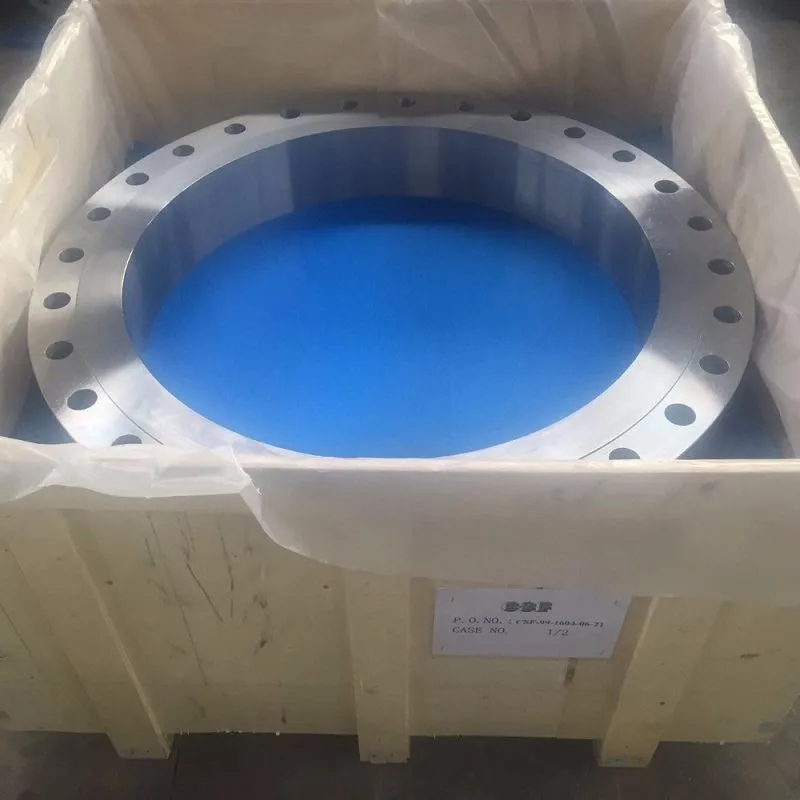
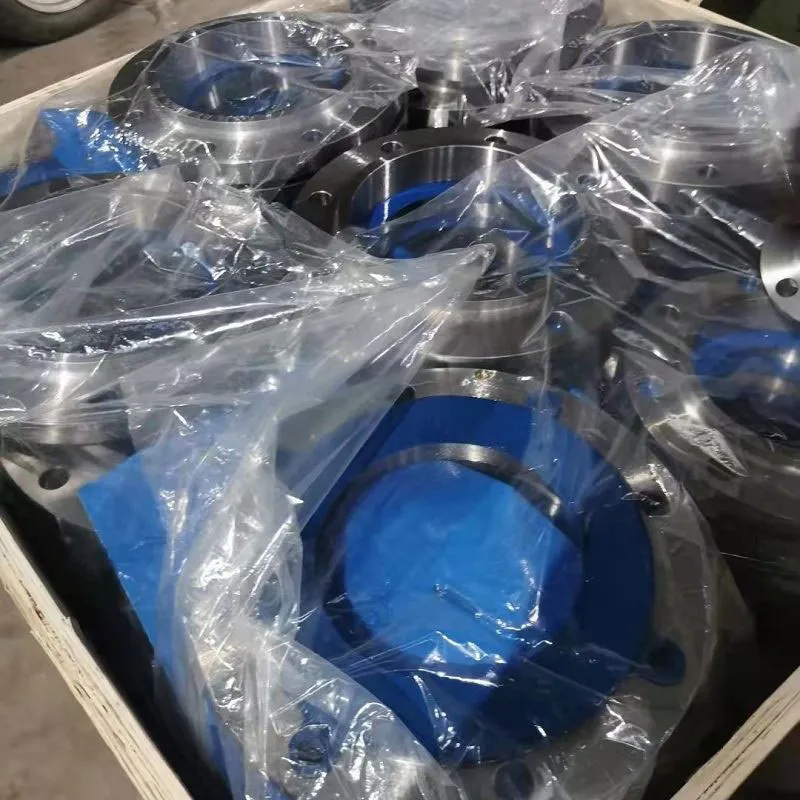
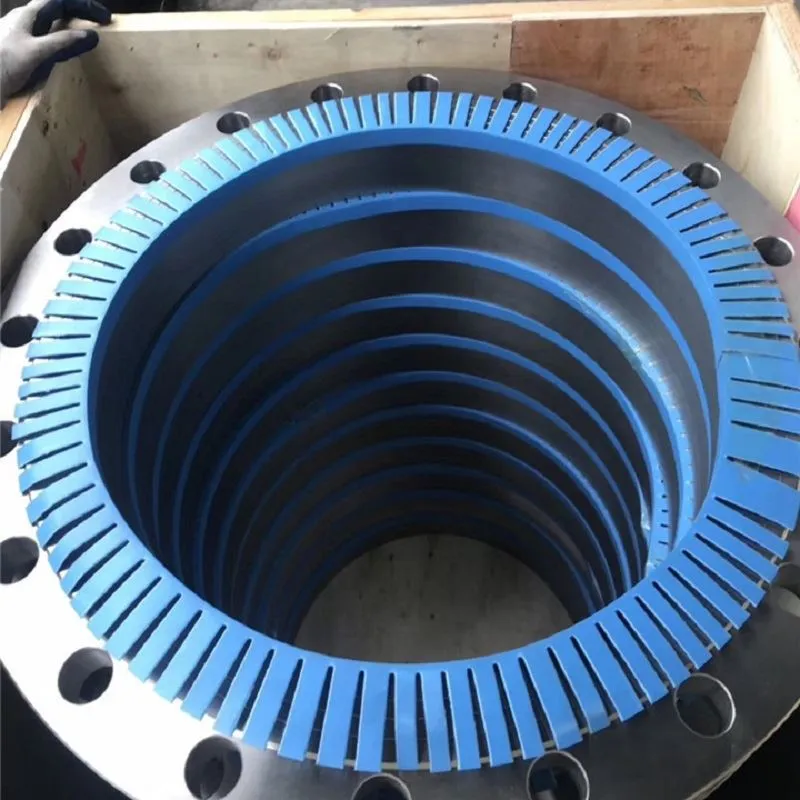
Separately, it is worth mentioning the importance of the original quality of the flanges themselves. Even a perfectly designed map will not save the connection if the geometry of the product is broken at the production stage. That is why reliable engineering bureaus and large customers are increasingly paying attention to manufacturers with a complete vertically integrated cycle. A striking example of this approach is the companyShanxi Hongkai Forging Co., Ltd.. Based in Dingxiang County, a key industrial center for the forging industry in China, the organization operates three in-house facilities covering the entire route from primary forging to final packaging. Their products, which include six main types of forged flanges (from slip-on to butt-weld grades 150-2500), are manufactured to strict compliance with international standards DIN, ANSI B16.5, ASME, EN and GOST. Having our own right to import-export operations and a multi-level quality control system (including physical and chemical tests and geometry verification) guarantees that the flange received for installation will have stable mechanical properties and accurate dimensions in the range from DN15 to DN4000. This is especially critical for projects in the oil, gas and energy industries, where the slightest deviation in the plane of the sealing surface can negate all efforts to tighten correctly.
Comparison table of tightening control methods
| Parameter | Torque control (Traditional) | Steering angle control (Advanced) | Hydraulic tensioners (For large diameters) |
|---|---|---|---|
| Accuracy of axial force generation | Low (±25%) due to the influence of friction | High (±10%) subject to accurate marking | Very high (±5%) |
| Dependence on thread condition | Critical | Moderate | Minimum |
| Implementation cost | Low | Average | High |
| Applicability in cramped conditions | High | Medium (requires room to turn) | Low (requires access from all sides) |
| Recommendation for 2026 | Only for secondary units up to DN 50 | Standard for most industrial applications | Mandatory for flanges DN 400 and above, high-pressure systems |
Economic aspect and service market in the Russian Federation
Let's talk about money. The development of a high-quality technological map is not a free service. If you order it from a specialized engineering bureau, the price in 2026 varies from 15,000 to 50,000 rubles per unit size, depending on the complexity and class of responsibility. Cheap? It might seem so. But compare this with the cost of replacing a gasket in a running production facility with the line stopped.
The market for installation of flange connections in Russia is being transformed. Companies are appearing that offer not just “tightening the nuts,” but a comprehensive “turnkey” service: from the development of design documentation (design documentation) to the final report with photographic recording and telemetry data. Such contractors are more expensive - their hour of work can reach 5,000-8,000 rubles, but they provide a guarantee on the tightness of the unit for up to 2 years. This is a fundamentally new level of trust between the customer and the contractor.
As for equipment and materials, the price situation remains volatile. Domestic manufacturers of torque tools offer worthy alternatives to the bygone Western giants. However, in the segment of flange connections themselves, there is a growing interest in direct contracts with proven foreign factories capable of providing a full cycle of quality control. Companies like Shanxi Hongkai Forging LLC demonstrate how favorable logistics locations and the availability of their own heat treatment and machining capabilities allow them to supply products to Russia, the CIS countries and Europe without intermediaries, while meeting strict deadlines and customer technical requirements. Their experience working with projects in the oil, gas and petrochemical sectors confirms: reliability begins not at the construction site, but in the workshop where the part is born.
Where to find reliable suppliers and performers?
Finding a performer now resembles a minefield. Many fly-by-night companies offer services at dumping prices, using unqualified personnel and expired tools. How to distinguish professionals?
Request examples of completed work with hidden work certificates. A true pro always keeps a journal.
Check the availability of your own fleet of certified instruments. If the team has one key for everyone and there are no certificates of verification, run away from them.
Find out whether they work according to their own technological maps or are ready to adapt to your standards. The flexibility of thinking of engineers is an important indicator.
It is also worth paying attention to educational centers. In 2025-2026, several large technical universities and training centers launched advanced training courses on the topic “Modern methods for assembling detachable joints.” A certificate of this type received by the installer is a strong argument in favor of hiring this particular team.
Hidden threats and “anti-tips”
And now something that is usually not written about in advertising brochures. The main threat to a modern technology map is its excessive complexity. Theoretical engineers love to complicate things. They add dozens of inspection points that require special equipment that is not available on the shop floor. Result? Workers simply ignore the map because it is physically impossible to complete it on time.
The card must be viable. If it takes two hours to complete one item, but the process technology takes 15 minutes, the map is incorrect. It is necessary to either change the technology or simplify control. Sometimes a simple visual inspection by an experienced technician is more effective than trying to force an expensive sensor into a tight well.
Another problem is “digital noise”. Monitoring systems generate terabytes of data. Who analyzes them? Often no one. Data accumulates on the server until an accident occurs. Then a frantic search for reasons begins. Only information that is interpreted in real time has value. If your system does not send an alert to the site foreman when the tightening torque deviates by more than 5%, it is useless.
And one last thing. Don't blindly trust automation. Sensors can lie. The software may be buggy. Human experience, the nose of an old installer who hears the “wrong” sound when tightening, is still the most reliable filter. Technology should help people, not replace their brains.
Forecast for the development of standards until 2030
Where is the industry heading? I assume that in the next 3-4 years the concept of “technological map” will be transformed into a “digital recipe”. This will be a dynamic file that changes depending on environmental conditions received from IoT sensors and the characteristics of a particular bolt batch (yes, in the future, each bolt may have its own digital passport with individual mechanical properties).
Rostechnadzor is expected to tighten requirements. It is likely that mandatory digital certification of each critical flange connection will be introduced before putting the facility into operation. Without uploading tightening data to the state register, commissioning work simply will not be signed.
We can also expect to see an increase in the popularity of boltless connections and new types of clamps for certain pressure ranges, which can reduce the amount of traditional flanging work by 20-30%. But we won’t be able to completely abandon bolts for a long time. This method, proven over centuries, is too universal and reliable.
In conclusion, I want to say: a technological map is not a bureaucratic obstacle. This is a survival guide for your equipment. Treat it wisely, taking into account the real conditions of Russian production, climate and human factors. Don't chase buzzwords, chase reliability. Because when a pipe bursts at three o’clock in the morning when the temperature is minus forty, no beautiful graphs in the presentation will help you. Only a properly tightened bolt on a perfectly manufactured flange will help.