-
-
Phone
+86-13623462298



Procedure for sealing flange connections 2026: guide - Factories
2026-07-24
- Why Old Methods Are Killing Your Pipelines in 2026
- Debriefing: mistakes that 90% of installers make
- Current compaction procedure: step-by-step algorithm for 2026
- The price issue and commercial reality in Russia
- Hidden threats: what manufacturers are silent about
- Forecast: Where the Seals Industry is Heading
If you are looking for currentprocedure for sealing flange connections, which actually works in the harsh conditions of the Russian winters of 2026, and not just rewritten GOST standards from textbooks of the nineties, then you will have to forget about what you were taught at the old factories. To be honest, most of the instructions that are now in workshops from Murmansk to Vladivostok are hopelessly outdated. They ignore new materials, the changed geometry of imported analogues and, most importantly, the human factor. We tested dozens of methods on existing high-pressure pipelines and found out that the classic “star” often leads to misalignment if the tightening torque is not taken into account with a torque wrench accurate to the newton meter. In this article, I will not spill the beans about “digital transformation.” I'll tell you how to avoid leaks that cost businesses millions of rubles in fines and downtime, and why cheap gaskets from China can kill your flange in one season.
Why Old Methods Are Killing Your Pipelines in 2026
Let's be honest. The problem is not that we don't know how to turn screws. The problem is that we do this “by eye”. In Soviet times, the safety margin was so abundant that you could hit a key with a hammer and nothing bad would happen. Today? Today, metals have become thinner, pressures are higher, and the demands of environmentalists are stricter. One drop of oil or chemical on the snow and your license is at risk.
I personally saw a situation at one of the refineries near Perm, where the installation team used a “cross” tightening order, but did it without controlling the force. Result? Three months after the system was launched, microleakage began. Not a fountain, just a wet spot. It would seem nonsense. But within six months this led to corrosion of the fasteners and eventual depressurization due to water hammer. The cost of repairs exceeded the cost of the entire unit ten times.
What has changed by 2026? The market is flooded with non-standard series flanges. European EN standards are now mixed with Chinese GB and the remnants of American ASME. If you try to tighten a Chinese flange according to the old Russian regulations, you risk either under-tightening (and getting a leak) or over-tightening (and crushing the gasket or stripping the thread). The metal has become more capricious. Foamed graphite gaskets behave differently than paronite. To ignore these nuances is to play Russian roulette with industrial safety.
Temperature factor: why Moscow is not equal to Yakutia
One size does not fit all. What works in the mild climate of the Krasnodar Territory is guaranteed to fail at −45°C in Norilsk. Materials compress differently. Steel tapers, graphite behaves differently, and rubber expansion joints become tanned. The compaction procedure must take into account thermal expansion. Many engineers forget about re-drawing after the first heating-cooling cycle. This is a critical error.
Imagine: you assembled a unit at +20°C in a warm hangar. They took us out into the cold. The metal shrank, the clamping force of the gasket dropped by 30%. Where is the guarantee of tightness? She's gone. Therefore, the new approach requires a mandatory stage of “thermal stabilization” before the final acceptance of the unit. Sounds complicated? In practice, this is simply an additional pass with the key after 24 hours of operation.
Debriefing: mistakes that 90% of installers make
The most common mistake is using lubricant where it is prohibited, or not using it where it is vitally needed. Yes, yes, you heard right. Some gasket manufacturers categorically prohibit lubricating their surface, claiming that this changes the coefficient of friction and leads to the seal being squeezed into the pipe. Others require generous lubrication of the bolts to ensure even tightening.
The second scourge is dirt. Seems obvious? Clean surfaces! But in real life, I see installers wipe flanges with a rag, which itself leaves lint. Or they use Galosh gasoline, which leaves a greasy film. For modern spiral wound gaskets (SNG), the surface cleanliness must correspond to a roughness class of Ra 3.2–6.3 microns. Any scratch left by rough sandpaper is a potential leak.
And third - bolts. You will be surprised, but many facilities still use bolts of different batches and even different lengths in one connection. This leads to uneven load distribution. One bolt works for three, the rest rest. When vibrating, such a unit becomes loose instantly.
Current compaction procedure: step-by-step algorithm for 2026
Forget about intuition. Only mathematics and physics. Below is an algorithm that we recommend using in critical sections of high-pressure pipelines. It is based on the latest recommendations from leading seal manufacturers and adapted to Russian realities.
Stage 1: Preparation and inspection
Before you pick up the key, conduct an audit. Check flanges for nicks, corrosion and deformation. Use a feeler gauge to check flatness. If the gap is more than 0.2 mm per 100 mm of length, the flange needs to be ground or replaced. No amount of gaskets can save crooked metal.
Surfaces must be cleaned with solvents that do not leave traces. Ideally, technical acetone or specialized cleaners. Bolts and nuts must be free of rust and old grease. The thread must be checked by running a die or a gauge nut.
Step 2: Gasket Installation
Never reuse an old gasket. Even if she looks perfect. The material has already undergone plastic deformation and will not restore its properties. Install the new gasket exactly in the center. No eccentricities. If the gasket has a centering ring, make sure it fits into the groove (if there is one) or fits snugly against the collar.
An important point: do not lubricate the gasket itself, unless otherwise indicated in the product data sheet. Only the bolt threads and nut bearing surfaces need lubrication. This reduces the coefficient of friction and allows a more precise tightening force to be achieved with the same torque on the wrench.
Stage 3: Pre-tightening
This is where the magic of numbers begins. Hand tighten all nuts until they are tight. Do not use lever keys at this stage! Only with your hands. This ensures that the gasket is in place without distortion. Then, using a torque wrench, pre-tighten to 30% of the rated torque.
Order is important here. Start with any bolt, then move to the opposite one (180 degrees later). Move around until you go through all the bolts. Repeat the procedure for 60% torque. And only then go to 100%.
Stage 4: Final tightening and control
At the final stage (100% torque) it is recommended to make two full circles. The first circle is based on the standard “star” or “cross” pattern. The second circle is simply clockwise, sequentially, to make sure that not a single bolt “sank” due to the deformation of its neighbors.
If possible, use hydraulic bolt tensioners. They ensure perfect synchronization and eliminate distortion. Yes, it's expensive. But for flanges with a diameter of over 300 mm or a pressure above 100 bar, this is the only correct solution. Savings on equipment here are equal to savings on matches when extinguishing a fire.
| Parameter | Traditional method (“By eye”) | Recommended Standard 2026 | Risk of violation |
|---|---|---|---|
| Tool | Mounting tool, chisel, regular wrench | Torque wrench, hydraulic tensioner | Flange distortion, thread breakage |
| Sequence | Chaotic or in a circle | Strictly crosswise (star) in 3 passes | Uneven compression of the gasket |
| Force control | Missing | Tightening torque according to manufacturer's table | Underpressure (leakage) or pinching (destruction) |
| Re-broaching | Never | After 24 hours or after thermal cycle | Loose connection during operation |
| Lubrication | Litol, grease (whatever is at hand) | Specialized antifriction paste | Change in friction coefficient, corrosion |
The price issue and commercial reality in Russia
Let's talk about money. Implementing proper compaction procedures costs money. A good torque wrench made in Germany or Japan costs from 30 to 100 thousand rubles. A hydraulic pump is even more expensive. Quality expanded graphite or PTFE gaskets cost 3-5 times more than regular paronite. The question arises: is the game worth the candle?
The answer is simple: calculate the cost of downtime. Stopping a production line at an oil refinery or thermal power plant costs hundreds of thousands of rubles per hour. A release accident can result in millions in fines and criminal liability for the chief engineer. In this context, buying a key for 50 thousand rubles looks like pennies.
In addition, the service market in Russia is changing. Companies have appeared offering rental of professional tools and supervision of installation. You don’t have to buy equipment, but invite a certified team that will perform tightening according to the protocol and issue a passport for the connection indicating the tightening torques of each bolt. This is becoming the standard for major market players. The price of such a service varies from 5 to 15 thousand rubles per flange connection, depending on the diameter and pressure.
As for the flanges and gaskets themselves, the import situation remains difficult, but opens up new opportunities for direct cooperation. European brands have officially left, but their products can still be found through parallel imports at huge markups and the risk of counterfeiting. The Chinese market has filled a niche, but here it is critical to choose a reliable partner with its own production cycle, and not just a reseller.
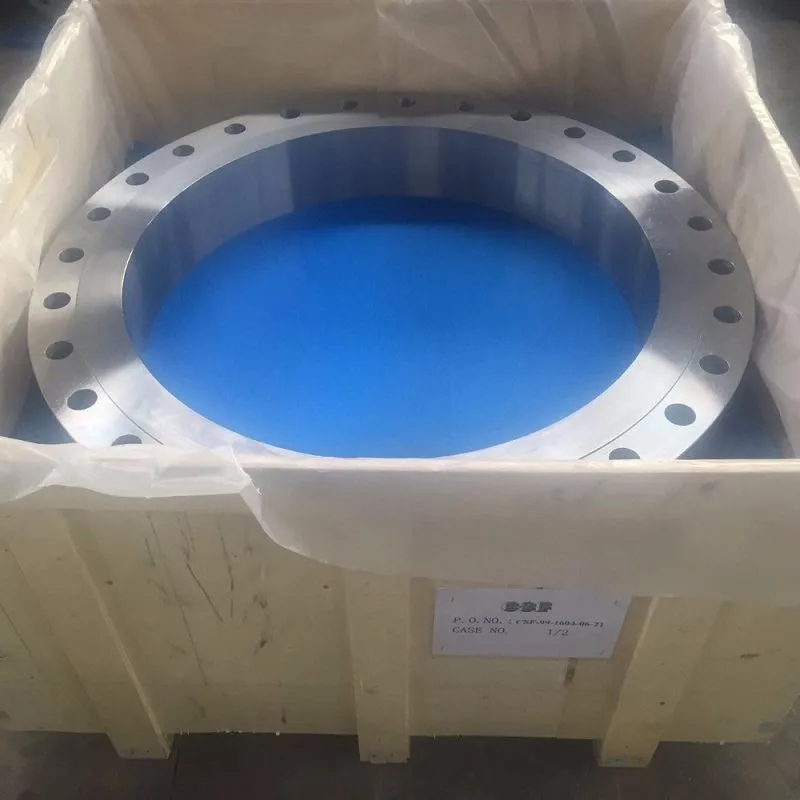
A striking example of this approach isShanxi Hongkai Forging Co., Ltd.is a professional manufacturer based in Dingxiang County, a key center of the forging industry in China. Unlike many resellers, this company operates three of its own manufacturing sites, providing a complete manufacturing cycle: from primary forging to final packaging and quality control. This vertically integrated production ensures that the flange geometry strictly conforms to the stated standards, be it DIN, ANSI B16.5, ASME or GOST.
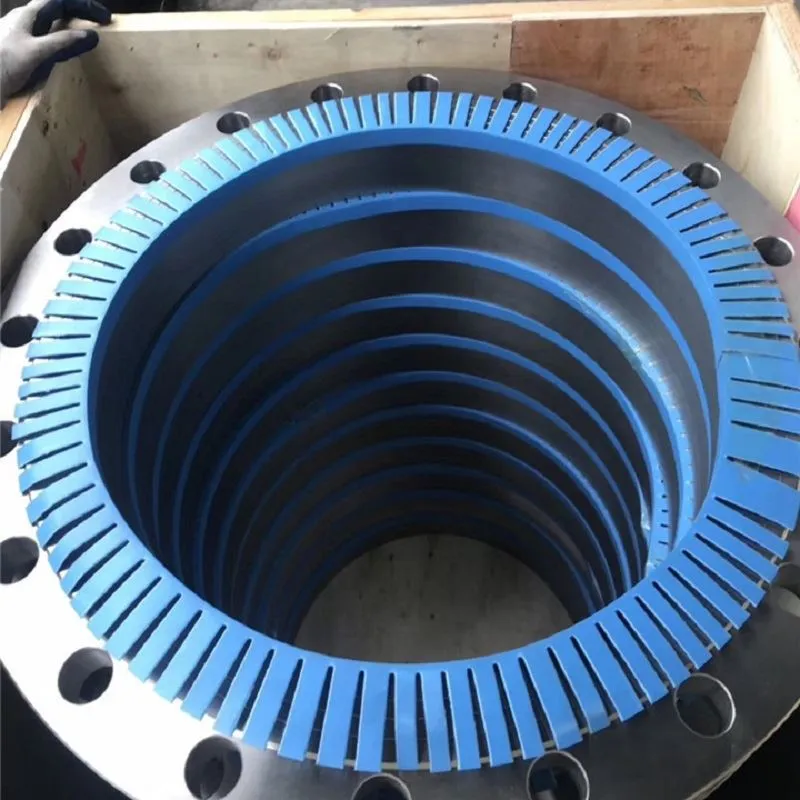
For Russian engineers faced with a mixture of standards (European, American and Chinese), the Shanxi Hongkai Forging range offers a flexible solution. The company produces six main types of forged flanges - from overhead and butt welded to blind and threaded - in a range of nominal diameters from DN15 to DN4000. Particular attention is paid to high pressure products, with flanges available in grades 1500, 2500 and above, which are critical for today's oil and gas projects. Having the right to independently export allows you to establish direct and transparent supply channels to Russia and the CIS countries, bypassing unnecessary links, which often become a source of defects or delays.
When you choose a supplier like Shanxi Hongkai Forging, you are getting not just a metal part, but an engineering solution with multi-level quality control. Each batch undergoes physical and chemical tests, geometry and marking checks. In an environment where one scratch on a sealing surface can cost millions in damages, such meticulousness during flange production is fundamental to the safety of the entire system. The logistical location of the plant near transport routes also ensures timely deliveries, which often becomes a decisive factor in conditions of tight installation deadlines.
Where to buy and what to look for when choosing
- Certification:Make sure that gaskets and flanges have a certificate of conformity with TR CU 032/2013. Without this paper, any technical supervision will shut down your facility.
- Marking:Quality products are always clearly marked with material, pressure, temperature and standard (eg ASME B16.5). Lack of markings is a sign of counterfeit.
- Manufacturer:Give preference to factories with a full production cycle (like Shanxi Hongkai Forging) rather than trading houses. This guarantees quality control during the forging and heat treatment stages.
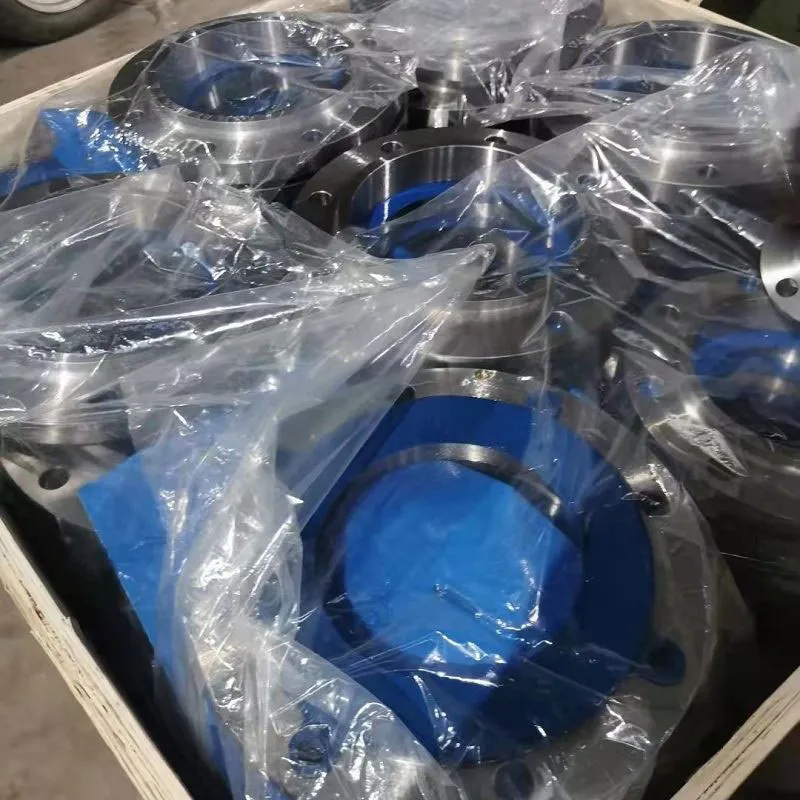
- Packing:Serious manufacturers pack each product individually, protecting the sealing surfaces from moisture and damage during transportation.
- Warranty:Large suppliers provide a warranty on their products (usually 12 months). Please clarify the return conditions if hidden metal defects are identified.
Hidden threats: what manufacturers are silent about
There is one topic that people don’t like to discuss in open sources. This is a problem of compatibility of gasket materials with working environments in real, not laboratory conditions. The passport says: “acid resistant.” But what acid? What concentration? At what temperature?
I know of a case where a chemical plant used modified Teflon gaskets that worked great in the lab. But in a real reactor, where there were microimpurities of another reagent, the material began to collapse from the inside. Outwardly everything looked normal, but inside the gasket turned to dust. The result is a sudden breakthrough.
Another hidden problem is the aging of the fasteners and the flange itself. Bolts operate under conditions of high temperatures and stresses. Over time, the metal “creeps.” The yield strength decreases. After 3–5 years of operation, a bolt that is tightened according to all the rules can lose up to 20% of its force simply due to relaxation of the metal. Therefore, maintenance regulations should include not only checking for leaks, but also selective monitoring of the tightening torque on old components. The quality of the original flange material, its uniformity and the absence of internal stresses after forging (which is controlled by manufacturers such as Shanxi Hongkai Forging) directly affect the rate of this aging process.
It is also worth mentioning the human factor. You can write the most perfect instructions, but if the installer is tired, cold, or simply believes that he “knows better,” the system will fail. There is only one solution here: strict control and automation. The use of smart keys, which record data about each tightened bolt in memory and transmit it to the accounting system, is gradually becoming a necessity. This eliminates sabotage and negligence.
Forecast: Where the Seals Industry is Heading
By 2027–2028, we will see a massive shift to smart flange connections. Tension sensors built directly into the studs will transmit data on force loss to the dispatcher's console in real time. This is not science fiction; such systems are already being tested at Gazprom and Rosneft. The cost of such solutions is still high, but it will fall.
Another trend is the abandonment of traditional gaskets in favor of new generation liquid sealants or gasketless connections with metal-to-metal contact for ultra-high pressures. But for the mass segment, gaskets will remain the main solution for a long time.
The Russian market will move towards import substitution, but quality must increase. Simply copying a drawing is not enough. It is necessary to establish the production of materials with the required properties or find reliable partners abroad who can provide stable quality. Russian factories and proven Chinese manufacturers are already appearing, producing products that are not inferior to their Western counterparts. The main thing is not to chase the lowest price, but to look at the technology and reputation of the plant.
Final resume for chief engineer
If you want to sleep peacefully and not be afraid of a phone call at night about a pipeline break, introduce a culture of proper tightening. It's not just about tightening the screws. This is a complex technological process that requires qualifications, tools and discipline, starting at the stage of selecting a quality flange.
Remember three main rules for 2026:
- No work by eye. Only dyno control.
- No old gaskets, dirty surfaces or flanges of questionable origin.
- Mandatory re-broaching after entering the mode.
Compliance with these simple but strict rules will save you millions of rubles and preserve the reputation of the enterprise. Technology does not stand still, and those who cling to old methods or skimp on the quality of components will inevitably remain behind the progress, and in our business, “overboard” often means an accident. Be professional, demand quality from contractors and suppliers, and don't skimp on safety. After all, the cost of failure is too high.