-
-
Phone
+86-13623462298



Pipe with flange thread: prices 2026, factories and suppliers
2026-07-27
- Why standard threading will become a headache by 2026
- Anatomy of pricing: what to expect from the market in 2026
- Geography of suppliers: where to look for a reliable partner
- Technical nuances: conical or cylindrical?
- Practical guide: how not to lose money when purchasing
- The future of the market: forecasts and fears
To be honest, when I first saw the estimate for replacing risers in a new building in the south-west of Moscow, I had a desire to simply burn this document. The numbers didn't match reality even a penny. Managers of large metal depots like to play hide and seek with the final cost, especially when it comes to specific items likeflange threaded pipe, where the price of 2026 has already begun to dictate new rules of the game for all market participants - from the giants of the oil and gas industry to private plumbers trying to survive in conditions of total inflation and logistics collapse.
Do you think it's just a piece of metal with threads? You are wrong. In the current realities of the Russian industrial sector, this detail has become a litmus test for the quality of supplies. We are accustomed to the fact that “GOST is GOST,” but let’s be honest: what comes to the warehouse today under the guise of premium products often requires additional mechanical processing, which eats up your entire margin. I spent the last three months visiting production facilities from Chelyabinsk to Tula, and what I saw made me rewrite this article three times.
Why standard threading will become a headache by 2026
The market situation has changed radically. If five years ago we could easily order a batch of pipes from a European supplier or choose from a dozen proven Russian factories with ideal geometry, now the landscape is completely different. Sanctions, the departure of Western brands of thread cutting equipment and the shortage of high-quality alloyed raw materials have led to a paradoxical phenomenon:flange threaded pipehas become a product with unpredictable characteristics even within the same batch.
The problem is not only the price. Yes, the cost has increased, and we will talk about this separately. The problem is that many manufacturers, trying to reduce the cost of the process, began to save on the finishing stage. The carving turns out “raw”. What does this mean for you as a customer or installer? This means that when you tighten a flange connection, in 8 cases out of 10 you will get either misalignment or microcracks in the stress zone. And in winter, when the temperature in the pipeline fluctuates, such connections become time bombs.
I spoke with the chief engineer of one of the largest petrochemical complexes in Tatarstan. He admitted to me on condition of anonymity that last quarter they had to reject almost 30% of the supply of pipes with finished threads. Cause? The thread pitch does not comply with the stated standard by only a few microns. For the average person, this is nonsense. For a high pressure system - a disaster. Therefore, when choosing a supplier in 2026, you need to look not at a beautiful brochure, but at the calibration certificates of their machines.
Hidden defects that sellers are silent about
There is one nuance that is rarely discussed in open sources, but which is well known to those who work “in the field.” We are talking about the so-called metal fatigue effect in the transition zone from the smooth pipe to the threaded part. During mass cutting, especially if a worn tool is used (and this now occurs everywhere due to problems with the import of carbide inserts), the structure of the metal is disrupted.
Visually the pipe looks perfect. Shine, smooth turns, no burrs. But under load it begins to “float”. The flange, which should fit tightly, begins to undercut. And the most annoying thing is that it is almost impossible to file a claim with the supplier. They will refer to incorrect installation, an incorrectly selected seal, or water hammer in the system. Proving a manufacturing defect after the fact is a fantasy task.
Therefore, my advice is simple and cynical: never take the cheapestpipe with flange thread. In 2026, a low price is an almost guaranteed sign of recycled scrap or obsolete equipment. Savings of 15-20% at the start will result in losses of 200% on repairs and downtime.
Anatomy of pricing: what to expect from the market in 2026
Let's move on to the most painful issue - money. Predicting prices in Russia is now a thankless task, but certain trends have already crystallized. The cost of ferrous metals fluctuates depending on the ruble exchange rate and internal export quotas, but the price of a finished product with mechanical processing is growing at a faster pace.
Why is this happening? Logistics. Shipping raw materials to the factory, the energy-intensive threading process (which requires precision machines and skilled operators), packaging and storage have all become more expensive. In addition, many factories are switching to working with prepayment, shifting the risk of cash gaps to the buyer.
If you are planning to purchase a large batch, forget about the prices of price lists from two years ago. The real value is formed at the moment of the transaction and depends on the volume. However, so that you can get your bearings, I have summarized the data based on market averages for the beginning of 2026. Please note: these are ex-factory prices, excluding delivery and VAT, which may also come as a surprise if your supplier works according to a simplified scheme.
| Pipe diameter (DN) | Thread type | Average price per meter (RUB) | Dynamics by 2025 | Risks when purchasing |
|---|---|---|---|---|
| 50 mm | Conical | 1 200 – 1 450 | +18% | High risk of geometry defects |
| 80 mm | Cylindrical | 2 100 – 2 400 | +22% | Shortage of quality rolled products |
| 100 mm | Conical | 3 500 – 3 900 | +25% | Long production times |
| 150 mm | Weld weld + thread | 5 800 – 6 500 | +30% | Critical dependence on steel |
As you can see, the price range is significant. And it will only expand. Factories that were able to modernize their machine fleet and arrange supplies of high-quality raw materials keep their prices high, but provide a guarantee. Small workshops dump, but the quality of their products is Russian roulette.
Factor of exchange rate and import substitution
The currency factor cannot be ignored either. Although we are talking about the domestic market, the price of steel always correlates with world quotations. The weakening of the ruble automatically increases the cost of any metal products. But there is also the other side of the coin: import substitution. Previously, we bought expensive German or Italian pipes with perfect threads. Now their place is taken by Russian analogues and products from friendly countries.
With the Russian product, everything is clear: there are problems with quality, but there is also the availability of service. But with products from China or Turkey, the situation is twofold. Yes, they are cheaper than their European counterparts. But are their thread standards suitable for our GOST flanges? Often you have to use adapters or modify the seats on site, which eliminates all savings. I have seen cases where the Chinese thread simply did not screw onto the Russian flange without the use of brute force, which is unacceptable.
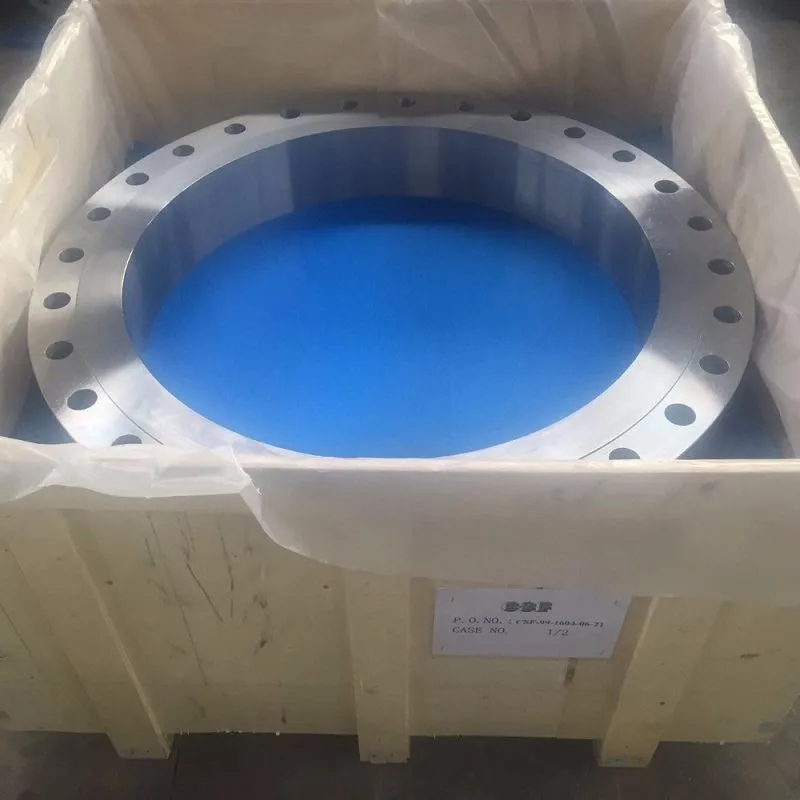
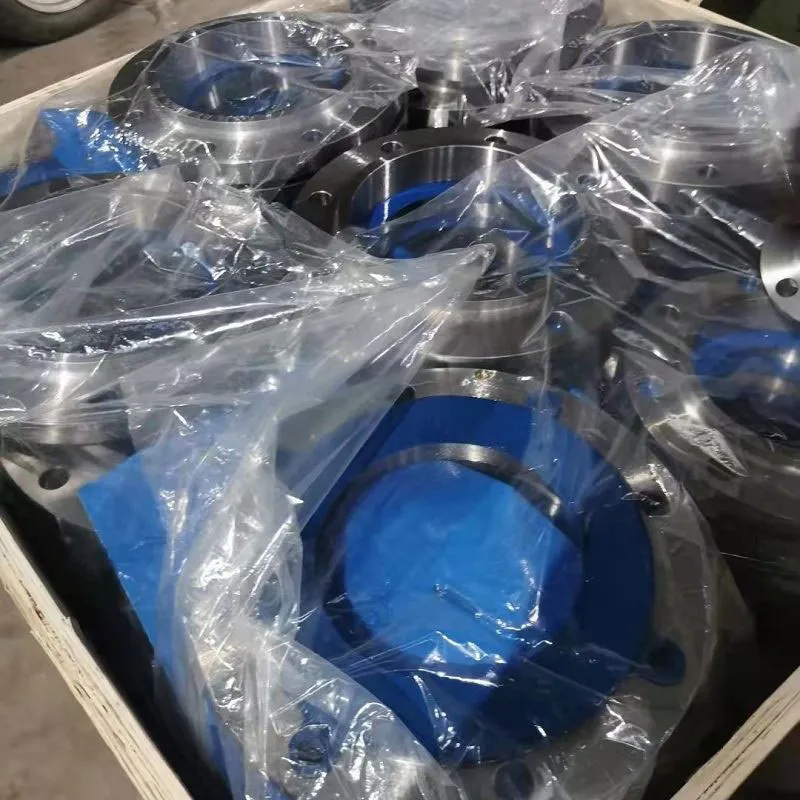
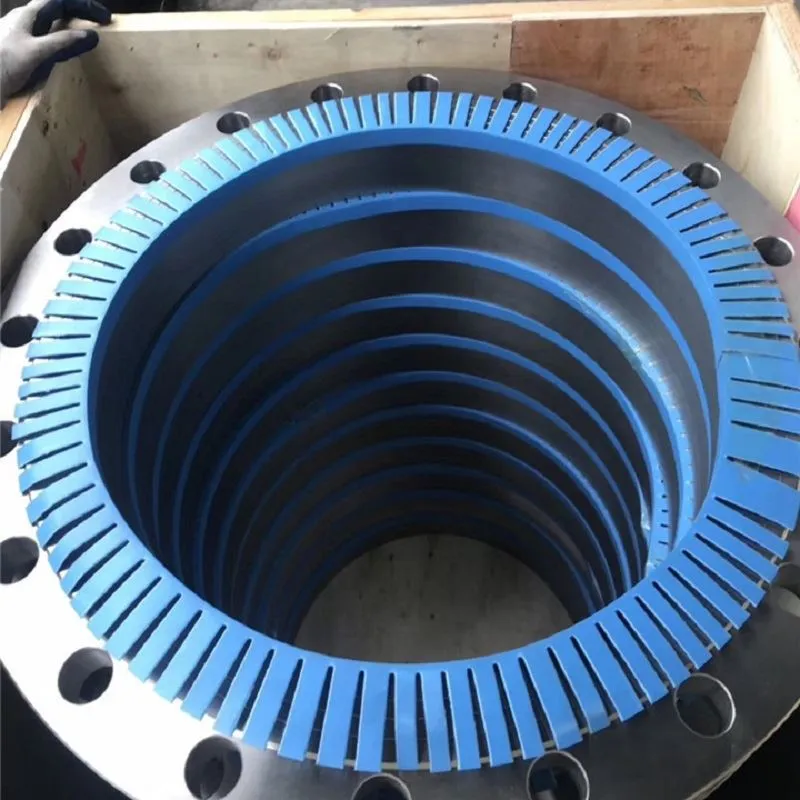
However, one should not equate the entire Asian market. Among Chinese manufacturers, there are companies that have relied on strict compliance with international standards, including GOST, understanding the specifics of the Russian market. A striking example of this approach isShanxi Hongkai Forging Co., Ltd.. Based in Dingxiang County, a key center for forging and pressing production in China, the company operates three of its own sites, providing a full cycle from forging to finishing packaging. Their peculiarity is that they do not just export goods, but have direct rights to import-export operations, which ensures transparency of transactions.
Why is this important in the context of our compatibility problem? Shanxi Hongkai Forging produces a wide range of flanges (applied, welded, threaded, blind) strictly according to DIN, ANSI B16.5 standards and, critically, according to GOST specifications. They work with ranges from DN15 to DN4000 and offer products in pressure classes from 150 to 2500. Having their own physical and chemical testing laboratory and multi-level quality control at all stages allows them to guarantee the same thread geometry that dumping competitors so often lack. For projects that require oil and gas industry-level reliability, finding a partner with similar vertical integration and an understanding of our regulations becomes a priority over simply a low price.
Geography of suppliers: where to look for a reliable partner
Russia is huge, and logistics leverage plays a decisive role in the final cost. Orderpipe with flange threadto Vladivostok from Tula may not be economically feasible, unless we are talking about unique grades of steel. Let's look at the main clusters of manufacturers.
Ural region.Traditional frame and metal forge. The largest pipe factories are located here. Pros: powerful production base, ability to order large volumes, strict quality control control at large enterprises. Cons: high workload, long shipment times, bureaucracy. If you need a batch of 100 tons, this is the place for you. If you need 50 pipes “yesterday”, they will most likely refuse or charge an exorbitant price for the urgency.
Central Russia (Tula, Moscow, region).There are more small and medium-sized enterprises specializing in machining here. They are more flexible and respond faster to non-standard orders. This is where you can most often findpipe with flange threadin small batches. However, quality control can be poor. Mandatory incoming inspection of each batch using thread gauges is recommended.
South of Russia.A developing cluster focused on the oil and gas sector. The quality ranges from excellent to downright poor. There are many new players who are trying to fill the niche of departed Western brands. Prices may be more attractive, but the reputation has not yet been established. You should work with them carefully, requiring extended warranties.
International hubs (China).As mentioned above, this region is heterogeneous. Large integrated production facilities, such as those in Shanxi province, offer an alternative to European quality at a competitive price, but require careful verification of documentation for compliance with GOST. Logistics here is longer, but with proper planning and working with direct manufacturers who have experience in supplying to the Russian Federation and the CIS, risks are minimized.
What to look for in documents?
When you receive a quote, don't just look at the total in the "Total" column. This is a trap for the inattentive. Ask the manager for a quality certificate for a specific steel melt. Check the steel grade for compliance with your specifications. To work with aggressive environments or at low temperatures (and we have long winters), ordinary St3 may not be suitable - you need steel with a high manganese content or alloyed.
Also pay attention to the terms of the warranty. A good supplier is not afraid to stipulate in the contract liability for hidden thread defects for at least 12 months of operation. If they tell you: “The warranty is only valid at the time of shipment from the warehouse,” run away. This means they themselves are not confident in their product.
Technical nuances: conical or cylindrical?
This issue is controversial even among experienced engineers. Which thread is best for a flange connection? The answer depends on the specific task, but let's figure it out without further ado.
Tapered thread.Ensures tightness due to tight contact of the turns. Additional compaction is often not required or minimal is required (flax, FUM tape). Ideal for systems where vibration is possible. But! It is more demanding on manufacturing precision. The slightest deviation in the angle of the cone will result in the connection either not being fully tightened or jamming halfway. In 2026, given the wear and tear of equipment in many factories, the risk of defective tapered threads is higher.
Cylindrical thread.It does not provide a seal on its own. Requires the mandatory use of a gasket (paronite, rubber, metal) between the flanges. But it is easier to manufacture and less sensitive to small errors. For most civil and industrial heating and water supply systems, this is a more reliable option. You can always replace the gasket if a leak occurs. With tapered threads, repairs are more difficult.
My personal recommendation for projects in harsh climates is to use straight threads with quality metal spacers. This will give you a margin of safety during thermal expansion of the pipes. Leave tapered threads for cases where it is structurally impossible to install a gasket.
Flange compatibility issue
Another pain is mismatched flanges. You bought a threaded pipe, bought flanges, but they don’t fit together. Why? Because standards are changing. There is GOST, there is DIN, there is ANSI. Even within the framework of GOST, different factories may interpret tolerances differently. Before ordering a batch, be sure to request a drawing of the threaded part and compare it with the parameters of your flanges. It is better to spend an hour checking drawings than a week reworking a unit.
This is especially true when repairing old systems. Soviet-made flanges could have been installed there, which have their own wear and tear characteristics and tolerances. A new pipe with perfect threads may simply not fit into the old connection. In such cases, it is sometimes more profitable to order a thread cutting service on site or use adapter couplings than to try to push in something that cannot be pushed in.
Practical guide: how not to lose money when purchasing
Let's create a checklist of actions that will save your budget and nerves. This is a summary of my experience and the mistakes of my colleagues.
- Step 1. Needs audit.Do not order an extra 30% “with a reserve”. Metal is becoming more expensive, but it also needs to be stored somewhere. Plus, if the batch is defective, you will lose more. Calculate exactly, plus 5-7% for inevitable losses during installation.
- Step 2. Select a supplier.Search not in Yandex.Direct (the resellers are there), but through industry portals and recommendations. Call the factory directly. Ask: “Do you have your own carving production or do you outsource it?” If you go to the side, the risks increase. Check to see if they work with GOST standards and if they have their own quality control department.
- Step 3. Test purchase.Never order the entire volume from a new supplier at once. Take a trial batch of 5-10 units. Check them in the workshop, try to assemble the unit, conduct hydraulic tests. Only after this sign a contract for the main volume.
- Step 4. Incoming control.Buy a good thread ring gauge. This penny device will save you millions. Check every fifth pipe from the batch. If the defect exceeds 2-3%, return the entire batch. Don’t believe the words “this is normal, it will shrink during installation.” He won't sit down.
- Step 5. Fixing the conditions.The contract must clearly state: steel grade, thread type, accuracy class, acceptance conditions and liability for hidden defects. No verbal agreements with manager Petrovich.
The future of the market: forecasts and fears
What's next for us? To be honest, there is little optimism. The shortage of qualified turners and machine tool adjusters in Russia is becoming critical. Young people do not go to factories, old personnel are leaving. This means that the human factor will play an increasingly important role in product quality. There is automation, but it requires maintenance, which also becomes a problem.
I expect further market stratification. There will be a clear division into “premium” (expensive, reliable, with documents and a guarantee) and “economy” (cheap, risky, for temporary solutions). The middle segment, which used to be the most massive, will collapse. It will become unprofitable for manufacturers to maintain average quality: either you make it expensive and good, or cheap and whatever happens.
For the consumer, this means that saving will become more dangerous. Cheapflange threaded pipewill turn into a commodity for one-time construction projects that are given up and forgotten. For objects that are expected to last for decades, you will have to pay a premium for reliability. And rightly so.
You can also expect the popularity of on-site carving restoration and repair services to grow in popularity. Mobile teams with modern equipment will be in high demand. Why transport pipes thousands of kilometers when you can invite specialists who will cut the threads directly on site in compliance with all tolerances? This service is still expensive, but its market share will grow.
Final word
The rolled metal market in Russia is undergoing a complex transformation. The old rules have stopped working, the new ones have not yet been written in blood. In these circumstances, your main defense is competence and attentiveness. Don't rely on chance. Check, feel, test.
Remember: a pipe is not just iron. These are the arteries of your system. And if a blood clot in the form of a defective thread gets into them, the consequences can be fatal for the entire project. Цена ошибки в 2026 году слишком высока, чтобы рисковать ради сомнительной экономии. Выбирайте партнеров, которые готовы нести ответственность, будь то крупные российские заводы или проверенные международные производители с адаптацией под наши стандарты.
И последний совет: держите руку на пульсе. Следите за новостями металлургических гигантов, отслеживайте изменения в ГОСТах (они тоже меняются, хоть и медленно) и общайтесь с коллегами. Информация в этой сфере — такой же ценный ресурс, как и сам металл. Удачи в строительстве, и пусть ваши фланцевые соединения будут герметичными, как швейцарские часы, несмотря на все перипетии нашего нестабильного времени.