-
-
Phone
+86-13623462298



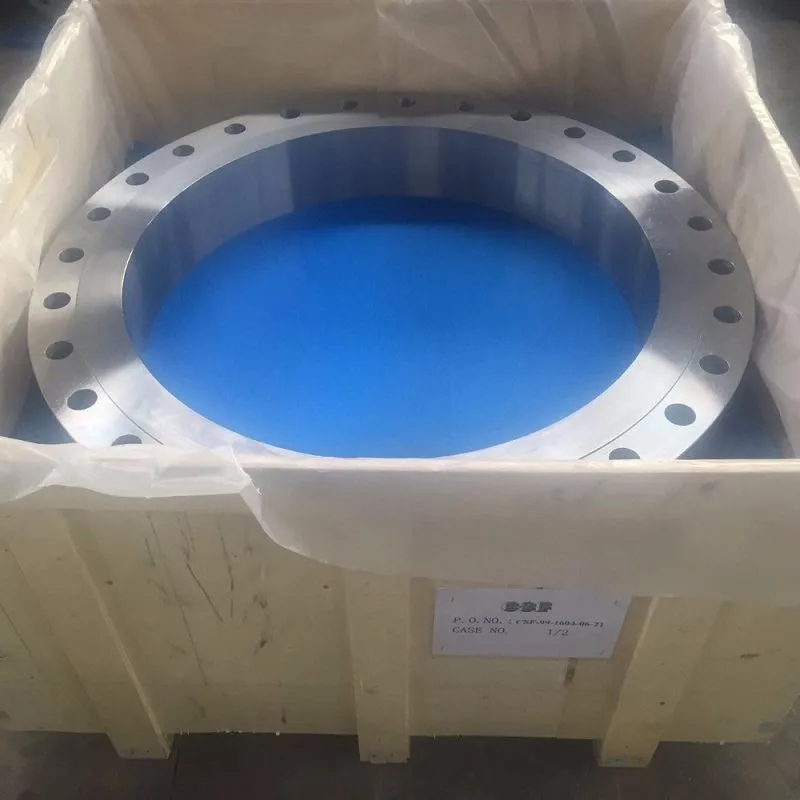
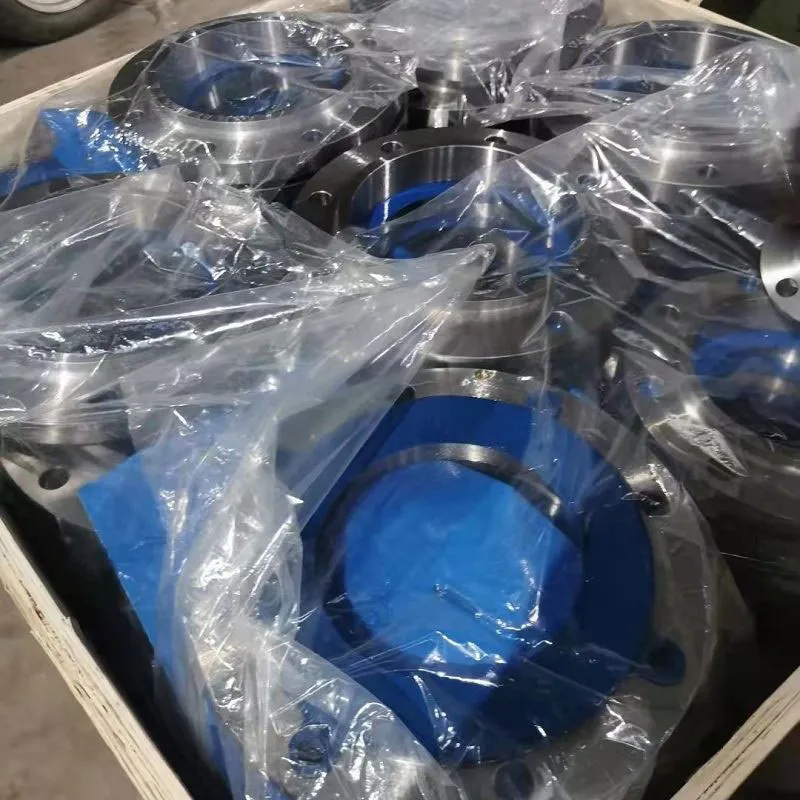
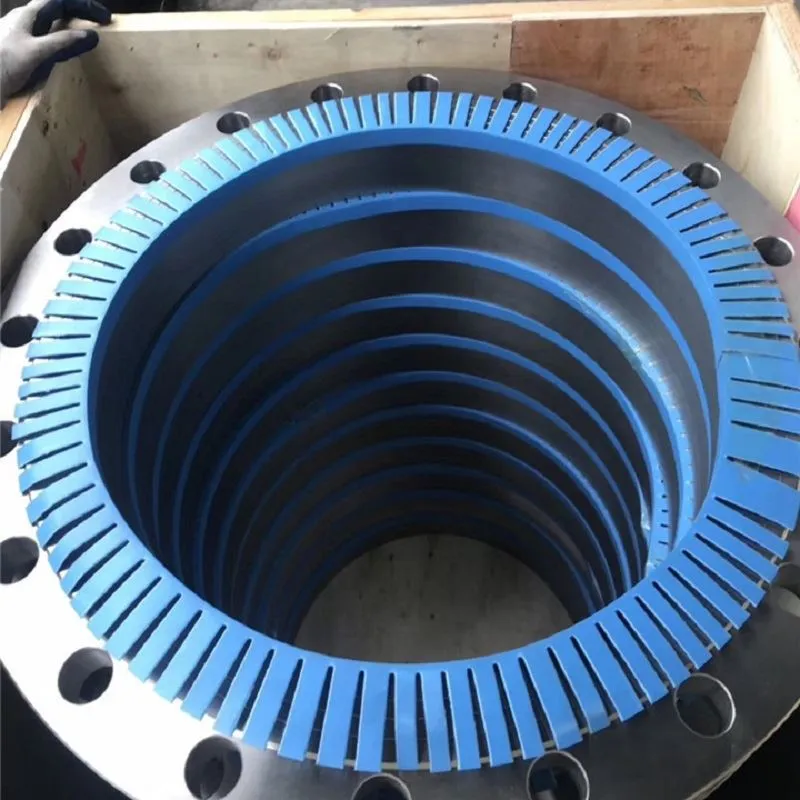
flange with stainless steel pipe: price from the factory
2026-07-27
Honestly, when was the last time I saw an adequate price list forflange with stainless steel pipe, the ruble has never made such somersaults as we are seeing now. The market has changed beyond recognition. What was considered a “premium import” just yesterday has today either disappeared from the shelves of Moscow warehouses or is sold for the price of an airplane wing. But there is another side to the coin: buying directly from the factory. It's not just an SEO buzzword, it's the only way for a midsize enterprise chief engineer to survive in 2026. We stopped paying for the brand and started paying for the metal. And guess what? It hurts, but it's necessary.
Why “European quality” became a myth, and the factory flange became a reality
Let's take off the rose-colored glasses. Just five years ago, the phrase “German quality” was a guarantee that your pipeline would not leak even if there was a pressure surge in the system. Today the situation is radically different. Logistic chains are broken. Service centers of European brands in Russia are closed or operate in “black box” mode. You buy an expensive fitting, and six months later it turns out that the warranty does not apply to it because “the official distributor has ceased operations.”
This is where it comes upflange with stainless steel pipe: price from the factorybecomes not just a number in the estimate, but a matter of national security for your production. Factories in Chelyabinsk, Nizhny Novgorod and even new lines in Tatarstan have learned to do what was previously considered exclusive. But we should not forget about trusted international partners who have maintained direct supply channels. A striking example is the company Shanxi Hongkai Forging LLC. Based in Dingxiang County, a key industrial center for the forging industry in China, they operate three in-house facilities with a full cycle from primary forging to finishing packaging. Their experience in working with the Russian market and the right to independent export operations allow them to bypass complex intermediaries, offering transparent terms of cooperation.
But there is a nuance that marketers are silent about. Not all factories are the same. Some simply re-label Chinese consumer goods, passing them off as a “Russian innovative product” or a “European standard.” How to distinguish?
Look at the certificate. Not on a beautiful piece of paper with a coat of arms, but on a real test report. In 2025, the requirements for marking stainless steel became more stringent. If you are offered AISI 304, but in fact it contains steel with a high carbon content, which will begin to corrode after two years in an aggressive environment - this is not savings, it is a time bomb. I have personally seen facilities where such “savings” led to the shutdown of an entire food industry workshop. The losses amounted to millions of rubles, but they saved only a couple of thousand per shipment. Reliable manufacturers, such as the above-mentioned Shanxi Hongkai, implement a multi-level quality control system: from incoming raw material analysis to checking geometry and mechanical properties, ensuring compliance with ASME, EN, DIN and GOST standards.
Chemistry of the process: why steel grade is more important than geometry
Many buyers make a fatal mistake: they look only at the sizes. The diameter of the pipe, the number of holes for bolts, the thickness of the flange. This is important, of course. But this is just the tip of the iceberg. The main thing is the chemical composition of the alloy. In the conditions of the Russian winter and our often unpredictable coolants (which are sometimes more like an acid cocktail), ordinary “food grade” stainless steel may not hold up.
If you work with chemistry or high temperatures, you need steel grade 12Х18Н10Т (analogous to AISI 321) or even more resistant alloys with the addition of molybdenum. The problem is that unscrupulous manufacturers save on alloying elements. Titanium, nickel, molybdenum are expensive metals. Their absence in the alloy immediately reduces the cost of the product, but catastrophically reduces its service life.
How to check? Spectral analysis. Any self-respecting factory sellingflange with stainless steel pipedirectly, is obliged to provide a quality certificate with a breakdown of the chemical composition. If the manager hesitates and says: “Well, everything is in accordance with GOST, don’t worry,” run away from there. In 2026, no one takes anyone’s word for it anymore. Portable analyzer technologies have become available to every serious market player. Don’t be lazy to call a specialist with the device before accepting a large batch.
There is another point that is often overlooked - the quality of the weld between the pipe and the flange. This is where fistulas most often occur. Automatic TIG welding must be perfect. No pores, no undercuts. If you see irregularly shaped iridescent tarnish on a seam or, God forbid, traces of manual electrode welding on a product that is positioned as high-tech, this is a defect. Such a unit will not withstand vibration. Modern production lines, including facilities in Shanxi province, use automated heat treatment and machining complexes, which eliminates the human factor at critical stages.
Pricing 2026: what the cost is made up of and where the commissions are hidden
Talking about money is always unpleasant, but necessary. Why the priceflange with stainless steel pipevaries that much? It would seem that metal is metal. But no. The price range can reach 40-50% between different suppliers. Where does this difference come from?
Firstly, raw materials. Prices for nickel and chromium on world exchanges (even taking into account internal Russian quotations) are volatile. Factories that purchase strip under long-term contracts can keep the price stable. Those who work on the fly are forced to rewrite price lists every week. When buying from a factory, you often fix the price at the stage of concluding the contract, which in the current conditions is a huge plus.
Secondly, logistics. Delivering heavy metal across Russia is not a cheap pleasure. If the plant is located in Vladivostok, and you are in Voronezh, the cost of transportation can eat up all the benefit from the low selling price. Always consider the cost "in your warehouse". Sometimes it’s easier to buy from a local reseller who has already delivered a carload of products than to wait a month for delivery from the Urals, risking receiving damaged cargo. However, the geographical location of large export-oriented factories, such as sites in Dingxiang County, provides convenient transport accessibility to railways and port areas, which optimizes logistics even for remote regions of Russia.
Thirdly, the batch size. Factories do not like to bother with small wholesale. They need to load the lines. Therefore, the minimum batch often starts from 50 or 100 pieces. If you need three flanges for repair, the factory will either refuse or charge such a price that you will gasp. This is where large distributors come to the rescue and form group orders. But remember about the intermediary commission.
| Influence factor | Impact on price (%) | Expert commentary |
|---|---|---|
| Steel grade (304 vs 316/321) | +25…+40% | Don't skimp on chemicals. For aggressive environments only 316L or analogues with molybdenum. |
| Connection type (Welded vs Threaded) | -15…+10% | Threaded ones are more difficult to manufacture, but welded ones are more reliable for high pressures. |
| Order quantity | -20…-50% | Wholesale from 1 ton gives the maximum discount. Small wholesale is unprofitable for the plant. |
| Certification and passports | +5…+10% | The lack of documents reduces the price, but makes installation illegal at hazardous sites. |
| Logistics (railway vs Auto) | Varies | When ordering from 20 tons, railway is cheaper. Small lots - only cars, but expensive. |
Please note the table above. The figures are average, but they give an understanding of the cost structure. Many people wonder whyflange with stainless steel pipe: price from the factorysuddenly increases by 30% compared to the original request. Most often this happens due to changes in delivery conditions or clarification of the steel grade. Be attentive to the details in the specification.
Hidden threats: what they don’t write in catalogs
Now let's talk about what is usually kept silent. There is one problem that has become widespread in the last two years. This is the so-called “secondary” in production. Some unscrupulous factories are starting to use scrap stainless steel of unknown origin instead of the primary alloy. Visually the product looks great. Shiny, heavy, beautiful. But inside there is a lottery.
Such a metal may have a heterogeneous structure. When welding, it behaves unpredictably: cracks, pores, hot cracks. In operation like thisflange with pipemay collapse from water hammer, which a standard product could easily withstand. How to protect yourself? Require a clause in the contract regarding the use of only primary raw materials. Yes, this is difficult to control 100%, but legally it gives you leverage in the event of an accident. Vertically integrated production facilities that control the entire cycle from melting to packaging are the best insurance against such risks.
Another scourge is geometry. This is especially true for large diameter flanges. If the flange plane has a helical deformation (it is not visible to the eye, but visible with a laser level), then it is impossible to achieve a tight connection. You will pull the bolts, strip the threads, but the gasket will still etch. Plate (control plate) testing is mandatory for large batches. A plant that is confident in its product will not object to random inspection by the customer’s quality control department. The ability to produce products in the range from DN15 to DN4000 requires the highest precision equipment, which only a few companies have worldwide.
Practical guide: how to choose and not make a mistake
Let's imagine that you are a design or procurement engineer. You need to fill the object's need. The algorithm of actions should be tough, almost military. No lyrics.
First, decide on the operating conditions. Pressure, temperature, environment. Don’t listen to managers who say: “This is a universal flange, it will fit everywhere.” There are no universal solutions in engineering. If you have food production, you need to polish the inner surface of the pipe to a mirror finish (Ra < 0.8 microns). If it is chemical, the wall thickness and steel grade are important. If it’s cryogenics, you need special steels that maintain viscosity at minus 196 degrees.
Then look for a manufacturer. Not the dealer, but the factory. Use industrial catalogs and equipment manufacturer registers. Call the sales department directly. Ask uncomfortable questions: “Where do you melt the metal?”, “What kind of welding control do you carry out?”, “Do you have NAKS certification?” The answers to these questions will immediately eliminate 80% of resellers.
- Request samples.Before ordering a large batch, ask to send 2-3 samples. Cut one in half, look at the structure of the seam. Send the second one to an independent laboratory for spectral analysis. It costs money and time, but will save millions in the future.
- Check your reputation.Look for reviews not on the seller’s website, but on specialized forums and industry chats. Ask your colleagues: “Have you worked with this plant?” Word of mouth in the industrial sector works better than any advertising.
- Study the contract.Pay special attention to the warranty and claims clauses. The period for consideration of a claim should not be extended for months. Penalties for missed delivery deadlines should be real, not symbolic.
When you receive a commercial offer, compare not only the final amount, but also the terms. Who pays for packaging? Who insures the cargo? Is the quality certificate included in the price for each unit or only for the batch? The little things make all the difference.
Editing: where the most mistakes are made
Even the most idealflange with stainless steel pipemay be damaged during installation. Accident statistics show that 60% of problems arise not because of a defective product, but because of a violation of assembly technology.
First rule: alignment. The pipes should not be skewed relative to each other. If you force the joint by bolting the flanges together to eliminate misalignment, you create residual stresses in the metal. Over time, this will lead to fatigue failure. Use mounting mandrels and check the geometry with a laser.
Second rule: tighten the bolts. Only with a torque wrench! And only crosswise. Do not tighten the bolts in a circle. This leads to flange misalignment and uneven compression of the gasket. The tightening torque must correspond to the bolt diameter and gasket material. Tables of tightening torques can be found in any reference book; do not invent your own values by eye.
Third rule: gaskets. For stainless steel, ordinary rubber gaskets cannot be used if the temperature exceeds 100 degrees. You need paronite, Teflon or spiral wound gaskets (SPN). Moreover, the gasket material must be compatible with the working environment. It often happens that the flange itself holds up, but the gasket dissolves within a week.
The future of the market: trends for 2026-2027
What awaits us in the near future? The stainless steel fittings market will continue to transform. A further increase in the share of domestic producers is expected. The foreigners who still remain will occupy the niche of ultra-high-tech solutions where Russian industry cannot yet compete (for example, flanges for supercritical steam parameters).
But for 95% of tasks, the Russian product is already completely ready, as well as the products of reliable foreign partners working according to DIN, ANSI and GOST standards. Moreover, he is becoming smarter. Digital marking systems are being introduced. Soon, every serious flange will have a QR code leading to a digital passport of the product in the Honest Sign system or a similar industrial base. The whole story will be there: from metal melting to the date of shipment. This will kill the counterfeit market.
We should also expect an increase in energy prices, which will inevitably affect production costs. Electricity is needed for smelting, gas for heat treatment. Therefore, locking prices on long-term contracts will become a strategic necessity for large developers. Buying "spot" will be too risky.
An interesting trend is customization. Factories are increasingly willing to undertake the production of non-standard products in small series. Previously, you had to order a thousand pieces to launch a line. Now, thanks to flexible automation, you can make 50 unique flanges for a specific project without a huge markup. This opens up new possibilities for renovating old properties where standard dimensions simply do not fit.
Final verdict: is the game worth the candle?
Buyflange with stainless steel pipedirectly at the factory - this is the way of the samurai. It requires knowledge, time and a willingness to dive into technical details. It’s easier to go to the dealer, overpay 20% and forget about the problems. But in today's economy, this luxury is not available to everyone.
Direct work with the manufacturer provides real budget savings, quality control and independence from the whims of intermediaries. You know who made your product. You can come to the plant, go into the workshop, talk to the technologist. This is a level of trust that money cannot buy. Whether it is a large Russian plant or a specialized enterprise like Shanxi Hongkai Forging LLC, with its six types of forged flanges and experience in supplying the oil and gas sector around the world, the main thing is that the manufacturer is open to dialogue and is responsible.
However, I warn you again: do not chase the lowest price in the price list. There are no miracles. If the price is suspiciously low, it means that somewhere they saved on the quality of the metal, wall thickness or control. In engineering, the stingy pays twice, and sometimes three times. Choose the golden mean: a reliable factory with a transparent reputation, reasonable prices and a willingness to take responsibility for its product.
The Russian market has become more mature. We have learned to do complex things ourselves, but global cooperation remains an important tool. Andflange with stainless steel pipeis a prime example of this evolution. The price from the factory today is not just a marketing ploy, it is a real tool for optimizing costs without loss of reliability. The main thing is to use this tool wisely.
In conclusion, I want to say: don't be afraid to ask questions. Technology loves meticulous people. Your commitment to quality is your best guarantee that your pipeline will last for decades, not years. And remember that ultimately, human safety and the environment depend on every bolt and every weld. Don't make this a formality.