-
-
Phone
+86-13623462298



Installation of flange connections: price 2026 and full price list
2026-05-04
- Why old price lists lie: the economy of 2026
- Detailed analysis: what determines the final amount in the estimate?
- Comparison table: Real market prices 2026 vs. Legacy norms
- Compatibility problem: Russian metal and imported standards
- Forecast: what will happen to prices next?
- Conclusion: an honest look at things
Let's get straight to the point, without further ado. If you are looking for up-to-date information on requestinstallation of flange connections price, then know: the numbers that hang in the old estimates for 2024 are today just paper that can be used to light a stove. The market has turned upside down. In 2026, we are faced with a situation where the cost of installation is dictated not so much by the weight of the pipe, but by the availability of qualified personnel and the logistical nightmares of delivering fasteners from “friendly” countries. I saw estimates where the price for one joint increased by 40% only because the foreman could not find bolts of the required strength class within a hundred kilometers from the site near Tyumen. This is not a theory. This is the new reality in which engineers and customers have to work right now.
Why old price lists lie: the economy of 2026
Have you ever wondered why there are so many articles on the Internet about pipe installation, but none of them tell the truth about prices? Because writing the truth means admitting that the pricing system is broken. Traditional collections of prices (FSNB, GESN) have become a kind of museum exhibits. They are good for reporting to the bureaucracy, but disastrously bad for actual budget planning.
What's the catch? The problem is that the basic cost of work in these documents is tied to indices that simply do not keep up with inflation in the industrial construction sector. In 2026installation of flange connections pricewhich is calculated using old methods, may be two or even three times lower than the real cost of labor for a welder or installer. And this is not an exaggeration.
See what's happening in the market. After the final departure of Western vendors and the restructuring of supply chains, we got a paradox. Equipment has become cheaper (Chinese analogues), and people have become more expensive. A qualified installer who knows how to properly tighten a high-pressure flange without distortion is now worth his weight in gold. His hour costs as much as the entire shift used to cost. Companies that continue to use 2023 odds risk either going deep into the red or getting an item put together by hacks who agreed to that rate.
I personally spoke with the head of one large installation department in Nizhnevartovsk. He told me something that should be the epigraph to any modern estimate: "We no longer sell metal. We sell a guarantee that this metal will not explode in a month." And this guarantee costs money. Lots of money.
What does the price really consist of today?
Forget about the “materials plus labor” formula. In 2026, the price structure looks completely different. Let's break it down piece by piece so you understand where your money is going.
- Logistic leverage.Delivery of flanges, especially non-standard diameters or made of special alloys, can now account for up to 30% of the cost of the product itself. If your facility is located in a remote area, feel free to multiply transportation costs by a factor of 1.5.
- Quality control.Previously it was a formality. Now, given the variety of metal suppliers (from India to Turkey and China), incoming inspection and ultrasonic diagnostics of each connection have become mandatory stages that are charged separately.
- Risks of downtime.Installers now include the risk of waiting for materials in their rates. Nobody wants to keep a crew on site while customs clears a shipment of gaskets. This risk is monetized in an hourly rate.
To be honest, this is shocking to many customers. They are used to the fact that a flange is just a piece of hardware that needs to be screwed on. But in conditions when the cost of an error is measured in millions of rubles in damage and environmental fines, the “cheaper and faster” approach has become the most expensive pleasure.
Detailed analysis: what determines the final amount in the estimate?
When you ask for a quote, they often throw you one figure apiece. This is a dangerous illusion of simplicity.Installation of flange connections price- the value is extremely variable. It varies depending on dozens of factors that sales managers are often silent about so as not to scare the client.
The first and most obvious factor is pressure and diameter. It would seem banal. But in 2026, the difference in price between installing a DN 50 flange for low pressure and DN 300 for high pressure is colossal. And it's not just about weight. It's a matter of equipment. Large diameters require special hydraulic impact wrenches, calibrators and, most importantly, higher qualifications of personnel. An error when tightening a large flange can lead to its deformation, and then you buy a new part at your own expense.
The second factor that few people talk about out loud is the type of environment. If you are installing a water pipeline, that's one thing. When it comes to hydrogen sulfide, ammonia or high temperatures, the requirements for surface cleanliness, gasket quality and tightening torque increase exponentially. Here you can no longer work “by eye”. You need a torque wrench with force recording. And this service costs some money.
The third point is seasonality and geography. Try installing a flange connection outdoors in Yakutia at minus 50 degrees. Metal becomes brittle, tool lubricant freezes, people work slower. The winter price increase coefficient in such conditions can reach 2.0. Summer in Sochi is a different story - heat, humidity, corrosion. Conditions dictate the price.
And here lies the main trap for inexperienced customers. They take the average price in Moscow and try to apply it to the project in Norilsk. The result is predictable: the contractor either goes bankrupt in the process, or begins to save on everything: on gaskets, on bolts, on inspection. And then an accident happens.
Hidden costs that will eat up your budget
There are things that are never included in the basic installation price, but without them installation is impossible. You need to remember them in advance.
Preparation of pipe ends. It often happens that the delivered pipes have ellipse or nicks at the ends. Before installing the flange, they need to be machined or trimmed. This is a separate operation, a separate machine, a separate payment.
Centering. Bringing two flanges together perfectly evenly, especially if the pipes lie on supports and have their own mass, is an art. Sometimes temporary ties, jacks, and wedges are required. All these are consumables and work time.
Anti-corrosion treatment after installation. Bolts and nuts often come “black” or with minimal coating. After assembly, they need to be painted, lubricated with graphite lubricant, or wrapped with heat shrink. Forget about this point - in a year you will not be able to disassemble the unit for prevention.
Comparison table: Real market prices 2026 vs. Legacy norms
Lest you take my word for it, let's look at the numbers. I collected data on several large projects in different regions of Russia, implemented in the first quarter of 2026. Pay attention to the gap between the “official” estimated cost and what you actually had to pay.
| Connection parameters | Region | Average price according to old standards (RUB/piece) | Real market price 2026 (RUB/piece) | Expert commentary |
|---|---|---|---|---|
| Flat flange DN 50, RU 16 | Moscow and Moscow region | 850 | 1 400 – 1 600 | The growth is due to the cost of a standard hour and logistics within the region. |
| Butt weld flange DN 150, RU 40 | Sverdlovsk region | 2 100 | 3 800 – 4 200 | Preheating and control of the hardness of the seam is required. |
| Loose flange on a welded ring DN 300, PN 25 | KHMAO (North) | 4 500 | 9 500 – 11 000 | Winter coefficient, shift method, difficult delivery of fasteners. |
| Stainless steel flange DN 80, food grade | Krasnodar region | 1 800 | 3 200 – 3 500 | High requirements for cleanliness, use of special stainless steel tools. |
| High-strength flange DN 500, RU 63 | Tatarstan | 12,000 | 22,000 – 25,000 | The need to use hydraulic tensioners and certified teams. |
Looking at this table, it's easy to notice a trend. The more complex the conditions and the higher the responsibility, the greater the gap between the standard and reality. At simple positions the difference is still tolerable, but at critical nodes it becomes critical.
Why is this happening? Because old standards do not take into account the cost of modern equipment. A hydraulic impact wrench costs as much as a good foreign car. The depreciation of this tool, its maintenance, verification - all this is included in the price of the work. In Soviet collections such a concept simply did not exist; there they turned the key manually.
Compatibility problem: Russian metal and imported standards
Now let's talk about what really hurts the industry. These are not prices, but compatibility. In 2026, the flange market in Russia is a mix of GOST, European DIN/EN, American ASME and new Chinese GB standards.
Imagine the situation: you have a pipe according to GOST, you bought a “similar” flange from a Turkish supplier, and the gaskets were left over from a European project. On paper the diameters are the same. In practice, during assembly a misalignment occurs that cannot be eliminated by tightening the bolts. Why? Because the location of the holes (pitch) differs by a couple of millimeters, or the thickness of the flange does not correspond to the pressure.
This leads to the fact thatinstallation of flange connections pricewhich was agreed upon, suddenly grows during the installation process. Installers have to drill new holes (which is strictly prohibited at some sites without approval), add washers (which reduces reliability) or even change components.
I strongly recommend: before purchasing any batch of flanges, carry out a “try-on” on one sample. Don't trust certificates blindly. In the current conditions, the quality of the metal also fluctuates. Chinese manufacturers sometimes skimp on alloying additives, and a flange designed for minus 40 breaks like glass at real temperatures.
The issue with fasteners is especially acute. Bolts and studs of strength classes 8.8, 10.9, 12.9 are now a scarce high-quality product. The market is flooded with counterfeit goods, which are labeled correctly, but in fact stretch like plasticine. The use of such fasteners on critical pipelines is a crime. Testing each batch for hardness has become a mandatory step, and this also costs money.
How to choose a reliable supplier in the new realities?
In conditions where every percentage of defects threatens huge losses during installation, choosing a manufacturer becomes a strategic task. You can't just look for the lowest price in a catalogue. We need a partner who understands the specifics of Russian projects and guarantees compliance with standards.
An excellent example of adapting to these requirements is the companyShanxi Hongkai Forging Co., Ltd.. Based in Dingxiang County, Shanxi Province, one of the key industrial centers of forging and pressing production in China, the company has structured its work to minimize risks for foreign customers. The company acts as an independent legal entity with full rights to carry out import-export operations, which provides direct and transparent channels of interaction without unnecessary intermediaries.
The main advantage of manufacturers such as Shanxi Hongkai Forging is vertical integration. The company operates three of its own production sites, covering the full cycle: from primary forging to final packaging. This allows you to control quality at every stage, eliminating the situation when different operations are performed by separate workshops with different levels of responsibility.
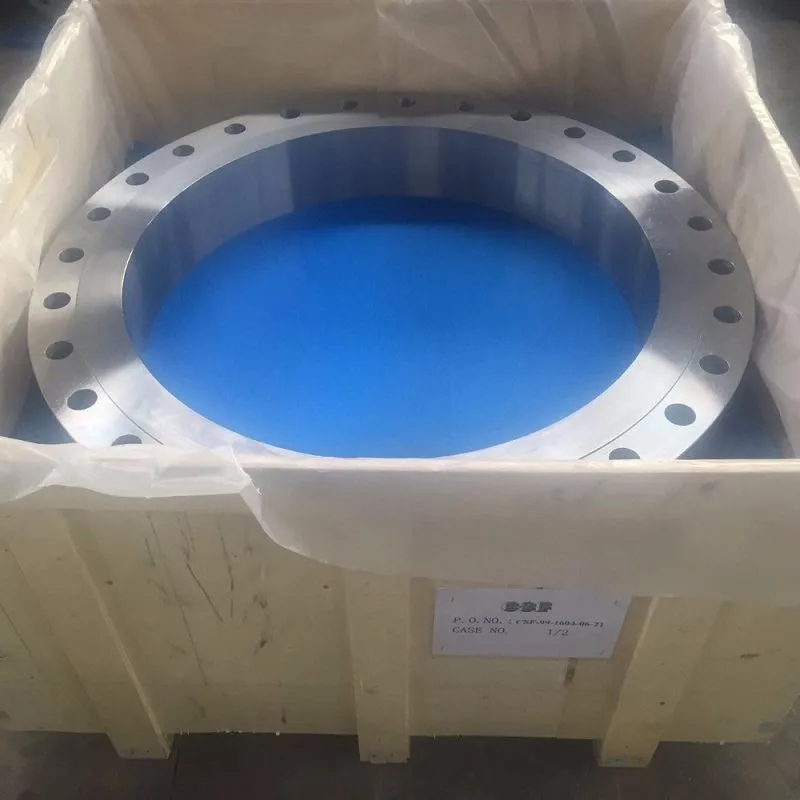
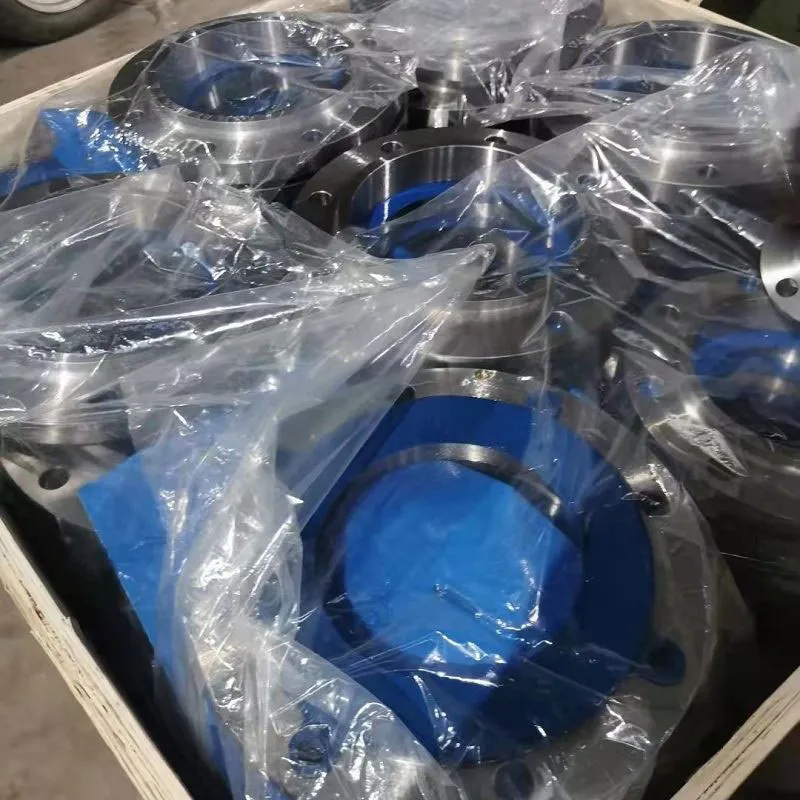
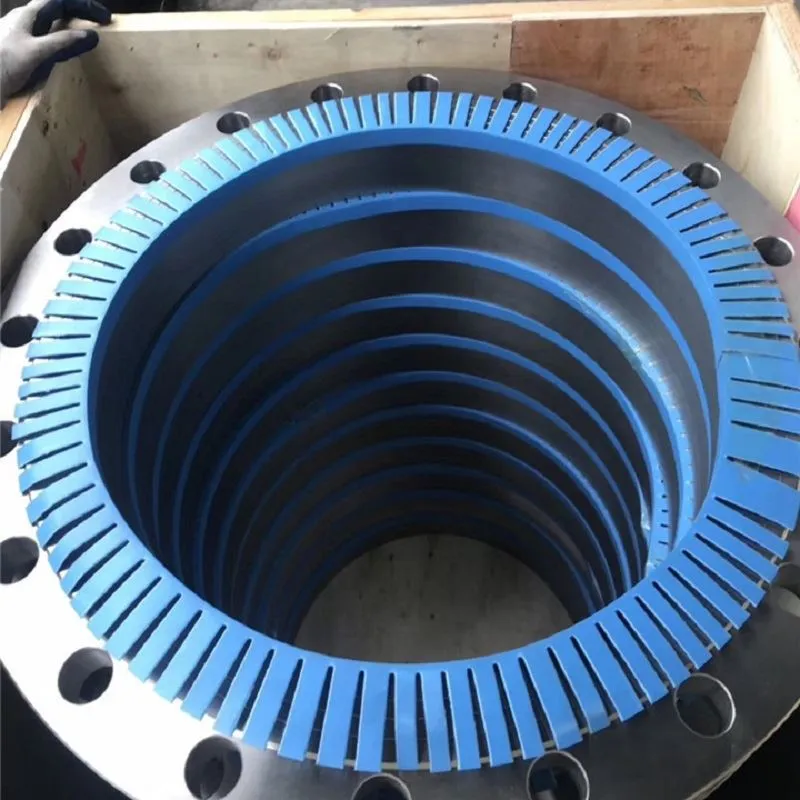
The company's product range covers almost any need of modern projects: from compact technical solutions to large-scale highways. All six main types of forged flanges (applied, socket weld, threaded, butt weld, loose ring and blind) are produced here in strict accordance with international standards: DIN, ANSI B16.5, ASME, EN, as well as GOST specifications. The nominal diameter range covers from DN15 to DN4000, including complex positions such as butt-weld flanges in classes 150–900 or loose-on-ring flanges in classes up to 2500.
For the Russian market, the ability of a manufacturer to work simultaneously with several standards is especially important. The infrastructure of Shanxi Hongkai Forging is equipped with modern equipment for machining, heat treatment and physical and chemical testing. The implemented multi-level quality control system ensures that the geometry, mechanical properties and markings of products will exactly comply with the stated technical specifications. The geographical location in a developed industrial cluster provides convenient logistics: proximity to railways and port areas makes it possible to effectively organize deliveries to Russia and the CIS countries, eliminating those same “logistics nightmares” that were mentioned at the beginning of the article.
By choosing a partner with such a level of production culture, the customer receives not just a metal part, but the confidence that the flange will not become a weak link in the system. The company's philosophy, focused on long-term partnerships and strict compliance with contractual obligations, becomes the very foundation of reliability that is so necessary in the unstable economy of 2026.
How to avoid problems when accepting work?
If you are a customer, your task is not just to pay the bill, but to control the result. Here's a checklist that will save you from headaches:
- Require tightening protocol. Modern work must be recorded: which bolt, with what force, by whom and when it was tightened.
- Check the gap between the flanges. It should be uniform around the entire perimeter. Use a dipstick.
- Note the protrusion of the threads. The nut should protrude beyond the end of the bolt by 2-3 threads, but no more. If the bolt is too long or short, this is an installation defect.
- Make sure the gasket is not pushed out. This is a sign of overtightening or incorrect choice of gasket material.
Remember, savings at the installation stage always come at a cost. Cheap flange installation today means expensive repairs and production downtime tomorrow.
Forecast: what will happen to prices next?
The situation is unstable. The ruble exchange rate, changes in customs duties, new sanctions - all this affects the final cost. My forecast for the second half of 2026 and 2027: prices will rise, but the structure of growth will change.
The cost of metal products themselves can stabilize thanks to the development of domestic production and established chains from Asia. But the cost of work will continue to creep up. The labor shortage in construction and industry is a structural problem that cannot be solved quickly. Young people do not become installers; experienced specialists retire or go into related fields.
Therefore, when forming a budget for future periods, allow for labor indexation of at least 15-20% per year. The old methods of calculating “materials + 30% for labor” no longer work. Now the formula looks like “materials + logistics + high percentage for qualifications + risks.”
We should also expect tougher requirements from Rostekhnadzor. Automation of control, the introduction of digital passports for each connection - this is no longer the future, this is the present. And you will also have to pay for maintaining this digital documentation.
Conclusion: an honest look at things
Let's be honest. Find the exact figure on the Internet by requestinstallation of flange connections pricealmost impossible, because there is no universal price. Each project is unique. Each pipe has its own character. Each region dictates its own conditions.
The main advice I can give as someone who observes the industry from the inside is: do not chase the lowest price in the tender. There are no miracles. If someone offers you installation at half the market price, he either does not understand the scope of work, or plans to do it somehow, or will go bankrupt in the process, leaving you with an unfinished object.
Invest in installation quality. Demand transparency in estimates. Understand what the price consists of. In 2026, pipeline reliability is not just a technical characteristic, it is a matter of the economic security of your enterprise. A flange connection is a small element of a large system, but it often determines whether oil, gas or water will flow where it needs to go or cause a major accident.
The market has changed. The rules of the game are different. Those who have adapted to the new realities work and earn money. Those who live in yesterday and old reference books are gradually leaving the market. The choice is yours: pay for quality now or pay for bug fixes later. History shows that the second option is always more expensive.
And one last thing. Before signing a contract, ask the contractor to show examples of similar work completed in the last six months. Call their clients. Ask not “how beautiful it was,” but “how does it work now.” This will give you more information than any, even the most beautiful estimate.
Источники данных и нормативная база (для углубленного изучения):
- Министерство строительства и жилищно-коммунального хозяйства РФ— Актуальные индексы пересчета сметной стоимости.
- Federal Agency for Technical Regulation and Metrology— Обновленные ГОСТы на фланцевые соединения 2025-2026 гг.
- Российская деловая сеть— Аналитика цен на металлопрокат и услуги монтажа в регионах.
- Журнал “Эксперт”— Специальный выпуск о проблемах импортозамещения в трубопроводной арматуре.
- Портал строительной информации— Мониторинг реальных рыночных расценок на монтажные работы (обновлено январь 2026).