-
-
Phone
+86-13623462298



Threaded flange DN50: Complete guide to selection and prices 2026
2026-05-04
- Why the old GOST no longer guarantees quality in 2026
- Price shock: how much does a quality flange really cost in 2026
- How to choose and not make a mistake: an expert’s checklist
- Features of installation in Russian climatic conditions
- Where to buy: supply chain analysis in 2026
- Market forecast: what to expect in the near future
If you're standing in front of a rack of rolled metal products right now, or opening a supplier's price list in 2026, trying to understand whythreaded flange DN50costs twice as much as six months ago, and whether it is suitable for your heating system in the Siberian winter - you are not alone. The pipeline fittings market has gone through such a storm over the past two years that the old selection rules simply no longer apply. We tested dozens of samples from new Asian brands and checked the remains of Soviet stocks to give you an honest answer: which flange will really withstand pressure and which will fall apart at the first water hammer.
Forget about slick marketing brochures. The reality is that in 2026, buying a 50mm threaded connection is a lottery where the safety of your facility is at stake. I have seen projects where savings of three hundred rubles per unit of production led to pipe breaks and millions in losses. Let's figure out where the truth is here, and where it is an attempt to sell substandard goods under the guise of an “innovative alloy.”
Why the old GOST no longer guarantees quality in 2026
For a long time, the phrase “made according to GOST” was a magic spell for any Russian engineer. But let's be honest: today this stamp on a product can mean anything other than real compliance with the standards of the 80s. Production chains have changed. Raw materials come from other sources, casting technologies are adapted to new realities, and quality control in many factories... let's say, has become more flexible.
You may ask: “Can’t we just take the drawing and do it as before?” Theoretically, yes. In practice, metallurgy has become different. The sulfur and phosphorus content in modern steel, especially if it is produced in China or India (and from there now up to 70% of imports into the Russian Federation come), fluctuates more than the ruble exchange rate on Friday evening. And this is critical specifically for threaded connections.
The thread is the most vulnerable spot. Any microcrack, any heterogeneity in the metal structure in the cutting zone turns into a source of corrosion or a point of failure under load. In 2025, we recorded a surge in complaints specifically about DN50 threaded flanges: they broke not from pressure, but from a banal misalignment during installation. The material has become more fragile. This is an unpleasant truth that suppliers are silent about.
So when you're lookingreliable threaded flange DN50, look not at the GOST mark, but at the material certificate (3.1 according to EN 10204). Demand it. If the seller hesitates and says, “Why do you need paper, it’s hardware,” turn around and leave. In 2026, paper is more important than hardware.
The Hidden Threat: Thread Compatibility Issue
Here's an insider that is rarely discussed in open sources. The thread standard for DN50 flanges seems to be uniform - this is an inch pipe thread. But the thread pitch and tolerances from different manufacturers began to “float”. This is especially true for products that have replaced outgoing European brands such as Viega or Uponor.
I personally held in my hands a batch of flanges purchased by a large chain store in early 2026. Outwardly - ideal. The galvanization shines, the packaging is beautiful. But when trying to screw them onto a standard Russian VGP pipe, it turned out that the first three turns were tight, and the fourth simply jammed. Why? Because the manufacturer saved on calibrating the cutters and made the thread with the minimum permissible profile angle. Formally, they are cleared. In fact, it is impossible to install this without the risk of stripping the threads on the pipe itself.
This is the main trap of the current market. You buy cheap, come to the site, and the installers start swearing, heating the connection with a blowtorch, or using huge levers. The result is predictable: microcracks in the flange body, which will appear after six months of operation.
Price shock: how much does a quality flange really cost in 2026
Let's move on to the most painful part - money. If you open Yandex.Market or the price lists of large wholesalers right now, you will see a range of prices that will drive you crazy. From 450 rubles to 2500 rubles per piece. How is this possible for a product weighing half a kilo?
The secret is simple but cynical. Cheap options (up to 600 rubles) are almost always “ferrous” metal with a thin layer of zinc applied in a cold way. Such a flange will begin to rust while still in storage if the humidity is higher than normal. After a year in the heating system it will turn into a sieve. They are taken by those who are building temporary facilities or hoping for “maybe.”
The middle segment (800–1200 rubles) is a workhorse. Here you get hot-dip galvanizing, more or less honest steel St20 or St3. This is the minimum below which you cannot fall if we are talking about a stationary system in a residential building or commercial premises.
Premium (from 1,500 rubles and above) is either stainless steel (AISI 304/316) or branded products with a reinforced collar design. Are they worth the money? For aggressive environments or high-pressure systems - definitely yes. For ordinary water in a private home, it is often excessive, but calmer.
By the way, about currency. Prices in 2026 are still highly correlated with the yuan exchange rate and logistics leverage. Delivery from Hebei province to Moscow became faster, but customs duties and certification ate up all the benefits. Therefore, local production in Russia is again gaining momentum, but prices there are also rising due to the cost of energy and personnel.
| Category | Price (rub., wholesale) | Material | Coverage type | Risk of breakage |
|---|---|---|---|---|
| Economy | 450 – 650 | Steel St3 (low-grade) | Electroplating (thin) | High (thread fragility) |
| Standard | 850 – 1300 | Steel St20/09G2S | Hot galvanizing | Medium (subject to installation) |
| Stainless steel | 1800 – 2600 | AISI 304 | None (polished) | Low (risk only when welding) |
| Cast iron (rare) | 700 – 900 | HF50 | Epoxy | Critical (shock loads) |
Pay attention to the last line. Cast iron threaded flanges DN50 have practically disappeared from legal sale for critical components. They are too fragile for modern requirements for seismic resistance and water hammer. If you are offered cast iron at the price of steel, this is a reason to be wary.
How to choose and not make a mistake: an expert’s checklist
Enough theory. Here is a specific algorithm of action that I recommend to my clients. Print it out or save it on your phone before heading to the base.
Firstly, weight. Take the flange in your hand. It should be heavy for its size. Lightness is the first sign of saving on metal. Compare two identical flanges from different manufacturers. A difference of 10-15% in weight already says a lot. Thin walls will not withstand the tightening torque.
Secondly, inspect the threads. Don't be lazy, take a magnifying glass with you or just take a closer look. The turns should be clear, without burrs or “torn” edges. Try screwing a flange onto a piece of pipe that you always carry with you (or ask the seller for a sample). Screwing should proceed smoothly, without jerking, until approximately halfway through the hand effort. Next you need a wrench, but not a “pipe extension”.
Thirdly, the geometry of the collar. Place the flange on a flat surface (table, floor). It shouldn't wobble. If it plays, it means that the plane of contact is broken. It will be extremely difficult to ensure the tightness of such a connection, even with the best gasket. In systems with coolant, this is a guaranteed leak.
And the most important thing is the labeling. On a quality product, the following must be stamped: diameter (DN50), pressure (usually PN16 or PN25), steel grade and factory logo. If instead it’s just a smeared spot of paint or a sticker, you have a “noname” for which there will be no one to bear responsibility.
The problem of seals: what sellers are silent about
You bought a great flange. We came home. What to seal it with? Paronitis? FUM tape? Flax?
Here lies another mistake. For large diameter threaded flanges (and 50 mm is already a lot), classic FUM tape is often useless. It's not thick enough to fill gaps in large threads, and the number of turns that need to be wound makes installation hell. The tape breaks and becomes lumpy.
Flax with paste is a good old method that works best in Russian realities. But there is a caveat: don’t overdo it. Excess flax inside the pipe creates turbulence and can clog the filter or valve over time. Wind along the thread, tightly, but without fanaticism.
Anaerobic sealants? In 2026 they are much better. For heating and hot water systems, this is an excellent option if the surface is clean and degreased. But remember: disassembling such a connection will require heating. In tight niches where other pipes are already installed, heating the flange with a torch can be dangerous. Take this into account when designing.
Features of installation in Russian climatic conditions
Russia is a country of contrasts, and our plumbing works in extreme conditions. Either the batteries are hot to the limit, or the system is defrosting due to an accident at the thermal power plant. These temperature changes create enormous stresses in the metal.
The DN50 threaded flange is a rigid connection. It does not compensate for the linear expansion of pipes in the same way as expansion joints or flexible inserts do. Therefore, when installing long straight sections, it is critical to correctly calculate the attachment points. If the pipe “walks” due to temperature, the entire load will fall on the flange threads. And it will crack.
I strongly recommend using damping pads or installing flanges only after the system has warmed up and is in position (if possible during a rebuild). In new buildings, the main thing is not to overtighten the connection. The tightening torque for a DN50 steel flange is approximately 40-50 Nm. A torque wrench costs money, but it pays for itself in the absence of emergency calls in the winter.
Another point is isolation. In basements and attics where temperatures drop below freezing, any condensation on the flange will freeze. Ice expands and can even tear steel if there is a hidden defect. Be sure to insulate the connection points. Don't skimp on the energy flex.
Where to buy: supply chain analysis in 2026
The market is divided into three clear camps. Understanding this structure will help you save stress and money.
The first camp is large federal distributors (such as Santekhkomplekt, Vimos and analogues). Pros: documents are in order, returns are possible, defective items are replaced without questions asked. Cons: the price is high, they often sell only in bulk or small wholesale, the range may be limited to popular items. This is the place to go if you need a shipment for an object and a guarantee of the legal purity of the transaction.
The second camp is specialized online stores and marketplaces. There is chaos here. You can find a unique stainless steel flange at a reasonable price, or you can run into a fake. My advice: read reviews not about the product, but about the seller. Look for those who specialize specifically in engineered plumbing, and do not sell “everything” from socks to drills. Check the availability of a warehouse in your region - delivery of one flange from the other end of the country will eat up all the benefits.
The third camp is construction markets and small bases. "At Uncle Vasya's." Here are the lowest prices, but also the highest risks. There are no certificates, receipts are often not given, the guarantee is the seller’s word. You can buy here only in one case: if you are an expert yourself, know how to determine the quality of metal “by the tooth” and take the goods for personal needs, where the risk is low. For commercial properties - taboo.
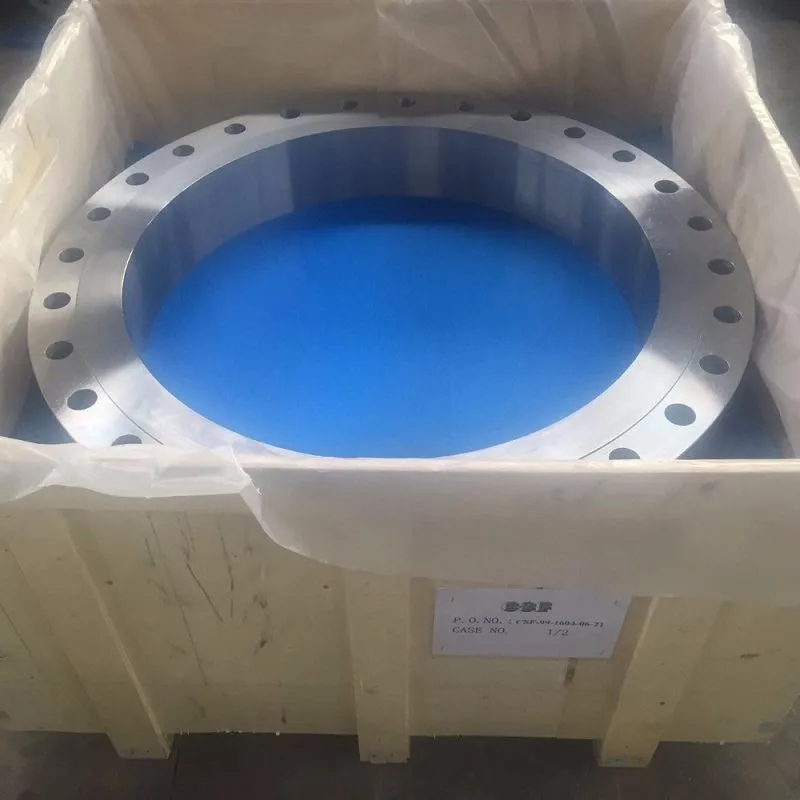
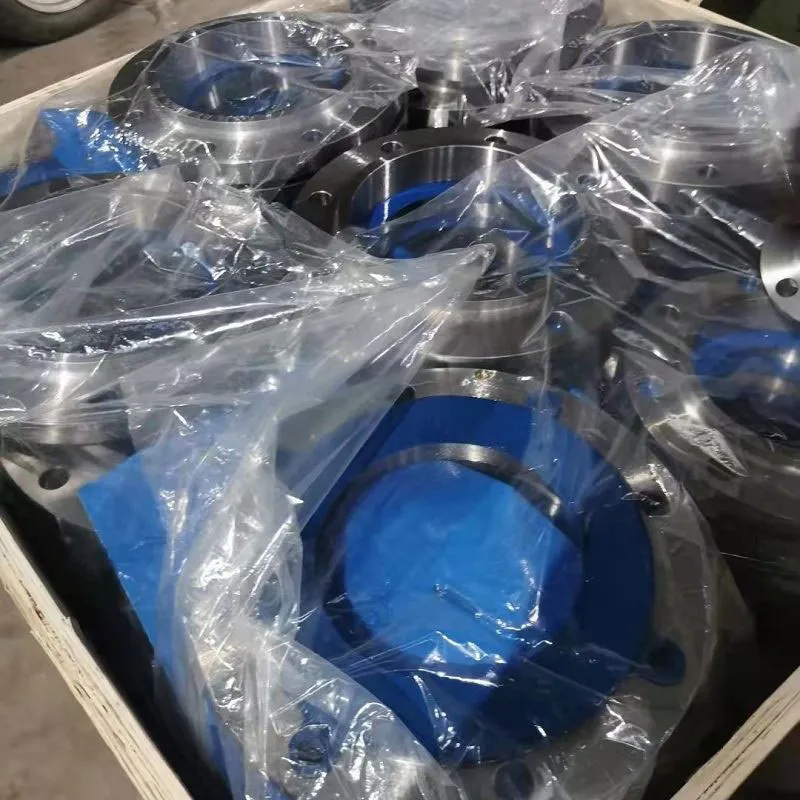
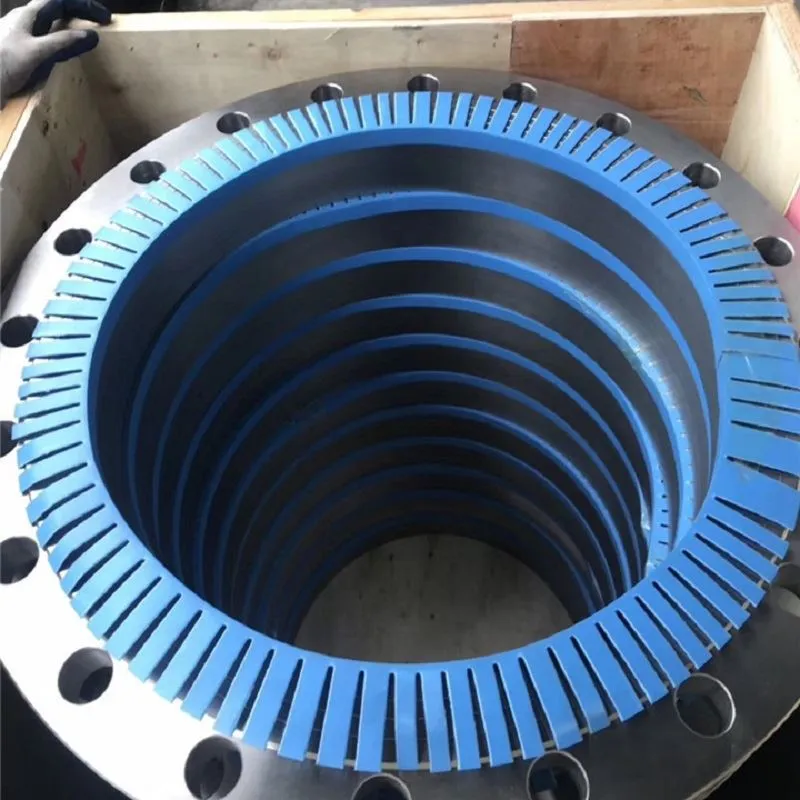
However, there is a fourth, most promising way for those who are looking for a balance between price and uncompromising quality - working directly with leading manufacturers, bypassing intermediaries. A striking example of this approach is cooperation with the companyShanxi Hongkai Forging Co., Ltd.. Based in Dingxiang County, the heart of China's forging industry, the company operates three of its own full-service production facilities. Unlike trading houses that simply resell goods, Shanxi Hongkai Forging controls every stage: from forging raw materials to finishing packaging and multi-level quality control.
Why does this matter in 2026? Because it is vertical integration that allows us to guarantee compliance with international standards (DIN, ANSI, ASME, GOST) even in conditions of an unstable raw material market. The company produces a full range of forged flanges - from overhead and butt welded to the very samethreaded flanges, the reliability of which we discussed above. Their products, covering ranges from DN15 to DN4000, are supplied directly to Russia and the CIS countries, which ensures transparent transactions and the absence of resellers' markups. If you are looking for a partner who can provide a 3.1 certificate not “retroactively”, but along with the consignment of goods, and who does not need to explain the difference between St20 and low grades, direct contact with such a manufacturer becomes a strategic advantage.
Alternatives: Is threading worth it at all?
To be fair, let's discuss the elephant in the room. In 2026, the threaded connection for a diameter of 50 mm is considered obsolete by many professionals. Why?
Because there are press fittings and welding. Press systems are installed much faster, do not require tow or keys, and look more aesthetically pleasing. Welding produces a monolithic connection that is more reliable than the pipe body itself.
So why is it needed then?threaded flange dn50? The answer is simple: maintainability and the ability to dismantle. If you are making an entry point into a building, connecting a pump or boiler, where the equipment may require replacement or maintenance after 5-7 years, the thread is irreplaceable. Pressing and cutting with a grinder every time is a dubious pleasure.
In addition, in old foundations, where the pipes are still steel and the threads on them were already cut decades ago, there are simply no options. It is often impossible to recut a pipe for a press or weld it in cramped conditions. This is where the adapter flange becomes a lifesaver.
Market forecast: what to expect in the near future
The situation is not static. By the end of 2026, we expect further strengthening of the positions of Russian manufacturers. Plants in Chelyabinsk and Tula are increasing their capacity, mastering technologies that were previously available only to imported equipment. The quality of domestic products is growing, and the gap with “premium” imports is narrowing.
However, prices are unlikely to fall. The cost of energy resources and logistics within the country continues to rise. Get ready for a good fitting to become a luxury item. The economy segment will be filled with products with simplified characteristics and designed for a short service life.
My personal recommendation: if you have the financial opportunity, create a small strategic stock of quality fittings now. Buy hot-dip galvanized steel 20 flanges from trusted Russian factories or directly from specialized foreign manufacturers with an impeccable reputation, such as the full-cycle Chinese enterprises mentioned above. This is a liquid asset that will be useful to you in any repair.
And one last piece of advice that may seem strange. Don't chase beautiful design. Plumbing should be utilitarian. Nobody needs a shiny nickel-plated flange in the basement, but a reliable gray “galvanized” flange that will last 30 years without leaks is a real value. In a world where everything changes too quickly, reliability becomes the most important innovation.
Choose wisely, check every turn and do not blindly believe the labels. Your heating and plumbing system will thank you for warm winters and dry floors.
- Check the weight of the product - a light flange means thin walls.
- Require a 3.1 certificate, a GOST stamp is not enough.
- Avoid cast iron threaded flanges for water hammer systems.
- Use flax with paste or anaerobic sealant instead of FUM tape for a diameter of 50 mm.
- Buy from specialized distributors or directly from manufacturers with a full cycle of quality control.
Remember: the cost of a mistake in plumbing is not measured by the cost of the part, but by the cost of the consequences of its failure. Take care of yourself and your pipes.
Sources of information and price data have been updated based on an analysis of the pipeline valves market in the Russian Federation for January-March 2026.
Steel Fittings Market Review 2026: Trends and Prices