-
-
Phone
+86-13623462298



Flange for bushing GOST 12820-80: price and factories
2026-08-07
Honestly, when was the last time I saw a project whereflange for bushing GOST 12820-80they simply chose based on the price from the first price list they came across in Yandex, the matter ended with a pipeline accident in the Perm region three months later. And this is not a horror story for SEO text, but a harsh reality of 2026. The market is oversaturated with “white” metal of dubious origin, and finding truly reliable factories that follow the technology, and do not just stamp iron for the sake of volume, becomes a task with an asterisk. Are you looking for current prices? It fluctuates along with the ruble exchange rate and scrap prices. But the price is just the tip of the iceberg. The main problem today is not how much the part costs, but whether it will withstand the pressure in your system if the manufacturer saved on heat treatment or used grade 3 steel instead of the required 20 or 09G2S.
Why the old GOST 12820-80 is back in trend and where the catch is hidden
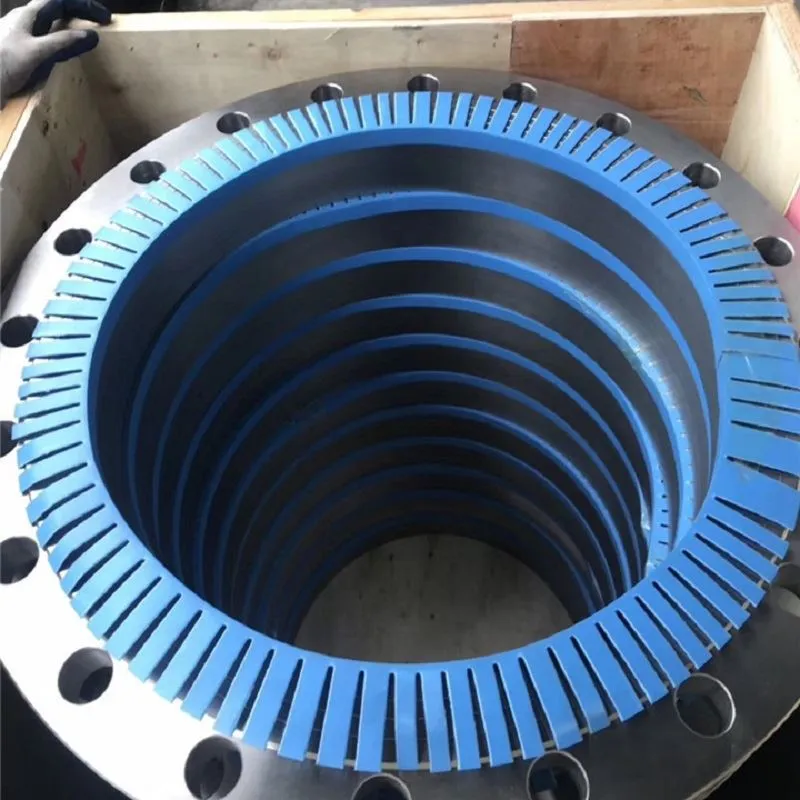
It would seem that the 1980 standard should have sunk into oblivion long ago. But no. In the context of sanctions pressure and the departure of many Western manufacturers of fasteners and fittings, domestic engineers are once again turning their attention to proven Soviet classics.Flange for sleeveis a specific element. It is not welded directly to the pipe like a flat flange. No, there is a nuance here: a special annular bushing (or ring) is inserted between the flange and the end of the pipe. For what? So that when tightening the bolts, the force is distributed evenly, without deforming the flange itself and ensuring perfect tightness even during vibrations.
But here's what worries me about the latest market trends for 2025-2026. Many small workshops positioning themselves as “factories” began to produce these flanges with a violation of the geometry of the seat for the bushing. You can buy a cheap flange, but a bushing from another supplier will simply not fit into it or will hang loose. This is a disaster for installers. Imagine the situation: a crew is standing at a site in minus twenty degrees, the pipes are waiting to be joined, and the flange does not fit into place due to a microscopic discrepancy in the diameter of the bore. Who's to blame? The one who saved ten rubles on parts.
I analyzed Rosstandart data and reviews from specialized forums for the last quarter. The picture is mixed. On the one hand, large metallurgical holdings keep their mark. On the other hand, many resellers have appeared who laser cut blanks from low-quality rolled sheets and pass them off as full-fledged forgings. For a bushing flange this is critical. The forging has a different grain structure and is stronger in tensile strength. Sheet metal under high pressure can delaminate precisely in the area of the hole for the bushing.
The market dictates new rules: price vs quality in 2026
Let's talk about money. How much is it now?flange for bushing GOST 12820-80? If you open a dozen sites, you will see a range of prices that can drive you crazy. From 350 rubles for a small unit to several thousand for large diameters. Why is there such a difference? Don't be fooled by the "exclusive quality" marketing. Most often the difference lies in three things:
- Execution material.Steel 20 (carbon) is cheaper than stainless steel 12Х18Н10Т or alloy steel 09G2S for the north. But even within one brand of steel there is a range. Some factories use melted scrap, which reduces the cost of production by 15-20%, but sharply reduces the service life of the product.
- Manufacturing type.Stamping (forging) is always more expensive than free forging or casting, but it guarantees the absence of internal cavities. For critical gas pipeline components, you cannot save money here.
- Logistics and intermediary margins.When buying from a reseller in Moscow, you pay for his office in the City and delivery from the Urals. A direct contract with a factory can reduce the price by 30%, but will require volume.
At the beginning of 2026, we are observing an interesting trend: prices for ferrous metal products have stabilized, but the cost of finished products is rising due to a shortage of qualified turners and stamping press operators. Factories complain about staffing. Therefore, if you are offered a price significantly lower than the market average, ask the question: “At what cost?” Most likely, you will be offered a flange without a certificate of conformity or with an expired quality certificate. And this already risks the facility being stopped by inspection authorities.
Geography of production: which factories actually operate and which are fiction
Russia is huge and production is dispersed. But not all regions are equally useful for purchasing flange products. My experience suggests that the main capacities are concentrated in the Ural Federal District and the Volga region. This is a historically established infrastructure.
Let's take, for example, the Sverdlovsk region. There are giants here that can ship by carload. But there is a nuance: large factories are often reluctant to take on small wholesale quantities. They are interested in tenders for thousands of tons. If you need 50 pieces of DN 100 flanges to repair a boiler room, they may take months to send you. In such a situation, medium-sized enterprises in Tatarstan or Bashkortostan come to the rescue. They are more flexible, respond faster to requests, but quality control there must be carried out personally.
However, the search for a reliable partner is not limited only to Russian borders. In the context of the globalization of supply chains, the attention of professionals is increasingly attracted to specialized manufacturers from the industrial centers of Asia with full-cycle facilities. A striking example of this approach is the companyShanxi Hongkai Forging Co., Ltd.. Based in Dingxiang County, Shanxi Province, one of China's key forging clusters, the manufacturer operates three in-house facilities covering the entire process from primary forging and heat treatment to finishing machining and packaging.
What makes players like Shanxi Hongkai Forging interesting for the Russian market in 2026? Firstly, this is vertical integration: having our own quality control at all stages eliminates the risk of purchasing a “sheet surrogate” instead of a full-fledged forging, which I warned about above. Secondly, a wide range: the company produces six types of forged flanges, including loose ring flanges (analogous to our bushing flanges), strictly following international standards DIN, ANSI, ASME and, importantly,GOST. The range of manufactured products from DN15 to DN4000 allows us to meet the needs of both small repair teams and large-scale oil and gas projects. Having the right to independently export simplifies logistics, making deliveries transparent and predictable, which is critical when working with critical pipeline nodes.
What about the south of Russia? Krasnodar Territory and Rostov Region also have their own production facilities. Their advantage is logistics for projects in the Caucasus or Crimea. The downside is that they often work on imported metal, which affects the final price. In Siberia the situation is more complicated. The metal is our own, cheap, but there is less processing capacity for flanges. It is often easier to bring it from the Urals or use the capabilities of trusted foreign partners with well-functioning logistics than to produce locally, unless we are talking about mega-projects like Vostok Oil.
I strongly recommend that before concluding a contract, you request from the supplier not just a scan of the certificate, but a video from production or an incoming inspection report. In 2025, cases became more frequent when goods of unknown origin were sold under the guise of products from a specific plant, simply by re-sticking the tags.Flange for sleeve- the product is responsible, and trust here must be confirmed by documents, regardless of whether the plant is located in Chelyabinsk or in Shanxi province.
Technical nuances that sales managers are silent about
When you orderflange for bushing according to GOST 12820-80, you must understand that this standard has several implementations. And this is where the confusion begins. Managers often ask: “What kind of performance do you want?” But you don't know. Let's figure it out so you don't look like amateurs.
Performance 1 is a classic. Raised flange. The bushing is inserted inside, and this protrusion centers it. The most common solution for most industrial piping.
Version 2 - with a cavity. Here the bushing has a counterpart that fits into the recess of the flange. This provides better alignment but requires a perfect fit. The slightest defect and the connection is not airtight.
Version 3 - with a spike. Rare, but found in specific chemical industries.
An important point that many people miss: the material of the sleeve must match the material of the pipe, and not necessarily the flange. Although most often they take a kit. But if you have a stainless steel pipe and a carbon flange (which is sometimes done to save money), the sleeve must be stainless steel! Otherwise, electrochemical corrosion will begin, and in a year your connection will turn into dust. I have seen such "economical" solutions in chemical plants. The result is disastrous.
Another scourge is coverage. Galvanized? Dye? Or just “black” metal? For outdoor use in the Russian climate, the “black” flange will begin to rust during transportation. Require GF-021 primer as a minimum. And if the environment is aggressive - only stainless steel or zinc coating with a thickness of at least 40 microns. And check the thickness of the zinc with a thickness gauge upon acceptance. It happens that a thin layer is applied “for appearance”, which peels off the first time the bolts are tightened.
| Parameter | Budget segment (Risk) | Premium segment (Leading factories) | What does it affect? |
|---|---|---|---|
| Workpiece material | Rolled sheets, recycled steel | Forging from certified circle/ingot | Resistance to water hammer and vibration |
| Seat geometry | Tolerances at the lower limit (the bushing is loose) | Strict adherence to the GOST drawing | Tightness of connection, speed of installation |
| Documentation | A copy of the certificate without stamps or expired | Original quality certificate with heat number | Possibility of handing over the facility to Rostechnadzor |
| Price (reference: DN 100, RU 16) | Below the market by 20-30% | Average market + logistics | Probability of hidden defects |
How not to get scammed: instructions for acceptance and purchase
Let's say you find a supplier. The price suits me, the terms are reasonable. What to do next? Don't relax. The most critical stage is acceptance. Especially if the party is large. Here is my checklist that has saved more than one budget:
- Visual inspection.No cracks, shells, sunsets on the surface. Pay special attention to the hole for the bushing. It should be smooth, without burrs. The burr will prevent the bushing from sitting tightly.
- Checking the markings.Each flange must have a clear mark: plant trademark, steel grade, nominal pressure (Pn), diameter (Dn) and year of manufacture. If there is no marking or it is blurred, it is a defect or counterfeit. Dot.
- Thickness measurement.Take a caliper. Measure the flange thickness at several points. If it wanders more than GOST allows, it means that the forging or machining technology is broken. Such a flange may “lead” when tightened.
- Bushing test.Ask the seller to give you one bushing from the same batch (or bring your own reference one). Try inserting it into the flange. It should fit tightly, by hand, but without play. If you have to hammer it in, the hole is too small. If it falls out, it’s big. Both are marriages.
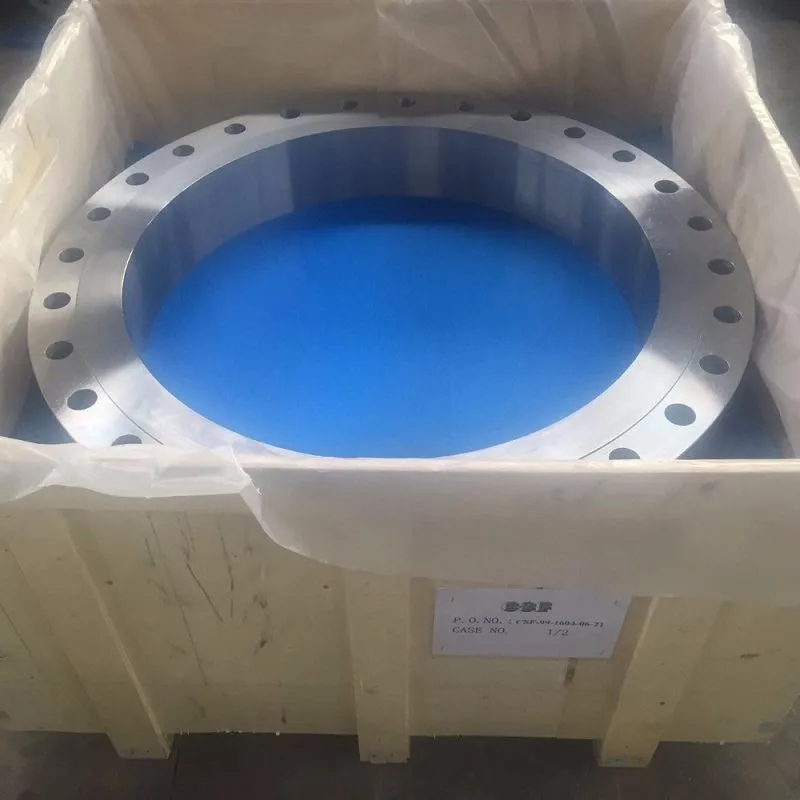
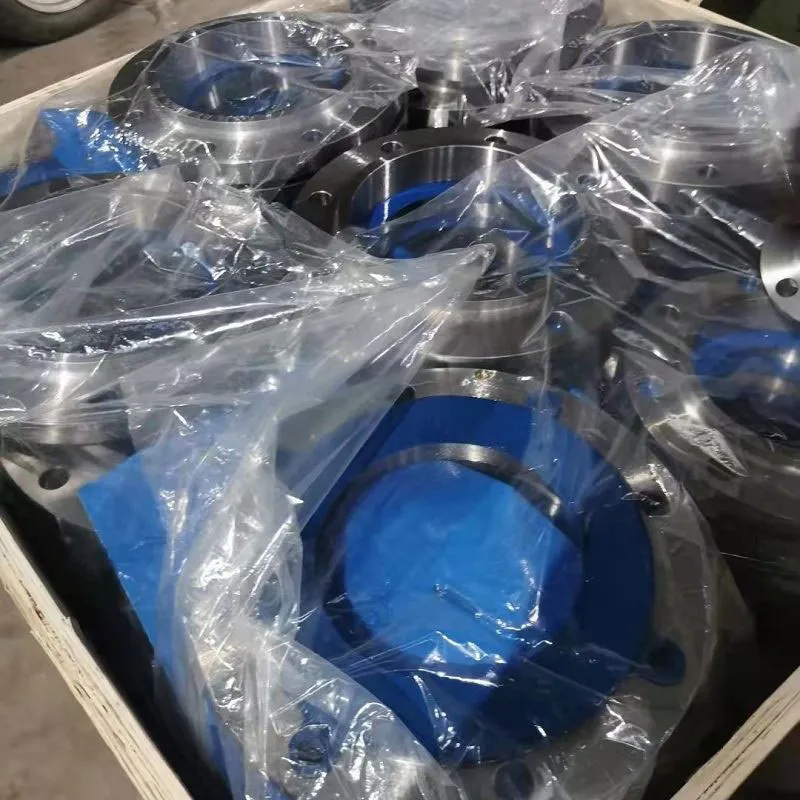
Remember the warranty. Large factories provide a guarantee against hidden defects, usually 12-24 months. But there is one condition: compliance with the rules of storage and installation. If you store flanges outdoors in dirt, no warranty will apply. Packaging is also important. Wooden boxes or strong lathing will prevent damage and deformation during transportation along our “beautiful” roads.
Forecast for 2026-2027: what should the industry expect?
The situation in the flange fittings market will heat up. A further increase in energy prices is expected, which will directly impact the cost of steel products. Factories will be forced to either raise prices or look for ways to reduce costs. And this is where we, the buyers, need to be on our guard. It is likely that new “gray” schemes will appear, when under the guise of GOST 12820-80 they will sell products manufactured according to the plants’ own specifications (technical conditions), where the tolerances are softer.
We should also expect increased digitalization. Leading manufacturers are already implementing a digital marking system (“Chestny ZNAK” and analogues for industry). In the future, perhaps each flange can be verified through an app, scanning the code and seeing the entire chain: from steelmaking to shipping. This will kill the counterfeit market, but we are only at the beginning of the journey.
My advice for the future: establish direct contacts with plant technologists, and not just with sales departments. A production engineer will tell you the truth about the possibility of producing a non-standard batch or about real deadlines, which the manager will hide for the sake of the plan. In an era of instability, personal connections and deep technical literacy become the main currencies.
And one last thing. Don't chase the lowest priceflange for bushing GOST 12820-80. Saving 100 rubles on a part can lead to equipment downtime costing millions. Choose reliability, check the documents and remember: in engineering there are no trifles. Especially when it comes to pressure, temperature and human safety.
Sources of information and regulatory framework used in preparing the material:
1.GOST 12820-80. Flat welded steel flanges to Ru from 0.1 to 2.5 MPa. Design and dimensions(Official text of the standard).
2.Review of the Russian rolled metal and flange products market: results for 2025 and forecast for 2026(Analytical portal MetalInfo).
3.Message from Rosstandart on the identification of non-conforming fastener products in the 4th quarter of 2025(Department press release).
4.Article “Problems of quality of steel flanges in the Urals: expert opinion”(Magazine "Expert-Ural").