-
-
Phone
+86-13623462298



Flange connection of heating networks 2026: prices and factories
2026-08-07
When it’s minus thirty outside, and a main line suddenly breaks in the basement of your apartment building or industrial site, no one wants to listen to lectures on thermodynamics. At such moments, the only thing that matters is the reliability of the unit that maintains pressure and temperature. That's whyflange connection of heating networksin the forecast for 2026, it becomes not just a technical detail, but a question of the survival of the infrastructure and the wallets of management companies. We analyzed the market, talked with chief engineers of factories from the Urals to the Moscow region and found out: what is sold to you as “standard” is often a time bomb given our real temperature changes.
Forget about glossy catalogs for a minute. The reality is that by 2026, prices for these components will rise not linearly, but spasmodically, and the reason for this is not only the exchange rate of the ruble. We are talking about a fundamental restructuring of metal logistics and changes to GOST standards, which many manufacturers ignore in the pursuit of volume. If you are planning to purchase flanges for a heating main right now or are preparing an estimate for the next heating season, this article will save you millions of rubles and, possibly, the nerves of the chief engineer.
Why old norms no longer work in Russian winters
Let's be honest: the Soviet legacy in the form of huge reserves of safety saved us for a long time. But modern realities dictate different conditions. Steel became different. Rental technologies have changed. And most importantly, the operating modes of heating networks have become more aggressive due to attempts to optimize fuel consumption. The pipes get hotter and cool down faster. Cyclic loads kill metal faster than constant static loads.
Have you ever seen how a flange gets tired? This is not a crack that appears immediately. These are microdeformations of the sealing surface. First there is a small steam leak, which is easy to fix. Then - corrosion under the gasket. And the final result is depressurization at the peak of frost. The problem in 2025-2026 is that many suppliers offer products certified according to old specifications, but produced on equipment that does not provide the required plane geometry.
I have personally seen batches of flanges from China that looked perfect in appearance, but when tightening the bolts they gave a misalignment of 0.5 mm. For a low pressure system this is nonsense. For a heating network with a pressure of 16 atmospheres and a temperature of 150 degrees? This is a guaranteed accident after six months of operation. Russian factories, by the way, are also not without sin. The race for import substitution has led to the fact that some small workshops began to stamp products from recycled metal, disguising it as alloyed alloys.
What's happening to the market right now? There is a shortage of quality steel grades 20 and 09G2S. Large players, such as ChTPZ or groups of companies working with Gazprom, buy the best volumes of metal. Small factories supplying components for housing and communal services are left with something that is of poorer quality. Hence the growth of marriage. Therefore, choosingflange connection of heating networks, you need to look not at the price per kilogram, but at the quality certificate of a particular melt.
The Hidden Threat: Seal and Climate Issues
No one talks about this out loud, but the weakest point of any flange connection in Russia is not the metal itself, but the gasket. In 2026, we expect a boom in the use of paronite and new generation graphite seals. Why? Because traditional rubber and cardboard simply cannot withstand the new temperature schedules that energy companies are introducing to save gas.
Imagine the situation: at night the temperature drops to -40°C, the pipe contracts. During the day, due to solar activity or changes in the boiler room mode, it heats up. The flange works like an accordion. If the gasket does not have sufficient elasticity and shape memory, it loses contact with the surface. The result is a fistula. And it’s good if it’s water. What if there is superheated steam?
Many buyers make the fatal mistake of purchasing flanges and gaskets from different places. “Why overpay?” - they ask. Then, the geometry of the flange sealing surface (peak-recess or smooth) must ideally match the type of gasket. A discrepancy even of a fraction of a millimeter leads to the fact that during installation the gasket is either crushed too much or it does not fill the micropores of the metal. In the conditions of the Russian winter, this is a death sentence.
Price forecast 2026: where is the money and why is it so expensive
Let's move on to the most painful part - money. If you're hoping prices will remain at 2024 levels, I have bad news for you. Analysts predict an increase in the cost of finished products by 15-25% by the beginning of 2026. And this is an optimistic scenario.
What does the price consist of?
- Raw materials:The cost of scrap and primary metal directly depends on export duties and domestic demand of the automobile industry.
- Energy:Manufacturing flanges is an energy-intensive process (forging, heat treating, machining). Electricity tariffs for industry are rising every year.
- Logistics:Delivery of heavy metal across Russia has become golden. Railway tariffs and the cost of fuel and lubricants for trucks are breaking records.
- Personnel:The shortage of qualified turners and CNC machine operators has led to an increase in wages at factories by 30% over the past year.
But there is also another side to the coin. Dumping. Some companies, wanting to receive a tender, offer prices below cost. How do they do it? They save on everything. They remove quality control, reduce heat treatment time (the metal remains brittle), and use cheap paint instead of anti-corrosion coating. In a year, such a flange will begin to rust on the outside, but on the inside it will already be eaten away by corrosion.
The actual price range at the end of 2025 for steel flat welded flanges (type 01) with a diameter of 100 mm (Ru 16) ranges from 800 to 1,500 rubles per piece, depending on the batch size and region. For free-sleeve connections (for copper or plastic pipes in heating substations), the price may be higher due to the difficulty of processing non-ferrous metals or composites. By 2026, the lower limit is unlikely to fall below 1,000 rubles, unless a miracle occurs in metallurgy.
Factor of sanctions pressure and import substitution
Previously, about five years ago, European flanges were often used for critical components. German quality, Italian steel. Now this route is closed or has become incredibly expensive due to supply chains through third countries. Moreover, you can wait for months for delivery from “parallel import”. And they don’t wait for pipes in winter.
Russian factories have learned to do well. The key word is “not bad.” Top enterprises in the Chelyabinsk, Sverdlovsk regions and Tatarstan produce products that are not inferior to European ones in terms of basic characteristics. But there is a nuance: the stability of the parties. Today the plant did an excellent job, tomorrow a shift or a batch of metal changed - and the quality went downhill. Therefore, in 2026, the key trend will be not just “buy Russian”, but “buy from a proven Russian manufacturer with a history.”
China should not be discounted either. They remained on the market. Their quality has grown catastrophically quickly. Yes, there is a risk of running into plasticine, but large Chinese brands now offer certificates that actually work. However, taking into account delivery times and the risks of customs clearance, for the prompt repair of heating networks in the Russian Federation, priority still goes to local warehouses. However, for large-scale projects with a long planning cycle, finding a reliable foreign partner with a full production cycle becomes a strategic task.
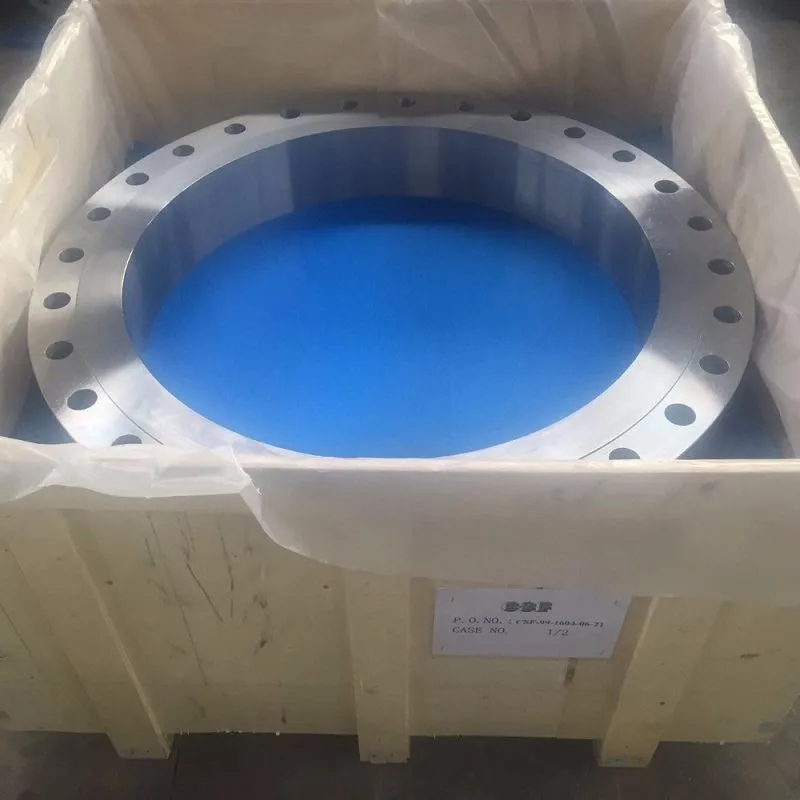
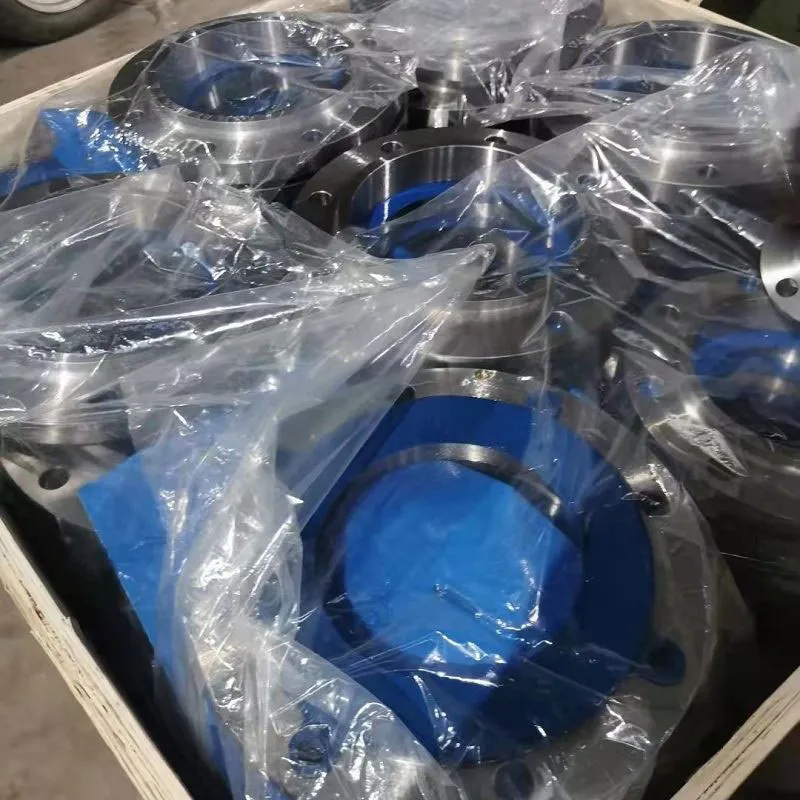
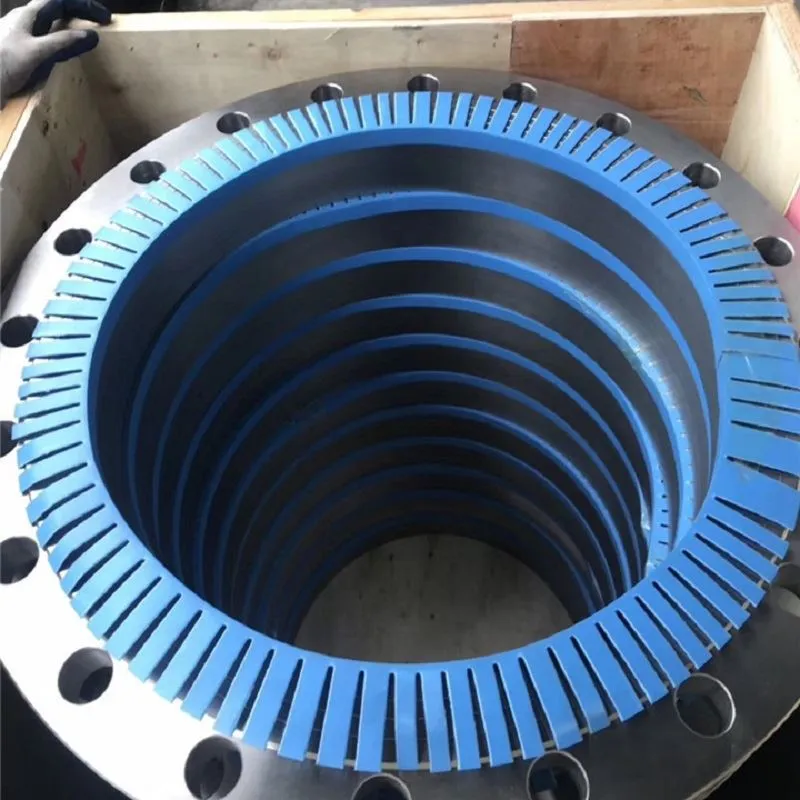
In this context, the experience of such manufacturers asShanxi Hongkai Forging Co., Ltd.. Based in Dingxiang County, Shanxi Province, one of China's key forging industrial centers, the company is an example of a vertically integrated enterprise. Unlike simple resellers, Shanxi Hongkai Forging operates three of its own production sites, covering the full cycle: from primary forging and heat treatment to finishing machining and packaging. This allows them to tightly control quality at every stage, which is critical when working with GOST, DIN and ANSI B16.5 standards.
For Russian customers looking for an alternative to European supplies without loss of quality, an important factor is that the manufacturer has the right to independently carry out import-export operations. This provides direct and transparent channels of interaction, bypassing unnecessary intermediaries. The range of such companies, which includes six main types of forged flanges (from butt welds to blind plugs) in the range of nominal diameters DN15–DN4000, makes it possible to meet the needs of both compact technical solutions and large highways. The geographical location in a developed industrial cluster also provides logistics advantages, providing convenient transport accessibility to railways and port areas, which directly affects the reliability and timeliness of deliveries even in the face of global difficulties.
Review of manufacturers: who really holds the brand
I will not name specific brands in the advertising format, but I will give vectors where to look for a purchasing engineer. The market can be divided into three echelons.
First echelon: Giants.These are factories that work with the oil and gas sector. Their products are redundant for an ordinary city heating main, but they are as reliable as a tank. Their prices are high, production times are long (often work is made to order), but defects are practically excluded. If you are building a highway from a thermal power plant to a district, this is the place for you.
Second echelon: Specialized TC plants.Enterprises that have been feeding themselves for years at the expense of housing and communal services and the construction of cottage villages. They know the specifics: we need fast shipments, we need the ability to cut threads for a non-standard bolt, we need a deferred payment. Their quality is good, but requires incoming inspection. This is where the golden mean lies in terms of price/quality ratio for most tasks in 2026. This also includes large foreign manufacturers with their own base and laboratories that can document the compliance of products with the declared standards.
Third echelon: Garage workshops and resales.Danger zone. Often, under the guise of their own production, they sell products from unknown artels, repackaged in beautiful boxes. You can buy it cheap here, but the risk of getting a flange with a crack after the first hydraulic pressing is close to 100%.
When choosing a supplier, be sure to ask for a sample. Not a photo, not a drawing, but a living piece of iron. Take a caliper, check the wall thickness, look at the finish of the end. If the surface is rough, like a file, or, on the contrary, too mirror-like (which is also bad for the adhesion of the gasket), run away from there.
Comparison table of connection types for various conditions
To make it easier for you to navigate the variety of offers, I have compiled a summary table. It is based on market monitoring data for October-December 2025.
| Connection type | Application | Average price (RUB, Ru 16, Du 50) | Pros | Cons and risks |
|---|---|---|---|---|
| Flat weld (01) | Internal networks, low pressure, water up to 100°C | 450 – 600 | Cheap, easy to install | Low fracture strength, not suitable for high temperatures |
| Collar (03) | Lines, steam, high pressure, temperatures up to 300°C | 900 – 1400 | High reliability, even load distribution | More expensive, more difficult to install (precision welding required) |
| Free on welded ring | Pipes made of non-ferrous metals, plastic in heating points | 700 – 1100 | Protection of the pipe from tightening forces, easy installation | Risk of losing the ring, difficulty in alignment |
| Blind flange (plug) | Conservation of sites, audit | 600 – 950 | Reliable overlap | Heavy weight, difficult to remove when frozen |
Please note the price range. It is determined not only by the seller’s markup, but also by the thickness of the product. GOST allows certain deviations, but some manufacturers play at the lower tolerance limit, saving metal. The table shows prices for products that correspond to the average GOST values, and not the minimum acceptable values.
Practical advice on installation and acceptance
Even the best flange can be ruined by improper installation. This is an axiom that foremen forget. Here are a few rules that will save your network in the 2025-2026 season.
Firstly,never use expired gaskets. Paronite and rubber have an expiration date. If a gasket has been in storage for five years, it will lose its elasticity. You tighten it, it will crunch inside, and within a month it will leak. Check the production date on the packaging!
Secondly, tighten the bolts. Forget about the “who spins the hardest” method. You need a torque wrench. You need to tighten it crosswise, in several passes. First by hand, then with 30% effort, then with 60%, then with 100%. If you tighten one bolt all the way at once, the entire flange will warp. You can check the misalignment with a feeler gauge: the gap between the flanges should be uniform around the entire circumference.
Thirdly, corrosion protection. After installation, the joint must be painted. Don’t just spray it from a can for show, but apply primer and enamel that is resistant to the temperature of your network. The bolts and nuts themselves are often forgotten. In two years it will be impossible to unscrew a rusty bolt without a grinder. Use graphite thread lubricant before assembly - this will save the emergency crew hours of work in the future.
Legal aspects and guarantees
When concluding a supply contract in 2026, pay attention to the warranty clause. Standard warranty is 12 months. But for heating networks this is not enough. One heating season is a stress test. If the manufacturer only provides a 6-month warranty, he clearly has no confidence in his product in winter conditions.
It is also important to specify responsibility for hidden defects. The crack may not appear immediately, but after the tenth heating-cooling cycle. Lawyers recommend including in the contract a clause on compensation for damage caused by an accident due to a product defect. This disciplines suppliers better than any checks.
Don't forget about certificates of conformity. Since 2025, the requirements for declaring products for high-risk facilities have become more stringent. The absence of a valid EAC certificate is not just a piece of paper, it is a reason for the Rostechnadzor inspection to stop the facility. Check the certificate number in the RosAccreditation register directly during the transaction. The databases are being updated, and the status of the document may have changed.
A look into the future: technologies of 2026
What's next for us? The industry does not stand still. Flanges with integrated pressure and temperature sensors are appearing on the horizon. Sounds like fantasy? This is already a reality in pilot projects of “smart cities”. Such a flange itself informs the dispatcher about a drop in pressure or critical heating even before a visible leak occurs.
The use of composite materials for flanges in low-pressure networks is also gaining momentum. They don't rust at all. There is only one problem so far - the price and the distrust of conservative chief engineers. But by 2026, when the cost of maintaining steel networks due to corrosion will peak, composites could become a cost-effective alternative.
Another trend is modularity. Factories are beginning to offer ready-made units: a pipe with already welded flanges and installed gaskets, packaged in heat shrink. This reduces the influence of the human factor during installation on site. Brought it, docked it, tightened it. Less welding in the cold means less waste.
Final summary for the buyer
Marketflange connections of heating networksin 2026 will be complex, expensive, but predictable for those who can read between the lines. Don't chase the lowest price - in this niche, cheapness always means the risk of an accident. Focus on second-tier factories with their own control laboratory. Require certificates for the metal, not just the finished product.
Remember: a flange is not just a piece of iron. This is insurance for your peace of mind in winter. An error in selection or installation costs more than the difference in price between a good and a bad supplier. Plan your purchases in advance, create safety stocks in warehouses before the start of the season, and never skimp on gaskets and bolts. In our climate there are no small things.
If you are faced with a choice: buy a batch today at a high price or take a chance and wait for a decline, my advice is: buy it now. Metal will not become cheaper, and the need for heat will not go away. It’s better to have a supply in stock than to catch a breakthrough in January at minus forty.
I hope this breakdown will help you make the right decisions and keep your networks running smoothly in the years to come. Take care of the warmth and your nerves.
Sources of information and regulatory framework
- GOST 33259-2015 Flanges of fittings, connecting parts and pipelines for nominal pressure up to PN 250
- Analytical review of the Russian rolled metal and pipe billet market (October 2025)
- Requirements for the quality of flange connections in heat supply systems
- Отчет Ростехнадзора о состоянии промышленной безопасности на объектах теплоснабжения за 2025 год
- Прогноз цен на сталь и металлоконструкции на 2026 год: мнение экспертов Урала