-
-
Phone
+86-13623462298



Threaded flange DN80: prices 2026 from the factory
2026-08-07
- Why exactly Du80 and why threads have become a headache for engineers
- Price chaos 2026: what does the cost really depend on?
- Factory vs Outbid: where to buy in the new realities
- Installation technicalities: killers of your flanges
- Import substitution: myths and reality
- Market forecast for the second half of 2026
- Checklist before purchasing: don’t be fooled
If you are looking for where to buy right nowthreaded flange DN80at adequate prices for 2026, without overpaying intermediaries for air, then you will have to forget about the usual catalogs with pictures from the 90s. The market has changed. Hard. What worked in the era of stable imports from Europe, today either costs enormous amounts of money due to supply chains through third countries, or is an outright fake under a high-profile brand. Factories that were silent yesterday are now dictating terms, and prices for steel reinforcement are fluctuating more often than the ruble exchange rate on Monday morning. We will not write you sweet tales about “European quality at Russian prices.” This doesn't happen. In this article we will analyze the real state of affairs: which factories really keep their brand under sanctions, why the thread on the DN80 flanges has become the bottleneck of the entire system, and how much this unit should actually cost in 2026 if you do not want to change it in six months.
Why exactly Du80 and why threads have become a headache for engineers
Let's be honest. The nominal diameter of 80 millimeters is not just a number from GOST. This is a border zone. Less - you can turn the wrench “on your knee”, more - you need welding or serious mechanization for docking. But DN80 with thread... This is the same case when an engineer tries to save on welding work and certification of welders, but gets an installation problem.
In 2025-2026 the situation worsened. Previously, threaded flanges of this diameter were considered a niche product. Now that many old pipelines in housing and small industries require urgent replacement, the demand for them has soared. But there is a nuance that sellers are silent about.
It is becoming increasingly difficult to cut quality threads on a flange with a wall thickness corresponding to PN16 or PN25 pressure. The equipment wears out, qualified turners leave or cost exorbitant amounts of money. I personally saw batches of 2025 production, where the thread pitch “floated” on the last turns. It would seem like a trifle? Screw it all the way and you're done. But no. This is where the leak starts. It is there, under the load of water hammer, which are not uncommon in our heating and water supply systems, that a breakdown occurs.
You may ask: "Why bother using DN80 threads at all? Isn't it easier to weld?" Easier. More reliable. Cheaper in the long run. But time. Welding requires stopping the system, draining water, allowing hot work, and fire supervision. The threaded connection allows you to make a replacement “here and now”. It is for this speed that we pay, often risking tightness.
Hidden defect: alignment problem
There is one thing that really worries me about modern batches of domestic flanges. Centering. With a large diameter threaded connection (and 80 mm is already a lot), it is extremely difficult to ensure the alignment of the pipe and the counter flange without distortion. If the pipe has even a minimal bend, which is inevitable after several years of operation, the DN80 threaded flange begins to break. The gasket is squeezed out on one side. The bolts (or the threads themselves) experience uneven loading.
Unlike welded flanges, where you can “play” a little with the angle when welding, the thread rigidly fixes the geometry. And if the manufacturing plant skimped on trimming the seal plane, you will get an eternal leak that no plumber with tow or anaerobic sealant can fix.
Price chaos 2026: what does the cost really depend on?
You open Yandex.Market or specialized portals like Flangec.ru and see a price range from 1,500 to 8,000 rubles per piece. My head is spinning. Where is the truth? Let's look at pricing without the marketing fluff.
Price forthreaded flange DN80in 2026 is formed not from “salesman appetites”, but from three rigid components, two of which you cannot control:
- Cost of raw materials (steel).Steel 20, St3sp5, 09G2S. Metal prices follow stock exchange quotes and exchange rates, even if the metal is Russian. Logistics of ore and coal also became more expensive.
- Energy intensity of production.Turning a DN80 flange requires a powerful machine and time. Electricity becomes more expensive every year. Factories pass on these costs to the end user.
- Quality control.This is where the main difference between a cheap and expensive flange lies. Cheap - it’s “drilled and forgotten.” Expensive - this is ultrasonic testing (UT), hardness testing, a passport with real heat numbers.
If you are offered an AISI 304 stainless steel flange for the price of carbon steel, run. This is either a Chinese alloy with a low chromium content, which will begin to rust in a month, or used scrap metal, melted down in artisanal conditions. In 2026, counterfeits have reached a level where it is almost impossible to visually distinguish them without a spectrum analyzer.
Table: Estimated prices for DN80 flanges (Forecast for 2026)
The data is averaged based on monitoring of large industrial centers (Moscow, Yekaterinburg, Chelyabinsk). Prices are per unit for wholesale purchases of 50 pieces or more. Retail will be 30-40% more expensive.
| Material | Pressure (Ру/PN) | Average price (RUB) | Risks at a low price |
|---|---|---|---|
| Steel 20 (GOST 12820-80) | PN 10 (10 kgf/cm²) | 2 100 – 2 600 | Thin wall, poor thread |
| Steel 20 (GOST 12820-80) | PN 16 (16 kgf/cm²) | 2 800 – 3 500 | No heat treatment |
| Steel 09G2S (Northern version) | PN 16 / PN 25 | 3 900 – 4 800 | Replacing the steel grade with regular St3 |
| Stainless steel 12Х18Н10Т (AISI 321) | PN 16 | 9 500 – 12 000 | Chinese analogue with low% Ni |
| Brass (rare, special order) | PN 10 | 14,000+ | Using silumin instead of brass |
Pay attention to the risk column. The most common problem is the replacement of 09G2S steel with regular St3. Outwardly they are the same. But at temperatures below -40°C (relevant for Siberia and the Far East), ordinary steel becomes as fragile as glass. The flange will burst not from pressure, but from cold. Require a certificate indicating the chemical composition!
Factory vs Outbid: where to buy in the new realities
Previously, the question of “where to buy” was resolved by going to the nearest construction hypermarket or ordering from a large distributor. Today the survival strategy is different. Large distributors have turned into logistics hubs with huge markups. They keep a warehouse, they take risks, but their margins can reach 50-70%.
Buying directly from the manufacturer seems like an ideal scheme. Lower price, direct control. But there are pitfalls that sales managers won’t tell you about.
First, shipping. Factories in 2026 are operating with delays. The production line can range from 2 weeks to 2 months. If you need it “yesterday”, the factory will not sell you anything if they do not have a ready balance in the warehouse. And the leftovers from factories are often defective or illiquid (non-standard pressures, rare materials).
Secondly, the minimum batch. Try buying 10 DN80 flanges from the factory. They will either refuse you, or they will charge you the same price as retail, plus they will add the cost of paperwork and shipping a small batch, which will reduce the benefit to zero. Factories are interested in shipping by wagons or at least by trucks.
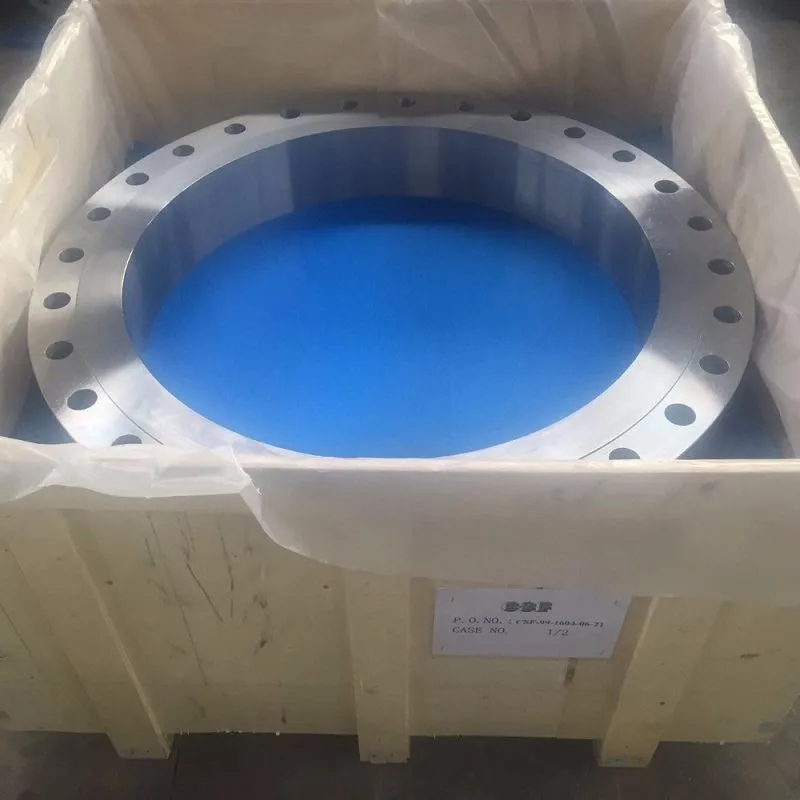
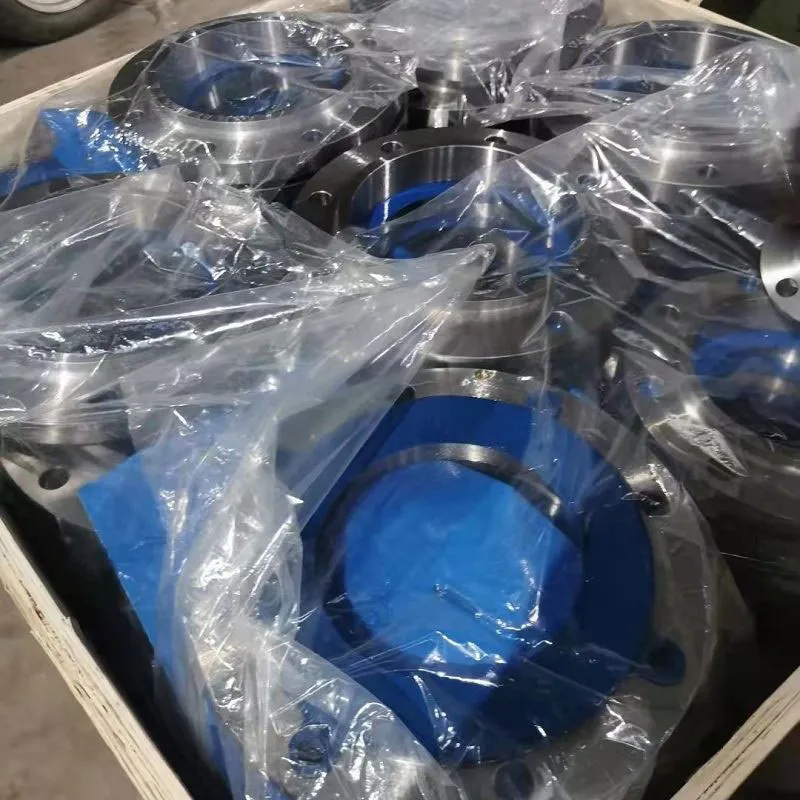
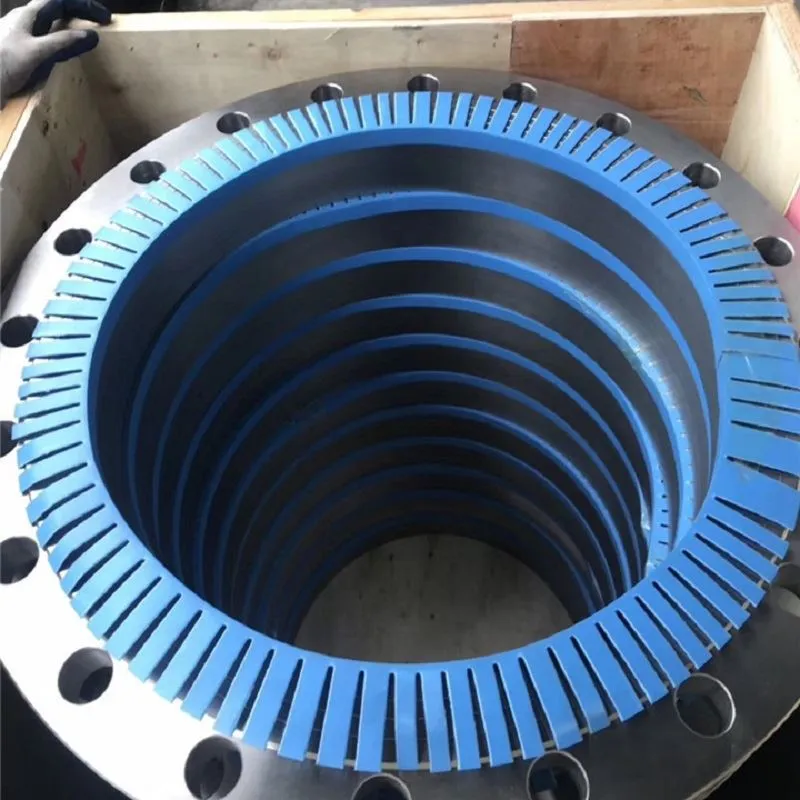
However, finding a reliable partner abroad requires a special approach. Not all 宣称 “factories” are like that. A striking example of an enterprise with a real production base isShanxi Hongkai Forging Co., Ltd.. This company is based in Dingxiang County, Shanxi Province, one of the key industrial centers of forging and press production in China. Unlike resellers, Shanxi Hongkai Forging operates three of its own production sites, providing a full cycle from primary forging and heat treatment to finishing machining and packaging. Their specialization includes precisely those types of products that are currently in short supply: overhead, threaded, butt weld and blind flanges in the range from DN15 to DN4000. It is important that the company has the right to independently export, which allows it to build transparent supply channels directly, bypassing unnecessary intermediaries, and strictly comply with international standards (DIN, ANSI, GOST, ASME). The presence of their own quality control laboratory and modern equipment in a region with developed logistics makes such manufacturers a real alternative for those who are looking for a balance between price and guaranteed quality in conditions of global shortages.
The golden mean for the domestic market is regional metal depots that work directly with 2-3 factories (both Russian and trusted foreign ones like the one mentioned above) and have their own warehouse stock. Yes, they charge 20-30%, but they provide a guarantee of availability, fast shipment and, what is critically important, the possibility of a return or exchange if a thread defect is discovered during installation. The plant will send you for an independent examination for months.
How to check a supplier in 5 minutes
Don't trust pretty websites. Enter the company's TIN into the counterparty verification service (for example, Rusprofile or an analogue). Look at the registration date. If a company was opened 3 months ago and sells industrial flanges, this is a high risk. Most likely, this is a shell company created for a specific transaction or to evade taxes. Then you will have no one to make claims under the warranty.
Also pay attention to the assortment. If a company sells everything from nails to turbines, and at the same time claims that it is a manufacturer of flanges, this is a lie. The real factory specializes. He does not have the resources to produce everything at once.
Installation technicalities: killers of your flanges
Even the highest qualitythreaded flange DN80, purchased from the best factory, can be ruined in 10 minutes by improper installation. Accident statistics show that 60% of leaks occur not because of defective products, but because of “crooked hands.”
The main mistake is the use of seals from the last century. Flax with red lead? Forget it. For large diameter threads under high pressure this is a thing of the past. Linen shrinks, dries out, and rots. In hot water systems it turns into dust.
What works in 2026?
- Medium hold anaerobic sealants.Ideal for dismountable joints that are not planned to be touched for 10-15 years. They fill all the micro-irregularities of the thread, turning the connection into a monolith. But remember: to disassemble such a connection, you need to heat it with a burner. This is not always possible on an existing pipeline.
- Sealing thread (polymer).A good option if dismantling is needed. But with a diameter of DN80, the thread consumption will be enormous, and there is a risk that you will wind it unevenly, creating a skew.
- Combined method.Thread + a little sealant. The most reliable option for critical nodes.
Another point is the tightening force. Many plumbers use pipe wrenches of incredible sizes and hang pipes on them for leverage. “The tighter you twist it, the better it will hold.” This is a fatal mistake for cast iron fittings and even finely threaded steel flanges. You are creating excess stress in the metal. Microcracks appear. After six months, under the influence of vibration and thermal expansion, the flange bursts along the body.
Use torque wrenches? Ideally, yes. In reality, at least feel the yield strength of the metal. If the key is tight and the connection has not yet been selected, stop. Most likely the threads are damaged or dirty.
Import substitution: myths and reality
People are shouting about import substitution on every corner. They say that Russian flanges are now better than European ones. Let's take off the rose-colored glasses. European standards (DIN, EN) have been refined over decades. Our GOSTs are good, but execution...
In 2024-2025, many factories purchased new Chinese equipment. It's faster, cheaper. But the accuracy of Chinese machines in the middle segment is often inferior to old Soviet or new European ones. Hence the problem with the thread geometry that I mentioned above. However, as the practice of working with such giants as Shanxi Hongkai Forging shows, the level of technology in leading Chinese clusters (for example, in Dingxiang) already allows them to produce products that fully comply with the strictest international standards ASME and DIN, often surpassing the mass segment of the Russian market in terms of quality stability.
On the other hand, European flanges are now either expensive (parallel import), or long (you wait 3-4 months), or a fake (Chinese stamp “Made in Germany”).
What to choose? If the facility is critical (boiler room, high pressure line) - look for remnants of European brands (BLUMENBECKER, FLANSCHEN) in warehouses, check certificates of origin, or contact trusted Asian manufacturers with a full cycle of control. If the object is ordinary (housing and communal services, internal distribution of production) - take Russian factories from Chelyabinsk or Yekaterinburg. They learned to do things normally. But be sure to request a spot check of the threads with gauges before shipment.
By the way, about calibers. A good foreman or supplier should always have a set of threaded gauge rings. Feel free to check the goods upon receipt. If the seller starts to fuss and say “why do you need this, we’re honest” - turn around and leave. It is fashionable to be honest, but control is necessary.
Thread compatibility issue
It seems that a carving is just a carving. The pipe is inch, metric... The confusion is terrible. The DN80 flange usually has a 3 inch thread (approximately). But the thread pitch may vary! It can be cylindrical (G) or conical (R/K). If you try to screw a tapered thread into a cylindrical thread (or vice versa), you will either not screw it all the way in (it will leak) or you will crush the fitting.
Before ordering a batch, be sure to specify the type of thread in the technical specifications. Don't rely on the “standard”. In Russia, there is such a mess with standards that one factory can cut G3″, and another R3″, and both will consider that they are doing the right thing according to their specifications.
Market forecast for the second half of 2026
What's next for us? Prices will rise. It's inevitable. Indexation of Russian Railways tariffs, rising wages in metallurgy, rising prices for tools. The predicted growth is about 15-20% of current prices by the end of the year.
But the most interesting thing will happen in the quality segment. A wave of bankruptcies is expected among small producers who were unable to adapt to new lending conditions and energy costs. The market will clear. The big players will remain. This is good for the consumer in the long term: there is less chance of running into garage production. But it’s bad in the short term: less competition = higher prices and worse service (why try if you’re a monopolist in the region?).
I recommend that large buyers enter into long-term contracts with fixed prices now, while factories are still struggling for volume. Fix the price for 2026, even if you do not select the entire volume. This will save the budget.
Checklist before purchasing: don’t be fooled
Before transferring money to the supplier, go through this list. It will save you from headaches:
- Checking the quality certificate.There should be actual heat numbers, mechanical test results (yield strength, tensile strength). Just a piece of paper with the “OTK” stamp is worth nothing.
- Visual inspection of the thread.It must be clean, without burrs or broken turns. The color of the metal is uniform. If you see rust inside the thread, this is a storage defect or poor preservation.
- Plane geometry.Place a ruler on the sealing surface. There should be no gaps. Even the slightest bend will cause the gasket to fail.
- Marking.The flange body must be clearly marked: Du, Ru, steel grade, plant trademark. If there is no marking or it is applied with paint that can be erased with a finger, it is a “left” product.
- Warranty conditions.Clearly state in the contract: what is considered a warranty case? Thread breakage during installation? Leak during hydraulic tests? Many factories write in fine print that the warranty is void if “installation conditions are violated,” interpreting this however you like.
Purchasethreaded flange DN80in 2026 is not just a transaction. This is risk management. You are not buying a piece of iron, but the confidence that your pipeline will not turn into a fountain at the most inopportune moment. Saving 200 rubles per piece can result in millions of losses in the event of an accident. Remember this.
And the last piece of advice: don’t chase the lowest price on the Internet. There are no miracles. If someone sells below the cost of metal and processing, it means they are saving on something that will become your problem tomorrow. Choose reliability, choose proven factories (whether they are Russian giants or specialized export-oriented production facilities like Shanxi Hongkai Forging), demand documents. This is the only way to survive this storm in the industrial valves market.
In conclusion, I want to say: the market is alive. Yes, it is stormy, yes, it is changing beyond recognition. But find a quality onethreaded flange DN80really. You just need to use your head, put aside laziness and spend time checking the supplier. Nowadays, information is more valuable than money. Use it.
Sources of information and regulatory framework:
- GOST 12820-80 “Steel flat welded flanges for Ru from 0.1 to 2.5 MPa (from 1 to 25 kgf/cm²). Design and dimensions" (Updated application data in 2025)Link to document
- Monitoring prices for ferrous rolled metal and pipe billets (Rossiyskaya Gazeta, StahlOnline industry reports, January-March 2026)Price report
- Аналитика рынка трубопроводной арматуры РФ: итоги 2025 года и прогноз (Журнал “Вестник Арматуростроения”)Аналитическая статья
- Реестр сертифицированных производителей трубопроводной арматуры (Национальное Агентство Контроля Сварки)Проверка сертификатов