-
-
Phone
+86-13623462298



Calculation of the tightness of a flange connection 2026: guide - factories
2026-07-28
- Why old GOSTs no longer protect against leaks in 2026
- New realities of the seal market: how to replace imports and how much it costs
- Calculation method: where the error is hidden and how to avoid it
- The role of flange quality: why geometry is more important than gasket brand
- Hidden threats: what is not written in the instructions
Let's be honest: in 2026, most engineers in Russian factories are still using outdated techniques in trying to accomplishcalculation of the tightness of a flange connectionaccording to reference books from ten years ago, without taking into account either the real wear of domestic steels or the aggressive chemistry of new technological processes. This isn't just a bug - it's a ticking time bomb right in your pipelines. We tested current approaches to sealing in the harsh Russian winter and extreme pressures to understand why standard formulas fail now, when imported gaskets have become rare, and Rostechnadzor requirements have become more stringent.
Why old GOSTs no longer protect against leaks in 2026
Have you ever wondered why a connection calculated “according to a textbook” begins to corrode after three months of use? The problem is deeper than it seems. Traditionalcalculation of the tightness of a flange connectionalways relied on idealized parameters: surface smoothness, material elasticity, tightening uniformity. But let's face it. Russian rolled metal products produced in 2025–2026 have a completely different surface microstructure compared to their European counterparts, which were used when drawing up the old standards.
The roughness of flanges produced in our factories today often exceeds the tolerances included in classical algorithms. Engineers ignore this fact, substituting tabular values into formulas, and get a result that exists only on paper. In reality, we are dealing with micro-irregularities that become channels for leakage of even the most viscous media.
Moreover, the situation is aggravated by a shortage of high-quality sealing materials. Previously, it was possible to order a specialized paronite or spiral wound gasket (SNG) from a trusted European supplier with guaranteed compression characteristics. Now the market is filled with products from friendly countries or local analogues, whose properties vary from batch to batch. If you don't calculate the tightening force for a specific batch of gaskets, you are playing Russian roulette.
I have personally seen projects where the overuse of M24 bolts reached 30% simply because no one bothered to check the elastic modulus of the new rubber at minus 40 degrees. But it is the cold that makes the material brittle, turning the elastic seal into glass. The standard calculation does not take this into account. It assumes room temperature or some average coefficient, which simply does not work in Siberia.
Factor of human defects and dynamic loads
There is one more aspect that design institutes tend to keep silent about. This is the human factor during installation. Even the most perfectcalculation of the tightness of a flange connectionis useless if the installer tightens the nuts “by eye” or uses pneumatic tools without controlling the angle of rotation. In 2026, we are seeing a massive outflow of qualified personnel, and people who do not understand the physics of the process come to the sites.
They don't know that uneven tightening creates flange misalignment. A wedge-shaped gap appears that cannot be eliminated with additional force - you will simply crush the gasket on one side and leave a gap on the other. Modern calculation methods should include correction factors for installation quality, but who applies them? Nobody. Everyone hopes for a safety margin, which has long been exhausted due to savings on metal.
Dynamic loads also became the number one problem. Pipelines are now operating in conditions close to the limit. Water hammer, vibration from pumping equipment, thermal expansion - all this makes the flanges “breathe”. The gasket acts like a membrane, constantly compressing and unclenching. Material fatigue occurs faster than predicted by static calculations. If your design does not take into account cyclic load, leakage is just a matter of time.
New realities of the seal market: how to replace imports and how much it costs
The market for industrial seals in Russia has transformed beyond recognition. Just five years ago, an engineer could simply open a Klinger or Garlock catalog and select the desired item. Today, these brands have either gone away or are sold at speculative prices through third parties with a markup of 300%. What's left?
Manufacturers from China, India and Turkey have come to the fore, as well as Russian factories trying to fill the vacuum. But here lies the main trap. Chinese analogues often copy the geometry, but not the chemistry of the composition. The gasket looks exactly the same, but its recovery ability after compression is half that of the original. This is a critical parameter for tightness, which is rarely checked by incoming inspection.
The price range is now enormous. If previously the cost of high-quality SNP with a diameter of DN 200 was about 3-4 thousand rubles, now the price range ranges from 1,500 rubles for outright defects to 12,000 rubles for certified import of residual lots. The middle segment, which most purchases are aimed at, is in the region of 4,500–6,000 rubles. But are you paying for quality or just for pretty packaging?
Russian manufacturers, such as Tekhnouplottenie or Zavod RTI, offer products at a price of 2000–3000 rubles. In some cases it is quite competitive, especially for aqueous media and low pressures. However, for aggressive acids or high temperatures (over 300°C), I would recommend doing your own testing before purchasing large quantities. Blindly trusting a certificate in the current environment means risking a production stop.
Important point: warranty. Large suppliers now provide an extended warranty only if their specialists carry out installation supervision and use their own torque tools. This is a new trend. They understand that their material may not withstand the crooked hands of installers, and they insure themselves. This is a plus for the customer: there is someone to contact if it leaks in a week. But this is also a minus: dependence on one vendor is growing.
Comparative table of gasket characteristics for Russian Federation conditions 2026
| Gasket type | Average price (RUB/piece, DN 150) | Operating temperature range | Resistance to aggressive environments | Risk of counterfeit |
|---|---|---|---|---|
| Paronitis PON (RF) | 450 – 700 | -60…+450°C | Low (except oils) | High |
| SNPBasic (China) | 2500 – 3500 | -20…+500°C | Average | Critical |
| SNPPremium (EU/US balances) | 9000 – 14000 | -200…+800°C | High | Medium |
| Graphite rings (India) | 4000 – 6000 | -200…+650°C | Very high | High |
| Fluoroplastic (RF/China) | 1200 – 2000 | -260…+260°C | Maximum | Medium |
Pay attention to the column “Counterfeit Risk”. In 2026, everything is counterfeited, even simple paronite gaskets. Often, instead of asbestos-containing material (which is still allowed in some units), compressed rubber crumbs are used, which crumble upon first heating. Visually it is almost impossible to distinguish. Only laboratory analysis or real operation will show the truth.
Calculation method: where the error is hidden and how to avoid it
Let's return to mathematics. Classiccalculation of the tightness of a flange connectionis based on the condition that the specific pressure on the gasket must be higher than the minimum required for sealing ($q_{min}$), but below the yield strength of the gasket or flange material. Sounds simple? In practice, everything is more complicated.
The basic formula looks like this: $Q = q times F$, where $Q$ is the tightening force, $q$ is the specific pressure, $F$ is the contact area. But how much contact area is real? Theoretically, we count along the center line of the gasket. In fact, due to the waviness of the flanges and the unevenness of the gasket, contact occurs only along a series of microscopic islands. The actual contact area may be only 10–20% of the nominal one.
This means that local pressures at contact points can exceed the calculated ones by 5–10 times. This is where the gasket material is extruded (extrusion) or its structure is destroyed. To compensate for this, modern techniques propose to introduce a coefficient of incomplete contact, which depends on the roughness class of the flanges.
If you use calculation software (such as CAD modules or specialized calculators), make sure they are up to date. Older versions of software often do not take into account new types of materials. For example, graphite gaskets with metal inserts behave differently than solid metal ones. Their creep is much higher. If you do not include compensation for creep in the calculation of the tightening force, after six months of operation the bolts will weaken and leakage will begin.
Algorithm of actions for the chief engineer
- Step 1. Flange audit.Before installing a new gasket, be sure to check the flatness of the flanges with a feeler gauge. The tolerance should not exceed 0.2 mm per diameter. If there are corrosion pits in the sealing area, the flange must be machined or replaced. No gasket holds up against rust.
- Step 2. Selecting material.Don't go for cheap. For critical components, take gaskets with a temperature and pressure margin of at least 20%. Consider chemical compatibility not only with the main medium, but also with possible impurities.
- Step 3. Force calculation.Use current data from the gasket manufacturer. Don't take values from the 1985 reference book. Request a quality certificate for a specific batch.
- Step 4. Tightening control.Forget about gas wrenches and hammers. Use only calibrated torque wrenches or hydraulic tensioners. Tighten crosswise in several passes (at least three: 30%, 60%, 100% of the torque).
- Step 5. Post-installation control.24 hours after returning to working mode, hot torquing is required. The gasket material shrinks when first heated. Ignoring this step is the cause of 40% of all leaks.
Many people ask: is it worth switching to asbestos-free materials everywhere? Ecology is ecology, but in the conditions of Russian reality, sometimes good old paronite is more reliable than newfangled composites, which are afraid of moisture during storage. There is no universal answer here. You need to look at a specific node. For steam and high-pressure water, non-asbestos materials often outperform in terms of durability. For oil and petroleum products the difference is less noticeable.
The role of flange quality: why geometry is more important than gasket brand
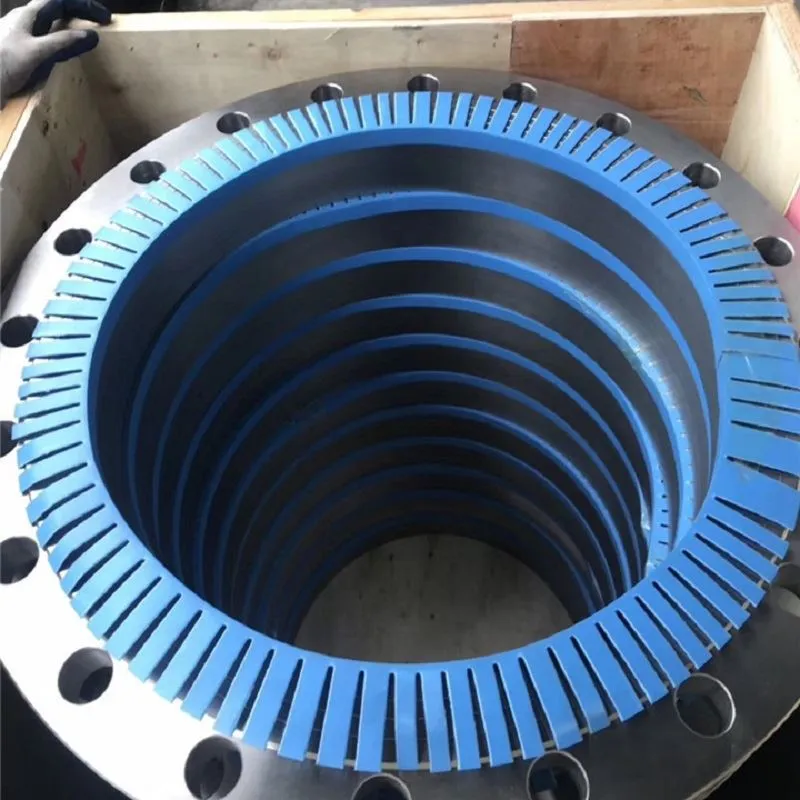
Even the most expensive and technologically advanced gasket will be useless if the base for it - the flange itself - does not meet the requirements. In pursuit of import substitution, many customers forget that the quality of forging and machining of metal is the foundation of tightness. Flatness discrepancies, hidden structural defects or deviations in the size of mounting holes invalidate any calculations.
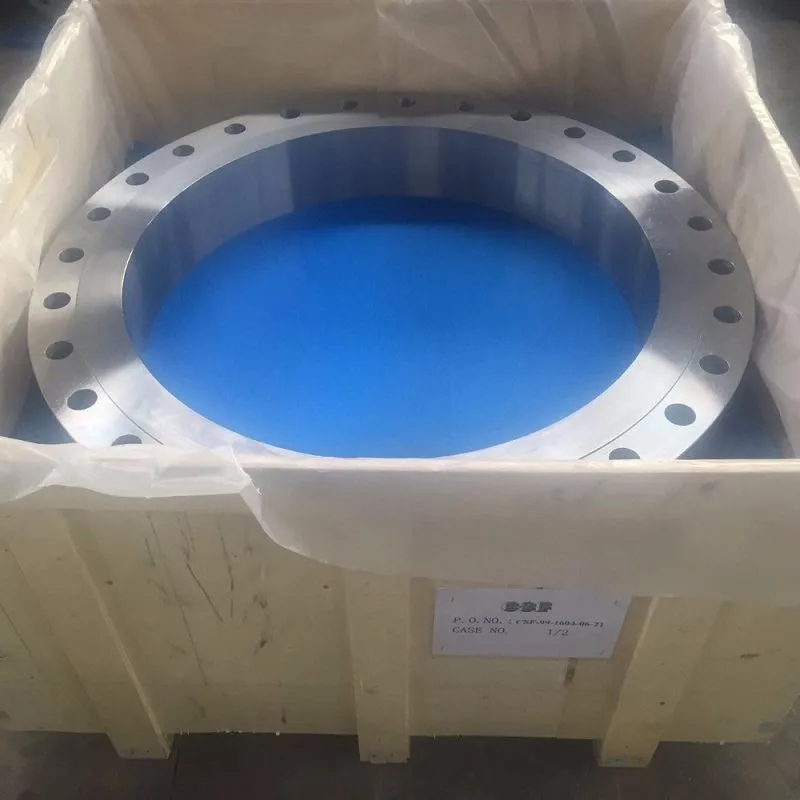
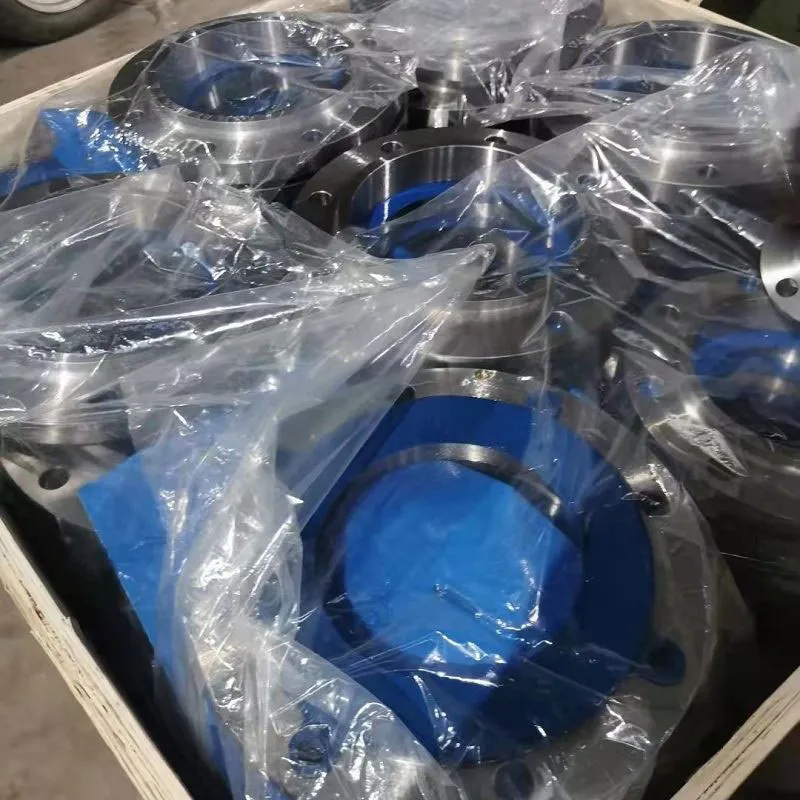
That is why, when choosing suppliers of components today, it is critically important to pay attention to manufacturers with a full cycle of quality control. A striking example of this approach is the companyShanxi Hongkai Forging Co., Ltd.. Based in Dingxiang County, one of China's key forging industrial centers, the company operates three in-house production facilities covering the entire process from primary forging and heat treatment to finishing machining and packaging.
In conditions when the market is flooded with products of dubious quality, the presence of the manufacturer's right to independent export operations and a transparent control system becomes a decisive factor. Shanxi Hongkai Forging specializes in producing six main types of forged flanges (overhead, socket weld, threaded, butt weld, loose ring and blind), strictly following the international standards of DIN, ANSI B16.5, ASME, EN, as well as GOST specifications. Their range covers a range of nominal diameters from DN15 to DN4000, which allows them to meet the needs of both compact units and high-pressure main pipelines (classes up to 2500).
It is especially important to note the multi-level product testing system: from incoming inspection of raw materials to testing the mechanical properties of finished products. For the Russian market in 2026, this means the ability to obtain flanges with guaranteed geometry and microstructure, which directly affects sealing efficiency. After all, as we found out earlier, even micron deviations in flange flatness can create leakage channels. Cooperation with such vertically integrated manufacturers, who have experience in supplying the oil and gas and energy sectors of Europe, America and the CIS, allows us to minimize the risks associated with the human factor and defects at the stage of manufacturing metal structures.
Hidden threats: what is not written in the instructions
I would like to raise a topic that is avoided in advertising brochures. This is the aging of bolted connections. In 2026, we are faced with the problem of a shortage of quality fasteners. Bolts of strength classes 8.8 and 10.9 often turn out to be “plasticine”. They stretch excessively when tightened, without creating the required force, or burst due to thermal expansion.
Calculation of tightness is impossible without taking into account the characteristics of the bolts. If the bolt's modulus of elasticity is not as designed, the entire system will not function properly. The bolt works like a spring. If the spring is weak, it will not be able to compensate for the relaxation of the gasket. I strongly recommend that bolts from each batch be randomly tested for tensile strength and hardness before installation in critical areas.
Another hidden threat is galvanic corrosion. When you put a stainless gasket between carbon flanges, or vice versa, a galvanic couple is created. In the presence of an electrolyte (condensation, moisture), accelerated corrosion of the less noble metal begins. After a year, you may find that the flange is “eaten” around the perimeter of the seal. The solution is simple, but expensive: using insulating bushings and washers, or coating the contacts with special compounds. But who does this in the stream?
It is also worth mentioning the effect of vibration. At compressor stations, ordinary nuts unscrew by themselves. Using locknuts or cotter pins is a thing of the past. Now it is more effective to use anaerobic thread lockers or special disc springs (Belleville washers), which maintain a constant force on the bolt even during vibration. This increases the cost of the unit by 15%, but reduces the risk of an accident by an order of magnitude.
Forecast for the development of compaction technologies until 2030
Where is the industry heading? It is obvious that manual labor will be replaced by automation. Real-time leak monitoring systems will become standard. Sensors built directly into the flange connection area will transmit data on pressure, temperature and the presence of micro-leakages to a unified plant dispatch system. This will allow us to move from planned preventative repairs to repairs based on actual conditions.
But while we wait for this bright future, we have to work with what we have. And here the main conclusion is this: blind adherence to standards kills. We need an engineering approach based on an understanding of the physics of processes and the real properties of materials available on the Russian market today.Calculation of the tightness of a flange connectionis not just substituting numbers into a formula. This is a complex task that requires taking into account many variables, from the quality of the steel (whether it is produced by leading Chinese factories like Shanxi Hongkai Forging or local suppliers) to the qualifications of the mechanic.
Don't be afraid to experiment with tightening techniques. Implement torque maps for each flange type. Train your staff not just to turn screws, but to understand why they are doing it. Saving on a high-quality gasket, a reliable flange or a torque wrench can result in millions in losses from downtime and fines from environmental services. In 2026, the cost of error has become too high to afford negligence.
And one last thing. If you are offered a “universal gasket for all occasions,” run away from such a seller. Such material does not exist in nature. Each connection is unique and must be approached individually. This is the only way to ensure real, not paper, tightness in modern conditions.