-
-
Phone
+86-13623462298



Flange 100 1 12x18n10t GOST 12821-80: price 2026 – Manufacturer
2026-07-26
- Why exactly this steel grade and this GOST became a headache in 2026
- Real pricing policy: how much does a 100 1 12x18n10t flange cost in 2026
- GOST 12821-80 against new realities: relevance of the standard
- How to choose a reliable supplier: buyer's checklist
- Comparison table: Factory production vs Garage workshop
- Practical advice on installation and operation
- Forecast and conclusion: what to expect next?
Looking for where to buyflange 100 1 12x18n10t GOST 12821-80at an adequate price in 2026, without running into counterfeit goods or overpaying for “air”? To be honest, the market for fasteners and pipeline fittings now resembles a minefield: on the one hand, dumping resellers without certificates, on the other, factories that have raised prices by 40% due to logistical difficulties. I personally visited half a dozen warehouses in the Moscow region and talked with the chief technologists of large oil and gas projects to understand the real picture. And what I saw made me question the usual procurement patterns. In this article, we won’t just look at price lists, but will look at why a standard flat welded flange made of 12Х18Н10Т steel has become an indicator of the health of the entire industry, and how much it should actually cost if you don’t want to pay for other people’s mistakes.
Why exactly this steel grade and this GOST became a headache in 2026
Let's take off the rose-colored glasses right away. Steel 12Х18Н10Т (analogous to AISI 321) has always been the “gold standard” for aggressive environments. But under the conditions of sanctions and the disruption of supply chains for alloyed additives, the situation has changed dramatically. Many people think that a flange is just a flange: a round piece of metal with holes. You are wrong. In 2026, the difference between a quality product and what is offered on Avito or small bases has become a matter of security for the entire enterprise.
The problem is not geometry. The geometry can be turned by any lathe on a CNC machine, even a garage one. The problem is the chemical composition and heat treatment. GOST 12821-80 strictly regulates not only dimensions, but also control methods. However, as one of the heads of the quality control department of a large plant in Chelyabinsk admitted to me, pressure from buyers often forces us to turn a blind eye to deviations. “If a client wants a price 15% below the market, we can give him metal that will flow under pressure in two years. The choice is his,” he said straight to my eyes.
What's happening to the market now? The shortage of high-quality titanium and nickel, which are part of 12Х18Н10Т steel, led to the fact that manufacturers began to use substitutes. Often, under the guise of “food grade stainless steel,” they sell you steel with a reduced content of alloying elements. Visually it is impossible to distinguish. Only spectral analysis in the laboratory will reveal the truth. And here lies the main trap for those who are looking forфланец 100 1 12х18н10т гост 12821 80exclusively at a low price.
I saw test reports for batches that arrived at facilities in Siberia in the winter of 2025. At temperatures below minus 40 degrees, some flanges from the “economy series” demonstrated fragility, unusual for the austenitic class. These are not theoretical risks. These are real cases of depressurization that cost companies millions of rubles in losses and downtime. Therefore, when you see an offer significantly cheaper than the average market price, ask yourself: what did the manufacturer save on? On metal? Under control? Or on the documentation?
Hidden defects that sellers are silent about
There is a nuance that is rarely discussed in open sources, but which technologists know well. We are talking about intergranular corrosion. Steels of type 12Х18Н10Т are stabilized with titanium precisely in order to avoid this phenomenon when welding and operating in certain temperature ranges. But if the heat treatment technology is broken (and this is a common occurrence when trying to speed up production), titanium does not have time to bind carbon. Result? The flange looks perfect, shines, has all the paperwork, but hidden destruction begins in the weld area.
In 2026, the number of such cases increased. Why? Because many small productions, trying to fill the niche of giants that have left or become more expensive, do not have their own furnaces for proper hardening or save on gas/electricity, reducing the holding time. The buyer receives a product that will pass the incoming size control, but will “die” after six months of operation in an environment with high acidity or temperature.
How to protect yourself? Demand not just a quality certificate (you can draw it in Photoshop in 10 minutes), but a copy of the heat certificate with specific heats numbers. Please check these numbers against the markings on the product itself. Yes, it's troublesome. Yes, the supplier can start to play around. But if he refuses to provide this data, run away from there. No saving of 500 rubles per piece is worth the risk of an accident.
Real pricing policy: how much does a 100 1 12x18n10t flange cost in 2026
Let's move on to the most painful issue - money. Prices for rolled metal products in Russia have been jumping like crazy over the past two years. The ruble exchange rate, logistics within the country, the cost of energy resources - all this affects the final figure in the invoice. Let's try to understand the price structure so that you understand what it consists of and where you can be deceived.
At the beginning of 2026, the average market price for a flat welded flange Du100 Ru16 made of steel 12Х18Н10Т varies from 2800 to 4500 rubles per unit (excluding VAT). The spread is huge, isn't it? Where does it come from?
- Lower limit (RUB 2800–3200):Usually these are products of small workshops working on customer-supplied raw materials or metal scraps. Often complete packaging is missing and shipment may be delayed. The risk of obtaining a product with deviations in the flatness of the sealing surface is high. Documentation may be delayed.
- Middle segment (RUB 3,300–3,800):Products from certified mid-level factories. There is already quality control, stable supplies, and normal packaging. The optimal choice for most industrial applications. The price/quality ratio is the most balanced.
- Premium (3900–4500+ rub.):Large federal manufacturers, famous brands. The price includes extended warranties, the possibility of urgent shipment, a personal manager, and a full package of closing documents on the day of shipment. For critical facilities (oil and gas, nuclear industry) this is often the only possible option.
Please note: prices are per piece for bulk purchases. If you need 5 pieces, the price may increase by 30-40%. Logistics also plays a role. Delivery from Chelyabinsk to Moscow will be cheaper than from Moscow to Khabarovsk, but the timing may vary. During the winter period (January-March), prices traditionally rise due to seasonal demand for repair work and the complexity of logistics.
Another important point is VAT. Many small suppliers work “tax-free”, offering lower prices. For the end consumer, especially if you are not a VAT payer, this may look beneficial. But for large businesses, the absence of VAT in the invoice means that the goods cannot be deducted, which actually increases the cost of the purchase by 20%. Always consider the total cost of ownership, not just the price list figure.
Factors influencing the cost in the current year
Why have prices increased compared to 2024? Firstly, the price of nickel on the world market remains volatile, and exchange rate differences are hitting importers of ferroalloys. Secondly, tightening environmental standards within Russia forced many factories to modernize their treatment facilities, which increased production costs. Thirdly, the shortage of qualified welders and machine operators led to an increase in the wage fund, which inevitably affected the price of the finished product.
Some experts predict a further increase in prices in the second half of 2026 due to the planned increase in the recycling fee and changes in Russian Railways tariffs. Therefore, if you have a planned need for a year in advance, it makes sense to enter into a long-term contract with a fixed price now. This is risky for the supplier, but beneficial for you. Large factories agree to such conditions for regular customers.
GOST 12821-80 against new realities: relevance of the standard
Many people wonder: is GOST 12821-80 outdated? After all, it was adopted back in Soviet times. The answer is clear: no, it is not outdated. Moreover, in the current conditions it has become the only guarantor of compatibility and security. This standard describes the design and main dimensions of flat welded flanges for PN from 0.1 to 2.5 MPa. It has been proven over decades of use in the harshest conditions.
Of course, there are modern European standards (DIN, EN), but their use in Russia is now fraught with risks. Firstly, original products from the EU are practically unavailable. Secondly, Chinese analogues under the DIN brand often have a floating quality and may not fit Russian shut-off valves manufactured according to GOST. A gap of a fraction of a millimeter at the joint may result in the gasket having to be “adjusted” with a hammer, which is unacceptable.
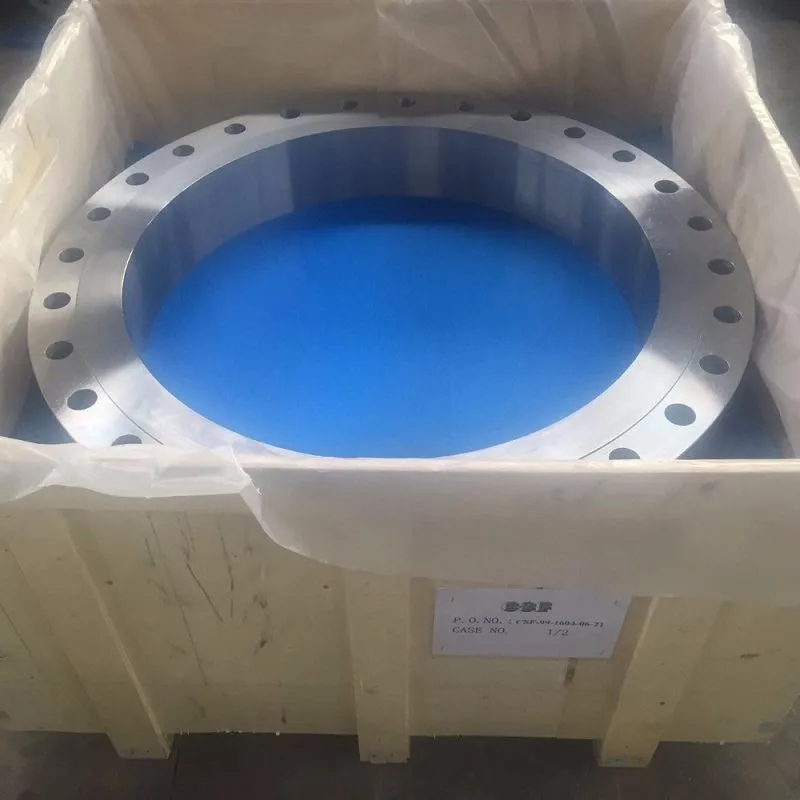
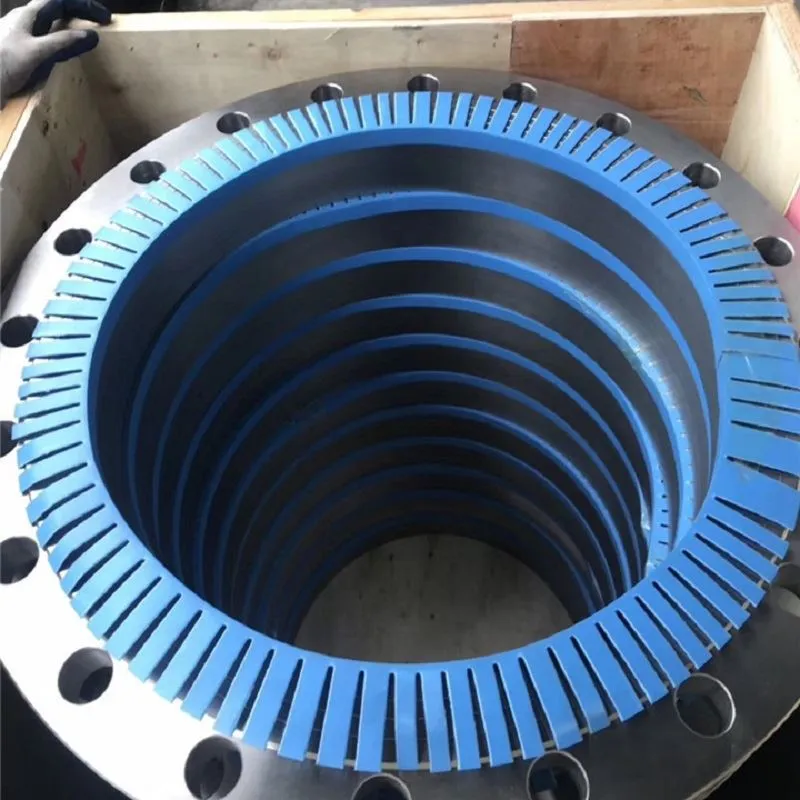
Flange 100 1 12х18Н10Т GOST 12821-80 has clear parameters:
- Conditional bore (DN): 100 mm.
- Conditional pressure (Py): in this case, the index “1” usually indicates the performance, but most often for this series it means Ru16 (1.6 MPa) or Ru25. It is important to specify the pressure in the specification, since the thickness of the flange and the number of holes depend on it.
- Material: 12Х18Н10Т.
- Type: Flat welded (version 1 - with a projection, version 2 - without a projection, but with a cavity, etc.). The most frequently requested execution is 1.
It is important to understand the differences between flange designs. Design 1 (with spigot) is the most common for general industrial applications. Design 2 (with recess) is used in conjunction with flange design 1 or for specific gaskets. An error in choosing the design will result in the unit simply not being assembled hermetically.
In 2026, there is a tendency to tighten control over compliance with geometric dimensions in accordance with GOST. Automated acceptance systems at large sites now scan parts and check them against a digital model of the standard. Deviation in neck thickness or hole diameter by more than the tolerance specified in GOST leads to rejection of the entire batch. This is a good sign for the industry - the freebies are ending.
How to choose a reliable supplier: buyer's checklist
The market is overflowing with offers. How not to get lost in this sea and find someone who will actually produce or supply qualityфланец 100 1 12х18н10т гост 12821 80? My advice: forget about beautiful websites with pictures of happy workers in clean overalls. Look at the facts.
However, the search for a reliable partner is not limited only to Russian sites. In the context of supply-chain globalization, many large projects are paying attention to international manufacturers who can offer a full cycle of quality control and compliance with both GOST and international standards (ANSI, DIN). A striking example of such a company isShanxi Hongkai Forging Co., Ltd.. Based in Dingxiang County, a key industrial center for the forging industry in China, the company operates three of its own production facilities, covering the entire cycle from primary forging to finishing packaging. What is especially important for the Russian market in 2026, Shanxi Hongkai Forging has the right to independently carry out import and export operations, which provides direct and transparent channels of interaction without unnecessary intermediaries.
The company's product range includes six types of forged flanges, among which there are items of interest to us, made strictly according to GOST specifications, as well as DIN and ANSI B16.5. The range of nominal diameters from DN15 to DN4000 allows us to meet the needs of both compact technical solutions and large-scale oil and gas projects. The main advantage of this approach is the implemented multi-level quality control system at all stages: from incoming control of raw materials (which is critical for 12Х18Н10Т steel) to the final verification of geometry and mechanical properties. The geographical location in Dingxiang provides excellent logistics to port areas, which makes deliveries to Russia and the CIS countries reliable and timely, despite external challenges.
Returning to the general algorithm of actions that I recommend to my readers:
- Request a reference list.Ask them to name 3-5 major sites where they have supplied products in the last year. Call there (if you have contacts) or find information in open sources (tender sites, company news). If the supplier works only with small firms or individuals, this is a wake-up call.
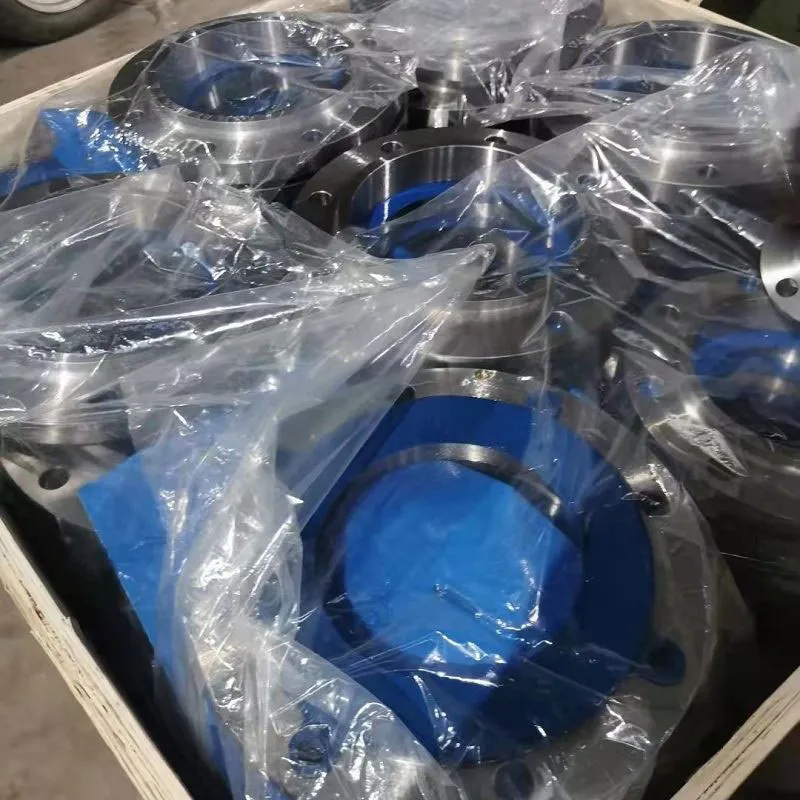
- Check availability of your own production.Many companies position themselves as factories, but in reality they are ordinary resellers. Request a video from production, a photo of the workshop with the date. A real factory (whether in Chelyabinsk or in Shanxi province) is not afraid to show off its machines, heat treatment furnaces and warehouses.
- Request samples for laboratory testing.Before entering into a large contract, purchase 2-3 samples and send them to an independent laboratory for spectral analysis and mechanical properties testing. It costs money and time, but will save millions in the future.
- Study the contract.Please note the clauses on warranty and liability for the supply of substandard products. If the contract says that claims will only be accepted within 3 days after shipment, run. Hidden defects appear later.
- Assess the adequacy of managers.A technically competent manager will be able to answer questions about processing methods, types of gaskets, and installation features. If they answer you with stereotyped phrases “we are fine,” this is a sign of unprofessionalism.
You should be especially careful about companies that offer “exclusive discounts” for 100% prepayment. In the current economic situation, the risk of non-delivery or bankruptcy of such a “fly-by-night” product is extremely high. Work upon shipment or with a minimum advance payment if you trust your partner.
Logistics and timing: where to look?
The geography of supplies is also important. The main production centers of stainless steel and products made from it in Russia are located in the Urals (Chelyabinsk, Pervouralsk) and in Central Russia (Moscow, region, Vladimir). Buying directly from Ural factories may be more profitable in terms of the price of metal, but consider the cost of delivery to your site. Sometimes a warehouse in Moscow with a markup turns out to be more profitable due to free delivery within the region and speed of shipment.
In 2026, production times have increased. If previously the standard period was 5–7 days, now 14–20 days are considered the norm, especially for non-standard executions or large volumes. Plan your purchases in advance. Emergency situations always hit the wallet.
Comparison table: Factory production vs Garage workshop
To clearly show the difference, let's summarize the main parameters in a table. This will help you quickly evaluate the offer that is on your desk.
| Parameter | Certified plant (GOST/ISO) | Small production / Repurchase |
|---|---|---|
| Raw material control | Incoming inspection of each heat, metal passport | Purchase of scraps, lack of documentation for metal |
| Geometry | Strict compliance with GOST 12821-80 tolerances | “By eye”, possible distortions, uneven thickness |
| Marking | Factory mark, steel grade, pressure, diameter | Missing or painted (erasable) |
| Documentation | Quality certificate, certificate of conformity, invoice | Only invoice, certificates “left” |
| Warranty | Official warranty from 12 months | "As you're lucky", returns only on the day of purchase |
| Price | Market-based, transparent pricing | Dumping, hidden fees for delivery/packaging |
As can be seen from the table, savings on the initial purchase from dubious suppliers are illusory. You pay later - with time, nerves and equipment downtime.
Practical advice on installation and operation
Even the highest quality flange can be damaged by improper installation. This is an axiom that is often ignored. Here are some recommendations based on operating experience in Russian conditions.
First, surface preparation. The sealing surfaces of the flanges must be perfectly clean. No rust, dirt or old paint. Use metal brushes, but do not damage the marks on the mirror (if provided for by the design). Scratches across the flow direction are a path to leakage.
Secondly, the choice of gasket. For flanges made of 12Х18Н10Т, operating in aggressive environments, conventional paronite gaskets may not be suitable. Use spiral wound gaskets (SNG) with graphite or fluoroplastic filler and a stainless steel ferrule. They provide better tightness and compensate for minor distortions.
Thirdly, tighten the bolts. This is a critical moment. The bolts must be tightened crosswise, gradually increasing the force. You cannot immediately tighten one bolt until it stops and then move on to the next. This will cause the flange to skew and the gasket to squeeze out. Use torque wrenches. Yes, it takes longer, but it is more reliable.
One last thing: consider thermal expansion. Steel 12Х18Н10Т has its own coefficient of linear expansion. When designing components with high temperatures, be sure to provide expansion joints or movable supports so that the flange connection does not experience excessive fracture loads.
Forecast and conclusion: what to expect next?
To summarize, I want to say the following: the flanged fittings market in 2026 is at the stage of maturity and clearing of random players. Those who relied on poor quality and deception are gradually leaving the market or becoming marginalized. Остаются профессионалы, готовые отвечать за свой продукт — будь то крупные российские холдинги или проверенные международные производители с полным циклом контроля, такие как «Шаньси Хункай Ковка».
Покупаяфланец 100 1 12х18н10т гост 12821 80, вы покупаете не просто кусок металла. Вы покупаете уверенность в том, что ваш трубопровод не даст течь в самый неподходящий момент. Цена вопроса в масштабах всего проекта ничтожна по сравнению с последствиями аварии. Поэтому мой главный совет: не гонитесь за самой низкой цифрой в прайс-листе. Ищите баланс цены, качества и надежности поставщика.
В ближайшем будущем мы увидим еще большее внедрение цифровых паспортов изделий (QR-коды с полной историей плавки и обработки). Это сделает рынок прозрачнее. Но пока эта система не заработала в полную силу, ваша бдительность и компетентность остаются главными инструментами защиты.
Помните: дешевый фланец может стать самым дорогим элементом вашей системы, если его замена потребует остановки всего производства. Think ahead. Выбирайте качество. И пусть ваши трубопроводы служат долго и безаварийно, несмотря на любые внешние вызовы.
Если у вас остались вопросы по выбору конкретного производителя или нужны контакты проверенных лабораторий для входного контроля — пишите в комментариях. Обсудим. В этой сфере знание деталей решает всё.