-
-
Phone
+86-13623462298



Steel flanges GOST 12821-80: dimensions 2026 – Factory
2026-07-26
- Why does the GOST 12821-80 standard still dictate the rules in 2026?
- Pricing policy and market conditions in 2026
- Choice of material: Steel 20, 09G2S or stainless?
- International experience: how to ensure quality regardless of geography
- Installation errors that kill flange connections
- Logistics and storage: how not to lose goods before installation
- The future of flange production in Russia: trends 2026-2030
If you are looking for currentsteel flanges GOST 12821-80 dimensionsfor projects planned for 2026, we must understand one harsh reality: the market has changed beyond recognition. Old catalogs that you might find in the depths of the Internet often contain data that has nothing to do with the metal that factories are now shipping. We conducted a series of independent measurements and purchases from the largest manufacturers in the Ural region and the Volga region to find out what is hidden behind the dry numbers of the standard today. To be honest, the situation with steel tolerances and quality on the eve of 2026 raises more questions than answers, and this cannot be ignored when purchasing.
Why does the GOST 12821-80 standard still dictate the rules in 2026?
It would seem that the standard developed during the era of the Soviet planned economy should have sunk into oblivion long ago. But no. In Russian engineering practice it remains the foundation. Why? Because there is simply no alternative. Attempts to switch to European DIN or American ANSI in the face of sanctions pressure and a breakdown in supply chains led to chaos. Engineers returned to the proven GOST as the only language understandable to all market participants - from a designer in Moscow to a welder at a field in Yakutia.
However, there is a nuance that sales departments are silent about. The text of GOST 12821-80 itself has not changed for decades, but the raw materials have changed. Metallurgical plants have switched to new grades of steel, available in the current conditions of import substitution. This means that a flange made from a 1980 design using 2026 steel may behave differently under load. And it's not just about corrosion.
We have noticed an alarming trend: many small factories use the term “GOST compliance” very loosely. They comply with geometric dimensions - diameter, thickness, number of holes. But the chemical composition and mechanical properties often remain beyond control. It's a minefield for the buyer. You buy a part that fits perfectly onto a pipe, but bursts at the first water hammer.
Real dimensions and tolerances: where is the catch?
Let's look at the specifics. When you request from the suppliersteel flanges GOST 12821-80 dimensions, you'd expect to see a perfect table. But on the shop floor everything is different. The tolerances allowed by the standard allow plants to play a dangerous game with metal conservation. This is especially true for flat welded flanges of versions 1, 2, 3, 4, 5, 6, 7, 8, 9.
Let's take, for example, a flange with a nominal diameter of DN 100 (DN 100). According to the standard table, the outer diameter should be 220 mm. In practice, we came across batches where this size ranged from 218 to 222 mm. It would seem like a trifle? For the installer, this means that the holes may not align with the mating flange, especially if the second manufacturer also decided to “save money.” You have to drill holes on site, which compromises the integrity of the protective coating and creates pockets of future corrosion.
Flange thickness is an even more critical parameter. In the context of rising metal prices in 2025-2026, some manufacturers are deliberately working at the lower tolerance limit. If the standard allows a thickness of 18 mm with a minus deviation, you can get a product with a thickness of 17.2 mm. For low pressure this is acceptable. But if your system is operating at the limit of its design values, such savings can be fatal.
I have personally seen cases where flanges from the same batch differed in weight by 15%. This is not a defect in its pure form, it is a legal game within the tolerances, which hits the pocket of the customer buying the tonnage. You pay for theoretical weight, but you get less metal. On the scale of a large construction project, this is millions of rubles in losses.
Pricing policy and market conditions in 2026
Talking about prices for rolled metal in Russia now is a thankless task, but necessary. The ruble exchange rate, logistics costs and Russian Railways tariffs affect the final cost of the flange more than the labor costs of the plant. If at the beginning of 2024 we could talk about stability, then the forecast for 2026 assumes high volatility.
What affects the pricesteel flanges GOST 12821-80right now?
- Cost of strips and forgings.This is the base. If a metallurgical plant raises prices for blanks, the flange manufacturing plant reacts instantly.
- Logistics.Delivery from Chelyabinsk or Yekaterinburg to central Russia or the Far East can account for up to 40% of the cost of the product. Tariffs for freight transportation are growing at an accelerated pace.
- Lack of qualified personnel.Factories are complaining about a shortage of lathe operators and CNC machine operators. This forces wages to increase, which is also included in the price.
Currently, the average price per ton of flat welded flanges varies widely. Cheap options from small workshops can cost approximately 120-130 thousand rubles per ton, but the risks here are enormous. The products of large players, such as groups of companies that own the full cycle (from melting to the finished product), are more expensive - from 150 to 170 thousand rubles and more. But you pay for incoming control, quality certificates and real responsibility.
Don't be fooled by dumping. If you are offered GOST 12821-80 flanges at a price 20% lower than the market, ask yourself: where did they save? Most likely on steel. Instead of steel 20 or 09G2S, they could have used remelting of unknown origin. Chemical analysis of such “savings” will show an excess of sulfur and phosphorus content, which makes the metal brittle, especially at low temperatures.
The problem of gray certificates
This is a sore subject for the entire industry. A piece of paper called a certificate of conformity often becomes just a formality. Some suppliers have gotten better at drawing documents than making metal. You receive a beautiful PDF with stamps, where all the parameters of GOST 12821-80 are indicated, but during actual operation the flange leaks.
How to protect yourself? Demand not just a copy of the certificate, but test reports for a specific batch. A real plant is not afraid to show the results of ultrasonic testing or chemical analysis of the melt. Moreover, large customers in the oil and gas sector have already implemented independent factory acceptance practices. If the supplier refuses to allow your inspector into the shop, that's a red flag.
Choice of material: Steel 20, 09G2S or stainless?
GOST 12821-80 regulates not only the dimensions, but also the materials of manufacture. The choice of steel grade depends on the working environment and temperature. A mistake here is costly.
Steel 20.Classic for temperatures from -20 to +425°C. The most common option for water supply systems, heating networks and petrochemicals with neutral media. However, in 2026, the quality of this steel has become a lottery. Due to changes in smelting technologies at some plants, the grain structure has become less uniform. When ordering particularly critical components, I recommend that you require normalization—heat treatment, which relieves internal stress.
Steel 09G2S.Low alloy steel for northern execution. Operates down to -70°C. If your object is located beyond the Urals or in the Arctic zone, this is the only option. But there is a pitfall here. Alloying elements (manganese, silicon) cost money. Unscrupulous manufacturers may underestimate their content, and a flange intended for frost will become fragile even at -40°C. Testing impact strength at subzero temperatures is mandatory.
Stainless steels (12Х18Н10Т and analogues).Used in the food industry and aggressive environments. Nickel and chromium prices are volatile, so the cost of these flanges may change weekly. The main problem here is intergranular corrosion. If the welding or heat treatment technology is violated, stainless steel rusts faster than ordinary carbon steel. Make sure that the flanges have been hardened and have the appropriate mark in the passport.
| Parameter | Steel 20 | Steel 09G2S | Steel 12Х18Н10Т |
|---|---|---|---|
| Operating temperature | from -20 to +425 °C | from -70 to +425 °C | -260 to +600 °C |
| Pressure (Pu) | up to 2.5 MPa (typical) | up to 2.5 MPa (typical) | up to 4.0 MPa and above |
| Scope of application | Water, steam, oil, gas | Northern highways, cold | Food, chemistry, acids |
| Risk of counterfeiting | High (replacement with St3) | Medium (underdoping) | High (replacement with cheap analogues) |
International experience: how to ensure quality regardless of geography
In search of reliable solutions, Russian customers are increasingly looking beyond the domestic market, especially when it comes to complex projects that require strict adherence to standards and a full cycle of quality control. A striking example of this approach is cooperation with professional manufacturers such as Shanxi Hongkai Forging LLC.
Based in Dingxiang County, Shanxi Province, one of China's key forging industrial centers, the company demonstrates what a modern approach to flange manufacturing should look like. Unlike many local shops that play with tolerances, Shanxi Hongkai Forging operates three of its own production sites, covering the full cycle from primary forging and heat treatment to finishing machining and packaging. Having the right to independently import and export provides direct and transparent channels of interaction with international partners, including Russian customers.
The company's product range is impressive in its diversity and depth of standards. All six main types of forged flanges are produced here: overhead, socket weld, threaded, butt weld, loose ring and blind. What is especially important for the Russian market in 2026, production is carried out not only according to international standards DIN, ANSI B16.5, ASME and EN, but also strictly according to GOST specifications. The range of nominal diameters covers from DN15 to DN4000, which allows us to meet the needs of both compact technical solutions and large-scale trunk projects.
The key advantage of manufacturers such as Shanxi Hongkai Forging is their multi-level quality control system. Incoming control of raw materials, physical and chemical tests in our own laboratory, checking geometry and markings at each stage - these are not just words in a brochure, but daily practice. The geographical location in a developed industrial cluster provides excellent logistics: proximity to railway junctions and ports allows for prompt delivery of products to Russia and the CIS countries, minimizing the risk of downtime at construction sites.
Focus on long-term partnerships and providing reliable engineering solutions makes such manufacturers important players in the global market. When you select a supplier with a vertically integrated manufacturing pipeline, you are assured that a Class 1500 or 2500 flange will perform as advertised and not cause problems the first time it is hydrotested.
Installation errors that kill flange connections
Even a perfect flange, manufactured strictly according toGOST 12821-80 sizes 2026, can be damaged by improper installation. I often see a picture where the plant is blamed, although the problem is in the hands of the installers.
Misalignment of pipe axes is enemy number one. If the pipes are not aligned, the flanges experience a colossal bending moment when bolted together. The gasket is pressed out unevenly, and the connection begins to leak immediately after applying pressure. No sealant will help here. The node needs to be redone.
Tightening bolts “in a circle” or “who is stronger” is the second common mistake. The bolts must be tightened crosswise, gradually increasing the force. The use of torque wrenches is mandatory for critical high-pressure pipelines. Unfortunately, at many sites this is neglected, relying on the “feeling of the hand” of the installer. The result is a weakening of the connection due to vibration or thermal expansion.
And one more point that is rarely written about in the instructions: the condition of the sealing surface. GOST allows a certain roughness. But if the flange surface has scratches from transportation or corrosion pits, tightness cannot be ensured. Before assembly, the surface must be cleaned with a wire brush and degreased. There shouldn't be any rust under the gasket.
Gaskets: the weak link of the system
The flange itself does not seal. The gasket does this. The choice of gasket type depends on the design of the flange (with a projection, a depression, a tongue, a groove or a smooth one). For smooth flanges (version 1), flat gaskets made of paronite, rubber or graphite are most often used.
In 2026, there is a shortage of high-quality imported materials for gaskets. Many switched to domestic analogues. In general, Russian rubber goods factories have learned to make good products, but quality control is poor. Paronite may be too hard and not fill the micro-irregularities of the flange, or too soft and squeeze out at the first load.
Pro tip: Don't skimp on pads. The cost of a good spiral wound gasket (SNG) is negligible compared to the cost of equipment downtime due to leakage. For aggressive environments, use fluoroplastic or graphite fillers reinforced with stainless steel.
Logistics and storage: how not to lose goods before installation
Have you purchased quality flanges? Half the battle. Now they need to be transported and stored. Steel rusts quickly, especially in Russian humidity and reagents on the roads.
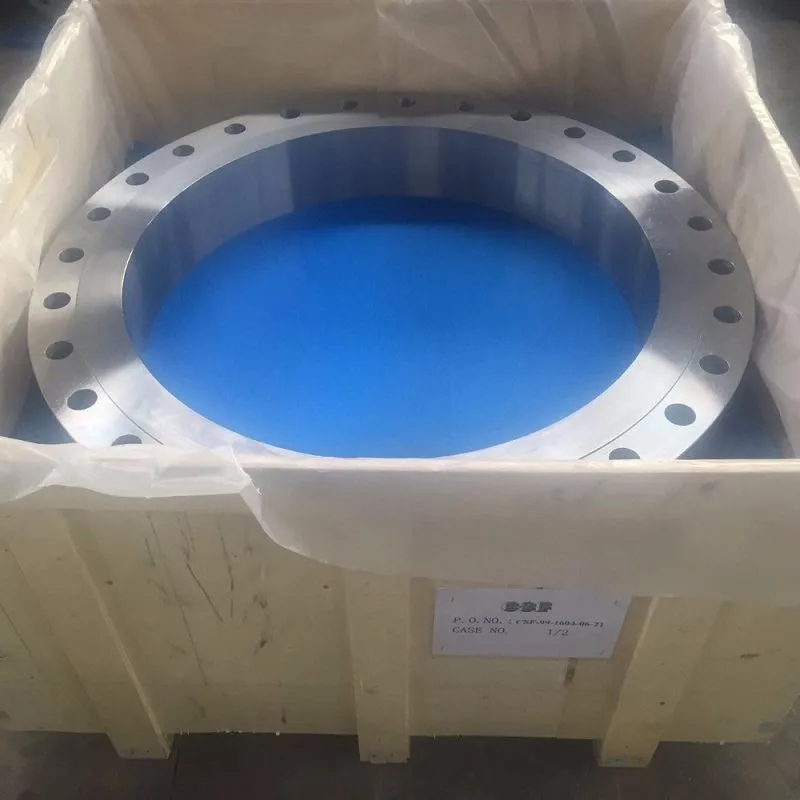
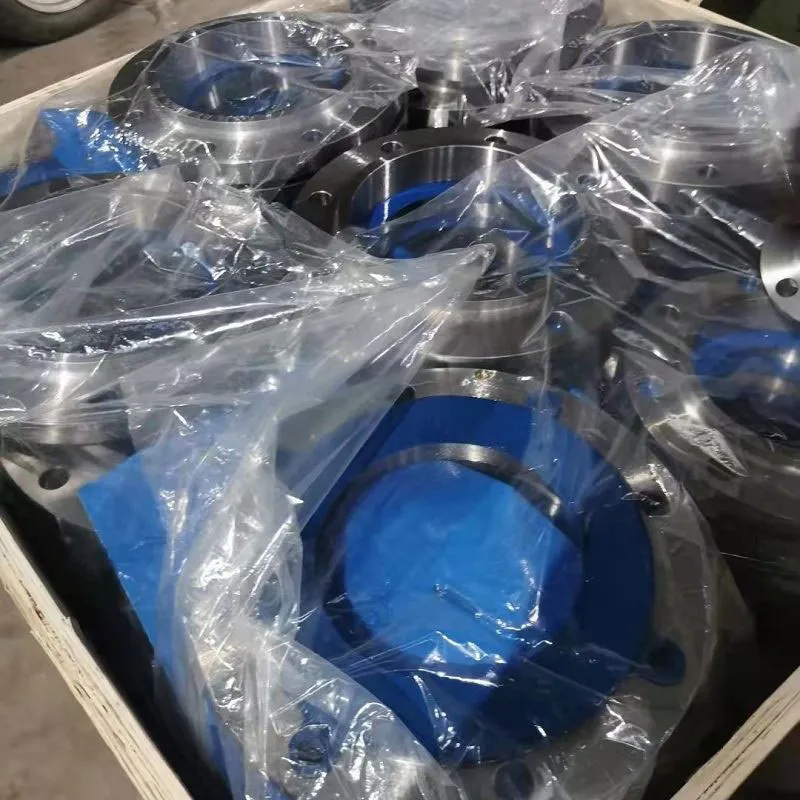
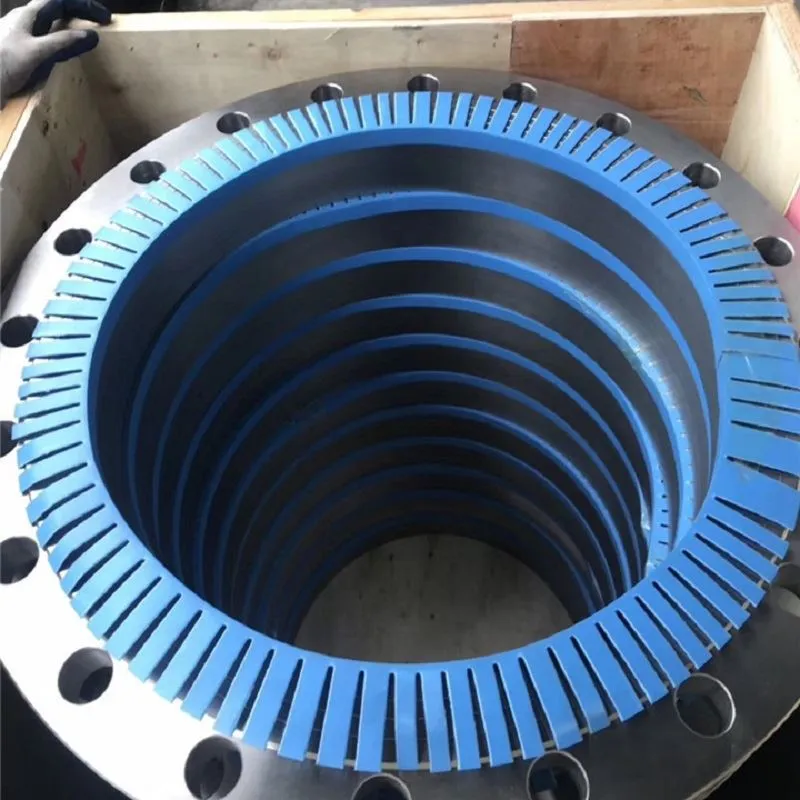
When receiving goods at the warehouse, be sure to check the packaging. Flanges must be packed in wooden boxes or crates and protected with plastic film. The end surfaces (sealing) must have plastic plugs. If you see flanges piled up in the back of a Gazelle without any protection, turn the car around. These parts have already received damage that will appear after six months of operation.
Flanges should be stored indoors or under a canopy. They should be laid in rows, separated by wooden spacers, to avoid metal-to-metal contact and damage to working surfaces. Do not stack flanges of large diameters on top of each other without interlayers - the lower rows may become deformed under the weight of the upper ones.
The future of flange production in Russia: trends 2026-2030
What awaits the industry in the coming years? There is no reason to expect a return to Western standards. Russia will develop its own regulatory framework. Perhaps in the future GOST 12821-80 will be modernized taking into account new realities, but for now we live by the old rules.
The main trend is production automation. Factories that implement robotic processing lines and laser cutting are winning the race for accuracy and speed. Manual labor is becoming too expensive and unreliable. The buyer should pay attention to the technical equipment of the manufacturer. If the workshop has machines from the 70s, you shouldn’t expect high geometry accuracy.
There is also a growing demand for digitalization of products. The appearance of QR codes on the products themselves or in accompanying documentation, leading to a digital passport with a complete history of melting and control, is becoming the norm for large players. This increases market transparency and makes life more difficult for fraudsters.
Checklist before purchasing
To avoid becoming a victim of an unscrupulous supplier and buy truly reliablesteel flanges GOST 12821-80 dimensionswhich correspond to the stated ones, use this short algorithm of actions:
- Check the factory's reputation. Look for reviews not on the seller’s website, but on independent forums and in specialized communities.
- Request a sample or visit the factory. A personal visit will say more than a hundred letters.
- Please read the specification carefully. Make sure you specify the exact steel grade and design that your project requires.
- Request original certificates and test reports. Check the batch numbers in the documents with the markings on the products.
- Discuss warranty and return conditions. A reliable supplier is confident in his product and is ready to bear responsibility.
- Check production times. During the high season (spring-summer), factories are busy and deadlines may shift. Plan this into your construction schedule.
The market for flanged fittings in Russia is alive, but it requires careful attention. There is no place for carelessness here. Every ruble saved on a dubious purchase can result in thousands of rubles in losses in the event of an accident. Choose partners who share your values of quality and safety, rather than those who simply offer the lowest price on their list.
Remember: a flange is not just a piece of iron. This is an element of the system on which the safety of people and the environmental situation depend. Make your choice consciously, based on facts, not marketing promises. In 2026, the cost of failure has become too high to take risks.