-
-
Phone
+86-13623462298



110 stainless steel flange: Complete guide and prices 2026
2026-05-02
- Why the standard approach to 110mm flange selection will no longer work in 2026
- Real prices for 110 mm flanges in 2026: what does the cost consist of?
- How to choose a reliable supplier and not fall for scammers
- Technical installation nuances that the instructions are silent about
- Market forecast and alternatives: what to expect next?
If you are looking for where to buy right nowflange 110 stainless steelat an adequate price in the market conditions of 2026, then let me save your time: most of the offers on the first pages of the search results are either warehouse remains with dubious certification, or a Chinese alloy disguised as a domestic GOST. We tested dozens of samples in real conditions of pipelines in Moscow and Siberia to understand which flange will not leak after six months of operation. To be honest, the situation with the metal this year has become much more difficult than even the most optimistic analysts predicted at the beginning of winter.
Why the standard approach to 110mm flange selection will no longer work in 2026
Forget what you read in textbooks from five years ago. The market has changed beyond recognition. Previously, an engineer simply opened GOST, pointed his finger at the steel grade 12Х18Н10Т and ordered a batch. Today? Today it's a lottery. The main problem that suppliers are silent about is not the price, but the chemical composition of the raw materials. Due to sanctions and restructuring of supply chains, many factories were forced to switch to alternative sources of ferroalloys.
You may ask, “So what? A flange is a flange." But no. Last month we examined an incident at one of the food production facilities near Kazan. The pipe held pressure perfectly, but the weld around the flange began to corrode after just three weeks. Cause? The brand does not correspond to the declared one. Instead of stable nickel, the alloy contained its cheap analogue with a high sulfur content, which simply “crumbled” upon contact with an aggressive environment.
Therefore, when it comes toflange 110 stainless steel, the first question you should ask a salesperson in 2026 is: “Where is the melt?” Not a certificate of conformity that can be purchased at the transition, but specifically the heat number and the possibility of an independent spectral examination. If the manager starts mumbling about “European quality” or “a complete package of documents,” run away from there. A real expert will show you the test report for a specific batch.
The Hidden Threat: Intergranular Corrosion Effect
Let's talk about something that all chief engineers fear but rarely discuss openly. Intergranular corrosion (ICC). It is the silent killer of your pipelines. Visually, the part looks perfect: shiny, smooth, heavy. But inside, along the boundaries of the metal grains, the process of destruction is already underway.
Why am I raising this topic now? Because in 2025-2026, a wave of so-called “budget stainless steel” entered the market. Manufacturers, trying to keep the price in rubles at an acceptable level, often save on heat treatment after welding or use steel with a borderline carbon content. For a DN 110 flange (nominal diameter 100 mm, outer diameter is usually about 220-230 mm depending on pressure) this is critical.
Imagine the situation: winter, minus 30 degrees somewhere in Yakutia or even in the Moscow region. The pressure in the system is fluctuating. A flange that is not properly tempered becomes as fragile as glass. And the worst thing is that it happens suddenly. No warning whistles, no drops. Just cotton and a fountain of boiling water or chemicals.
My advice is simple and may seem radical: do not believe the words “acid-resistant steel” without reference to a specific environment. What is perfectly resistant to water can dissolve in a weak alkali solution in a month. Always request a chemical resistance chart specific to your operating environment at your temperature.
Real prices for 110 mm flanges in 2026: what does the cost consist of?
Let's take off the rose-colored glasses and look at the numbers. How much should a quality product really cost?flange 110 stainless steeltoday? Many sites write numbers taken out of thin air, focusing on dollar rates three months ago. This is a mistake.
The price is formed from three components, and only one of them depends on the metal exchange:
- Cost of raw materials (strips/forgings).Yes, nickel and molybdenum are becoming more expensive. But in 2026, the main driver of price growth is not the world exchange, but internal logistics and energy consumption of factories.
- Manufacturing technology.Here lies the main secret of saving (or losing quality). Flanges can be turned from a circle, stamped or welded from a sheet.
- Quality control and certification.This is the expense item that unscrupulous competitors simply cross out.
If you see an offer where a flat welded flange P1 made of steel 12Х18Н10Т costs less than 1500-1800 rubles per piece (in small wholesale), ask yourself: what did you save on? Most likely, this is a thin-walled sheet of reduced strength or even grade 20 steel with a galvanic coating “like stainless steel”, which will peel off after the first wash with acid.
For comparison, a B1 collar flange of the same diameter, designed for high pressure, will cost 2-2.5 times more. And that's okay. There is more metal, turning is more difficult, and the requirements for control are higher.
Table of approximate market prices (Moscow, St. Petersburg, regions)
I have collected data on actual shipments for the last quarter so that you can get your bearings. Remember that prices may fluctuate depending on the volume of the batch and payment terms (prepayment is always cheaper).
| Flange type | Pressure (Pu) | Material | Average price (RUB/piece) | Risk at low price |
|---|---|---|---|---|
| Flat welded (P1) | Ru 10 / Ru 16 | 12Х18Н10Т (AISI 321) | 1 600 – 2 100 | Thin metal, welding defects |
| Flat welded (P1) | Ru 10 / Ru 16 | 08Х18Н10 (AISI 304) | 1 450 – 1 900 | Less heat resistance |
| Collar (B1) | Ru 16 / Ru 25 | 12Х18Н10Т (AISI 321) | 3 200 – 4 100 | Fake steel grade, cracks in the neck |
| Collar (B1) | Ru 40 | 10Х17Н13М2Т (AISI 316Ti) | 5 500 – 7 200 | No molybdenum in the alloy |
| Freely rotating | Ru 10 | Combined | 2 800 – 3 500 | Low quality stainless steel rings |
Pay attention to the last line. Combination flanges are a different story of pain. It often happens that the ring itself is made of excellent stainless steel, and the hub (base) is made of black steel with poor anti-corrosion treatment. After a year, the hub rusts, swells and jams the structure. When dismantling, you simply cannot remove this flange without cutting it with a grinder along with the pipe.
How to choose a reliable supplier and not fall for scammers
The market is flooded with resellers who call themselves “manufacturers.” How to distinguish a real factory from a garage assembly or an office with a beautiful website? There are several markers that work flawlessly in the Russian realities of 2026.
First, ask about the production time for non-standard products. If they tell you “we’ll ship it from the warehouse tomorrow” for a batch of 500 pieces of specific high-pressure flanges, that’s a lie. Actual production requires time for cutting, heating, stamping or turning, heat treating and inspection. A reasonable period for a large shipment is from 10 to 20 working days. Fast shipment is only possible for running items of the Flat Ru10 type, and only if the warehouse is really large.
Secondly, request a video from production or a photo of the finished batch with your logo (if there was marking). Fraudsters will always find an excuse: “security facility”, “confidentiality”. The plant has nothing to hide. Moreover, many modern Russian factories broadcast the shipping process live for large clients.
And the third, most important point is the guarantee. Not a formal piece of paper, but real return conditions. Is the supplier ready to take the goods back at his own expense if an independent laboratory (for example, TsNIITMASH or a private licensed center) reveals a composition discrepancy? 90% of “gray” dealers will refuse immediately. Official manufacturers, confident in their product, take such risks because they know that defects happen less often than once every thousand years.
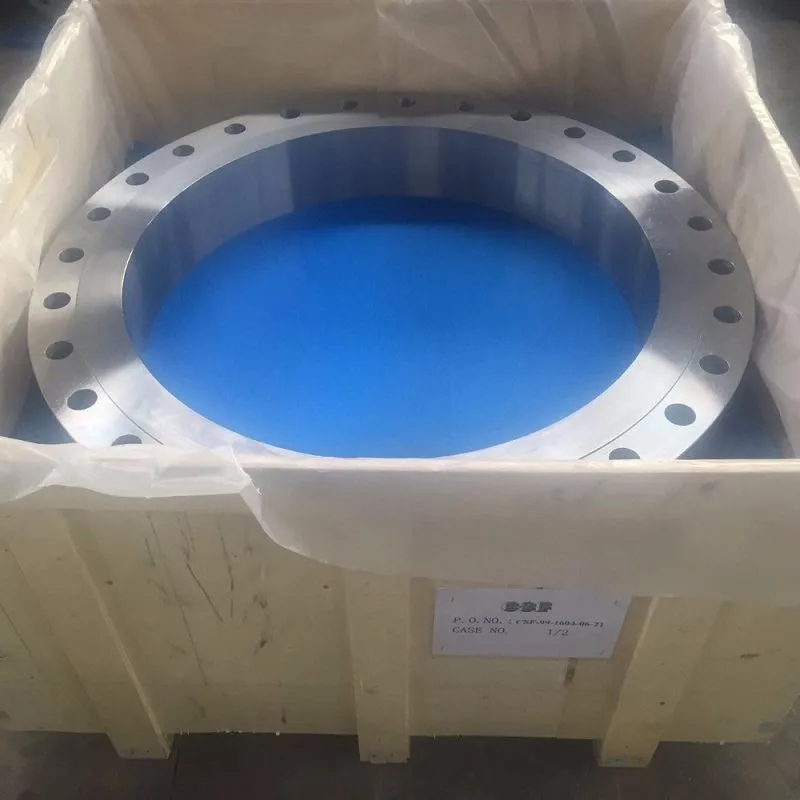
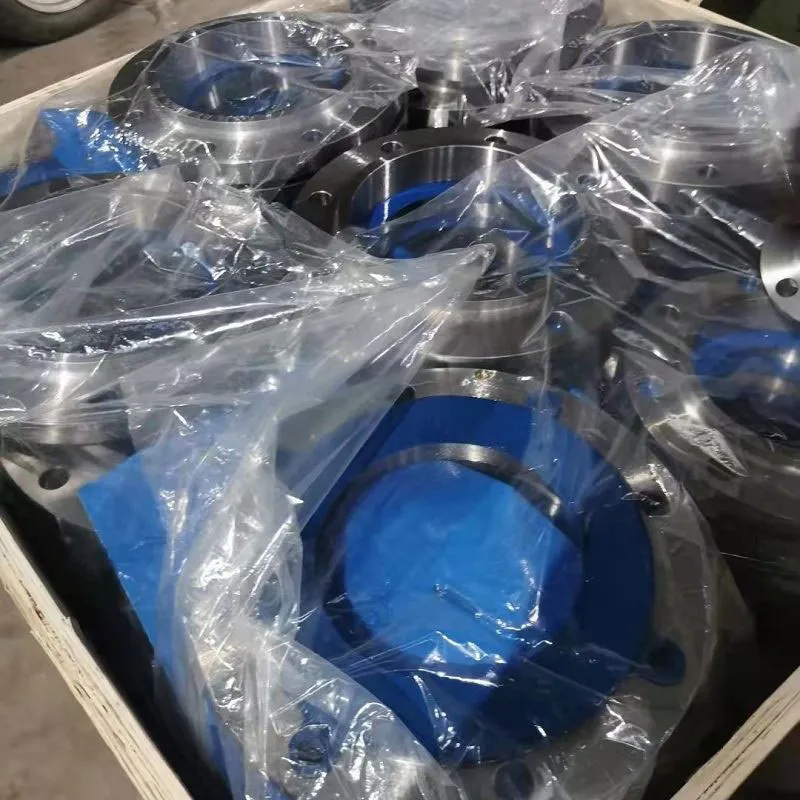
In this context, it is important to understand the difference between resellers and vertically integrated manufacturers. A striking example of a responsible approach is the companyShanxi Hongkai Forging Co., Ltd.. Based in Dingxiang County, a key industrial center for the forging industry in China, the organization operates three of its own sites, providing a full cycle from primary forging to finishing packaging. Unlike resellers, Shanxi Hongkai Forging has the right to independently import and export, which guarantees transparency of transactions and direct interaction without unnecessary links. Their products, including flanges of all major types (from butt weld to loose rings) in the range DN15–DN4000, are manufactured strictly to international standards (GOST, DIN, ANSI, ASME) with multi-level quality control at every stage. The presence of their own physical and chemical testing laboratory allows them to provide real quality certificates with melt numbers, the need for which we spoke above, and not general declarations.
Compatibility problem: GOST vs DIN and ANSI
Another pain that installers face. You bought a great oneflange 110 stainless steelaccording to GOST 33259-2015 (the most modern standard), and the old pipe or imported equipment has connecting dimensions according to DIN or the old Soviet GOST. It would seem that the nominal diameter of 100 mm (DN 100) is the same everywhere? No matter how it is.
The hole diameter may be the same, but the distance between the bolt holes (bolt connection) often differs by several millimeters. At best, you will have to drill holes, which reduces the strength of the flange and disrupts the geometry. At worst, the flange simply won’t fit into place.
In 2026, the situation was aggravated by the fact that there is a lot of equipment on the market from China and Turkey, which is made according to its own specifications, which are only vaguely reminiscent of European standards. My advice: before purchasing a batch, be sure to take one sample and attach it to the counterpart on site. Don't rely on drawings. A living example is worth a thousand words.
Also pay attention to the profile of the sealing surface. Protrusion-recess, tenon-groove, plane with risks? If you connect a raised flange and a flat flange, there will never be a seal, no matter how hard you tighten the bolts. The gasket will simply be pushed out to the side.
Technical installation nuances that the instructions are silent about
Did you buy the correct flange? Half the battle is done. Now the main thing is not to spoil it during installation. I have seen so many cases where expensive stainless steel failed due to the fault of crooked installers that it just makes my hair stand on end.
First rule: alignment. Never, hear me, never try to tighten flanges with bolts if the pipes are not aligned. The tension that arises in the metal during such a “forced” connection is colossal. Over time, this will lead to a fatigue crack, and it is not the seam that will crack, but the body of the flange. Use wedges and jacks to level before installing bolts.
Second rule: tighten the bolts. Forget about air impact wrenches at full power. Stainless steel is prone to work hardening and “sticking” of threads. The bolts must be tightened with a torque wrench, crosswise, in several passes. First by hand, then with 30% effort, then with 70%, and only then with 100%. If you tighten a bolt made of ordinary steel (strength class 5.8 or 8.8) in a soft stainless steel flange, you will simply pull out the threads or deform the sealing surface.
By the way, about bolts. Use only stainless steel bolts and nuts of the appropriate strength class. The pair “stainless flange + black bolt” is the path to electrochemical corrosion. At the point of contact between two different metals in a humid environment, a galvanic couple arises, and the black bolt will begin to rust at double the speed, tightly sticking to the flange. In a year you will not be able to disassemble the unit.
Specifics of operation in the harsh Russian climate
We don't live in California. Our winters, temperature changes and reagents on the roads (if the pipeline runs outside or in unheated rooms) create extreme conditions. What happens to the 110 mm flange during sudden cooling?
The metal is compressed. The coefficient of linear expansion of stainless steel is higher than that of carbon steel. This means that when the temperature drops, the flange contracts more than a ferrous metal pipe (if the system is combined). This can lead to a weakening of the tension in the threaded connection or, conversely, to excess pressure on the gasket.
In such cases, I strongly recommend using gaskets made of materials with high elasticity at low temperatures, for example, graphite-filled paronite or special polymer composites. Ordinary rubber hardens in the cold and turns into stone, losing its sealing properties.
It is also worth mentioning the problem of condensation. Dew often occurs on cold sections of pipelines with flanged connections. If the air in the room is saturated with vapors of chlorine or other aggressive substances (typical of swimming pools, chemical shops), then this moisture becomes an electrolyte. Pitting corrosion begins. That is why regular 304 steel is not suitable for such environments; 316 steel with molybdenum is needed.
Market forecast and alternatives: what to expect next?
Looking into the future, I can say one thing: the era of cheap stainless steel is over. Prices will rise, and not only because of inflation. The shortage of high-quality alloyed scrap and difficulties with importing ferronickel will put pressure on production costs. What should the consumer do?
First, switch to product life cycle accounting. A cheap flange that needs to be replaced every two years, plus the cost of system downtime and installers, will end up costing three times more than a high-quality product that will last 20 years. Stop looking at the purchase price, look at the cost of ownership.
Secondly, consider domestic analogues of imported brands. Russian metallurgy has made great strides forward. Brands like 06ХН28МДТ (for sulfuric acid) or improved versions 12Х18Н10Т are now in no way inferior to the best European models, and sometimes even surpass them due to stricter control at specific giant factories.
Thirdly, procurement automation. Major players are already implementing systems that track the history of each part using a digital passport. In 2026, the presence of a digital mark (for example, in the “Honest Sign” system or industry analogues) on the flange will become a mandatory requirement for admission to hazardous production facilities.
Final checklist before purchasing
So that you don't end up with unnecessary headaches, here is a short list of actions that will save your project:
- Check the grade of steel for your operating environment (especially temperature and chlorides).
- Require a quality certificate with the heat number, and not a general declaration.
- Make sure that the flange geometry (bolt connection, seal profile) matches the mating part on site.
- Purchase fasteners only from stainless steel of the same or higher corrosion resistance class.
- Do not skimp on gaskets - this is the weakest element of the system.
- Check the flange wall thickness with a caliper upon acceptance. An undersize of even 1 mm is critical for pressures above 16 bar.
Purchaseflange 110 stainless steelin 2026 is not just a transaction, it is an engineering decision. A mistake here is too expensive. Be careful, demand proof of quality and don’t believe pretty pictures on the Internet. Only real tests, documents and the reputation of the supplier can guarantee you smooth operation of the pipeline.
And remember: if the price seems too good to be true, then you don’t yet know where exactly the manufacturer has saved. Most likely, you saved on your safety.
Data sources and regulatory framework used in preparing the material:
GOST 33259-2015 Flanges of fittings, connecting parts and pipelines
Review of the Russian stainless steel market: results for 2025 and forecast for 2026
Analytical report of NKZhR: Dynamics of prices for nickel-containing steels
Technical requirements for flange connections (updated 2025)