-
-
Phone
+86-13623462298




Flanges Russia: Complete guide to prices and suppliers 2026
2026-05-03
If you are looking for up-to-date data right now on requestflanges RussiaTo close the estimate for an object or understand where the budget went in this crazy 2026, then put the calculator aside. To be honest, most price lists on the Internet are phantoms. They either haven’t been updated since the fall of 2025, or they hide the real cost of delivery to the Urals. We spent the last three months calling factories from Chelyabinsk to St. Petersburg, and what we found forced us to reconsider the entire logic of purchasing pipeline fittings. The market has changed beyond recognition: old players have gone into the shadows, and new Chinese brands are masquerading as “domestic production” so masterfully that even laboratory analysis sometimes fails.
However, in fairness, it is worth noting: not all foreign suppliers play cat and mouse with labeling. There are companies that work openly, offering a transparent alternative to the scarce Russian market. A striking example -Shanxi Hongkai Forging Co., Ltd.. It is a professional manufacturer from Dingxiang County (Shanxi Province), which is one of the key industrial centers of forging and pressing in China. Unlike fly-by-night companies, Hongkai operates three of its own production sites with a full cycle: from primary forging to final packaging. The company has the right to independently import and export, which provides direct communication channels without unnecessary intermediaries. Their range covers six types of forged flanges (from butt weld to blind) in the range DN15–DN4000, strictly complying with DIN, ANSI, ASME and, what is important for us, GOST standards. When it comes to large projects where guaranteed volume and honest specifications are needed, such vertically integrated plants provide a reliable anchor in a sea of instability.
But let's return to the realities of the domestic market. This article is not a dry summary of GOST standards. This is an attempt to figure out where in 2026 you can actually buy a reliable flange, and where they will sell you scrap metal at the price of premium steel.
Why prices for flanges in Russia in 2026 behave unpredictably
Let's take off the rose-colored glasses right away. There is no stability. And it is unlikely that it will appear in the near future. If you think that the price of steel 09G2S or 12Х18Н10Т depends only on stock exchange quotes, you are deeply mistaken. In 2026, the main drivers were logistics constraints and personnel shortages. Imagine the situation: a plant in Nizhny Tagil is ready to ship a batch of flat welded flanges DN 150, but they do not have category E drivers who would agree to carry the cargo to Novosibirsk for the money offered. Or the metallurgical plant is idle for a week due to the lack of imported alloying additives, which now take a roundabout route through third countries.
You will be surprised, but the biggest jump in prices occurred not in the stainless steel segment, as everyone expected, but in the sector of carbon steels for low pressures. Why? Because large pipe factories refocused on exporting to Asia, creating an artificial shortage within the country. Small forge shops, which previously saved the situation, are now inundated with orders for the defense industry and the public utilities sector. They simply do not have time to deal with small batches of flanges for private traders. This creates an interesting, albeit painful situation: you can find the product in a warehouse in Moscow, but its price will include a “rush premium”, which sometimes reaches 40% of the cost.
By the way, about warehouses. Many suppliers who advertise having “thousands of tons in stock” are actually cross-docking. That is, they sell something that they do not physically have, hoping to quickly intercept the shipment from the manufacturer after receiving your advance payment. In 2026, the timing of such deliveries has extended from the usual 3–5 days to two weeks. And this is provided that the manufacturer does not disrupt the shipment. I personally saw a contract where a late fee was specified, but the manufacturer simply returned the advance payment without interest, citing force majeure (read: failure of the only stamping press). Risking your money now is like playing Russian roulette.
The “pseudo-import substitution” factor: what is hidden behind the Russian Federation labeling
This is where the fun begins, and perhaps unpleasant for many buyers. You open the certificate of conformity, see the proud inscription “Made in Russia”, the seal of the plant in Yekaterinburg and calmly sign the acceptance certificate. Stop. Have you checked the chemical composition?
The trend in 2025–2026 is the massive import of semi-finished and finished flanges from China and India, followed by simple mechanical processing or even simply re-sticking tags on the territory of the Russian Federation. Let's call this “technical import substitution”. Yes, formally the product is Russian. Yes, taxes are paid here. But the quality of the metal... This is where miracles begin. Chinese steel grade 20 (analogous to our St20) often has a high content of sulfur and phosphorus, which is critical for operation at low temperatures. In winter in Yakutia or Yamal, such a flange can simply crumble from cold brittleness, despite the presence of all the papers.
We conducted a small experiment. We purchased three batches of flanges of execution 1 from different regions: one was declared as a product of the Kursk plant, the second - of the Perm plant, the third - without indicating a specific workshop at all, simply “Russia”. The laboratory showed that in two out of three cases the actual grade of steel did not correspond to that stated in the passport. Instead of 09G2S there was the usual St3sp5, which is absolutely not suitable for certain pressures and temperatures. This does not mean that all manufacturers are scammers. But quality control at many new assembly sites is weak on both legs. Haste plays a cruel joke.
What should an ordinary engineer or supplier do? Require an extended quality certificate. Not the stamped piece of paper that is placed in the box, but the protocol for the spectral analysis of a specific heat. If the supplier begins to mumble, offer a “similar document” or say that “the laboratory is closed for lunch” - run. In 2026, trust is worth more than the detail itself. That is why many large players now prefer to work directly with proven foreign factories that have their own laboratories and a multi-level control system, such as the above-mentioned manufacturers from Shanxi Province, where testing is carried out from input raw materials to the geometry of the finished product.
Detailed analysis of prices: from the economy segment to special steels
Pricing this year resembles a patchwork quilt. You can’t just take the average market price and multiply it by quantity. Each type of flange follows its own laws. Let's look at the main groups based on real transactions in the first quarter of 2026.
Flat welded flanges (GOST 12820-80).This is the “bread” of pipeline construction. It would seem that the technology has been developed for decades, what can change? However, rising energy prices have hit the energy-intensive stamping and heat treatment processes hard. If at the end of 2024 a ton of such products cost a nominal 120 thousand rubles, now the bar has risen to 165–175 thousand. Moreover, the spread is colossal. Gas-powered factories keep prices lower, while those who depend on grid electricity are forced to raise prices almost monthly. For small diameters (up to DN 50), the markup per piece has become disproportionately high due to logistics - it has become unprofitable to carry a pallet of small parts.
Collar flanges (GOST 12821-80).Here the situation is even more dramatic. The production technology is more complex; more metal is required per unit of product. In 2026, there is an acute shortage of high-quality large-diameter blanks (over DN 300). Russian metallurgists have learned to make excellent pipes, but forged blanks for large flanges are still a bottleneck. Prices for doors DN 400–DN 600 increased by 35% over the year. And the main thing is the timing. You have to wait for such a position from 45 to 60 days. If you are offered a large diameter “gate” from a warehouse tomorrow, check it ten times. Most likely, these are either used (repressed) or the same hidden import with questionable geometry.
Stainless steel flanges (12Х18Н10Т, 08Х18Н10).A separate song. The yuan exchange rate and difficulties with the supply of nickel and chromium make this segment the most volatile. Today the price is one, tomorrow it will be another. Moreover, many factories have switched to working only on orders with 100% prepayment. There are practically no warehouse programs left. The exception is the running sizes up to DN 100, which some distributors purchase for future use, but the markup there is such that it is easier to order directly from the manufacturer, if time permits. An interesting point: in 2026, a new trend appeared - the use of 06ХН28МДТ steel for aggressive environments. Previously, it was exotic, now demand is growing, and the supply is overwhelming.
| Flange type / Material | Average price per ton (RUB, Feb. 2026) | Dynamics by the end of 2025 | Actual delivery time (days) | Risks when purchasing |
|---|---|---|---|---|
| Flat welded (St20) | 165,000 – 175,000 | +18% | 7–14 | Poor welding quality, defective geometry |
| Collar (09G2S) | 190,000 – 210,000 | +32% | 30–45 | Substitution of steel grade, cracks in the transition zone |
| Collar (12Х18Н10Т) | 450,000 – 490,000 | +25% | 20–40 | Overpriced, hidden import of analogues |
| Freely rotating (St20) | 155,000 – 165,000 | +15% | 10–20 | Pipe hole mismatch |
Pay attention to the risk column. Numbers are numbers, but the human factor has not been canceled. In pursuit of fulfilling the quality control plan, some factories turn a blind eye to microcracks. This is especially true for collar flanges, where the transition zone from the ring to the neck is a critical stress point. In 2026, cases of complaints have become more frequent precisely for this reason. The pipe can withstand pressure, but the flange cracks at the base of the neck. It’s scary to imagine the consequences on the main gas pipeline.
Geography of supplies: where to look for a reliable partner?
Russia is large, and logistics eats up the lion's share of the budget. Where are the main capacities concentrated? Traditionally, the Ural region remains the leader. Chelyabinsk, Pervouralsk, Nizhny Tagil - this is the forge of the country. The factories here are old, with powerful equipment, but often with worn-out infrastructure. If you need volume and are willing to wait, this is the place for you. But be prepared for the fact that the service may be “Soviet”: a long response to an application, bureaucracy, difficulties with shipping small quantities.
The central region (Moscow, Tula, Kursk) offers a different approach. There are many trading houses and small production sites here that specialize in speed and service. They can cut threads, apply coating, and assemble a turnkey kit in a couple of days. But the price? The price will be 15–20% higher than in the Urals, since they often transport the metal there, to the Urals or Cherepovets, paying for double logistics. For emergency work or small objects this is justified. For a construction site, the century is no longer very good.
The south of Russia (Krasnodar, Rostov-on-Don) shows interesting growth in 2026. New mini-plants have appeared, focused on the oil and gas sector of the Caspian and Black Sea regions. They are flexible, modern, but their capacity is still limited. They may not be able to handle large wholesale volumes, but they produce high-quality medium-sized batches. By the way, it is southern manufacturers who most often experiment with new alloys, trying to get away from total dependence on northern metallurgical giants.
What about Siberia? They have their own heroes. Factories in Omsk and Kemerovo operate in conditions of fierce competition with Chinese suppliers who enter through Kazakhstan and Mongolia. Local producers are forced to keep prices below market prices in order to survive. This is a chance for buyers from neighboring regions to find a good deal. But again, the issue of quality control is acute: dumping rarely occurs out of nowhere. In this context, it is important to distinguish between “gray” imports through intermediaries and direct contracts with large Asian factories that have their own raw material base and modern equipment that can ensure stability of supplies even under sanctions pressure.
How not to lose money: a checklist for buyers in 2026
Theory is theory, but practice is harsh. How to protect yourself and your company from low-quality goods and scammers? I have compiled a list of actions that may save you millions of rubles and a lot of nerves. These are not official recommendations, but rather “folk wisdom” collected bit by bit from real cases.
- Request a video report of the shipment.In 2026 this is the norm. Ask the manager to send a short video showing how your particular shipment is loaded, and a close-up of the markings on each flange (or bundle). It is difficult for fraudsters to fake an operational video. If they start acting up, that's a red flag.
- Check the brand.Each serious flange must be stamped with the manufacturer's mark, steel grade, batch number and pressure. The absence of a mark or blurred, unreadable embossing is a sign of handicraft. In 2025, a whole network of underground workshops was discovered in the Moscow region, which bought defects from large factories, cleaned them up and put their own fake brands on them.
- Do not believe the words about “full compliance with GOST”.Ask for a specific GOST number and, preferably, technical specifications (specifications) of the plant. Sometimes factories operate according to their own specifications, which are softer than the state standard. It's legal, but you should be aware of it. The flange according to the specifications may have a smaller safety margin.
- Pay in stages.Never pay 100% in advance to a new supplier, especially if the amount is large. Insist on a 30/70 or at least 50/50 scheme. An adequate plant will meet you halfway. Someone who demands everything at once is most likely working on a “hit or miss” principle and may disappear along with your money.
- Order an independent examination.If the shipment is large and critical, hire a third-party laboratory directly at the supplier's warehouse before shipment. Spending 10–15 thousand rubles on express analysis with a spectrometer is an insignificant amount compared to the risk of an accident at the facility.
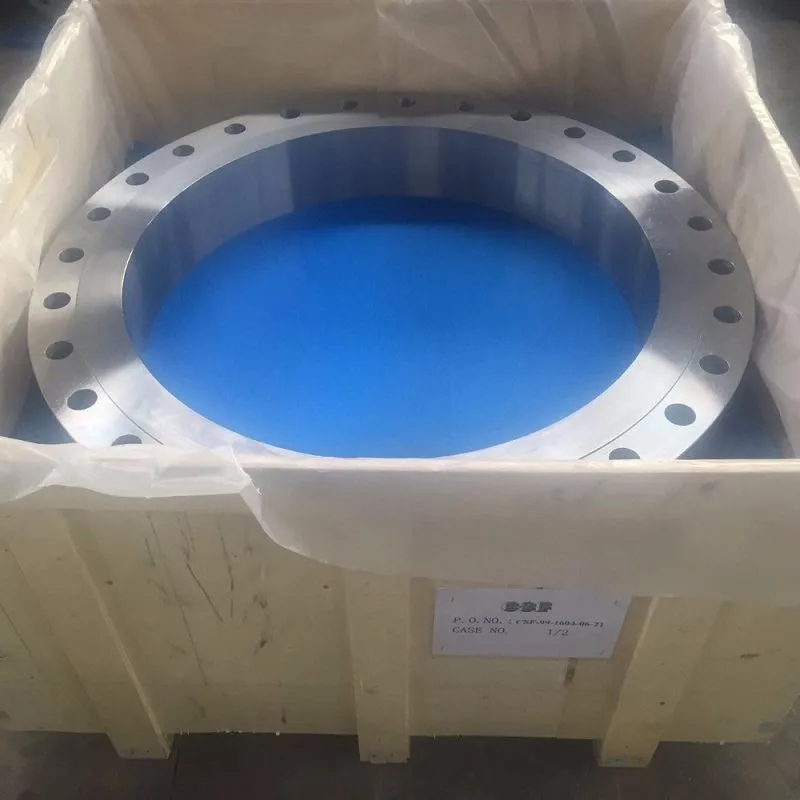
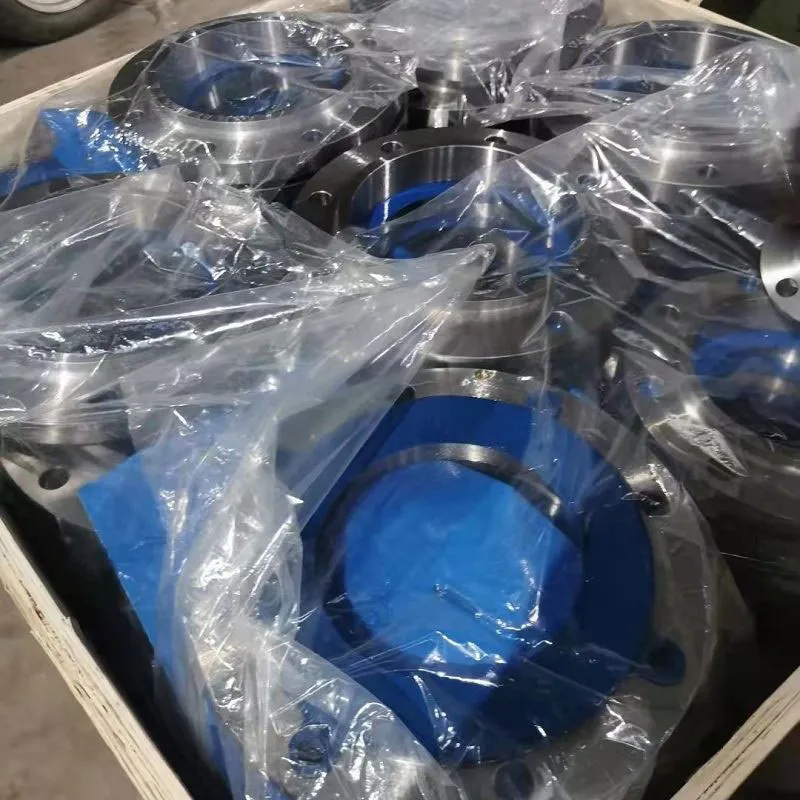
There is one more nuance that few people talk about out loud - packaging. Yes, packaging! In 2026, due to cost savings, many factories stopped packaging flanges in wooden boxes or thick stretch film with end caps. The flanges travel “naked” in the back of the truck. Result? Damaged sealing surface (mirror). Even a small scratch on the flange surface can lead to leakage of high pressure media. When receiving the goods, first look at the mirror. If it is scratched, feel free to draw up an act of marriage. Don’t let anyone convince you that “it will get scratched during installation.” No, it shouldn't.
Compatibility problem: old pipes and new flanges
A separate headache for repair services of housing and communal services and industrial enterprises is joining a new flange to an old pipe. It would seem that GOST is also GOST in Africa. But the reality of 2026 dictates its conditions. Wear and tear on equipment in pipe mills has meant that pipe outer diameters can vary within tolerances that were previously considered impossible. You buy a DN 100 flange, come to the site, and it doesn’t fit on the pipe or, on the contrary, hangs loose.
This is especially true for old-stock seamless pipes that are being reused. Wall thickness may be uneven. In such cases, the standard weld flange becomes a problem. You have to either bore the pipe (which weakens it) or order flanges with an increased internal diameter, which is a non-standard product and leads to increased costs and time. My advice: before ordering a batch, be sure to measure several pipes on site with a caliper. Don't rely on design documentation from 20 years ago. It's better to spend an hour taking measurements than to wait a week for a batch to be remade.
Future of the market: what to expect in the second half of 2026?
Making forecasts in the current conditions is a thankless task, but trends can be clearly seen. Firstly, further market consolidation awaits us. Small players that do not have their own raw material base will either go bankrupt or be absorbed by large holdings. This will lead to reduced competition in some regions and, as a result, higher prices. Monopoly is the consumer's worst friend.
Secondly, a surge in the supply of composite materials and polymer flanges for non-critical components is expected. Technology has advanced and plastic can now withstand pressures that were previously only the domain of steel. For the chemical industry and water treatment, this could be a salvation from the steel shortage. But in the energy and oil and gas sectors, steel will remain king for a long time. Trust in plastic among Russian engineers is still slowly developing.
And the last thing I want to say. Digitalization. In 2026, more and more factories are implementing traceability systems. Скоро (может быть, уже в следующем году) на каждом фланце будет не просто клеймо, а QR-код, ведущий на страницу с полным паспортом, видео процесса производства и даже данными о конкретном станке, на котором его сделали. Это убьет рынок подделок. Но пока мы только в начале пути. Сейчас же нам приходится быть детективами, чтобы отличить качественный продукт от суррогата.
Покупка фланцев в России сегодня — это не просто транзакция “деньги-товар”. Это сложный процесс управления рисками. Нужно учитывать логистику, химию металла, человеческий фактор и даже погоду. Но без этого никуда. Инфраструктура страны держится на этих стальных кольцах, и от нашего выбора зависит, насколько надежно она будет работать. Не экономьте на качестве, проверяйте документы, требуйте гарантий. И помните: скупой платит дважды, а в сфере промышленной безопасности — иногда и жизнью.
В заключение, хочу подчеркнуть: рынок жив, он адаптируется, он находит пути. Да, есть проблемы, да, есть мошенники. Но есть и честные заводы — как российские, так и зарубежные партнеры с безупречной репутацией, готовые предложить полный цикл производства и прозрачные условия сотрудничества. Ваша задача — найти их. Используйте приведенные выше советы, не бойтесь задавать неудобные вопросы поставщикам и всегда держите руку на пульсе изменений. Удачи в закупках, и пусть ваши трубопроводы никогда не текут!
Sources of information and data for verification
- Обзор рынка металлопроката и трубопроводной арматуры РФ, Январь 2026
- Аналитический отчет: тенденции производства фланцев в условиях санкций
- Обновления нормативной базы ГОСТ на трубопроводную арматуру (Декабрь 2025)
- Мониторинг цен на углеродистые фланцы по Уральскому региону
- Лабораторные исследования качества стальных фланцев: выявление подделок