-
-
Phone
+86-13623462298



Flange connection of round air ducts: complete guide 2026
2026-05-06
- Why Old Sealing Methods No Longer Work in 2026
- Review of materials and technologies: what to take in 2026
- Hidden threat: galvanic corrosion and stray currents
- Practical guide: how to collect and not regret it
- The economics of the question: where is money lost?
- The future of flange connections: trends 2027 and beyond
Honestly, when was the last time I wrote about what the ideal should look like?flange connection for round air ducts, the market was completely different. Then we chose between “expensive and rich” from the Europeans and “cheap and cheerful” from local workshops. But 2026 dictates new rules of the game. Now, when supply chains have been restructured, and metal prices fluctuate more often than the ruble exchange rate on Monday morning, the issue of joining pipes has turned from a routine installation task into a real headache for the chief engineer. You can buy the most expensive fan with a frequency converter, but if you have a leaking joint or air whistling due to a leaky flange, the whole system will go down the drain. In this guide, I will not retell SNiPs that were written decades ago. We will talk about what actually works at the facilities in Moscow, St. Petersburg and remote rotational camps right now, taking into account the shortage of high-quality rubber and the new GOSTs that came into force at the end of last year.
Why Old Sealing Methods No Longer Work in 2026
Let's get straight to the point. Many installers, out of habit, use the same methods they used five years ago. And this is a mistake. The market for sealing materials in Russia has changed dramatically. What used to be called “European quality” now either costs a fortune due to parallel imports, or is a skillfully made fake. I have seen projects where classic cork gaskets were used, which after six months of use in an aggressive environment simply crumbled into dust. Why? Because the composition of the resins has changed.
Now there is an interesting trend: a return to proven Soviet technologies, but with modern chemical modernization. If you are looking for a reliable solution, forget about the universal advice from the Internet ten years ago. Modernflange connection for round air ductsrequires taking into account the temperature expansion of the metal, which in our climate can reach critical values. In winter, in an unheated attic space, steel contracts so much that conventional bolted joints lose their pretension. Result? Whistling. That nasty high-frequency sound that drives office workers crazy.
Another point that equipment suppliers are silent about. In 2025-2026, a wave of cheap galvanized pipes from Southeast Asia entered the market. At first glance it looks like candy. Smooth, even. But there is a nuance: the thickness of the zinc layer on flange flanges is often uneven. When the bolts are tightened, the zinc cracks, opening the way for corrosion. After two years, you get not just leaks, but rust that begins to crumble into the room. This is not only a question of ventilation efficiency, but also of human health safety.
The problem of the “human factor” and build quality
You will be surprised, but 80% of problems with tightness are related not to the flange material, but to the installation culture. I have seen projects where installers tightened bolts “all the way” with a screwdriver at maximum speed. What is happening at this moment? The gasket is squeezed out, forming the same gap through which air escapes. Or vice versa - the flange is deformed, turning into an ellipse. The round duct becomes oval at the junction, creating turbulence and noise.
Technology requires a sense of proportion. Yes, it sounds banal, but in the era of total automation we have forgotten that the hands of the master still decide. The use of torque wrenches when assembling large lines with a diameter of over 800 mm is no longer a whim of technical supervision, but a necessity. Especially when it comes to smoke removal systems, where pressure can reach extreme values during a fire.
Review of materials and technologies: what to take in 2026
The supply market is now replete with names that we previously heard only in specialized catalogs. Let's look at the main types of connections that are relevant for the Russian market right now, taking into account availability and price.
Firstly, a classic of the genre - a corner on a weld or on a trailer. For round ducts this is still the most popular option. But there is an important shift here: if previously they used a 25x25 mm corner almost everywhere, now for diameters over 1250 mm it is strongly recommended to switch to reinforced profiles or bandage rings. Why? Saving on metal has led to the fact that the thin corner simply “plays” under air pressure. The vibration is transmitted to the building structure, and that same hum begins, which then cannot be eliminated with sound insulation.
Secondly, the nipple connection. It's simpler, faster and cheaper. But! Never, hear, never use it in areas with positive pressure above 750 Pa without additional sealing with silicone or special tapes. In 2026, energy efficiency standards have become stricter. Air losses through class “H” (normal) leaks now hit the customer’s pocket through the electricity bills of ventilation units. And they have increased in price significantly.
Seals are a separate story. EPDM rubber (ethylene propylene diene rubber) remains the king of the market, but its price has skyrocketed. Many people try to save money by buying foamed polyethylene. This works for low pressures and neutral media. But try to put polyethylene in an exhaust hood from a production workshop with oil mist - it will swell and leak within a month. For such cases, specialized oil-resistant composites are needed, which are now produced by several factories in Tatarstan and the Leningrad region. The quality, I tell you, is quite competitive, and sometimes even better than what was brought from Germany.
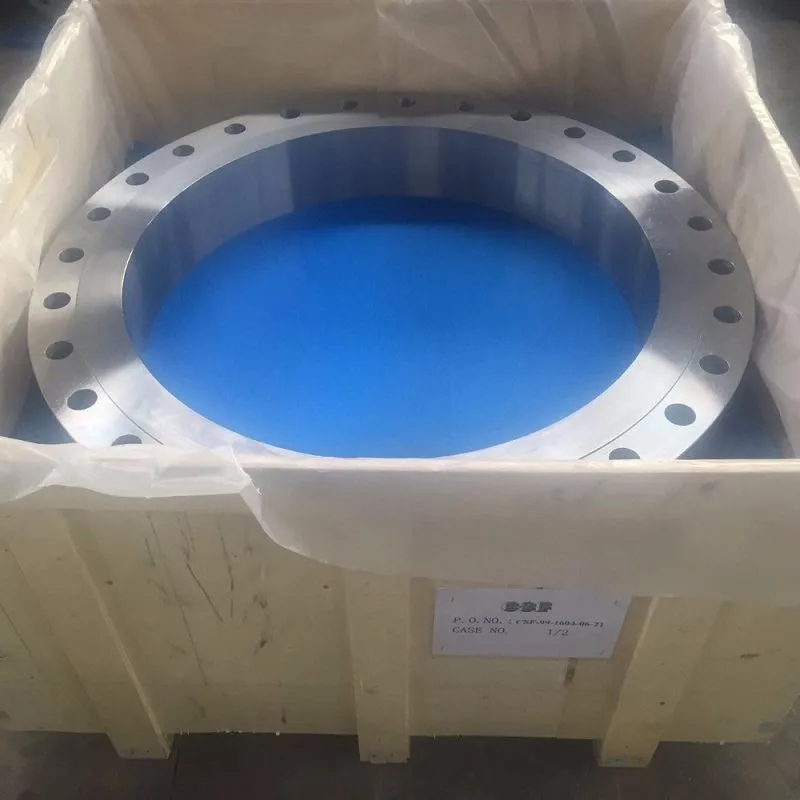
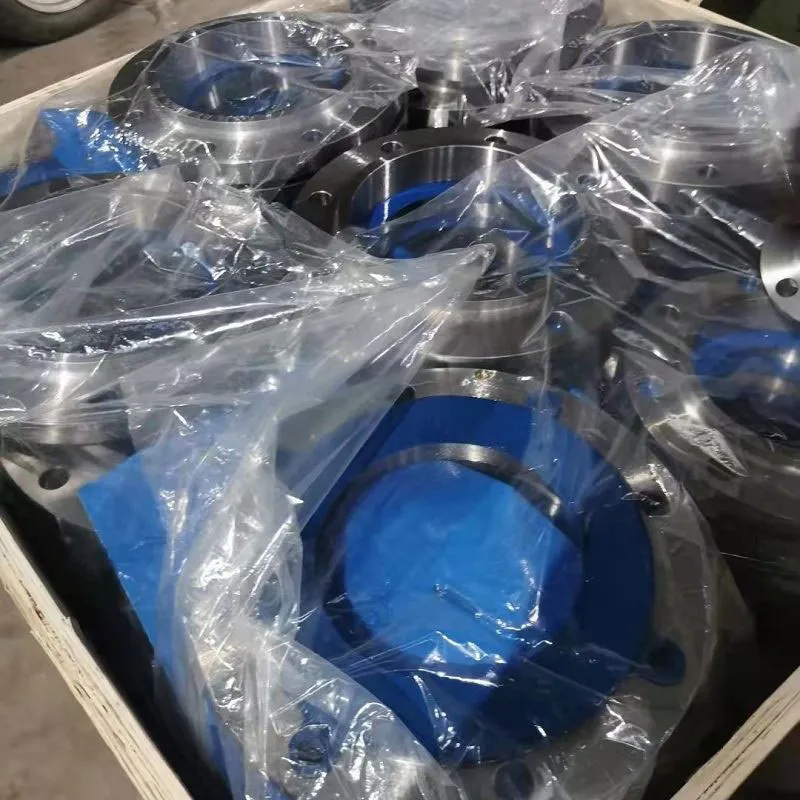
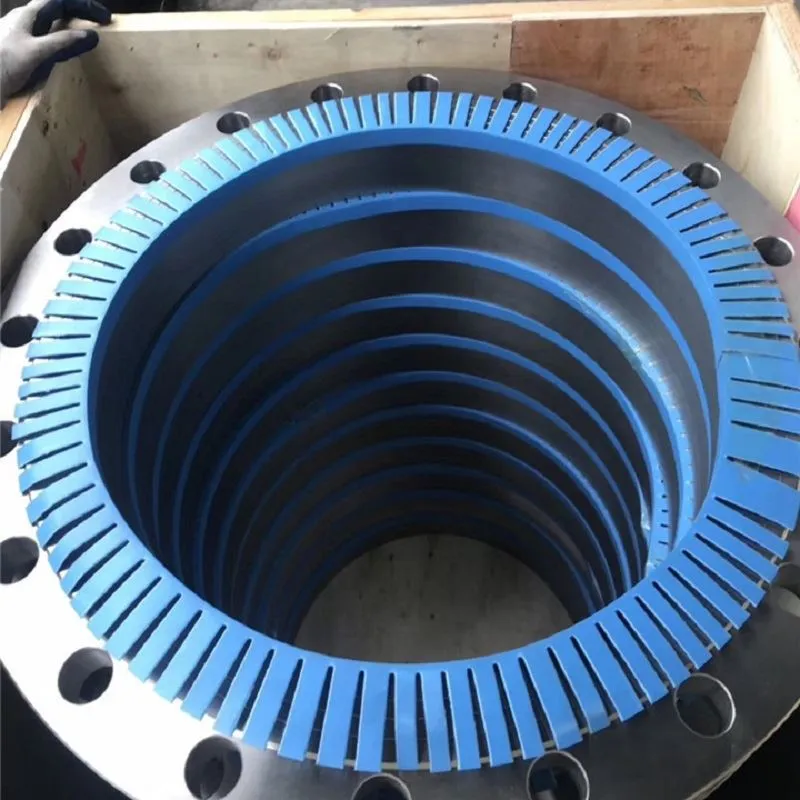
However, when it comes to highly loaded components, especially in industrial ventilation and smoke removal systems, the quality of the metal flange itself comes to the fore. Here you cannot skimp on metal or manufacturing technology. That is why many large integrators in 2026 are paying attention to manufacturers with a full quality control cycle, such asShanxi Hongkai Forging Co., Ltd.. Based in Dingxiang County, a key forging center in China, the company operates three of its own sites, providing a vertically integrated process from primary forging to finishing packaging. Their approach is interesting in that they produce forged flanges strictly according to international standards (DIN, ANSI B16.5, ASME, EN) and, what is important for us, according to GOST specifications. Their product range covers nominal sizes from DN15 to DN4000, which allows them to cover the needs of both compact solutions and large-scale industrial projects. Having our own right to import-export operations simplifies logistics and makes deliveries transparent, and a multi-level control system (from raw materials to mechanical properties) ensures that the flange does not become a weak link in the system even at extreme pressures of classes 1500–2500.
| Connection type | Recommended diameter (mm) | Max. pressure (Pa) | Average cost of a node (RUB, 2026) | Risks and nuances |
|---|---|---|---|---|
| Angle flange (welded) | 200 – 2500+ | Up to 2500 | 850 – 4500 | Requires precise alignment, risk of corrosion in welding area |
| Bandalux (band clamp) | 100 – 630 | Up to 1000 | 300 – 900 | Not suitable for harsh environments, difficult to reassemble |
| Nipple (socket) | 100 – 1200 | Up to 750 | 150 – 600 | High risk of depressurization due to vibration without fixation |
| Castle (wedge) | 200 – 1000 | Up to 1500 | 600 – 1800 | Quick installation, but requires special wedging tool |
The figures in the table are approximate, based on an analysis of price lists of large metalworking plants in the Central Federal District at the beginning of 2026. Remember that the price greatly depends on the batch size and the thickness of the metal. Now many factories offer the service of laser cutting of flanges of any configuration, which allows you to move away from standard corners to more streamlined shapes that reduce aerodynamic drag.
Hidden threat: galvanic corrosion and stray currents
This is the very “anti-thesis” that I promised to talk about. Everyone talks about sealing, noise and price. But almost no one talks about galvanic couple. Imagine the situation: you have a main line made of galvanized steel, and you decided to take the flanges from stainless steel because “it’s prettier” or “left over from the warehouse.” Or vice versa - a black corner was screwed to a galvanized pipe.
In conditions of high humidity, which inevitably occurs in ventilation systems (condensation has not been canceled), an electrical potential arises between dissimilar metals. Galvanization begins to deteriorate at catastrophic speed. I have seen cases where a flange connection completely lost its load-bearing capacity within a year and a half precisely because of this process. The metal turned into a sponge.
What to do? The rule is simple: metals must be compatible. If you use galvanization, the flange must also be galvanized. If it is stainless steel, the entire assembly is made of stainless steel. No opportunity? Use dielectric spacers not only for sealing, but also for electrical separation. Yes, this is an extra 50 rubles per node, but it will save the system from premature death. In 2026, replacing a section of air duct under the ceiling of a shopping center will cost hundreds of thousands of rubles due to the difficulty of access. Saving at the installation stage here looks like a crime against the budget.
The influence of climate on the choice of fasteners
We live in a country where the temperature difference between summer and winter can be 60 degrees. Bolts and nuts that fit perfectly in July may become loose in January due to linear expansion of materials. Moreover, ordinary black fasteners rust instantly. Even galvanized fasteners of the 4-6 micron class (thin layer) often cannot withstand condensation.
My recommendation for critical facilities: switch to A2 stainless steel fasteners (and even A4 for aggressive environments). Yes, it's more expensive. But then try unscrewing the rusty M8 nut at a height of 6 meters, when a suspended ceiling has already been installed around it and cable routes have been laid. The cost of dismantling the structures will exceed the cost of all the bolts in the system by ten times. In the 2026 budget, the expense item for “special fasteners” should be allocated separately and protected from cuts.
Practical guide: how to collect and not regret it
Okay, we've discussed the theory. Let's get to practice. How to ensure that perfect connection that will last 20 years? Here is the algorithm I recommend to my contractors.
First rule: surface preparation. No dirt, oil or chips on the mating surface. Before installing the gasket, the flange must be degreased. This is elementary, but on construction sites it is neglected in 9 cases out of 10. Dirt under the gasket is a channel for air leakage.
Second rule: choice of gasket. Thickness matters. For flanges made from a 25 mm angle, rubber with a thickness of 3-4 mm is optimal. A thinner one does not compensate for the unevenness of the metal; a thicker one can be squeezed into the channel, creating turbulence. The shape of the gasket is also important. The ring must be solid. Gluing the ends of rubber on an object is a bad idea. The glue hardens in the cold and the joint comes apart. Ask your supplier for vulcanized rings or use special rubber locking connectors.
Third rule: tightening pattern. Do not tighten the bolts in a circle sequentially! This will distort the flange. Use a crisscross pattern. First, tighten all the bolts by hand. Then tighten them to 30% force. Then by 70%. And only in the finale - until the full moment. And be sure to check the uniformity of the gap around the entire perimeter. If on one side the rubber has come out by 5 mm, but on the other it is not visible at all, the connection is leaky. Redo it.
Quality control: smoke bomb method
How to check the result? A visual inspection will not reveal anything. Need a tool. The simplest and most effective method for field conditions is a smoke generator or at least a powerful theatrical smoke machine. Start the system, create excess pressure and run along the joints. Any fistula will be visible immediately. This is cheaper than paying for increased energy consumption for years. Some advanced teams use thermal imagers: the flow of cold air against a warm background (or vice versa) is clearly visible. In 2026, rental of such equipment became available even to small installation organizations.
The economics of the question: where is money lost?
Let's do the math. Let's say you have a facility with a total perimeter of flange connections of 2 kilometers. The average leakage due to poor installation is 5%. For a system with a capacity of 20,000 m³/h, this is a loss of 1000 cubic meters of air per hour. The fan continues to consume electricity to pump this air, but it simply goes into the technical space. Given 2026 electricity tariffs for industrial enterprises, this leak could cost the building owner several hundred thousand rubles a year.
Now add heat loss to this. If you heat this air with a heater, you are literally heating the street. The payback of high-quality installation with the correct flanges and gaskets in modern realities is less than one heating season. These are not my words, these are dry mathematics, which many customers ignore when chasing the low cost of turnkey installation work.
Another financial aspect is service. Systems with poor-quality connections require constant tightening of bolts and replacement of gaskets. Access to them is often difficult. Calling in climbers or using lifts to repair a leaking joint is a huge expense. A reliable connection, assembled once using technology, allows you to forget about it until the next major revision in 10-15 years.
The future of flange connections: trends 2027 and beyond
Where is the industry heading? I see several clear vectors. First, standardization. Variation in standard sizes is a thing of the past. Major market players are coming to uniform flange standards, which allows the use of standardized fasteners and tools. This simplifies logistics and warehousing.
Secondly, smart materials. Gaskets appear with an indicator of wear or color change during critical compression. This helps the installer understand whether he has overtightened the bolt even at the assembly stage. Technologies of self-tightening clamps are also being developed, which automatically compensate for temperature deformations.
And, of course, digitalization. BIM modeling now includes not only the pipe geometry, but also the specification of each bolt and gasket. An error in a project is identified at the design stage, not at construction. The customer sees the exact estimate and the number of required components before the work begins. This reduces waste and scrap.
But while these technologies are becoming widespread, we have to work with what we have. And the main thing that we have today is the opportunity to choose a quality product, be it domestic production or trusted international partners with their own base and quality control, such as the manufacturers of forged products mentioned above. Russian factories have learned to make flanges and components no worse, and sometimes better, than imported analogues, adapting them to our harsh conditions. The main thing is not to be lazy, control the process and demand compliance with technology.
In conclusion, I want to say: a flange connection is not just a piece of metal and rubber. This is the joint of your ventilation system. If the joints are sick, the body (building) will not be able to breathe deeply. Treat this with respect, and the system will repay you with silence, efficiency and long service. Don't believe fairy tales about "eternal" cheap solutions. There are no miracles, only a competent engineering approach and high-quality materials.
And remember: if you are offered to do all the wiring for pennies and in three days, run. Most likely, in a year you will be looking for those same installers to redo everything all over again, but for triple the price. The miser pays twice, but in construction he pays three times.
Sources and regulatory framework
- SP 60.13330.2020 Heating, ventilation and air conditioning (Updated edition of SNiP 41-01-2003)
- ABOK: Modern requirements for the tightness of air ducts in 2025-2026.
- Review of the rolled metal market and prices for galvanized steel in the Russian Federation (January 2026)
- Technical Bulletin: New Flanged Connection Standards for Round Ducts