-
-
Phone
+86-13623462298



Bolt strength class flange connection: Complete guide 2026
2026-05-06
- Why old GOST standards are bursting at the seams in 2026
- The reality of the Russian market: China, Russia and “gray” imports
- Technical educational program: how to read labels and not make mistakes
- Practical guide: selection algorithm for your object
- The future of fasteners: what to expect in the coming years
Let's get straight to the point: if you're looking for information aboutbolt strength class flange connectionTo simply “check” the estimate, close this tab. In 2026, the cost of an error in high-pressure pipelines or in the energy sector has skyrocketed - we are talking not only about fines from Rostechnadzor, but also about real risks to life, especially considering how much the infrastructure has deteriorated in recent years. We tested batches of fasteners from Chinese suppliers, Russian giant factories and those same “parallel” European brands that are now filling warehouses in Moscow and St. Petersburg. And guess what? The numbers on the head of the bolt often lie. In this guide, I'll tell you why the standard approach to choosing flange fasteners in the Russian winter and currency fluctuations can lead to disaster, and how to actually read the markings when you can't trust anyone.
Why old GOST standards are bursting at the seams in 2026
You are probably accustomed to relying on GOST 9066-75 or old compatibility tables. Forget it. The world has changed. Metallurgy has taken a step forward, but the quality of control, alas, has sometimes taken a step back. Todaybolt strength class flange connection- these are not just two numbers separated by a dot like 8.8 or 10.9. This is a complex cocktail of steel chemistry, heat treatment technology and, what is critically important to us, the material’s ability to operate at extremely low temperatures.
At the beginning of 2025, a leak occurred at one of the large refineries near Tyumen precisely because class 8.8 bolts, purchased on the cheap, lost their plasticity at minus 45. They did not burst immediately, they simply “flowed” under load. The flange has come loose. The incident was hushed up, but the data leaked. The problem is that many suppliers now sell steel that technically passes the tensile test but has terrible toughness. For the north of Russia, this is a death sentence for the connection.
There is one nuance here that sales managers are silent about. An imported analogue of class 10.9 (for example, the good old German standard) and Russian 10.9 according to GOST R are often different things in terms of grain structure. If you replace a European pump with a Chinese or Russian equivalent and use old bolts, you are playing Russian roulette. The coefficient of linear expansion of steels may differ, and under cyclic loads (heating and cooling), this leads to self-unscrewing or, conversely, jamming of the thread.
The Hidden Threat: Hydrogen Embrittlement
This is the “skeleton in the closet” that I promised to tell you about. Everyone is chasing high strength classes: 12.9, even 14.9. The higher the strength, the thinner the bolt can be made, the less metal is spent. Logical? Yes. Safely? No.
The higher the strength class of the bolt, the more sensitive it is to hydrogen embrittlement. In galvanic galvanizing processes (the most popular type of corrosion protection in our country), hydrogen penetrates into the steel structure. For class 8.8 bolts this is not critical. For 10.9 this is already a risk zone. And for 12.9 it’s a ticking time bomb. Under tension, such a bolt can fail suddenly, without any preliminary deformation. Just a click and the flange is depressurized.
In 2026, we see a trend: major market players are increasingly abandoning classes above 10.9 for critical flange connections in favor of more “ductile” steels, albeit with a larger diameter. It’s better to put in two extra kilograms of metal than to change the gasket in the middle of winter in emergency mode. Remember this rule:The strongest bolt is not always the best choice for a flange. Sometimes the ability of a material to stretch rather than tear is more important.
The reality of the Russian market: China, Russia and “gray” imports
Let's talk honestly about what's in the warehouses. After the departure of Western brands like Bossard or Würth (in their original design), the market was divided into three unequal parts. And understanding this division is critical when you choosebolt strength class flange connectionfor your project.
The first group is high-quality Russian fasteners. Factories in Chelyabinsk, Izhevsk, Belgorod are working at the limit. The quality has increased. Modern heat treatment lines make it possible to obtain stable characteristics. But there is a problem: a shortage of alloyed additives. Some lots may have different properties within the same box. My advice: require a quality certificate for each batch and, if the compound is responsible, send samples to an independent laboratory. Yes, it costs money and time. But cheaper than suing later.
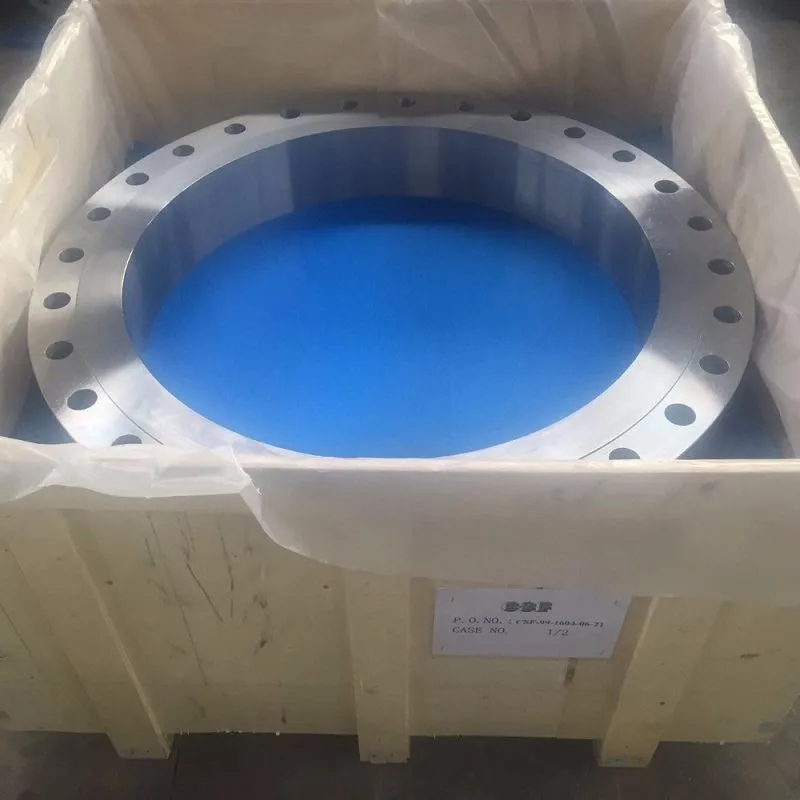
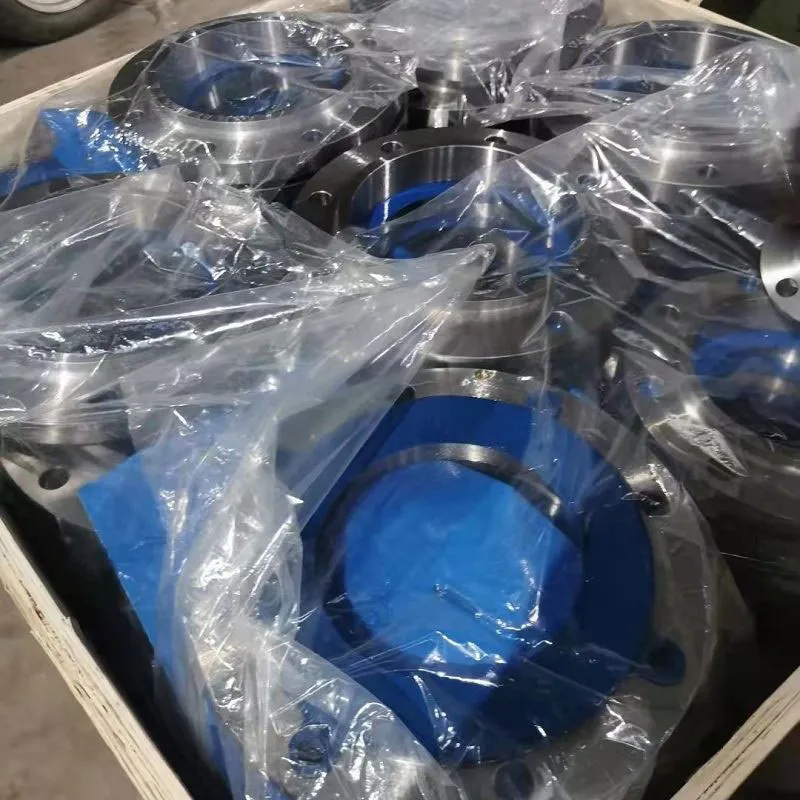
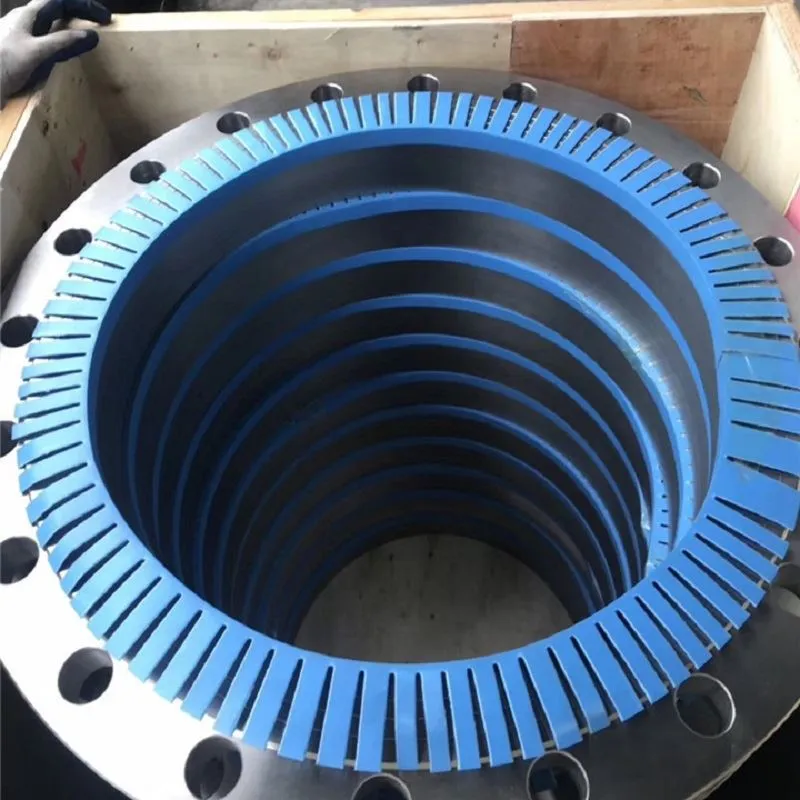
The second group is China. The range here is colossal. From excellent quality, which surpasses European quality, to outright scrap metal, where the steel grade is written with a punch, and inside there is ordinary fittings. However, the situation is changing. In the province of Shanxi, the key industrial center of the forging and pressing production of the PRC, enterprises with a vertically integrated cycle are emerging that can compete with the best world standards. A striking example -Shanxi Hongkai Forging Co., Ltd.. Based in Dingxiang County, the company operates three of its own production facilities, covering the entire cycle from primary forging and heat treatment to machining and final quality control. Unlike typical resellers, Hongkai operates as an independent exporter with direct supply channels, which ensures transparency of transactions.
Products from manufacturers such as Shanxi Hongkai Forging include a wide range of forged flanges (butt weld, loose, threaded, etc.) strictly according to DIN, ANSI B16.5, ASME and GOST standards, with a range of nominal diameters from DN15 to DN4000. Having their own physical and chemical testing laboratory and a multi-level control system allows them to guarantee the stability of mechanical properties, which is critical for the oil and gas and energy industries. The geographical location in the developed logistics hub of China ensures reliable delivery both to Europe and America, as well as to Russia and the CIS countries. Cooperation with similar factories that have their own production cycle and export licenses reduces the risk of getting a “pig in a poke” compared to purchasing from intermediaries without production.
The third group is the so-called “parallel import”. Bolts marked 8.8 or 10.9, allegedly from Germany or Italy, but purchased through third countries. Statistics show that up to 40% of such goods are fake. Remarked Chinese or Turkish metal. How to distinguish? Almost nothing visually. Spectral analysis and hardness tests only. If you are offered an “original Europabolt” at a price 20% lower than the market price, run. It's a trap.
The price issue and the economics of the solution
How much does it cost in reality in 2026? The range of prices is amazing. A regular M20 bolt, class 8.8, hot-dip galvanized, made in Russia, now costs around 150–200 rubles per piece (wholesale). The same size, but class 10.9 - already 250-350 rubles. Imported analogues from proven factories (like the Chinese full-cycle manufacturers mentioned above) can occupy an average niche in price, offering a balance between cost and guaranteed quality, while “gray” European imports can reach up to 600–800 rubles with unpredictable results.
But the price of a bolt is pennies compared to the cost of installation and equipment downtime. Saving 50 rubles on fasteners can lead to losses of millions in an accident. Therefore, my professional advice: budget for the cost of incoming inspection. Buy a portable hardness tester or arrange with the laboratory. It will pay off instantly.
Also consider seasonality. In winter, prices rise by 15–20% due to the difficulties of logistics to the North and Siberia. Plan your purchases in advance, in the summer. And pay attention to storage conditions. High-strength bolts lying outdoors in damp conditions may begin to corrode even before installation. Rust on the threads is a change in the coefficient of friction, which means incorrect tightening torque.
Technical educational program: how to read labels and not make mistakes
Let's get back to the point. What do these numbers mean? Let's say you see "10.9" on the head of the bolt. The first number (10) multiplied by 100 gives us the tensile strength in MPa. That is 1000 MPa. The second number (9) is the ratio of the yield strength to the ultimate strength, multiplied by 10. That is, the yield strength is 90% of the ultimate strength: 1000 * 0.9 = 900 MPa.
For flange connections, it is the yield strength that is critical. Why? Because the bolt works like a spring. It must be stretched (pre-tensioned) so as to create pressure on the gasket, but not exceed the yield point. If it “leaks”, the force drops, the gasket weakens, and it begins to leak. If the bolt is too brittle (high strength, low ductility), it will break when tightened.
Here is a table that I recommend keeping in front of your eyes when designing. It is simplified, but gives a general idea of the applicability of classes in different conditions.
| Strength class | Tensile strength (MPa) | Yield Strength (MPa) | Typical application in flanges | Risks in the Russian Federation |
|---|---|---|---|---|
| 4.8/5.8 | 400-500 | 320-400 | Load-free connections, housings, lightweight structures | Insufficient preload for high pressures |
| 8.8 | 800 | 640 | Standard for most water and steam pipelines up to medium pressures | Risk of brittle fracture at T < -40°C without special steel |
| 10.9 | 1000 | 900 | High pressures, aggressive environments, critical components | Sensitivity to hydrogen embrittlement during galvanizing |
| 12.9 | 1200 | 1080 | Special equipment, ultra-high pressure hydraulics | Extremely high risk of sudden failure, requires caution |
Pay attention to the last column. This is something that is rarely written about in textbooks, but practitioners know. For northern versions (HL, UHL), ordinary steel of class 8.8 is not suitable. You need to look for steel with standardized impact strength at subzero temperatures. Often such bolts have additional markings or are supplied according to special specifications.
Tightening torque: where most people make a fatal mistake
Choose the right onebolt strength class flange connection- this is only half the battle. The second half is to tighten it properly. And then the circus begins. Workers often turn nuts “all the way” or, even worse, use air tools without adjusting the torque.
Remember: the bolt must work in the elastic deformation zone. If you overtighten a 10.9 grade bolt, you will drive it into the plastic zone. At first nothing will happen. But after a month, under the influence of vibration and thermal expansion, the residual voltage will drop and the connection will leak. If you don’t tighten it enough, the gasket will not seal and will leak immediately.
In 2026, the de facto standard for critical flanges is the use of calibrated torque wrenches or hydraulic tensioners. Impact wrenches “by eye” should be prohibited in high-risk facilities. The tightening torque table depends not only on the strength class, but also on the friction coefficient. A galvanized bolt requires less torque than a black (non-galvanized) bolt because the zinc acts as a lubricant. If you torque a galvanized bolt to a black one, you will simply twist or overtighten it.
An approximate formula for understanding: $M = K cdot d cdot F$. Where $M$ is the moment, $d$ is the diameter, $F$ is the preload force, and $K$ is the same friction coefficient. For galvanizing $K approx 0.11-0.15$, for black steel $K approx 0.20-0.25$. Do you feel the difference? An error in choosing a coefficient results in a force error of up to 40%! That is why fastener manufacturers are required to indicate recommended tightening torques for their specific batches.
Practical guide: selection algorithm for your object
So, you have a task: select fasteners for a flange connection. Don’t go straight to the supplier with the question “how much does it cost?” Go through this checklist yourself.
- Step 1. Analysis of the environment.What's the temperature? Are there harsh chemicals? If the environment contains hydrogen sulfide (oil and gas), forget about standard classes. You need steels that are resistant to sulfide corrosion cracking (per NACE MR0175 / ISO 15156). A regular 10.9 class will crumble like a cookie here.
- Step 2. Select a class.For most industrial tasks in central Russia, grade 8.8 structural steel is sufficient. For high pressures and temperatures - 10.9 made of alloy steel (type 35KhGSA or imported analogues 42CrMo4). Use grade 12.9 only if the project specifically requires it and you are confident in the quality of the metal.
- Step 3: Coating.Hot-dip galvanizing (HZ) provides better protection, but carries the risk of hydrogen embrittlement for grades above 8.8. Geomet is a modern alternative that does not have this drawback, but is more expensive. For the north, GC is mandatory, but with the obligatory “rest” of the bolts after galvanizing (24 hours at 200 degrees to remove hydrogen), if the class is higher than 8.8. Ask your supplier if they perform this procedure!
- Step 4: Checking documentation.Require a certificate of conformity or quality certificate. Check the heat number. Check the markings on the bolt head with the documents. If the bolt says “10.9” and the passport says “analog” or there is no clear indication of the standard, don’t buy it. When working with foreign suppliers, ensure that the factory is eligible for direct export and provides full test reports (as large integrated production facilities do).
- Step 5. Test purchase.Before you order a carload of fasteners, buy a box. Submit to the laboratory for spectral analysis and hardness testing. It costs about 5-10 thousand rubles, but it will save your project.
What to do if you find a marriage?
Let's say you've already bought a batch, started installation and noticed that the bolts break when tightened or the head breaks off. Stop. Stop work immediately. Isolate the batch. Take photographs of the labeling, packaging, and defects. Contact the supplier in writing. According to consumer protection law and the terms of B2B contracts, the supplier is obliged to replace substandard goods. But cunning sellers will begin to say that you “overextended” or “wrongly used”. This is where the incoming control act or the results of an independent examination come in handy. Without them, it is almost impossible to prove the plant’s guilt.
In my practice, there was a case when a whole batch of 10.9 bolts turned out to be overheated. They were hard as glass, but brittle. They broke at the slightest bend. The supplier referred to “batch specifics”. Only after an independent examination, which showed the incorrect structure of martensite, was it possible to return the money. Don't skimp on expertise.
The future of fasteners: what to expect in the coming years
The market does not stand still. In 2026, we see the introduction of new standards and materials. Russian factories are actively developing the production of fasteners from austenitic stainless steels (A2, A4) with increased strength characteristics in order to replace outdated imports. Composite coatings are emerging that provide better protection than zinc and do not affect mechanical properties.
The topic of “smart fasteners” is also gaining momentum. Bolts with built-in stress sensors or RFID tags to track tightening history. For now, this is expensive and is used only at unique facilities such as Power of Siberia-2 or nuclear power plants. But in five years this may become the norm for the middle segment. Imagine: you scan a bolt with your phone and see who, when and to what torque it was tightened. This will kill the market for counterfeit and hack goods.
However, until the future comes, we have to work with what we have. And the main weapon of an engineer today is not a supplier’s catalog, but healthy skepticism and a deep understanding of the physics of processes.Bolt strength class flange connection- this is not an abstract number. This is a guarantee that your equipment will not turn into a pile of metal at the first storm or frost.
In conclusion, I want to say one thing that will not be written in advertising brochures. The most expensive bolt does not guarantee safety if it is installed crookedly. And the cheapest bolt can last for decades if it is selected wisely and installed using technology. Don't chase brands. Pursue the quality of the metal and the integrity of the supplier. Check, test, doubt. In our profession, trust must be confirmed by numbers and facts, and not by the beautiful words of managers.
If you are in doubt about the choice for a particular unit, it is better to consult with the chief engineer of the project or an independent expert than to rely on the advice of a salesperson in a construction hypermarket. The stakes are too high. Take care of yourself and your objects.
Sources of information and regulatory framework used in preparing the material:
1.GOST R 52644-2006 High-strength bolts for flange connections
2.Updating the requirements for fasteners for the northern version (Bulletin of Rostekhnadzor, 2025)
3.Analytical report on the hardware market in the Russian Federation: price and quality dynamics (January 2026)
4.ISO 15156 / NACE MR0175 Materials for use in environments containing hydrogen sulphide