-
-
Phone
+86-13623462298



Flange connection of HDPE pipes: complete guide 2026
2026-04-30
- Why old school is back in fashion: the paradox of 2026
- Anatomy of an ideal knot: what is it actually made of?
- Price segment and market of the Russian Federation: where is the money, Lebowski?
- Installation instructions: where everyone goes wrong
- Alternatives: when is a flange too much?
- Forecast and trends: what awaits the market until 2027?
- Final checklist before purchasing
If you are right now faced with the choice of how to connect the main line for water supply or sewerage in the harsh Russian winter, thenflange connection of HDPE pipes- this is not just a technical term from GOST, but your main safety rope. In 2026, when the market is flooded with cheap Chinese analogues and domestic “craft” solutions, a mistake in choosing a flange can cost you not only a flooded basement, but also huge fines from the water utility. We tested dozens of samples, talked with installers from Siberia and the Krasnodar Territory, and are ready to tell you what manufacturers are silent about: not every “reinforced” connection will withstand a real water hammer.
Why old school is back in fashion: the paradox of 2026
It would seem that the era of electrofusion welding and compression fittings should have finally buried the good old flanges. But reality made its own adjustments. After a series of large-scale accidents on pipelines in 2024-2025 associated with human factors during welding, large Russian utilities began to return en masse to detachable connections. Why? Because they can be checked visually. They can be pulled over. And, what is most important in our latitudes, they can be quickly replaced if the soil “leads”.
To be honest, I was surprised to see the procurement statistics from major players like Gazprom and Rosvodresursy. The share of flange adapters has grown by 18% over the past year. This is not nostalgia. This is pragmatism. In conditions where there are not enough qualified HDPE welders even in Moscow, the ability to assemble a bolted assembly using two workers with keys becomes a decisive argument.
The main problem that they won’t tell you about in the store
Let’s dot the “e” right away. Most problems arise not because of the quality of the pipe itself, but because of a mismatch between the flange and polyethylene materials. You buy a HDPE 100 pipe (black, with a blue stripe), and they sell you a flange made of St3 steel without proper anti-corrosion coating. After two years, rust eats away the fasteners, and the connection begins to leak. Or even worse: they offer you a “universal” flange that supposedly fits everything. Forget this word. There is no universality in plumbing.
The issue of thermal expansion is especially acute. Polyethylene “walks” much stronger than steel. In summer the pipe lengthens, in winter it contracts. If you rigidly fix the flange without taking this factor into account, by next spring you will get a crack in the welding zone of the shoulder. I have seen such cases personally: a beautiful, shiny structure turned into a fountain right in the middle of the roadway.
Anatomy of an ideal knot: what is it actually made of?
To understand what exactly to look for in supplier price lists in 2026, you need to understand the composition of the sandwich. The flange connection of HDPE pipes is not one piece, but a system of three critical elements. Miss one and the whole structure becomes useless.
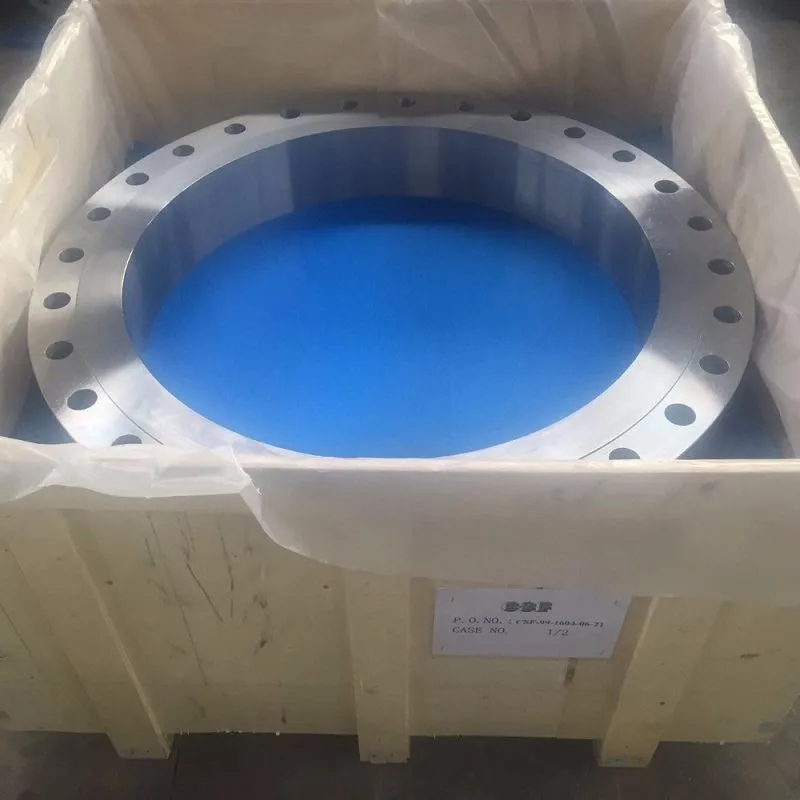
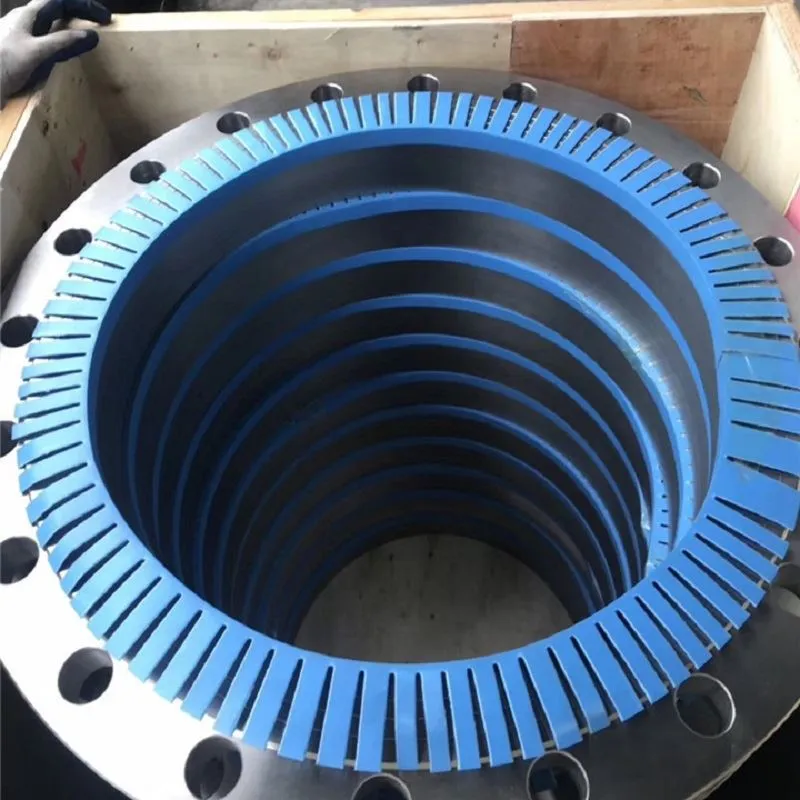
1. Loose steel flange (collar).This is the outer ring. In modern realities, we strongly recommend looking only at galvanized options or, if the budget allows, at AISI 304 stainless steel. Ordinary black steel, even painted with enamel, does not last long in soil with high humidity (and in our country 80% of such soils) do not last long. The thickness of the metal must correspond to the pressure in the system. For a pressure of 10 atm (PN10), a thickness of 10-12 mm is suitable, but for 16 atm (PN16) you cannot save - take from 14 mm.
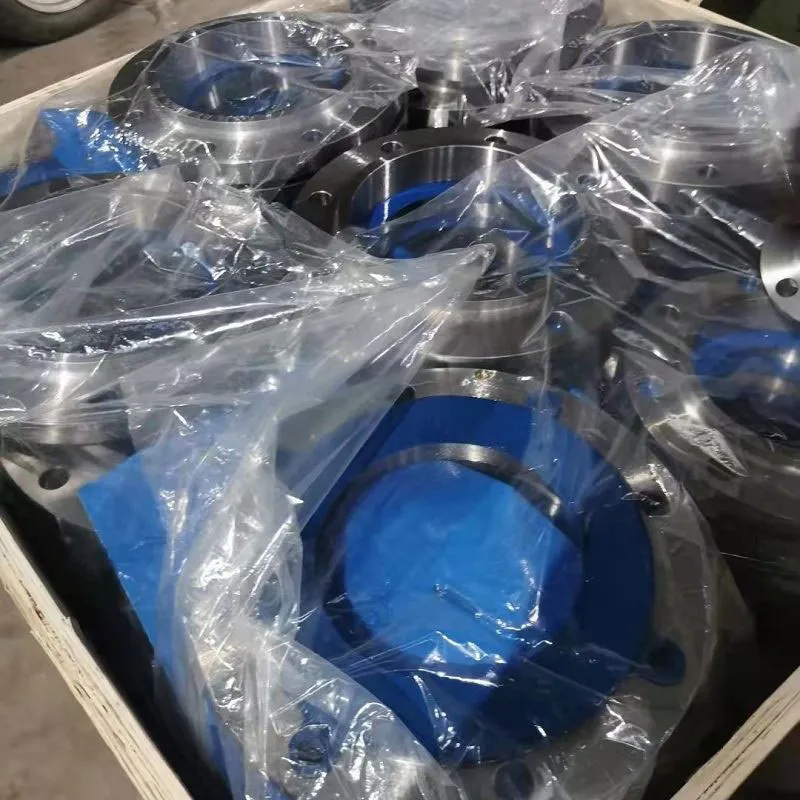
Here it is important to make a note about the origin of the metal. The market today is divided between those who skimp on steel quality and those who use proven hot forging technologies. It is the forged flanges that provide the necessary grain structure of the metal, resistant to stress and corrosion. A striking example of this approach is the company's productsShanxi Hongkai Forging Co., Ltd.. Based in Dingxiang County, a key industrial center for the forging industry in China, the manufacturer operates three of its own full-service facilities, from primary forging to finishing packaging. Their specialization in loose flanges (loose ring) in pressure classes up to 2500 and diameter range from DN15 to DN4000 shows how seriously global players take the geometry and strength of this part. The company's right to direct export operations and strict control according to DIN, ANSI and GOST standards allows Russian customers to receive products where the thickness of the metal and the quality of the zinc coating correspond to the declared characteristics, and are not the subject of a lottery.
2. Burt (sleeve for flange).This is where the main intrigue is hidden. The collar is butt welded to the pipe. It must be made of the same grade of polyethylene as the pipe itself (PE100 or PE80). Mixing brands is a crime. If the pipe is made of PE100, and the collar is made of recycled material or PE80, the welding site will be the weakest link. Pay attention to the shape of the collar: in 2026, a reinforced tapered collar has become the de facto standard, which better distributes stress when tightening bolts.
3. Sealing gasket.A little thing that decides everything. EPDM rubber has become a mandatory standard for drinking water. Forget about ordinary technical rubber, it hardens in the cold and leaks. For aggressive environments or hot water (up to 40-45 degrees, above HDPE is no longer recommended), paronite is sometimes used, but in 95% of cases, high-quality food grade rubber is the best choice.
Price segment and market of the Russian Federation: where is the money, Lebowski?
The situation with prices in Russia by the beginning of 2026 had stabilized after the shock of previous years, but the spread remains colossal. You can find a kit (flange + collar) for 800 rubles, or you can pay 3,500 rubles for a similar diameter. What's the difference? Let's be honest: often the only difference is the brand and the beautiful box. But there are also nuances.
Chinese supplies, which previously accounted for up to 60% of the market, are now faced with logistical difficulties and the appreciation of the yuan. However, this weeded out weak players. Large plants with vertically integrated production remained on the market, such as the above-mentioned Shanxi Hongkai Forging, whose proximity to railways and port areas ensures reliability of supplies even in unstable conditions. At the same time, Russian manufacturers, such as Polimerstroy, Technocap and a number of factories in Tatarstan and Bashkiria, occupied the vacant niche for the production of polyethylene piles. The quality of domestic piles has grown catastrophically (in a good way). The geometry has become more precise, the control of raw materials has become stricter.
Approximate price range for sets of flange connections for the most common diameters (at the beginning of 2026):
| Pipe diameter (mm) | Average price per set (RUB) | Delivery time (days) | Risks of cheap analogues |
|---|---|---|---|
| 63 | 450 – 700 | 1-3 | Thin flange metal, deformation when tightening |
| 110 | 900 – 1400 | 2-5 | Substandard polyethylene pile (risk of cracks) |
| 160 | 1800 – 2600 | 3-7 | Lack of zinc coating, rapid corrosion |
| 225 | 3500 – 5000 | 5-10 | Inconsistency of bolt holes with GOST |
| 315 | 6000 – 8500 | 7-14 | High percentage of welding surface geometry defects |
Pay attention to the “Risks” column. A cheap flange may cost you to replace an entire section of pipe. A savings of 500 rubles on a diameter of 110 mm is negligible compared to the cost of excavation work to replace an emergency section in winter.
How to distinguish a high-quality pile from a fake without a laboratory?
Don't have a spectrometer? No problem. There are several “old-fashioned” but working methods used by construction site foremen:
- Color and shine.Good PE100 has a deep black color with a slight matte tint. If the collar shines like plastic from a children's bucket or has a grayish tint, this is either recycled material or the wrong brand of polymer.
- Smell.When heated (even just with hot air from a hair dryer), high-quality polyethylene smells like paraffin or a candle. A pungent, chemical smell is a sign of impurities and production waste.
- Geometry.Attach the collar to the pipe. The gap should be minimal and uniform around the entire circumference. If the collar is loose or skewed, throw it away immediately. No amount of welding will correct a crooked workpiece.
- Quality steel flange.Inspect the surface of the forged flange. It should not have any shells, cracks or traces of rough machining, typical of cast cheap fakes. A uniform zinc coating without drips is a mandatory sign of a quality product from a serious manufacturer.
Installation instructions: where everyone goes wrong
It would seem that what is so difficult here? Put it on, weld it, screw it on. But it is at the installation stage that 70% of errors are made that lead to accidents after six months of operation. I have compiled a list of the most common mistakes people step on.
Mistake #1: Overtightening the bolts.This is a classic of the genre. The installer takes a pneumatic impact wrench and tightens the bolts “all the way” to be sure. Result? The steel flange simply crushes the polyethylene collar with its weight and tightening force. Microcracks form and expand under water pressure.You need to tighten it with a torque wrench!Yes, it takes longer. Yes, it requires an additional tool. But the effort must be strictly measured. For a diameter of 110 mm this is usually about 40-50 Nm, for 225 mm it is already higher. Refer to the manufacturer's torque charts.
Mistake #2: Incorrect tightening sequence.Do not tighten the bolts in a circle! First crosswise (diametrically opposite), then following diagonally. This is the only way to ensure a uniform fit of the planes and the absence of distortion, which can cut off the sealing gasket.
Mistake #3: Ignoring pipe end preparation.Before welding the collar, the end of the pipe must be perfectly flat and perpendicular to the axis. Any bevel will cause the flange to sit at an angle. As a result, when assembled with a mating metal flange, enormous mechanical stress will arise. Use a trimmer. Don't be lazy.
Specifics of working in sub-zero temperatures
Russia is a country of cold. Installation of HDPE pipes at temperatures below -10°C requires special care. Polyethylene becomes more fragile. Impacts on the pipe, fittings falling onto frozen ground - all this can create internal defects that will appear later. If you are forced to work in cold weather, allow the materials to “acclimatize” in a warm room for at least a day before installation. A cold collar welded to a cold pipe is a time bomb.
Alternatives: when is a flange too much?
Let's be objective. Flange connection of HDPE pipes is a wonderful thing, but not always necessary. When should you consider other options?
If we are talking about internal wiring in a private house or cottage, where access to pipes is free and the risk of water hammer is minimal, compression fittings will be faster and cheaper. They do not require welding or special equipment.
If the pipeline is buried deeply and forever, and the likelihood of repair tends to zero, butt welding of pipe into pipe (without a collar) will create a monolithic connection that is stronger than the pipe itself. The flange here is just an extra point of potential leakage.
But! As soon as it comes to connecting to valves, pumps, meters or switching to a steel main, the flange becomes the uncontested king. No other type of connection will give you such speed of dismantling and reliability of mating dissimilar materials.
Forecast and trends: what awaits the market until 2027?
Analyzing the current situation, I see a clear trend towards standardization and tightening of control. It is expected that by the end of 2026, new requirements for marking fittings for water supply will be introduced in Russia. QR codes on each pile, allowing you to track the batch of raw materials and the manufacturing plant, will become the norm. This is a blow to “garage” manufacturers churning out products from unknown granules.
The demand for ready-made units is also growing. Rather than purchasing the flange, collar and bolts separately and having them assembled on site (where gaskets are often lost or the wrong bolts are purchased), customers are increasingly choosing to purchase fully assembled and factory-tested flange adapters. This is 15-20% more expensive, but reduces the risk of the human factor to almost zero. Major international suppliers operating in the oil, gas and energy infrastructure segment have long offered such comprehensive solutions, ensuring the compatibility of each component.
Another interesting point is the development of composite flanges. While this is exotic for the Russian Federation, flanges made of fiberglass or reinforced polyamide are gaining popularity around the world. They don't rust at all. Steel is 4 times lighter. There is only one problem so far - the price and the distrust of our engineers in “plastic instead of metal”. But given the pace of import substitution, I would not be surprised if in a couple of years Russian factories begin mass production of such products.
Final checklist before purchasing
Before you sign the acceptance certificate or pay the invoice to the supplier, go through this list. It will save your nerves and budget.
- Check the certificate of conformity. Drinking water must have a hygienic certificate.
- Make sure that the grade of polyethylene collar (PE100/PE80) matches the grade of your pipe.
- Inspect the zinc coating on the flange. It should be uniform, without drips or gaps. Make sure that the product is made by forging and not casting.
- Check the package: are there gaskets? Are the bolts the correct length (should they protrude 2-3 threads beyond the nut)?
- Check the terms of the warranty. An honest manufacturer provides a guarantee of at least 12 months on the integrity of the connection, subject to installation conditions.
- Request documentation for steel: compliance with standards (GOST, DIN, ANSI) confirms that you are not buying a “pig in a poke”, but an engineering solution with a predictable resource.
Flange connection of HDPE pipes in 2026 is a time-tested technology, but requires a modern approach. Don't chase the lowest price. In infrastructure that should last 50 years, savings at the start turn into triple the cost of repairs. Choose trusted suppliers, request documents and, most importantly, follow the installation technology. Your system will thank you by not leaking at the most inopportune moment.
Sources of information and regulatory framework used in preparing the material:
1.GOST 32415-2013 Pressure pipes made of thermoplastics and connecting parts for them for water supply and heating systems
2.Standards for the procurement of pipe products of PJSC Gazprom (update 2025)
3.Recommendations of Rosvodresurs on the operation of polymer pipelines in climatic zones of the Russian Federation
4.Industry portal Plastinfo: Review of the Russian polymer pipe market, January 2026