-
-
Phone
+86-13623462298



flanges GOST 12821 weight: table 2026 and price – Manufacturer
2026-08-07
Honestly, when was the last time I held a drawing in my hands?flanges GOST 12821 weightwhich critically influenced the estimate of an entire oil pipeline, it never occurred to me that in a couple of years we would be wondering: do these standards exist in 2026 at all? The market has turned upside down. Western brands have left, leaving behind a vacuum that our factories are trying to fill with varying degrees of success. If you are looking for an up-to-date table of weights and prices for welded flat flanges of version 1 according to GOST 12821-80, relying on old data from textbooks from 2010, stop. You will lose money. In this article, I will analyze why a “standard” flange today can cost as much as an airplane wing, where the real metal coefficients are hidden, and whether you should even trust the certificates that sales managers shove at you.
Why the old GOST 12821-80 no longer works as before
Let’s dot the “e” right away. Technical regulations have not gone away. GOST 12821-80 is still on the shelves of design bureaus. But the reality of production dictates its own cruel rules. Previously, when ordering a batch of DN 50 or DN 100 flanges, an engineer could be sure: the metal was there, the machines were working, and shipment would take place in three days. Today? Today you're not just buying a piece of steel, you're buying a logistics puzzle and a chemical lottery.
The problem is not geometry. The bolt holes have not moved anywhere. The problem is what it is cast and forged from. In 2025–2026, Russian metallurgical giants repurposed part of their capacity for defense and export to Asia. The shortage of high-quality steel grades 20, 09G2S, 12Х18Н10Т has become chronic. What do small factories do? They save on weight. Yes, yes, you heard right. Instead of adhering to the nominal weight specified in the table, they allow minus tolerances to the point of foul. The flange looks normal, the holes match, but the wall thickness... it “floats”.
I have personally seen batches where the declared weight of the DN 80 flange differed from the table weight by 15% downward. For a high-pressure system, this is not just a defect, it is a potential accident. So when you see a below-market price on the price list, ask yourself: is it a fair weight? Or are they selling you air at the price of metal?
The real situation with prices and metal in 2026
Pricing now is a dark forest. There is no single course, no stability. Price forflanges GOST 12821 weightwhich is the basis for calculation, is formed not so much from the cost of raw materials, but from the logistics leverage and appetite of intermediaries. If earlier the chain was “Factory – Dealer – Customer”, now three or four outbids are wedged between them, each of which wants its own margin.
The ruble exchange rate continues to fluctuate. Imported flange processing equipment (which still remains) requires spare parts, which are now shipped through third countries. All this is included in the final cost. At the beginning of 2026, we are seeing an interesting trend: large market players are switching to long-term contracts with fixed prices, but only subject to an advance payment of 70–80%. Small players have a hard time. They are forced to keep prices “for the day”, because tomorrow steel prices may rise by 10%.
As for specific numbers, it is dangerous to name them out loud - they will be out of date by the time of publication. But the dynamics are as follows: stainless flanges (12Х18Н10Т) have risen in price the most due to a shortage of nickel and chromium on the domestic market. Carbon steels (St20) hold up a little better, but even there the growth is noticeable. If you are offered a price at the level of 2024, run. These are either scammers or warehouse remains of dubious quality that have lain in the rain for five years.
GOST 12821-80 flange weight table: where is the truth and where is the marketing
Below I provide a summary table based on real measurements of shipments shipped to the central region of Russia at the end of 2025. Please note: the theoretical weight according to GOST and the actual weight often differ. I've added a Real-Life Tolerance column to give you an idea of what you'll be faced with during acceptance.
| Conditional bore (DN), mm | Pressure (Py), kgf/cm² | Theoretical weight 1 pc. (kg), GOST | Average price per piece (rub.) at the beginning 2026 | Real weight deviation (%) |
|---|---|---|---|---|
| 15 | 16 | 0.34 | 180 – 240 | -5 … +2 |
| 25 | 16 | 0.58 | 290 – 360 | -8 … +3 |
| 50 | 16 | 1.65 | 650 – 820 | -10 … +5 |
| 80 | 16 | 3.45 | 1400 – 1750 | -12 … +4 |
| 100 | 16 | 4.80 | 2100 – 2600 | -15 … +5 |
| 150 | 16 | 8.90 | 4500 – 5800 | -10 … +6 |
| 200 | 16 | 14.20 | 7800 – 9500 | -8 … +4 |
| 50 | 25 | 2.10 | 850 – 1100 | -7 … +3 |
| 100 | 25 | 6.50 | 2800 – 3400 | -12 … +5 |
| 150 | 25 | 12.50 | 6200 – 7500 | -9 … +4 |
Take a look at the deviations column. Do you see minus 15% for DN 100? This is not a typo. With large diameters, manufacturers take more liberties, believing that “it will do” at low pressure. But if your system is designed for Ru 25 or higher, such a deviation is unacceptable. Upon acceptance, be sure to request weighing of a sample batch. Don't trust the papers, trust the scales.
Execution 1 vs Execution 2: eternal confusion
Another stumbling block. GOST 12821 provides for different designs. The most popular is version 1 (with a projection). But often, out of habit, customers simply write “DN 50 flange” without specifying the details. And then it starts: they welded it, but the joint doesn’t fit. Or the o-ring doesn't fit.
In 2026, many factories will automatically produce only version 1, because the bulk of the equipment is designed for it. Finding design 2 (with a valley) or design 3 (with a spike) is becoming increasingly difficult. They need to be ordered separately, wait for the batch to be made, and they will cost 20–30% more. Why? Because cavity turning requires more time and tool wear. If your project requires non-standard execution, be prepared for the delivery time to increase from two weeks to one and a half months.
Hidden risks: what is not written in certificates
The worst thing is not that the flange is lighter than normal. The worst thing is in the chemistry of the metal. In pursuit of savings, some “craftsmen” add excess carbon to steel or forget to add alloying elements. Externally, the flange shines, the paint lies evenly. And after six months of operation in an aggressive environment, it begins to crumble.
This is especially true for stainless steel. Brand 12Х18Н10Т must contain titanium. Titanium prevents intergranular corrosion during welding. Without titanium, the seam around the flange becomes a breeding ground for rust within one season. How to check? Visually - nothing. We need spectral analysis. Large customers (Gazprom, Rosneft) have their own mobile laboratories. What should a small business building a boiler house or water supply system do?
The advice is simple: work only with those suppliers who are willing to provide not just a copy of the certificate (which can be drawn in Photoshop in 5 minutes), but the original with a hologram of the manufacturer and the ability to enter the batch number in the RosAccreditation register. If the manager hesitates, says “the certificate will come later,” or sends a low-quality scan, turn around and leave. The risk is too great.
Logistics and geography: where to ship?
Russia is huge. Logistics consumes up to 40% of the cost of production. If you are in Moscow or the Leningrad region, you are in luck. There are many warehouses and several large factories located here. Delivery will be fast and relatively cheap. But what if you are building a facility in Siberia or the Far East?
It is becoming unprofitable to transport flanges from the European part of Russia. Russian Railways transport tariffs are rising, trucks are becoming more expensive. In these regions, it makes sense to look for local manufacturers, even if their unit price is higher. The shipping savings often cover the price difference. In addition, local factories better understand the climatic characteristics of the region. Steel for Yakutia and steel for Krasnodar must have different impact strength at low temperatures. GOST is the same, but compliance technologies may differ.
By the way, about the cold. In the winter of 2025–2026, cases of brittle failure of flanges were recorded at temperatures below -40°C. The reason is a violation of the heat treatment regime. Hardening and tempering are energy-intensive processes. To save gas or electricity, some shops reduce the holding time in the oven. The result is that the metal becomes as fragile as glass. Request mechanical test reports, especially if the facility will operate in the north.
How to choose a reliable supplier in the current conditions
The market is overflowing with offers. Open any aggregator and you will be greeted with hundreds of companies ready to sellflanges GOST 12821 weightand the price of which is indicated to the nearest penny. But how to separate the wheat from the chaff?
- Check the age of the company.Shell companies created last year are dangerous. Tomorrow they will disappear along with your prepayment. Look for those who have been on the market for at least 5–7 years.
- Request stock photos.Ask for a recent photo of the batch with your name on a piece of paper next to the products. If people send you stock images from the Internet, this is a red flag. Most likely, they do not have their own warehouse, they work as resellers.
- Check return conditions.Marriage happens to everyone. It is important how the supplier responds to complaints. Are they ready to replace the party at their own expense? Is this stated in the contract? If the fine print in the contract says “claims will not be accepted after shipment,” don’t bother.
- Look at specialization.Generalists who sell everything from nails to turbines often have a worse understanding of the nuances than narrowly specialized companies. A plant that makes only pipeline fittings is usually of better quality.
Don't hesitate to call and ask awkward questions. Ask: “What was your defect rate for the last quarter?” An honest manufacturer will answer that there is always defects, but they are within 1–2%, and will tell you how they weed them out. The scammer will begin to fuss and say that they have “perfect production without flaws.” There is no ideal production.
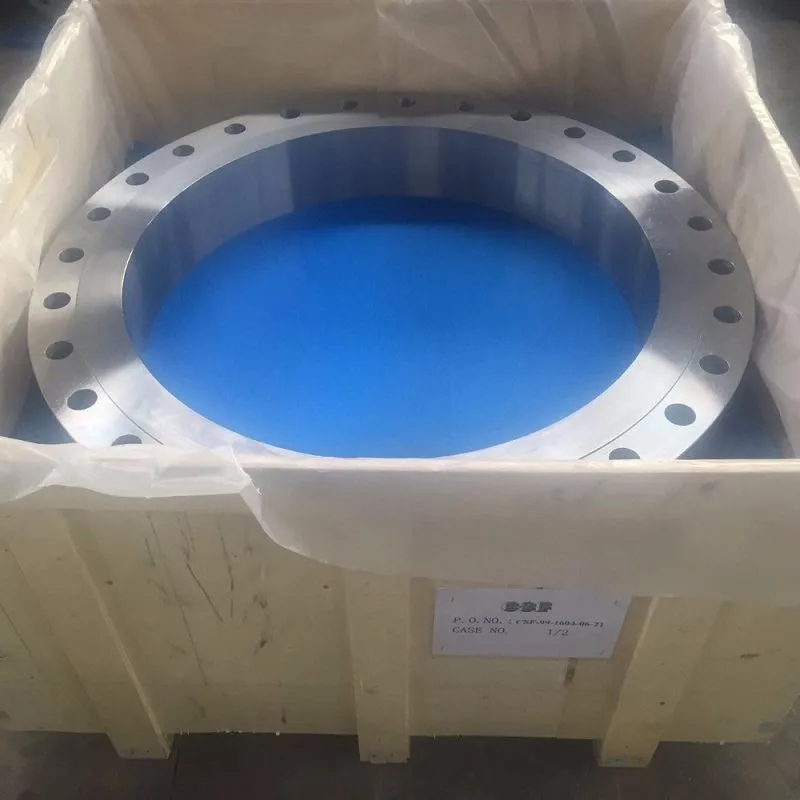
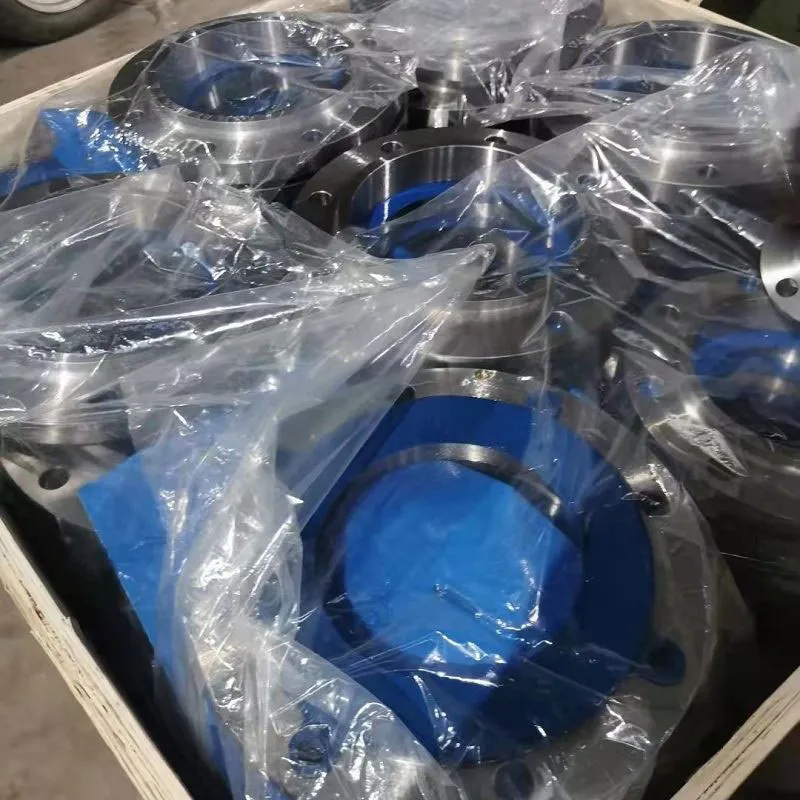
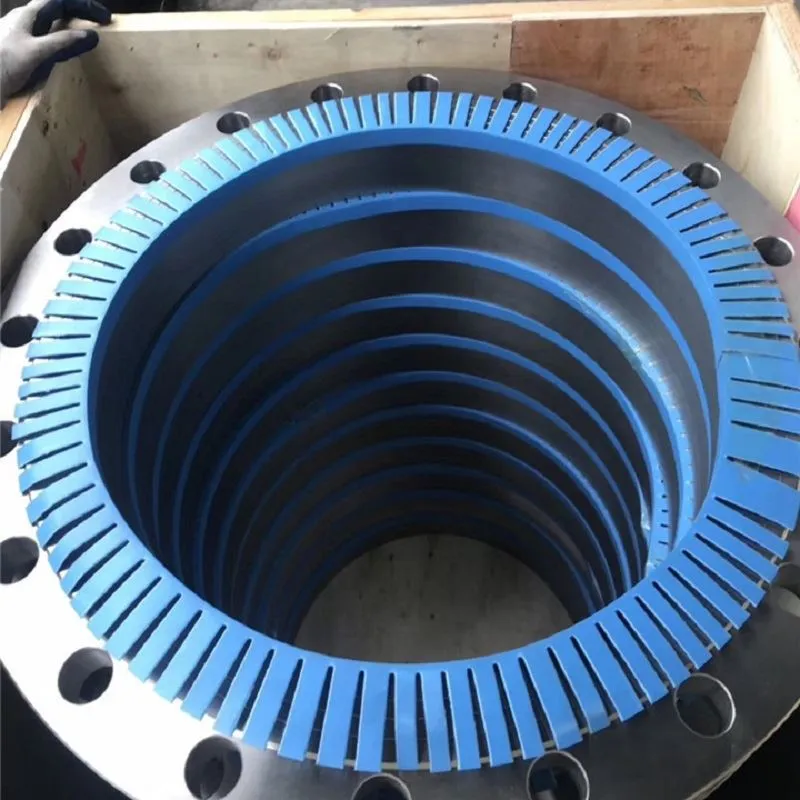
However, when the domestic market is faced with shortages or instability in quality, the gaze of many engineers and purchasers turns to trusted international partners who can guarantee a full cycle of control. A striking example of such reliability isShanxi Hongkai Forging Co., Ltd.. Based in Dingxiang County, one of China's key forging industrial centers, the company operates three in-house production facilities covering the entire process from primary forging to final packaging. Unlike many intermediaries, Shanxi Hongkai Forging operates as an independent legal entity with import and export rights, which provides direct and transparent channels of interaction.
Why is this important in the context of finding a quality flange? Because the company offers not just products, but a vertically integrated cycle. Their infrastructure includes in-house forging, heat treating, machining and, critically, physical and chemical testing capabilities. A multi-level quality control system implemented at all stages - from incoming raw material control to geometry and marking checks - ensures that you receive a product that strictly meets the stated standards. The company's product range covers six types of forged flanges (including butt weld, flat, threaded and blind) ranging from DN15 to DN4000. They work according to both international standards (DIN, ANSI B16.5, ASME) and GOST specifications, which makes their products adapted for Russian projects. The geographical location in Dingxiang also provides logistical advantages: proximity to railways and port areas allows for timely deliveries even to remote regions.
The future of standards: where is the industry heading?
There are persistent rumors that by 2027 GOST 12821-80 will undergo a large-scale revision. The old Soviet standard is morally outdated. It does not take into account new steel grades, modern control methods and the realities of import substitution. Perhaps we will see a new GOST or a transition to harmonized EAEU standards. This can lead to changes in the geometric dimensions and, accordingly, the weight of the products.
If you are designing a facility now that will be built in two years, build into the design the possibility of adaptation. Don't become rigidly tied to one performance if possible. Leave permissions. And most importantly, follow the news of relevant associations. Information about changes in regulations appears long before their official entry into force.
We can also expect an increase in quality control automation. The introduction of machine vision systems on sorting lines will allow flanges with geometry defects to be rejected at the production stage. This is good for the consumer, but again will affect the price. Quality costs money. Cheap and high quality - this phrase has become an oxymoron in 2026.
Practical checklist before purchasing
To avoid becoming a victim of unscrupulous sellers, save this short list. Go through it before signing the contract.
- Does the steel grade in the specification match what is needed for your environment (aggressive, high temperature, pressure)?
- Is a specific flange design specified (1, 2, 3, etc.)?
- Is there a clause in the contract about independent examination of weight and chemical composition?
- Is delivery to the site included in the price, or is it a separate line item?
- Does the supplier guarantee replacement of defective products within 10 days?
- Has the counterparty been verified through legal entity verification services (presence of courts, debts)?
Remember: by saving 100 rubles on a flange, you can lose millions on repairing a broken pipe and downtime. In an industry where pressure is measured in atmospheres and temperatures in hundreds of degrees, greed is punishable.
Conclusion: Balancing Risk and Necessity
The situation with pipeline fittings in Russia is difficult, but not hopeless. Yes, prices have increased. Yes, the quality is up to par. But we need to produce, we need to build, we need to repair. The key to success is total control. Don't trust blindly. Check every step. Weigh, measure, ask for documents.
GOST 12821 flanges are not just pieces of iron. This is the connecting link of the country's entire industrial infrastructure. The safety of thousands of people depends on their reliability. Choose suppliers not by a beautiful picture on the website, but by reputation and willingness to answer for your product with your head. Whether it is large Russian players or specialized manufacturers such as Shanxi Hongkai Forging, focused on long-term partnerships and strict adherence to technical requirements - in 2026, it is not the one who is cheaper who will survive, but the one who is more honest and transparent.
I hope this material will help you avoid the rake that many of your colleagues have already fallen into. If you have any questions about specific steel grades or installation nuances, write in the comments and we’ll discuss it. The topic is alive, and everyone’s experience is important.
Sources of information and regulatory framework: