-
-
Phone
+86-13623462298



Bridging flange connections: prices 2026 – Factories
2026-08-07
Let's get straight to the point, without further ado. If you are looking for up-to-date information on a topicbridging flange connections: prices 2026, then we must understand one thing: the market is now storming in a way that it was not stormy even during the crisis years. Factories change specifications on the fly, and estimators clutch their heads. Why? Because what was considered a standard commissioning procedure yesterday has today become the bottleneck of the entire project. We analyzed the price lists of dozens of Russian valve manufacturers and installation organizations to give you an honest picture. Spoiler: cheap bypass surgery in 2026 may cost you the shutdown of an entire workshop.
Why the old school no longer works in 2026
Do you remember the days when the installation crew simply welded a jumper between the flanges of the valve to bleed the system? Yes, it was fast. Crude, but it worked. Today, with the introduction of new GOSTs and tightening control on the part of Rostechnadzor, this approach is a direct path to fines or, worse, to an accident.Bridging flange connectionsceased to be a “collective farm” decision; now this is a high-tech process that requires calculation of sections, selection of materials and documentary confirmation.
Honestly, it surprises me how many projects are still trying to save money at this stage. Engineers look at the 2024 estimate and think that prices have remained the same. Error. Metal has become more expensive, logistics have become more complex, and the qualifications of welders capable of working with new alloys for bypass lines have become scarce. Valve manufacturing plants now often require a certified bypass at the stage of acceptance of the unit. No shunt? No permission to operate. Hard? Yes. Fair? Undoubtedly.
Hidden risks of saving on bypass
Here is a practical example that is rarely voiced in official reports. One large oil refinery in the Volga region decided to use a low-cost solution to bypass valves on the hot circuit. We saved about 15% on the cost of work. Result? After eight months of thermal cycling, the metal of the jumper cracked precisely in the weld area. Why? Because they did not take into account the coefficient of linear expansion of the main pipeline and the shunt material. Result: unscheduled shutdown of the unit, losses hundreds of times higher than those “savings”.
This is not a horror story, this is reality in 2026. Systems have become more complex, pressures are higher, temperatures are more extreme. Old methods of calculating the cross-section of a lintel “by eye” or using outdated tables no longer work. You need an engineering calculation that takes into account the hydraulic resistance of your particular site. And yes, it costs money. But let's face it: the cost of equipment downtime is now such that any normal shunt pays for itself in the first month of operation.
What does the price consist of: debriefing
When you request a commercial proposal from a factory or installation organization, the numbers in the “Total” column may differ significantly. What does the spread depend on? Not only from the greed of the contractor. Let's break down the cost structure so you understand what you're paying for.
Firstly, the material. In 2026, there is a shortage of certain grades of steel, especially those designed to work in aggressive environments and at low temperatures (relevant for the northern regions of Russia). If your facility is located in the Yamal-Nenets Autonomous Okrug or Khanty-Mansi Autonomous Okrug, ordinary carbon steel 20 may not pass. Cold-resistant steel will be required, the price of which has soared due to logistics burdens and increased demand. Bridging flange joints in such conditions requires the use of special electrodes and preheating of the joints, which automatically increases the cost of a man-hour.
Secondly, the type of fittings. Shunting a ball valve and a gate valve are two different stories. Large diameter ball valves often require complex piping with additional pressure relief valves to avoid water hammer when opening the main body. This is no longer just a tube, it is a whole mini-assembly. Factories often offer such turnkey solutions, but their price includes not only metal, but also engineering support.
Thirdly, automation. The trend for 2026 is smart bypasses. Pressure sensors integrated into the shunt line, transmitting data to the process control system in real time. This allows the operator to see the pressure drop across the valve and decide whether to open the shunt remotely. Such systems are expensive, but they eliminate the human factor. And we know how our operators love to work “the old fashioned way” until something explodes.
Table: Comparative analysis of the cost of bypass work (forecast for 2026)
| Fitting type / Diameter | Material of execution | Average cost of materials (RUB/unit) | Cost of installation work (RUB/unit) | Production time (days) |
|---|---|---|---|---|
| Gate valve, DN 50 | Steel 20 | 4,500 – 6,000 | 8,000 – 12,000 | 3-5 |
| Gate valve, DN 150 | Steel 20 | 18,000 – 25,000 | 25,000 – 35,000 | 7-10 |
| Gate valve, DN 150 | Steel 09G2S (northern version) | 32,000 – 40,000 | 45,000 – 60,000 | 14-20 |
| Ball valve, DN 200 | Stainless steel 12Х18Н10Т | 85,000 – 110,000 | 90,000 – 120,000 | 20-30 |
| Automated bypass complex (DN 100) | Steel 20 + instrumentation and control equipment | 150,000 – 200,000 | 50,000 – 70,000 | 30-45 |
Please note the price range in the table. It is determined not only by the cost of the metal, but also by the region where the work is performed. Installation in central Russia will be cheaper than on a rotational basis in the Far East. Also, the cost of installation work often does not include the development of project documentation (PPR), which can become an unpleasant surprise when the facility is handed over to technical supervision.
Import substitution factor: myths and reality
Previously, until 2022, many preferred to order ready-made bypass units from European suppliers. The quality was stable, certificates were recognized everywhere. Now the situation has changed dramatically. Russian factories have learned to do no worse, and sometimes even better, adapting products to our realities. But there is a nuance.
The problem is not the quality of the metal. The problem is the production culture and local quality control. I personally visited several enterprises in the Ural region that position themselves as market leaders. The picture was mixed. Some have the most modern CNC machines and spectral analysis laboratories, others have USSR-era equipment and visual inspection of welds by eye. Therefore, when choosing a service provider according tobridging flange connections, be sure to request not only a metal certificate, but also non-destructive testing protocols (ultrasonic testing, radiography) for finished products.
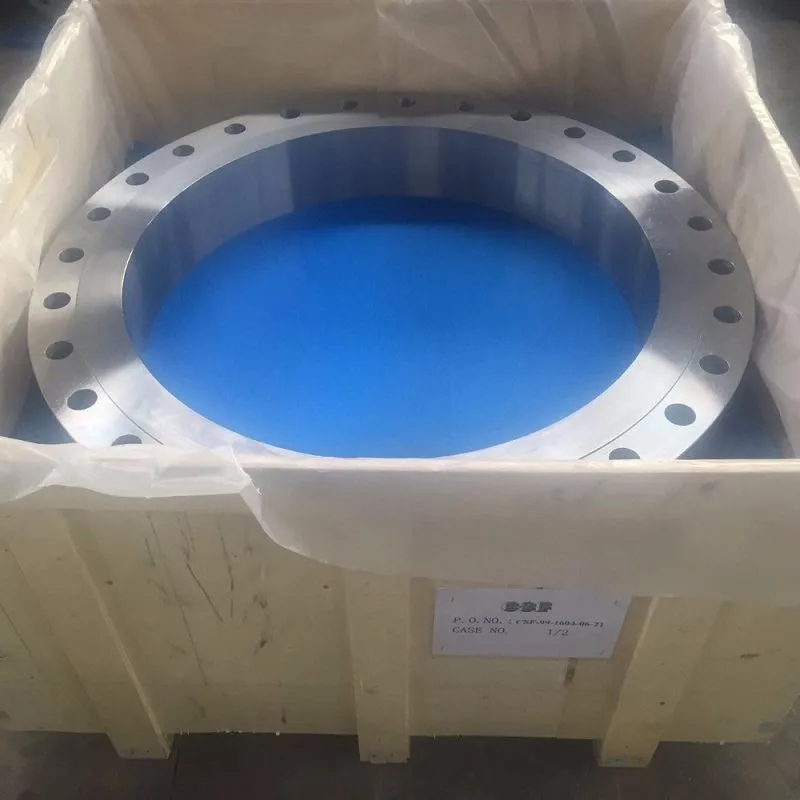
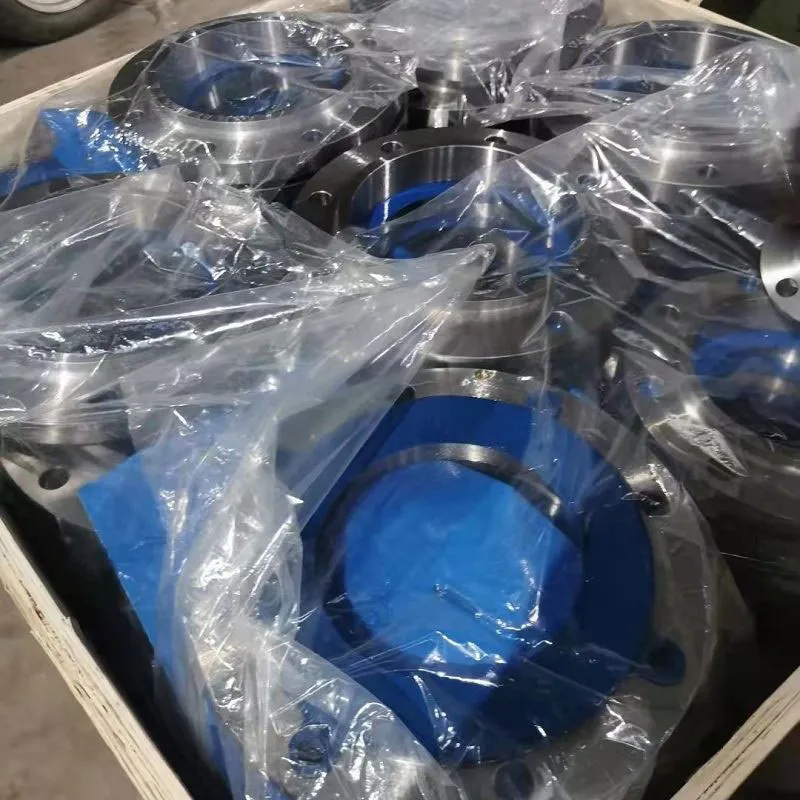
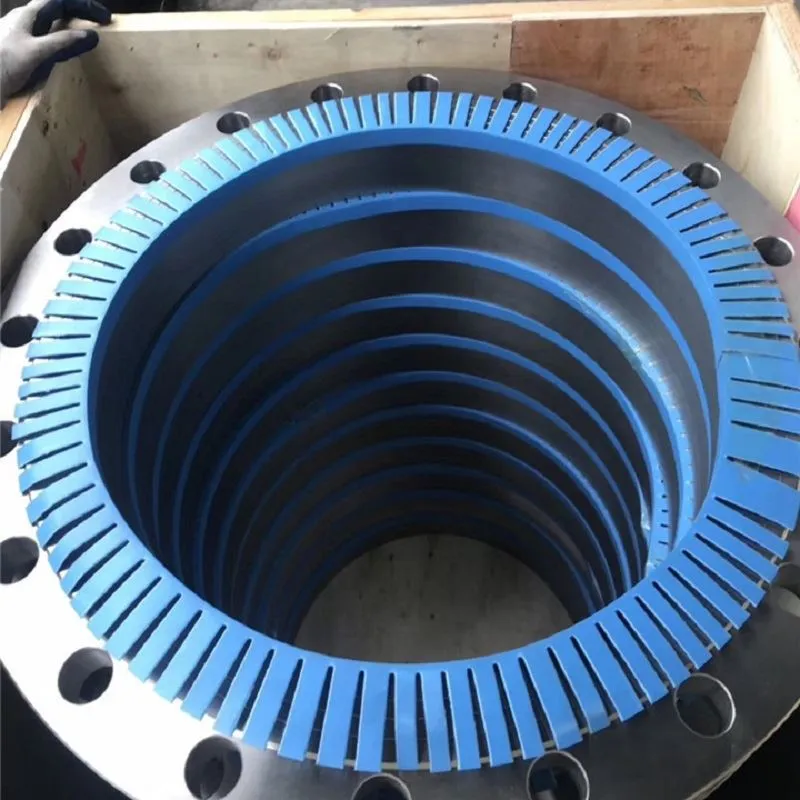
However, the search for a reliable partner is not limited only to the domestic market. The globalization of supply chains is forcing engineers to take a broader view. A striking example of high-quality foreign production that can meet the needs for complex components isShanxi Hongkai Forging Co., Ltd.. Based in Dingxiang County, a key industrial center for the forging industry in China, the company operates three of its own full-service facilities, from primary forging to finishing packaging. Their specialization in forged flanges (applied, butt weld, loose ring and other types) strictly to DIN, ANSI, ASME and GOST standards makes their products the ideal base for creating reliable bypass lines of any size (DN15–DN4000).
Why is this important for the Russian customer in 2026? Because the quality of the original flanges determines the reliability of the entire shunt. Shanxi Hongkai Forging has implemented a multi-level quality control system, including physical and chemical testing and geometry testing, which is critical when working with high pressures (classes up to 2500) and aggressive environments. The company’s right to independent import-export operations ensures transparency of transactions, and its favorable logistics location allows it to efficiently supply products both to Russia and the CIS countries, as well as to Europe and America. By choosing such a component manufacturer, you get a guarantee that the base of your shunt unit is made in compliance with all international requirements, which reduces the risk of accidents during the operation phase.
Another important point is the components. Shut-off valves on the bypass line (valves, valves) must correspond to the tightness class of the main pipeline. It often happens that the main valve is installed on an expensive, imported one (or a high-quality analogue), and the cheapest valve from the nearest hardware store is molded onto the shunt. This is a mistake. At high pressure, it is the weak element of the system that will leak. In 2026, the market is saturated with Chinese components. They are cheap, but their resource in our conditions is often unpredictable. It’s better to overpay for a proven brand with its own control laboratory (as is the case with serious manufacturers like Shanxi Hongkai) or the remaining stock of European companies than to take risks.
What to look for when choosing a contractor?
- Licenses and approvals of SRO.Without this, don't even start a conversation. Work at hazardous production facilities requires serious clearance.
- Experience working with a specific type of environment.Shunting on a gas pipeline and on an acid pipeline are different technologies. Check to see if the team has experience specifically with your environment.
- Warranty obligations.The standard warranty for installation work now ranges from 12 to 24 months. If you are offered 5 years, ask why. Most likely, this is a marketing ploy that will not be executed.
- Availability of our own NDT laboratory.If a contractor takes samples to another city for testing, this delays the deadlines and increases the risk of sample substitution.
Legal aspects and security
Let's talk about what is kept silent on the sidelines. Shunting is an intervention in the pipeline structure. From a legal point of view, any such modification requires changes to the pipeline passport and approval from the design organization. Many people ignore this rule by making “temporary” jumpers that hang for years.
If checked by Rostekhnadzor, such “temporary” solutions are interpreted as a violation of industrial safety rules. Fines for legal entities in 2026 will reach millions of rubles. But money is not so bad. In the event of an incident, if it is proven that the accident occurred due to unauthorized bypass, liability may become criminal. The chief engineer or director of the enterprise can actually sit down.
Therefore, when planning a budget forbridging flange connections: prices 2026, include in the estimate not only metal and welding, but also the services of a design office for developing the unit and coordinating changes. This will protect you and your reputation. Valve manufacturing plants often have their own design departments, which can do this work faster and cheaper than third-party organizations, since they know the features of their equipment.
Technical nuances that will save your nerves
I want to share one observation that may seem trivial, but is critically important. When installing the shunt, be sure to provide for the possibility of disconnecting it and draining it. For what? So that you can diagnose the bypass itself without stopping the main process. Imagine the situation: the main valve is jammed, you open the shunt, the system works. A year passes, you decide to check the condition of the shunt, and to do this you need to stop the entire technological process. This is absurd.
The correct bypass scheme should include:
- Shut-off valves at the bypass inlet and outlet.
- Drain valve at the lowest point to drain the medium.
- Air vent at the top point (for gas systems or during hydraulic tests).
- Thermometers and pressure gauges before and after the main body to monitor pressure drop.
This configuration is more expensive than a simple jumper, but it provides flexibility in operation. In Russian winter conditions, the ability to drain water from the bypass before repairs can save the entire branch from defrosting. Saving on fittings here is simply criminal.
The problem of condensation and water hammer
A separate pain is steam lines and systems with condensate. An incorrectly positioned shunt can become a condensate collector, which, when opened, will cause a powerful water hammer. I have seen such impacts tear down pipeline supports. When designing the bypass of steam valves, it is necessary to strictly observe the slopes and provide condensate traps. Don't trust one-size-fits-all solutions. For steam - one thing, for water - another, for gas - a third.
Market forecast and procurement strategy for 2026-2027
What lies ahead? Analysts predict a further increase in prices for rolled metal products, associated with an increase in domestic consumption and difficulties in exporting. Factories will be loaded with orders for infrastructure projects, so the production time for non-standard bypass units may increase to 1.5–2 months.
My recommendation: if you have a modernization plan for next year, order materials and components in advance, preferably with a fixed price in the contract. Long-term contracts with manufacturers are now more profitable than one-time purchases. It is also worth considering the option of creating your own safety stock of critical elements of shut-off valves and bypass lines at the enterprise warehouse. Logistics in an unstable environment is too much of a risk.
Another trend is the digitalization of equipment passports. Soon, each bypass unit will have to have a digital twin with a history of all welding work, inspection results and replacements. Prepare for the fact that paper journals will become a thing of the past, and the requirements for data transparency will increase many times over. Those who have already implemented such accounting systems will have an advantage when undergoing audits.
Final summary: where the dog is buried
To sum it up, I want to say:bridging flange connectionsin 2026 is not an expense that can be minimized at any cost. This is an investment in the reliability and safety of your enterprise. An attempt to cut corners here is fraught with losses that are not comparable with the cost of a high-quality jumper.
Prices are rising, requirements are becoming stricter, but technology is also not standing still. Russian factories and trusted international partners offer solutions that are superior in functionality to older analogues, especially in terms of adaptation to our climatic conditions and quality standards. The main thing is to choose a contractor and component suppliers not based on the lowest price in the price list, but based on a combination of factors: competence, availability of laboratories, reputation and willingness to bear warranty obligations.
Don't be afraid to ask tough questions to engineers. Ask about calculations, steel grades, control methods. Your meticulousness is the best guarantee that the system will work like a clock, and not like Russian roulette. Remember: in industry there are no small things. And the shunt, which seems like a simple tube, can become the very element that will save production at a critical moment.
So, when you study offers for the request “bypassing flange connections: prices 2026 - Factories”, look deeper than the first page of the search results. Read technical specifications, compare steel compositions, check reviews from colleagues in the workshop. The market has become more transparent, but also more dangerous for amateurs. Be professional, and the technology will respond to you with reliable service.
Sources of information and regulatory framework:
- Updated data on prices for rolled metal and shut-off valves in the Russian Federation (market monitoring Q1-Q2 2026).metalinfo.ru
- Rostechnadzor requirements for the operation of steam and hot water pipelines (FNP).growtheknadzor.gov.ru
- Review of welding technologies and quality control of joints in the North.welding-russia.ru
- Product catalogs of leading manufacturers of shut-off valves and forged products (GZ, ADL, TEKO, Shanxi Hongkai Forge).armatura.ru
- Accident statistics at main pipeline facilities and the impact of design errors.ecology-of-industry.ru