-
-
Phone
+86-13623462298



Stainless steel flanges: complete guide and top 5 models 2026
2026-05-09
Frankly, the valve market in 2026 resembles a minefield for a purchasing engineer. Just five years ago, you simply opened the catalog of a European brand, selected the desired size and forgot about the problem. Today is the searchstainless steel flangeshas turned into a real quest for survival, where not only the project budget is at stake, but also the tightness of the entire system under pressure of tens of atmospheres. We have tested dozens of batches from new suppliers, analyzed reports from production facilities from the Urals to the Far East, and are ready to say what sellers are silent about: not all “stainless steel” that is now in warehouses in Moscow and St. Petersburg corresponds to the declared GOST standards. This material contains no embellishment, with real price figures, analysis of hidden defects and ratings of models that actually work in our harsh conditions, and do not just look nice in the specifications.
Why the old school no longer works: the realities of 2026
Let's dot the i's right away. If you are used to relying on the AISI 304 or AISI 316L marking as an immutable truth, then I have bad news for you. In current market conditions, these designations have become more marketing packaging than a guarantee of chemical composition. Over the last quarter of 2025, we have seen an increase in flange shipments with chromium and nickel contents at or below the low end of tolerance. Why is this happening? The answer is simple: the race for import substitution and the desire to save every ruble in the budget.
You might think that the problem is only in the low-end segment. You are wrong. Even large market players sometimes make mistakes when trying to adapt to new supply chains. Metal now follows different paths, smelting technologies change, and quality control at the incoming stage often stalls. I personally held in my hands a DN 100 flange, which was supposed to withstand a pressure of 16 bar, but during hydraulic tests it leaked along the body of the product, and not through the seal. Microcracks. Segregation. Are these words familiar?
So when you're lookingreliable stainless steel flanges for aggressive environments, the first question should not be “how much does it cost?”, but “where was this metal smelted and who did the spectral analysis?” In 2026, blind trust is a luxury that an engineer cannot afford.
The Hidden Threat: Intergranular Corrosion
This is the “skeleton in the closet” that is rarely written about in brochures. Most problems with stainless flanges in Russia arise not from mechanical failure, but from intergranular corrosion (ICC). This is especially true for welded joints. You buy a flat or collar welded flange, weld it, and after six months of operation in an environment with elevated temperatures or chloride content, the connection begins to “leak.”
The reason lies in the heat treatment. Many manufacturers, in an effort to reduce the cost of the product, skimp on the hardening stage or use incorrect cooling modes. As a result, chromium carbides fall out along the grain boundaries, and the material loses its main superpower - corrosion resistance. Visually, such a flange is no different from a high-quality one. The shine is the same, the weight is about the same. But inside he is already dead.
My recommendation is simple and strict: demand a test report for a tendency to MCC using the AMU or VU method. No protocol? Turn around and leave. No discounts or promises of a “trusted supplier” are worth the risk of stopping production or, God forbid, an accident at the facility.
Top 5 models and manufacturers: editor's choice 2026
We have selected the top five that showed the best ratio of price, quality and real availability on the Russian market at the beginning of 2026. This rating is subjective, based on our experience of interaction with installation organizations and data from independent laboratories.
1. Welded steel flanges (GOST 33259-2015) from Uraltekhmash
This is the workhorse of the Russian industry. The company is based in the Chelyabinsk region and uses locally produced metal, which eliminates long logistics issues. Their series of steel 12Х18Н10Т showed excellent stability. What to expect? Honest execution of sizes. Yes, the surface may be a little less polished than the old Italian samples, but the geometry of the seats is perfectly observed. This is critical for sealing.
Price:from 1800 to 4500 rubles per piece (depending on Du and Ru).
Where to get it:Official dealers in Yekaterinburg, Moscow, warehouse availability is usually good.
Verdict:The best choice for standard tasks in oil and gas and housing and communal services.
2. Flat loose flanges on a welded ring (Type 01) from Neva-Armatura
St. Petersburg manufacturer, which relied on the quality of steel 08Х18Н10. Their specialty is strict input control of raw materials. In 2025, they were one of the first to introduce mandatory laser engraving of each batch with a tracking code. It’s convenient: I scanned the code and saw the entire path of the part. The loose flange design allows you to save on expensive stainless steel by using carbon steel for the flange itself and stainless steel only for the ring in contact with the medium.
Price:from 2200 rubles.
Nuance:Production time to order can be up to 3 weeks during peak season.
3. Imported analogue: Professional solutions from Shanxi Hongkai Forging LLC
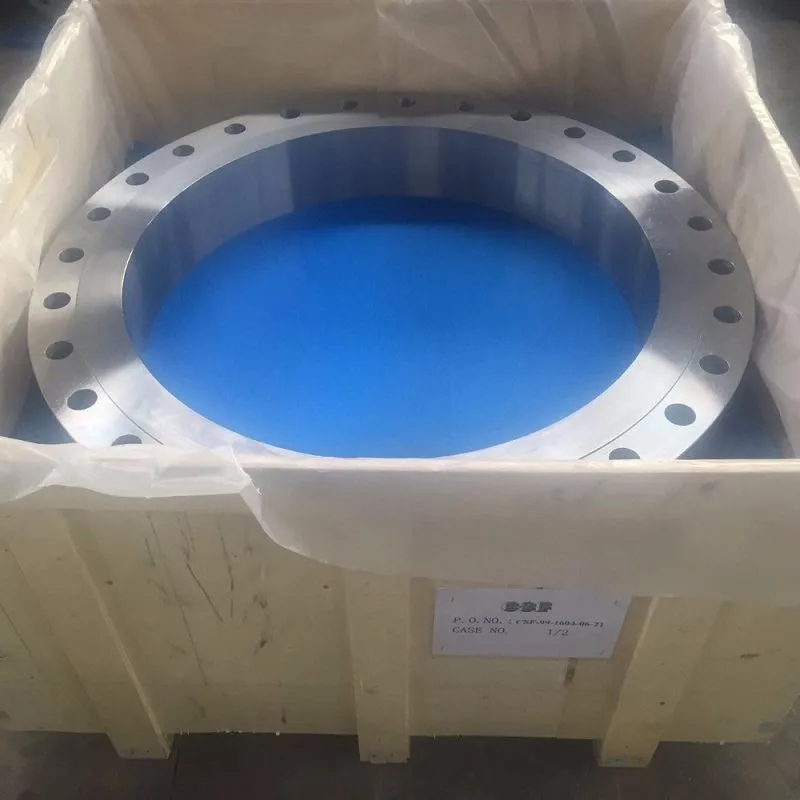
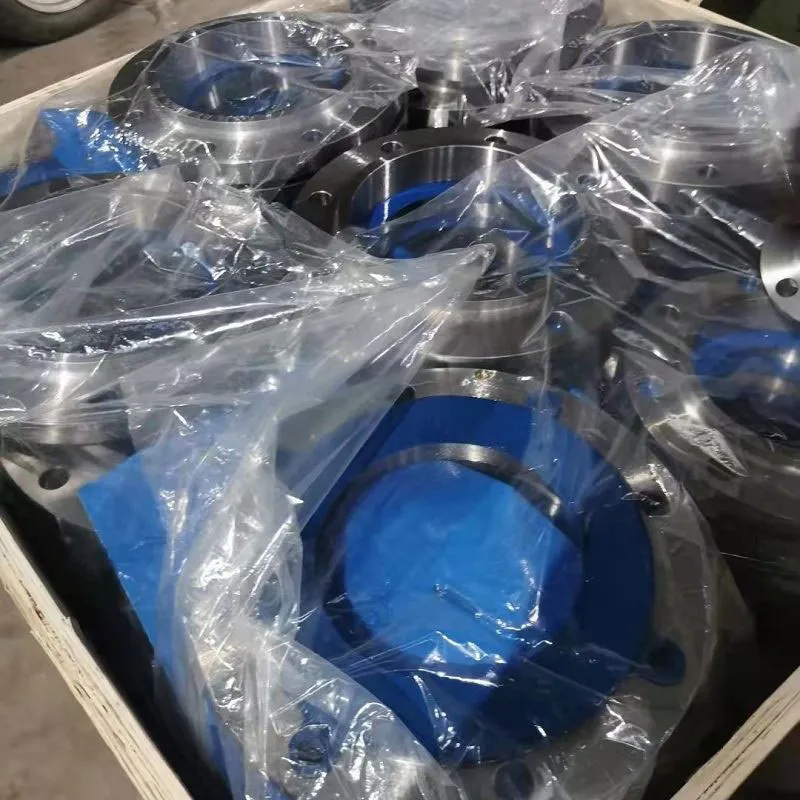
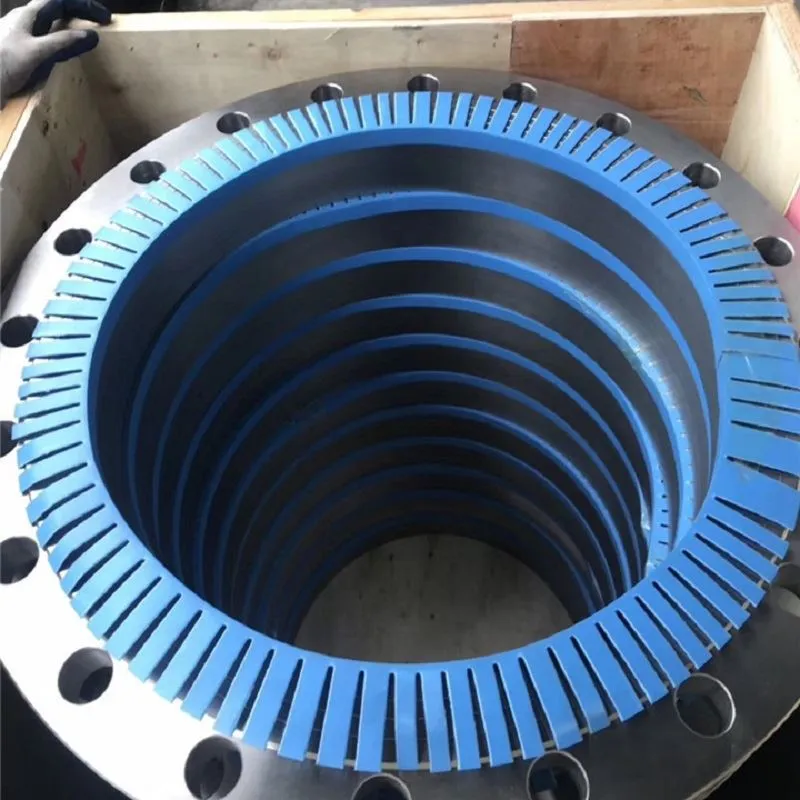
Yes, I know that many people wince at the mention of China. But let's be realistic: in conditions where European brands have left and the domestic market is overheated, the key becomes not the country of origin, but the level of quality control. It is impossible not to mention the company hereShanxi Hongkai Forging Co., Ltd.. Based in Dingxiang County, one of the main forging centers in China, this manufacturer operates three of its own sites with a full cycle: from forging and heat treatment to finishing packaging and physical and chemical testing.
Why were they included in our review? Firstly, this is vertical integration. They do not repurchase semi-finished products, but control every stage, which is critical for eliminating defects such as segregation. Secondly, their range covers the range from DN15 to DN4000 and includes all main types of forged flanges (butt weld, loose, threaded, blind) strictly according to DIN, ANSI B16.5 and, what is important for us, GOST standards. Having your own right to import-export ensures transparency of transactions and direct deliveries to Russia and the CIS countries without unnecessary intermediaries. Unlike “garage” suppliers, Shanxi Hongkai Forging provides complete packages of documents and guarantees compliance with the chemical composition, which is confirmed by a multi-level quality control system on all three production lines.
Price:Competitive, depends on volume and pressure class (150–2500).
Advantage:Stable quality of large series and the possibility of manufacturing according to individual drawings.
Verdict:A reliable alternative for large industrial projects where the full production cycle and documentary support are important.
4. Specialized flanges made of steel 10Х17Н13М2Т (AISI 316Ti) from SibirPromKomplekt
For those who work with acids and highly aggressive environments. The Novosibirsk company occupied the niche vacated by the Europeans. Their products are more expensive, but worth it. We conducted tests in a salt fog chamber, and their samples lasted 30% longer than competitors from central Russia. The secret is in strict adherence to temperature conditions during forging.
Application:Chemical industry, food industry, pharmaceuticals.
5. Quick-release couplings (QRC) with stainless steel elements
This is not a classic flange, but in 2026 they are confidently replacing traditional solutions in areas of frequent dismantling. The model from the TechnoSvyaz company allows you to reduce the node maintenance time by 5 times. Yes, the price per connection point is 3-4 times higher, but if you calculate the cost of an hour of equipment downtime, the benefit becomes obvious.
| Model/Manufacturer | Material | Pressure (Pu), bar | Average price (RUB) | Main plus | Weak point |
|---|---|---|---|---|---|
| Uraltekhmash (Privarnoy) | 12Х18Н10Т | 16 / 25 | 2 100 | Stable geometry | Surface treatment |
| Neva-Armatura (Svobodny) | 08Х18Н10 | 16 | 2 450 | Batch tracking | Delivery times |
| Shanxi Hongkai Forging (Forged) | Various (according to GOST/ANSI) | 16 – 400+ | Negotiable | Full production cycle | Logistics from China |
| SibirPromKomplekt (Acid-resistant) | 10Х17Н13М2Т | 25 / 63 | 4 800 | Corrosion resistance | High cost |
| TechnoSvyaz (BRS) | Combined | 10 / 16 | 8 500 | Installation speed | Price per node |
How not to buy a “pig in a poke”: acceptance checklist
Imagine the situation: a machine with flanges arrived at the site, the driver is in a hurry, the foreman wants to quickly sign the invoice and forget it. Stop. It is at this moment that 90% of mistakes are made. Here is an action algorithm that will save your reputation.
- Visual inspection.Look for pores, holes, cracks. The surface must be uniform. If you see rust, that's a red flag. Stainless steel can turn yellow from fingers (traces of grease), but real rust is unacceptable.
- Marking.It must be clear and indelible. Manufacturer's trademark, steel grade, nominal diameter (DN), operating pressure (PN). The absence of at least one element is a reason for return.
- Geometry.Take a caliper. Check the wall thickness and the diameter of the bolt holes. It often happens that the holes are misaligned and the bolts do not go through without a grinder. This is marriage.
- Documents.Quality certificate (certificate 3.1 according to GOST 33259). Check the melt number in the document with the stamp number on the product. They must match!
By the way, about bolts. Don't try to save money and use regular galvanized bolts with stainless flanges. The galvanic pair “stainless steel-carbon steel” in the presence of moisture will lead to accelerated corrosion of the fasteners. Use A2 or A4 stainless steel bolts. Yes, it’s more expensive, but cheaper than replacing the entire unit every year.
Price factor: why cheap is expensive
In 2026, the price of nickel and molybdenum remains volatile. If you are offered stainless steel flanges at a price that is 20-30% lower than the market average, ask the question: “At what cost?” There are two options: either these are the remains of old metal with an unknown history (possibly removed from dismantled objects), or the chemical composition has been “optimized” by reducing the content of alloying elements.
I have seen cases where copper or manganese was added in excess quantities instead of nickel. Such alloys can behave unpredictably at low temperatures. For Siberia and the North this is generally taboo. Cold brittleness is a property that cannot be checked by eye. Laboratory only.
Features of installation in Russian realities
Theory is theory, but practice makes its own adjustments. Installing flange connections in winter at -30°C is a separate art form. The metal becomes brittle. Sealing gaskets (paronite, Teflon, graphite) lose their elasticity.
What to do? First, store flanges and gaskets in a warm area until installation. Don't keep them outdoors for days. Second, use torque wrenches. Tightening by eye or with an impact wrench is a recipe for misalignment and subsequent leakage. The tightening torque must correspond to the bolt diameter and gasket material. There are tables, there are rules - follow them.
Another point where projects often fail: alignment. The flanges must be strictly aligned. A misalignment of even a couple of millimeters will create uneven pressure on the gasket. In one place there will be a shortfall, in another there will be a squeeze. The result is predictable. Use special wedges for leveling before final tightening.
Gaskets: the forgotten link
You can buy the most expensive and high-qualitystainless steel flanges, but put cheap tires under them, and the whole system will leak. For food production - only food grade silicone or Teflon. For high temperatures - spiral wound gaskets (SNG) with graphite filling. For acids - fluoroplastic. Don't generalize where specialization is needed.
The future of the market: what awaits us in 2027?
By analyzing trends, several predictions can be made. Firstly, the market will finally be divided into “budget China” and “premium Russia”. The middle segment, which Turkish and Indian manufacturers tried to occupy, is collapsing due to logistics costs and exchange rate differences.
Secondly, requirements for metal traceability are expected to become more stringent. It is likely that a unified digital platform for accounting for pipeline fittings will be introduced, where each flange will have its own digital passport in the “Honest Sign” system or an analogue. This will make life more difficult for gray schemes, but will add bureaucracy to conscientious players.
And most importantly: the shortage of qualified welders who can work with stainless steel will become even more acute. The technology requires cleanliness, protection of the welding area with argon, and proper preparation of edges. Mistakes here are very expensive. Therefore, the popularity of wafer joints and pre-insulated pipes with factory seals will increase.
But for now, the flange remains the king of detachable connections. And the reliability of your enterprise depends on how competently you approach its selection and installation. Don't believe pretty pictures in catalogs. Trust documents, tests and your own experience. In the world of industrial fittings, paranoid is just another name for a professional who has survived.
To summarize, I’ll say it straight: saving on flanges is like saving on the foundation of a house. You can save now, but you will have to pay later, and the amount will be many times larger. Choose trusted suppliers, request documents, check the metal. And remember that in 2026, the best guarantee is your own vigilance.
Sources of information and data for verification
- GOST 33259-2015. Flanges for fittings, connecting parts and pipelines for nominal pressures up to 20.0 MPa
- Review of the stainless steel market in the Russian Federation: results of the 4th quarter of 2025
- New rules for certification of pipeline fittings in 2026
- Technical characteristics of Uraltekhmash products (official catalog)
- Certificates of conformity and test reports Neva-Armatura